

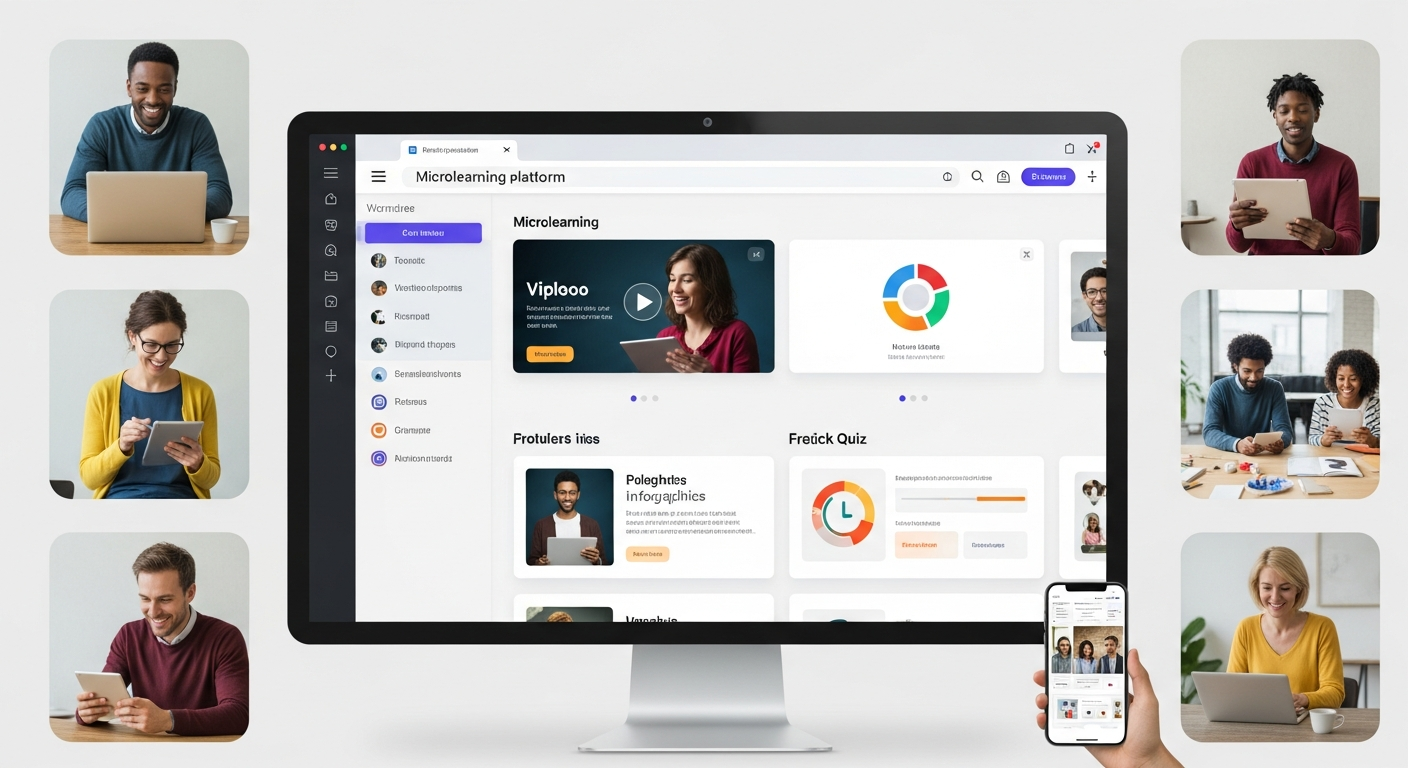
Unlocking Performance: Why a Microlearning Platform is Essential for Modern L&D Leaders
In today's fast-paced corporate world, the traditional, lengthy training module often falls short. Vice Presidents, Directors, and Senior Managers of Learning & Development (L&D) are constantly seeking innovative solutions to boost engagement, improve knowledge retention, and drive tangible business outcomes. Enter the Microlearning LMS – a transformative approach that delivers bite-sized, highly targeted learning experiences precisely when and where they're needed. This article delves into why a dedicated microlearning platform is not just a trend, but a critical investment for industries ranging from Compliance and Sales to Banking, Healthcare, and Oil & Gas.
What Exactly is a Microlearning Platform?
At its core, a microlearning platform is a specialized learning management system (LMS) designed to facilitate the delivery, management, and tracking of microlearning content. Unlike conventional learning management software that often handles extensive courses, a microlearning platform focuses on delivering concise, focused learning units that can be consumed in minutes rather than hours. These "micro-moments" of learning are typically rich in media, interactive, and directly relevant to a specific learning objective or skill gap.
Think of it as the strategic antidote to information overload and dwindling attention spans. For an enterprise learning management strategy, it means providing just-in-time support, reinforcing critical concepts, and driving continuous skill development without disrupting workflow.
The Irresistible Advantages of Microlearning for L&D
The shift towards microlearning is driven by compelling benefits that resonate deeply with L&D goals across diverse sectors:
Enhanced Engagement and Retention
Short, focused modules prevent cognitive overload, making learning less daunting and more enjoyable. When training is delivered in easily digestible chunks, learners are more likely to complete it, leading to higher engagement rates and significantly better knowledge retention. This is crucial for industries like Compliance and Banking, where understanding and retaining complex regulations is paramount.
Flexibility and Accessibility
Modern workforces are often remote, hybrid, or constantly on the move. A cloud based learning management system ensures that training content is accessible anytime, anywhere, on any device. This flexibility is invaluable for Sales teams needing quick product updates on the go, or Healthcare professionals accessing critical protocols between appointments.
Improved Agility and Speed to Competency
Microlearning platforms allow L&D teams to quickly create, update, and deploy new content. This agility is vital in fast-evolving industries like Pharma and Retail, where product information, sales strategies, or health guidelines can change rapidly. Employees gain critical skills faster, leading to quicker upskilling and reskilling.
Cost-Effectiveness and ROI
While initial setup might involve investment, the long-term cost-effectiveness is clear. Reduced time away from work for training, higher completion rates, and improved performance translate into a stronger return on investment for any learning content management system.
Key Features to Look for in a Microlearning Platform
An effective microlearning platform offers more than just content delivery. It provides a comprehensive ecosystem for modern learning:
- Intuitive Content Authoring: An AI Powered Authoring Tool simplifies the creation of engaging, interactive micro-modules, allowing L&D teams to produce high-quality content rapidly.
- Personalization and Adaptive Paths: The best platforms offer Adaptive Learning features, tailoring content delivery based on individual learner performance and preferences. This ensures relevance and maximizes impact.
- Robust Analytics and Reporting: Detailed insights into learner progress, engagement, and content effectiveness are crucial. This allows L&D leaders to measure the impact of their training and identify areas for improvement.
- Gamification Elements: Incorporating points, badges, leaderboards, and challenges transforms learning into an engaging experience. A Gamified LMS significantly boosts motivation and completion rates, especially in competitive environments like Sales.
- Seamless Integration: The platform should easily integrate with existing HRIS, CRM, and other enterprise systems for a unified data flow.
- Mobile-First Design: With mobile as the primary device for many, a responsive design is non-negotiable for accessibility.
Microlearning Across Diverse Industries
- Compliance: Delivering bite-sized updates on regulations, ethical guidelines, and company policies, ensuring continuous adherence and reducing organizational risk.
- Sales: Rapid product knowledge refreshers, objection handling techniques, and competitive intelligence updates for a highly agile workforce.
- Banking & Finance: Training on new financial products, fraud detection protocols, and customer service best practices.
- Insurance: Explaining complex policy details, claims processing procedures, and regulatory changes in digestible formats.
- Retail: On-the-spot training for new product launches, customer service scenarios, and seasonal promotions.
- Pharma & Healthcare: Updates on drug information, medical procedures, patient safety protocols, and continuous professional development.
- Hospitality: Quick refreshers on service standards, new menu items, safety procedures, and guest interaction best practices.
- Oil & Gas / Mining: Safety procedure reinforcements, equipment operation guides, and emergency response training in critical, high-risk environments, often utilizing Risk-focused Training strategies.
AI Integration in Microlearning: The Future is Here
Artificial Intelligence is not just a buzzword; it's a powerful enabler transforming the microlearning landscape. L&D leaders must consider how AI can elevate their training initiatives.
How can advanced computational intelligence enhance the personalization of microlearning content?
Advanced computational intelligence analyzes learner data, including performance history, job role, and even expressed preferences, to dynamically tailor the microlearning content delivered. It can identify specific knowledge gaps or areas for development and then automatically recommend the most relevant bite-sized modules. This ensures each learner receives a uniquely optimized learning path, improving relevance, engagement, and overall skill acquisition without generic, one-size-fits-all training.
What role does automated content generation play in accelerating content creation for microlearning modules?
Automated content generation tools, powered by sophisticated algorithms, significantly speed up the development of microlearning materials. They can assist in summarization of longer texts, convert existing resources into short-form content, suggest interactive elements, and even generate quizzes or assessment questions. This drastically reduces the time and resources required to produce new micro-modules, allowing L&D teams to respond more quickly to evolving training needs and keep content fresh and relevant.
How can data-driven insights optimize skill development and identify learning gaps in microlearning programs?
Data-driven insights extracted by sophisticated analytical engines continuously monitor learner interactions, progress, and performance within microlearning programs. This allows for the precise identification of where learners struggle or excel. By spotting common pitfalls or emerging skill deficiencies across a team or department, L&D can proactively deploy targeted micro-interventions, refine content, or even predict future training needs, thereby optimizing skill development and preventing minor gaps from becoming significant challenges.
Choosing the Right Microlearning Platform for Your Organization
When evaluating a microlearning platform, L&D leaders should prioritize scalability, ease of use for both administrators and learners, robust analytical capabilities, and seamless integration potential. Consider the specific needs of your industry and workforce, ensuring the chosen platform can grow with your organization and adapt to future learning demands. Look for a comprehensive LCMS that provides the flexibility and power needed for modern corporate training.
MaxLearn: Your Partner in Microlearning Excellence
For L&D professionals seeking a powerful and intuitive lms learning management system, MaxLearn LMS offers an advanced microlearning platform designed to meet the rigorous demands of today's enterprise. With its focus on engagement, adaptability, and performance, MaxLearn empowers organizations to deliver effective, impactful training that drives business growth.
Conclusion
The demand for efficient, engaging, and effective training solutions has never been higher. A microlearning platform addresses these challenges head-on, offering a flexible, powerful, and data-driven approach to corporate learning. For L&D Vice Presidents, Directors, and Managers, investing in a sophisticated microlearning solution is not merely an upgrade; it's a strategic imperative for fostering continuous learning, enhancing employee performance, and ensuring competitive advantage in any industry.
.jpg)


