

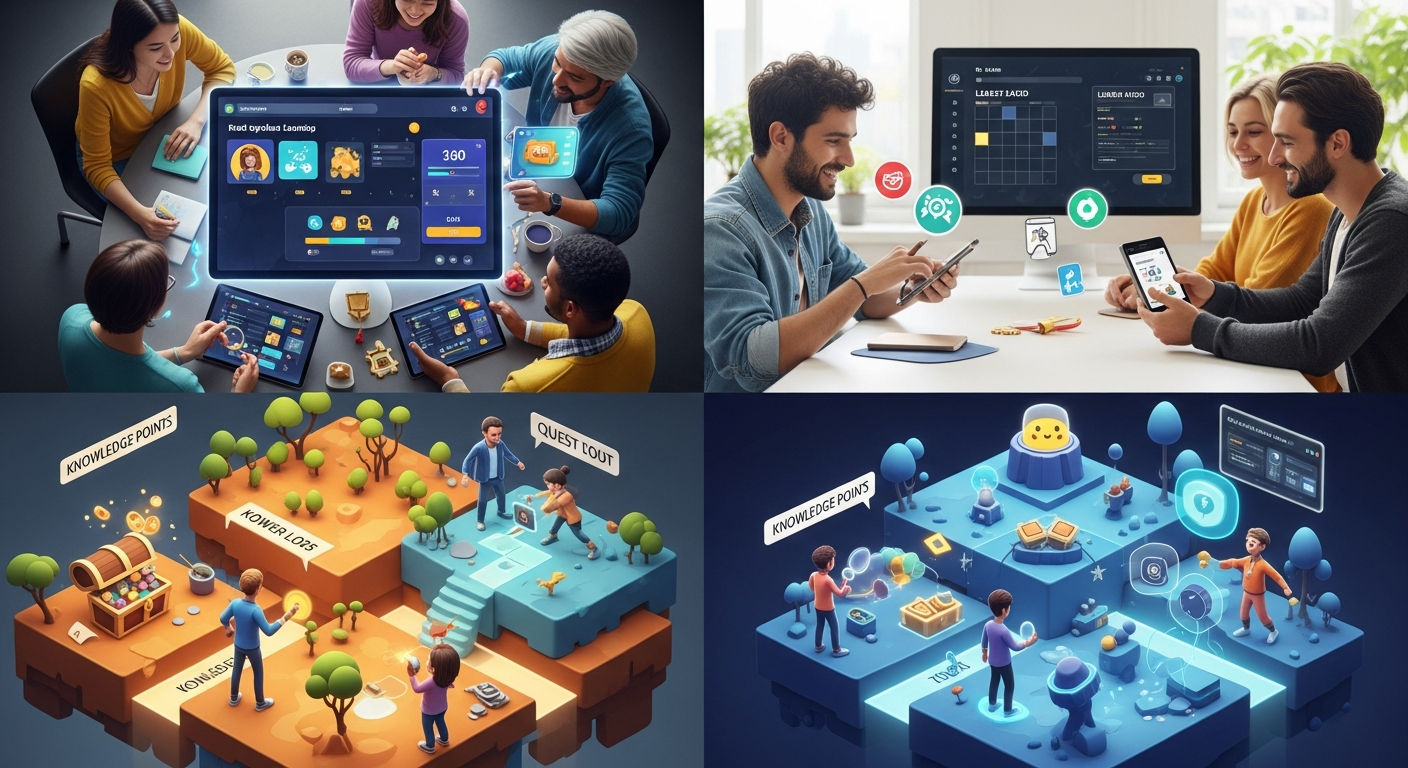
Gamification Of Learning: Transforming Engagement and Driving Performance in L&D
In today's fast-paced corporate landscape, the challenge for Learning & Development (L&D) leaders is not just to deliver training, but to ensure that learning truly resonates, sticks, and translates into measurable performance improvements. Traditional methods often struggle to capture the attention of a workforce accustomed to dynamic, interactive experiences. This is where the gamification of learning emerges as a powerful, transformative strategy, moving beyond mere buzzword status to become an essential tool for elevating employee engagement and driving tangible business outcomes.
Gamification in learning involves applying game-design elements and game principles in non-game contexts. It’s about leveraging inherent human desires for achievement, competition, collaboration, and mastery to make learning more compelling, enjoyable, and effective. For VPs, Directors, Senior Managers, and Managers of L&D, understanding and strategically implementing gamification isn't just an option—it's a necessity for fostering a culture of continuous learning and high performance.
Why Gamification Now? The Imperative for Modern L&D
The modern learner, often a digital native, expects instant gratification, personalized experiences, and continuous feedback. Monotonous, passive training modules can lead to disengagement, low retention rates, and ultimately, a poor return on L&D investments. Gamification directly addresses these challenges by:
- Boosting Engagement: It transforms mundane topics into exciting challenges, capturing attention and encouraging active participation.
- Enhancing Retention: The interactive nature and immediate feedback loops reinforce learning, making information more memorable.
- Motivating Behavior Change: By setting clear goals and rewarding progress, gamification effectively guides learners towards desired professional behaviors and skill acquisition.
- Providing Actionable Insights: Robust gamified platforms offer data on learner progress, pain points, and areas for improvement, enabling data-driven L&D decisions.
The Science Behind the Fun: How Gamification Works
Gamification isn't simply about adding points or badges; it's rooted in psychological principles that tap into intrinsic human motivators. It leverages concepts such as:
- Intrinsic Motivation: The desire to perform an activity for its inherent satisfaction, rather than for some separable consequence. Games foster autonomy, competence, and relatedness.
- Operant Conditioning: Through immediate feedback and rewards (points, badges), desired behaviors are reinforced, increasing the likelihood of their repetition.
- Flow State: By perfectly balancing challenge and skill, gamified learning can induce a "flow state," where learners are completely immersed and energized by the task at hand, leading to optimal performance and enjoyment.
- Social Learning: Leaderboards and team challenges encourage healthy competition and collaboration, leveraging our natural inclination for social interaction and recognition.
Key Elements of an Effective Gamified Learning Strategy
A well-designed gamification strategy integrates several core components to create a rich and rewarding learning experience:
- Points, Badges, and Leaderboards (PBLs): The foundational elements. Points track progress, badges acknowledge achievements and mastery, and leaderboards foster healthy competition and recognition.
- Narratives and Storytelling: Weaving learning content into an engaging story or quest provides context and purpose, making the journey more immersive and memorable.
- Challenges and Quests: Breaking down complex topics into manageable, progressive challenges with clear objectives encourages step-by-step learning and builds confidence.
- Immediate Feedback: Providing instant feedback on performance helps learners understand their mistakes, reinforce correct behaviors, and adjust their approach in real-time.
- Progression and Levels: Showing clear progression through different levels or stages provides a sense of accomplishment and encourages learners to continue advancing.
- Rewards and Recognition: Beyond points and badges, consider tangible rewards, recognition in team meetings, or access to exclusive content to further motivate learners.
Gamification in Action: Industry-Specific Applications
The versatility of gamification makes it applicable across diverse industries and learning objectives:
- Compliance Training: Transforming often dry compliance modules into interactive scenarios, quizzes, and decision-making games can significantly improve comprehension and adherence. Imagine a Risk-focused Training program where employees navigate simulated ethical dilemmas, earning points for correct choices and unlocking advanced levels for demonstrating mastery of regulations.
- Sales Training: Sales teams thrive on competition. Gamified learning can simulate sales pitches, product knowledge tests, and objection handling scenarios, complete with leaderboards, peer recognition, and virtual rewards for top performers. An Adaptive Learning approach within a gamified sales platform can tailor challenges based on individual performance, focusing on areas needing improvement.
- Banking & Finance: For complex financial products or regulatory updates, gamification can simplify concepts. Scenario-based simulations allow employees to practice customer interactions, fraud detection, or investment strategies in a risk-free environment, receiving immediate feedback.
- Healthcare: From onboarding new staff to continuous professional development, gamified modules can teach intricate medical procedures, patient communication skills, or new pharmaceutical guidelines through interactive simulations and virtual patient cases.
Leveraging Technology for Gamification: The Role of Modern Learning Management Solutions
The success of any large-scale gamification initiative hinges on the right technological infrastructure. A robust LMS (Learning Management System) is the backbone, providing the tools to design, deploy, and manage engaging learning experiences. Modern learning management software goes far beyond content delivery, offering integrated features essential for effective gamification.
A Gamified LMS will typically include built-in capabilities for tracking points, issuing badges, managing leaderboards, and creating interactive learning paths. For organizations adopting a modern approach to skills development, a Microlearning LMS is particularly effective. It allows L&D teams to break down complex topics into bite-sized, easily digestible modules, which are ideal for gamified challenges and quick, impactful learning moments. Furthermore, an AI Powered Authoring Tool can dramatically speed up the creation of engaging, interactive content, helping L&D teams quickly convert existing materials into gamified formats.
When considering a learning management system, look for a cloud-based learning management system that offers comprehensive features and scalability. A sophisticated learning content management system (LCMS) integrated within your lms learning management system ensures seamless content creation, delivery, and management, making it easier to implement an enterprise learning management strategy.
Addressing Common Concerns: Insights for L&D Leaders
How can we truly measure the ROI of gamified learning initiatives?
Measuring the return on investment for gamified learning extends beyond completion rates. Modern platforms track engagement levels, time spent, specific skill mastery, and even correlations with on-the-job performance metrics (e.g., sales figures, compliance rates, error reduction). Robust analytics dashboards allow L&D leaders to directly link learning activities to business outcomes, proving the value of their investments. By analyzing user behavior within the learning environment, organizations can gain deep insights into learner progress and areas requiring further development, making decisions based on solid data.
Is gamification suitable for all types of learning, especially complex or high-stakes topics?
Absolutely. While often associated with softer skills, gamification is exceptionally effective for complex and critical training. For example, in industries like Oil & Gas or Pharma, simulations and scenario-based games can provide a safe, engaging environment to practice high-stakes procedures, emergency responses, or intricate regulatory compliance. The key is thoughtful design that respects the gravity of the subject matter while leveraging game mechanics to enhance understanding and retention. Incorporating Risk-focused Training within gamified modules can significantly improve an organization's preparedness and response capabilities.
What are the first steps an organization should take to implement gamification effectively?
Begin with a pilot program in a specific department or for a particular training need. Identify clear learning objectives and how game mechanics can support them. Choose a versatile MaxLearn LMS or similar robust learning management solutions that supports gamification features. Gather feedback from participants, iterate, and then scale up. A clear strategy, executive buy-in, and the right technology are crucial for a successful rollout. Leveraging a cloud based learning management system ensures scalability and accessibility across your enterprise.
How does technology enhance the reach and personalization of gamified learning across diverse geographical teams?
A modern learning management system, especially a cloud-based one, breaks down geographical barriers. It allows employees in different regions to access the same high-quality, gamified training content anytime, anywhere, on any device. Furthermore, advanced platforms can leverage data to personalize learning paths, adapting challenges and content based on an individual's existing knowledge, role, and even cultural context. This ensures that a global workforce receives relevant and engaging training tailored to their specific needs, fostering a cohesive and skilled enterprise learning management ecosystem regardless of location.
In what ways can intelligent systems contribute to making learning more engaging and effective for employees?
Intelligent systems and advanced algorithms can significantly elevate gamified learning. They can analyze learner performance to dynamically adjust difficulty levels, recommend personalized content, and even generate unique challenges on the fly. For instance, an AI Powered Authoring Tool can help L&D teams rapidly create tailored content segments. These systems can provide sophisticated, context-aware feedback, identifying specific knowledge gaps and suggesting targeted resources or remedial modules. This adaptive and personalized approach ensures that each learner receives the most relevant and challenging experience, keeping engagement high and optimizing learning outcomes without direct human intervention.
Conclusion
Gamification is no longer an experimental approach; it is a proven methodology for creating dynamic, effective, and truly engaging learning experiences. For L&D leaders looking to overcome challenges of learner disengagement, knowledge retention, and skill development, integrating gamification into their strategy is a powerful move. By embracing the right blend of psychology, design, and technology—supported by a sophisticated MaxLearn LMS—organizations can unlock unprecedented levels of motivation, drive performance, and cultivate a workforce that is not only skilled but also genuinely excited about learning.
.jpg)


