

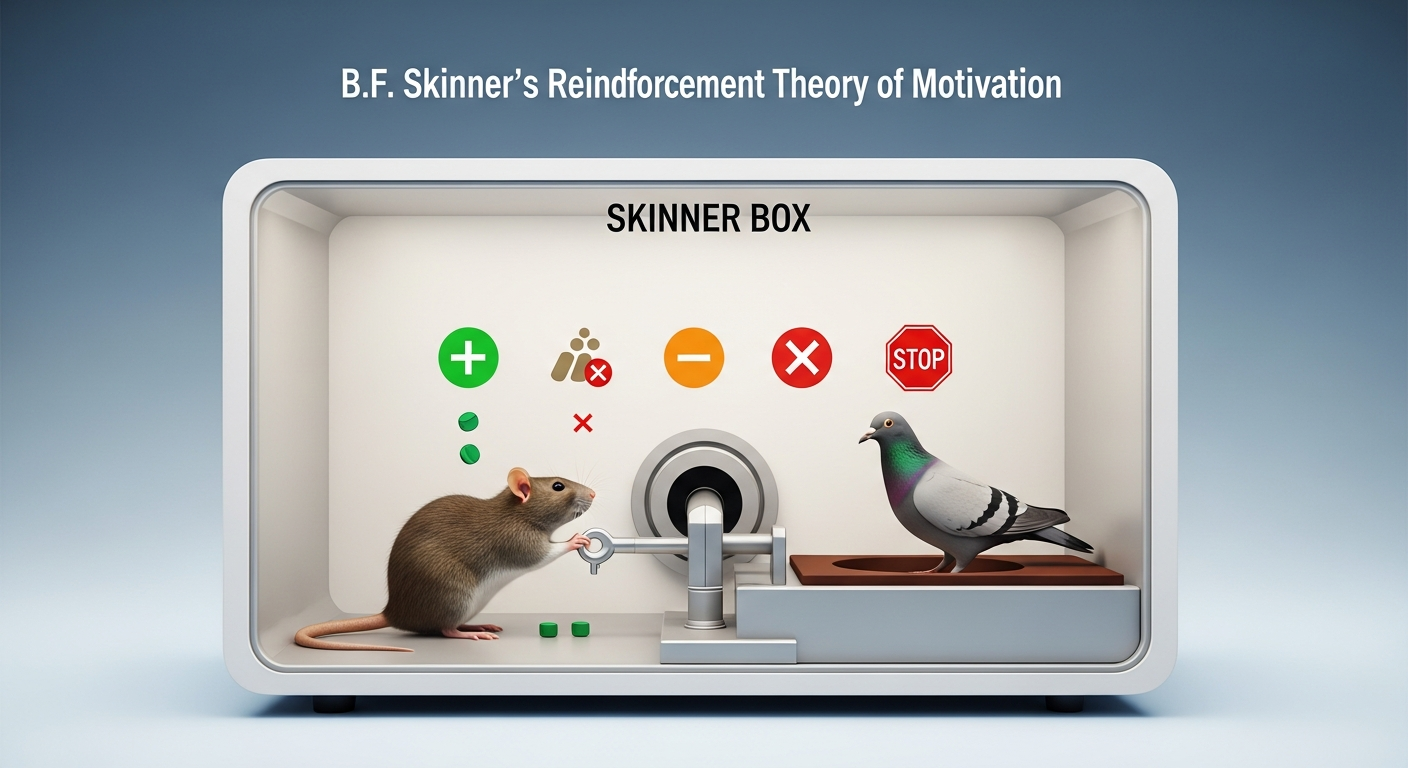
Mastering Motivation: Skinner's Reinforcement Theory in Modern L&D
For Vice Presidents, Directors, Senior Managers, and Managers of Learning & Development, the quest for highly motivated, consistently performing teams is perennial. In an era of rapid change, intricate compliance landscapes, and aggressive market demands across industries like Sales, Banking, Finance, Insurance, Retail, Pharma, Healthcare, Hospitality, Oil and Gas, and Mining, ensuring effective learning and behavioral change is paramount. While cutting-edge technology and innovative content strategies dominate L&D discussions, the foundational principles of human behavior often offer the most profound insights. Among these, B.F. Skinner’s Reinforcement Theory of Motivation stands as a timeless cornerstone, offering practical frameworks to shape desired behaviors, enhance engagement, and drive measurable results.
The Enduring Power of Operant Conditioning
B.F. Skinner, a titan in the field of psychology, revolutionized our understanding of behavior through his work on operant conditioning. His theory posits that an individual's behavior is a function of its consequences. Simply put, behaviors that are rewarded tend to be repeated, while those that lead to undesirable outcomes are likely to diminish. This isn't about manipulation, but about understanding the mechanisms that drive learning and sustained action. For L&D professionals, this provides a powerful lens through which to design training programs that not only impart knowledge but actively cultivate the behaviors essential for organizational success.
Understanding the Four Pillars of Reinforcement
Skinner identified four core components of operant conditioning, primarily focusing on reinforcement and punishment:
- Positive Reinforcement: This involves adding a desirable stimulus after a desired behavior occurs, increasing the likelihood of that behavior repeating. Think of praise, recognition, bonuses, or achieving a new certification. In a Gamified LMS, this could be points, badges, or leader board recognition for completing modules.
- Negative Reinforcement: This involves removing an undesirable stimulus after a desired behavior occurs, also increasing the likelihood of that behavior repeating. An example might be an employee completing a mandatory Risk-focused Training module to avoid further reminders or escalations. It’s important to note that "negative" here means removal, not bad.
- Positive Punishment: This involves adding an undesirable stimulus after an undesired behavior occurs, decreasing the likelihood of that behavior repeating. While effective in some contexts, its use in L&D must be approached with extreme caution, as it can foster resentment and anxiety.
- Negative Punishment: This involves removing a desirable stimulus after an undesired behavior occurs, decreasing the likelihood of that behavior repeating. An example could be revoking certain privileges due to non-compliance. Again, this is generally less favored in modern L&D due to its potential negative impact on morale.
In L&D, the emphasis is almost exclusively on positive and negative reinforcement, creating environments where desired actions are encouraged and sustained, rather than using punitive measures which can stifle innovation and engagement.
Applying Skinner's Theory in Modern L&D
The principles of reinforcement are incredibly versatile and can be integrated into virtually every aspect of your learning strategy:
Designing Engaging Learning Experiences
When designing an LMS or any learning content, consider how positive reinforcement can be woven in. Microlearning modules, delivered through a Microlearning LMS, offer frequent opportunities for positive reinforcement through immediate feedback. Think about:
- Immediate Feedback: Providing instant confirmation of correct answers or task completion.
- Progress Tracking: Visual indicators of progress (e.g., completion bars, levels) serve as powerful reinforcers.
- Gamification Elements: Points, badges, leaderboards, and virtual rewards create a competitive yet rewarding learning environment, especially effective within a Gamified LMS.
- Recognition Programs: Acknowledging top performers, certificated achievements, or consistent engagement.
- Adaptive Pathways: Adaptive Learning platforms can tailor content difficulty based on performance, offering a more challenging path as a reward for mastery, or extra support to prevent frustration (negative reinforcement).
Driving Compliance and Risk Management Training
For critical areas like compliance in Banking, Finance, Pharma, and Healthcare, Skinner’s theory is invaluable. By consistently reinforcing correct procedures and decision-making through scenarios and immediate feedback, L&D can ensure adherence. For instance, successfully navigating a simulated ethical dilemma in a Risk-focused Training program, leading to positive feedback, reinforces the correct behavior without the need for real-world failures. The avoidance of audit findings or regulatory penalties serves as a powerful negative reinforcer for proactive training.
Boosting Sales and Performance
In Sales and Retail, where motivation directly translates to revenue, reinforcement is key. Sales training can benefit immensely from systems that reward consistent effort, skill development, and successful conversions. An AI Powered Authoring Tool can help create dynamic, scenario-based training that provides immediate feedback, reinforcing effective sales techniques. Rewarding successful role-plays, sharing success stories, and tying learning outcomes to performance metrics are direct applications of Skinner's principles.
Leveraging Advanced Learning Platforms
Modern learning technologies are built to facilitate sophisticated reinforcement strategies. A robust learning management system (LMS) or a comprehensive learning content management system (LCMS) provides the infrastructure. Platforms like MaxLearn LMS exemplify how a cloud based learning management system can integrate these elements:
- Personalized Feedback Loops: Automating timely, specific, and actionable feedback.
- Achievement Recognition: Digital badges, certificates, and leaderboards that instantly acknowledge accomplishments.
- Progressive Skill Building: Structuring learning paths so that mastering one skill unlocks the next, providing an inherent reward.
- Performance-Linked Rewards: Integrating learning outcomes with real-world performance metrics for tangible incentives.
For any enterprise learning management initiative, selecting the right learning management software or learning management solutions that enable these reinforcement mechanisms is crucial.
AI-Driven Insights for Behavioral Reinforcement
The advent of artificial intelligence (AI) has significantly expanded our ability to apply Skinner's principles at scale and with unprecedented precision. AI doesn't just deliver content; it learns from learner interactions to optimize reinforcement.
Question: How can advanced algorithms tailor reinforcement strategies to individual learners within a global enterprise?
Answer: Intelligent systems analyze individual learning patterns, preferences, and performance data. This allows them to dynamically adjust the type, frequency, and intensity of positive reinforcement. For instance, one learner might respond best to gamified elements, while another might prefer detailed qualitative feedback. The system can identify these nuances and deliver personalized rewards, adaptive challenges, or targeted motivational messages, ensuring optimal engagement for each employee, regardless of their role or location.
Question: In what ways can digital platforms optimize motivational cues based on a user's operational environment or regional context?
Answer: AI-powered platforms can understand contextual variables, such as regional compliance differences, local market trends in Retail or Hospitality, or specific operational safety protocols in Oil and Gas or Mining. They can then deliver culturally relevant scenarios, localized examples, and performance benchmarks that resonate with the employee's specific work environment. This contextual relevance makes the reinforcement more potent and directly applicable, leading to more immediate and sustained behavioral change.
Question: How do intelligent systems help L&D identify and reinforce desired behaviors across large organizations?
Answer: By processing vast amounts of data from training interactions and real-world performance, AI can detect correlations between specific learning behaviors (e.g., consistent module completion, high scores in simulated scenarios) and desired organizational outcomes (e.g., improved sales figures, fewer compliance breaches, higher safety ratings). The system can then automate 'nudges,' positive feedback, or recognition for employees exhibiting these high-impact learning behaviors, effectively scaling reinforcement across thousands of employees and ensuring consistent alignment with strategic goals.
Challenges and Ethical Considerations
While powerful, applying Skinner's theory requires careful consideration. Over-reliance on extrinsic rewards can sometimes diminish intrinsic motivation. L&D leaders must ensure that reinforcement strategies complement, rather than replace, an organizational culture that values growth, autonomy, and purpose. The goal is to shape behavior for collective benefit without resorting to manipulation, fostering genuine engagement and a desire for continuous improvement.
Conclusion
B.F. Skinner’s Reinforcement Theory remains profoundly relevant for modern L&D. By systematically applying positive and negative reinforcement, organizations can create highly effective learning environments that drive desired behaviors, enhance skills, and ensure compliance across all industries. The intelligent integration of this theory with advanced learning management solutions and AI-powered tools offers an unparalleled opportunity for L&D leaders to optimize human potential and achieve strategic organizational objectives. Investing in a robust enterprise learning management platform that embraces these principles is not just about training; it's about systematically engineering success.
.jpg)


