

The Curve of Forgetting Definition: Mastering Memory in the Modern Enterprise
Imagine investing significant resources into training your employees – hours of valuable time, expert instructors, and sophisticated materials. Now, imagine a substantial portion of that learned knowledge vanishing within days, sometimes even hours. This isn't a hypothetical nightmare; it's a well-documented phenomenon known as the Curve of Forgetting. For organizations across high-stakes industries like Insurance, Finance, Retail, Banking, Mining, Health care, Oil and Gas, and Pharma, understanding and actively combating this natural memory decay isn't just an academic exercise; it's a critical strategy for performance, compliance, and growth.
In the dynamic landscape of today's business world, where information overload is common and continuous learning is non-negotiable, the Curve of Forgetting presents a formidable challenge. This article will delve into its definition, explore its profound implications for various industries, and unveil innovative, technology-driven strategies to flatten it, ensuring knowledge sticks and translates into lasting organizational success.
What is the Curve of Forgetting? The Science of Memory Decay
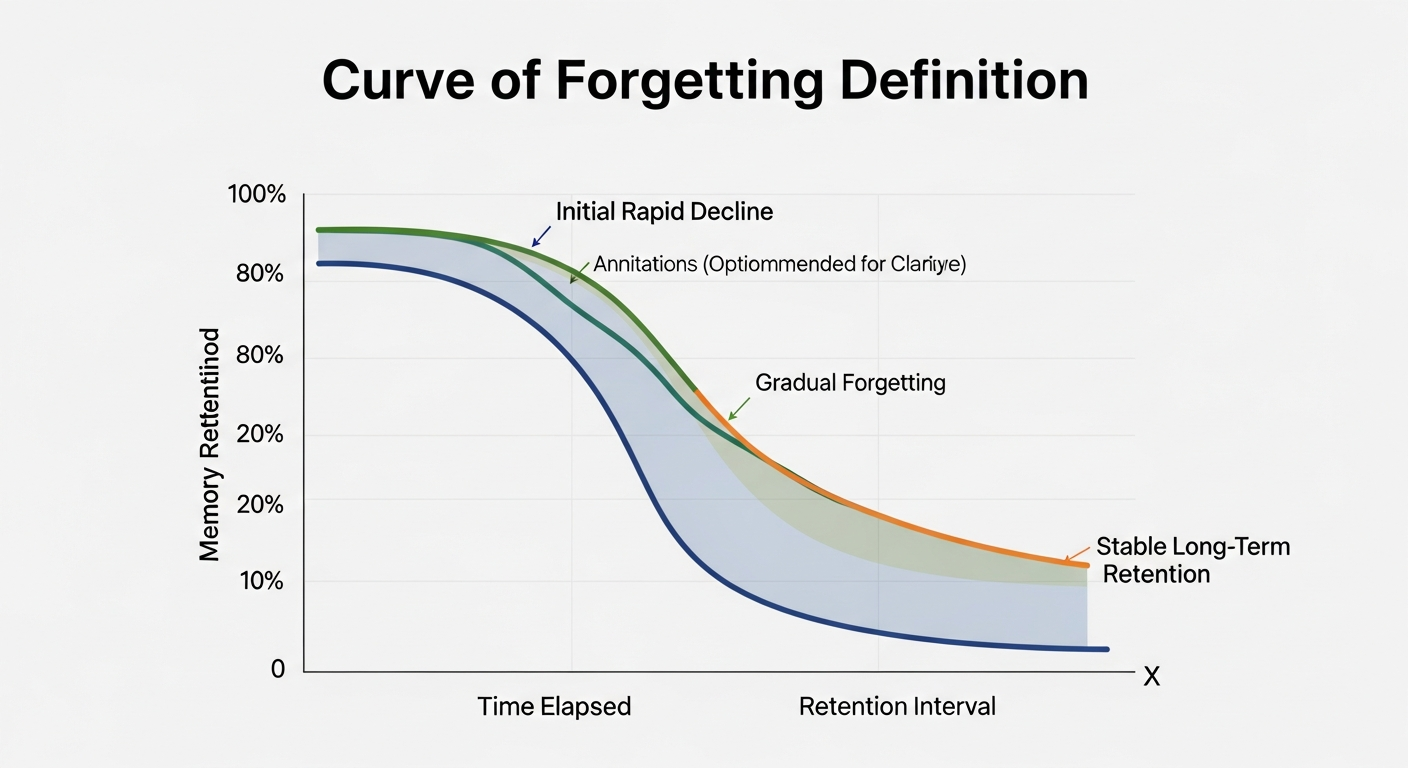
The concept of the Curve of Forgetting was first introduced by German psychologist Hermann Ebbinghaus in 1885. Through groundbreaking experiments on memory, Ebbinghaus discovered that immediately after learning new information, our ability to recall it declines rapidly over time if there is no attempt to retain it. His research showed a steep drop-off in retention, often losing 50% or more of newly acquired information within a day, and even more dramatically within the first week.
Essentially, the Curve of Forgetting illustrates the rate at which memories are lost over time. It's not a universal constant, however; its steepness can vary based on several factors:
- Meaningfulness of Information: Highly relevant or emotionally charged information is often remembered better.
- Presentation Quality: Engaging, well-structured, and visual content aids retention.
- Prior Knowledge: New information connected to existing knowledge is easier to store.
- Repetition and Rehearsal: Regularly revisiting material strengthens memory traces.
- Sleep and Stress: Adequate rest and reduced stress levels significantly improve memory consolidation.
For Learning & Development (L&D) professionals, recognizing the natural tendency for employees to forget is the first step toward building more effective training programs. It shifts the focus from merely delivering information to ensuring it's absorbed, retained, and applied.
Industry-Specific Impacts: Where Forgetting Costs the Most
The ramifications of the Curve of Forgetting are particularly severe in sectors where precision, compliance, safety, and customer satisfaction are paramount. The financial and operational costs associated with knowledge decay can be staggering.
Insurance and Finance: Navigating Regulatory Labyrinths
In Insurance and Finance, employees must stay abreast of complex regulatory changes, new product offerings, and evolving risk management protocols. A lapse in memory can lead to non-compliance fines, misinformed client advice, and significant financial losses. Forgetting about a specific compliance requirement or a nuanced product feature can have immediate, costly consequences.
Retail: Elevating Customer Experience and Sales
For retail associates, product knowledge, sales techniques, and customer service protocols are vital. If staff quickly forget details about inventory, promotions, or how to handle difficult customer scenarios, it directly impacts sales, customer satisfaction, and brand reputation. An ill-informed interaction can turn a potential sale into a lost customer.
Banking: Ensuring Security and Trust
Banking employees deal with sensitive financial data, strict security protocols, and intricate transaction processes. Forgetting a crucial step in fraud detection or failing to recall specific security measures can expose both the bank and its customers to significant risks, eroding trust and leading to financial liabilities.
Mining and Oil & Gas: Safety First, Always
In high-risk environments like Mining and Oil & Gas, forgetting safety procedures, equipment operation guidelines, or emergency protocols can have catastrophic consequences, leading to accidents, injuries, environmental damage, and even fatalities. Continuous, reinforced training is literally a matter of life and death.
Health care and Pharma: Precision in Patient Care
Health care professionals must retain vast amounts of information on diagnoses, treatment protocols, drug interactions, and patient care best practices. In the Pharma sector, compliance with drug development and manufacturing guidelines is non-negotiable. Forgetting critical information in these fields can compromise patient safety, lead to medical errors, and incur severe legal and ethical penalties.
Strategies to Flatten the Curve: Building Lasting Knowledge
Understanding the Curve of Forgetting is merely the starting point. The real challenge lies in implementing effective L&D strategies that actively combat memory decay and ensure information retention. Modern learning methodologies, often powered by advanced technology, offer powerful solutions.
1. Spaced Repetition: The Power of Timely Refreshers
This technique involves revisiting information at increasing intervals. Instead of one intense training session, concepts are reinforced over time, just before they are likely to be forgotten. This 'just-in-time' or 'just-enough' learning approach is highly effective for long-term retention.
2. Microlearning: Bite-Sized Knowledge Delivery
Breaking down complex information into short, focused modules (2-5 minutes) makes it easier for learners to digest and remember. This approach aligns perfectly with modern attention spans and busy work schedules. Platforms like MaxLearn Microlearning Platform are specifically designed to deliver content in this highly effective format, ideal for reinforcing key concepts across all industries.
3. Active Recall: Engaging the Brain
Instead of passively rereading material, active recall involves retrieving information from memory without prompts. This could be through quizzes, flashcards, or self-testing. Forcing the brain to retrieve information strengthens the memory trace, making it more accessible in the future.
4. Gamification: Making Learning Engaging
Incorporating game-like elements such as points, badges, leaderboards, and challenges into learning modules can significantly boost engagement and motivation. This makes the learning process enjoyable, leading to higher completion rates and better retention. A Gamified LMS transforms mundane training into an exciting experience, proving particularly effective in retail sales training or safety compliance for mining.
5. Adaptive Learning: Personalized Pathways to Retention
Not all learners are alike. Adaptive Learning systems adjust the learning path based on individual performance, knowledge gaps, and learning styles. If a learner struggles with a concept, the system provides additional resources or different explanations. If they master it quickly, they move on. This personalized approach ensures efficient learning and optimized retention.
6. AI-Powered Content Creation and Personalization
Artificial intelligence is revolutionizing how L&D content is created and delivered. An AI Powered Authoring Tool can help generate engaging microlearning content, personalize learning paths, and even predict when a learner might be about to forget a piece of information, triggering a timely reminder or refresher. This ensures content is always relevant and delivered at the optimal moment.
7. Contextual and Risk-focused Training: Relevance is Key
Learning is most effective when it's directly relevant to an employee's role and the challenges they face. Risk-focused Training, for example, prioritizes critical information related to safety, compliance, or high-stakes procedures. By making learning highly contextual, employees immediately see its value, which aids in retention and application.
Common Questions About Learning Retention in the Enterprise
What's the best approach to ensure staff retain critical information long-term?
The most effective approach combines several strategies: spaced repetition to reinforce knowledge over time, microlearning for digestible content, active recall through regular quizzes, and gamification to keep learners engaged. Leveraging an advanced learning platform that integrates these features is crucial for success.
How can businesses measure the effectiveness of their training in preventing knowledge decay?
Effective measurement involves more than just completion rates. Businesses should track post-training quiz scores, observe on-the-job application of skills, analyze performance metrics directly related to the training (e.g., error rates, compliance breaches), and conduct regular refresher assessments. Modern Learning Management Systems often provide analytics dashboards to monitor these key indicators.
Can intelligent systems truly help combat memory loss in professional training across different locations?
Absolutely. Advanced learning platforms, especially those integrating artificial intelligence, are highly effective. They can analyze individual learning patterns, predict forgetting points, and automatically deliver personalized refreshers. For organizations with geographically dispersed teams, these systems ensure consistent, high-quality training delivery and knowledge reinforcement, regardless of location.
Is it possible to make compliance training more engaging and memorable?
Yes, by transforming traditional, often dry, compliance modules into interactive, microlearning-based experiences. Incorporating real-world scenarios, gamified elements, and frequent, short quizzes powered by adaptive algorithms can make compliance training not just memorable, but also enjoyable and highly effective.
Conclusion: The Future of Knowledge Retention
The Curve of Forgetting is a fundamental aspect of human memory, but it doesn't have to be a barrier to organizational success. By understanding its mechanisms and proactively deploying intelligent, data-driven L&D strategies, businesses can significantly improve knowledge retention across all departments.
From ensuring critical safety protocols are ingrained in the minds of oil rig workers to guaranteeing financial advisors are up-to-date on the latest market regulations, flattening the curve is vital. Embracing modern learning methodologies, supported by powerful platforms that offer microlearning, gamification, adaptive learning, and AI-powered tools, is no longer a luxury but a strategic imperative. Investing in these solutions ensures that valuable knowledge not only reaches your employees but remains with them, driving continuous improvement, fostering innovation, and securing a competitive edge in an ever-evolving world.
.jpg)


