

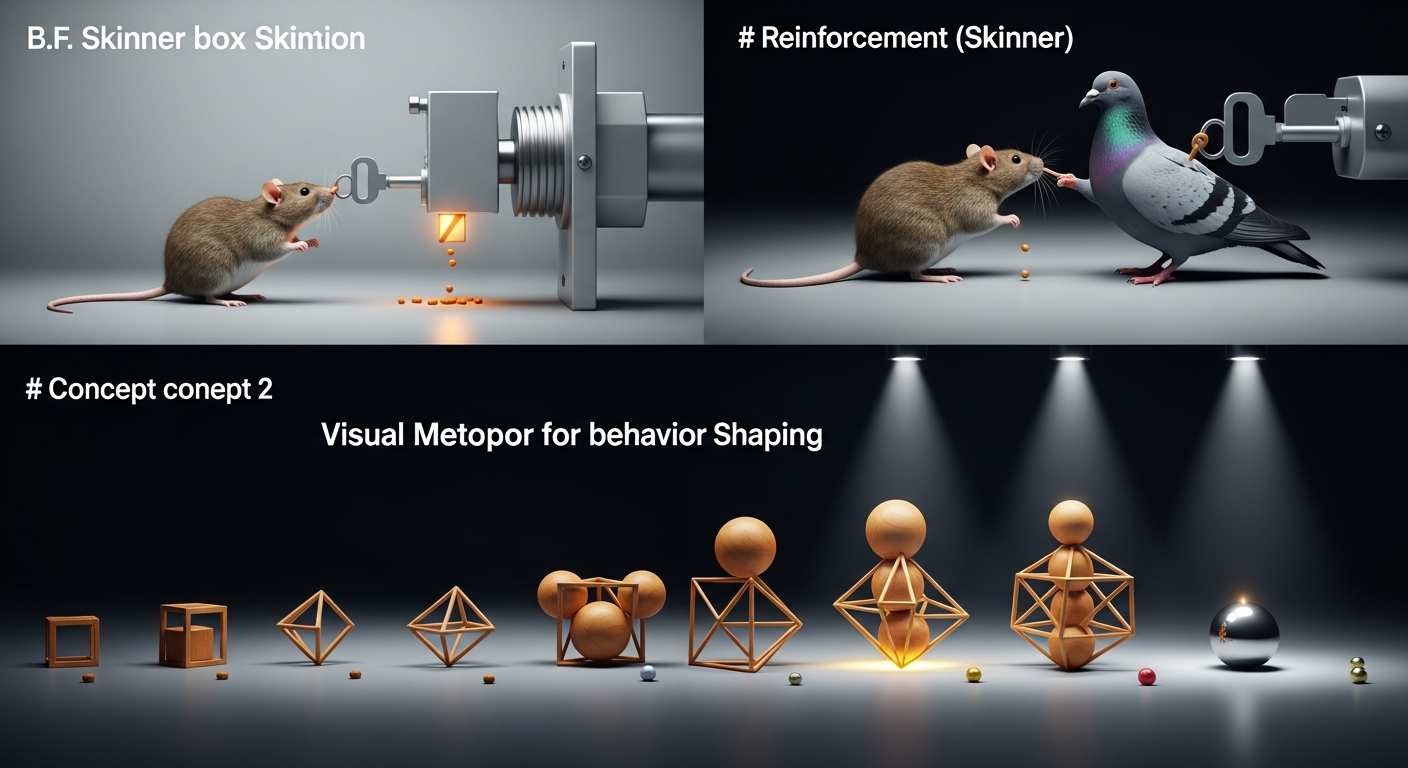
Reinforcement Skinner: Powering Modern L&D with Timeless Principles and AI
In the dynamic world of corporate learning and development, L&D Vice Presidents, Directors, and Senior Managers are constantly seeking effective strategies to enhance skill acquisition, drive compliance, and foster a culture of continuous improvement. While cutting-edge technologies like AI and sophisticated learning management solutions dominate discussions, the fundamental principles of human behavior, particularly those put forth by B.F. Skinner on reinforcement, remain profoundly relevant. Understanding and applying "Reinforcement Skinner" in today's eLearning landscape can unlock unprecedented levels of learner engagement and performance across industries from Banking to Healthcare, Retail to Oil and Gas.
The Enduring Power of Skinner's Reinforcement Theory
B.F. Skinner, a pioneer in behaviorism, introduced the concept of operant conditioning, which posits that behavior is a function of its consequences. Simply put, behaviors that are rewarded tend to be repeated, while those that lead to undesirable outcomes tend to diminish. This isn't just about simple rewards; it's a sophisticated system for shaping behavior through:
- Positive Reinforcement: Presenting a desirable stimulus after a behavior to increase the likelihood of that behavior occurring again. In L&D, this could be immediate feedback, points, badges, or recognition for completing a module or demonstrating a new skill.
- Negative Reinforcement: Removing an undesirable stimulus after a behavior to increase the likelihood of that behavior recurring. For example, completing a mandatory compliance module might remove a pending notification or a compliance risk flag.
- Punishment: Applying an undesirable consequence or removing a desirable one to decrease a behavior. While less common in positive L&D contexts, understanding it helps L&D professionals design systems that avoid unintended negative consequences.
For L&D leaders, the practical implication is clear: intentionally design learning experiences where desired behaviors (e.g., engaging with content, mastering a skill, adhering to policy) are consistently and appropriately reinforced. This forms the bedrock for effective training in complex sectors like Finance, Pharma, and Mining, where precision and retention are paramount.
Integrating Reinforcement Skinner into eLearning Strategies
Modern eLearning offers fertile ground for applying Skinner's principles, leading to more engaging and effective learning outcomes. Here’s how:
Microlearning and Spaced Repetition
Breaking down complex topics into digestible Microlearning LMS modules allows for frequent, immediate reinforcement. After each short module or concept, learners receive immediate feedback, quizzes, or small rewards, solidifying their understanding. Spaced repetition algorithms, often integrated into a sophisticated LMS, schedule re-exposure to content just as forgetting begins, acting as a powerful reinforcement mechanism for long-term retention. This is particularly vital for industries like Compliance and Insurance, where recalling critical information is essential.
Gamification and Rewards
The rise of Gamified LMS environments is a direct application of Skinnerian principles. Points, badges, leaderboards, and virtual rewards provide consistent positive reinforcement for active participation, correct answers, and progress. These elements tap into intrinsic motivation while providing external motivators that encourage learners to push through challenges, master new skills, and even compete with peers, fostering a vibrant learning culture in Sales, Hospitality, and other competitive fields.
Adaptive Feedback Loops
Immediate and constructive feedback is a cornerstone of effective reinforcement. In eLearning, this means more than just "right" or "wrong." It involves providing explanations, guiding learners to correct resources, and offering tailored suggestions. Adaptive Learning platforms take this a step further by dynamically adjusting the learning path based on a learner's performance, reinforcing successful learning while providing additional support where needed. This ensures every learner receives the optimal reinforcement strategy.
AI's Transformative Impact on Reinforcement Strategies
The advent of artificial intelligence has propelled the application of reinforcement principles into a new era, offering unprecedented personalization and predictive capabilities for enterprise learning management.
Enhancing Personalized Reinforcement
Question: How can technology predict learning needs and provide timely interventions to optimize individual skill development?
Answer: Artificial intelligence in an lms learning management system analyzes vast amounts of learner data – their past performance, engagement patterns, time spent on topics, and even professional roles. This allows the system to identify potential knowledge gaps before they become critical. An AI Powered Authoring Tool can then automatically generate or suggest personalized content, quizzes, or practice scenarios. For instance, if a sales professional consistently struggles with a particular product feature, AI can push targeted micro-modules or simulations, providing immediate reinforcement for correct understanding and application. This proactive, data-driven approach to positive reinforcement is a game-changer for skill mastery across all segments.
Ensuring Global Consistency and Cultural Nuance
Question: Can artificial intelligence help ensure consistent reinforcement across diverse global teams while respecting local contexts and operational differences?
Answer: For multinational organizations in Oil and Gas, Banking, or Pharma, maintaining consistent training standards globally while accommodating local cultural nuances is a significant challenge. An advanced cloud based learning management system leverages AI to analyze regional performance data and learner feedback. It can identify where specific content resonates or falls flat in different geographical areas. AI can assist in localizing content, translating and adapting examples to be culturally relevant, thus ensuring that reinforcement mechanisms (like scenario-based training or performance feedback) are equally effective and well-received regardless of location. This capability within a comprehensive Learning content management system strengthens global knowledge transfer and compliance without alienating local workforces.
Optimizing Training for Critical Areas
Question: What innovative methods can improve the effectiveness of training for critical areas like compliance and risk management, given their high stakes?
Answer: In industries like Insurance, Pharma, and Mining, errors in compliance or risk management can have severe repercussions. AI-driven simulation platforms, integrated into a robust learning management software, provide realistic, consequence-free environments for practicing critical decision-making. AI can offer instant, detailed feedback on choices made within these simulations, reinforcing correct procedures and highlighting potential pitfalls. This type of Risk-focused Training, often facilitated by an advanced Learning management system, is a powerful form of negative reinforcement, showing learners the adverse outcomes of incorrect actions without real-world consequences, thereby shaping safer and more compliant behaviors.
Benefits for L&D Leaders
By thoughtfully applying "Reinforcement Skinner" principles, augmented by AI and modern MaxLearn LMS solutions, L&D leaders can expect:
- Increased Engagement and Retention: Learners are more motivated to participate and retain information when their efforts are consistently acknowledged and rewarded.
- Faster Skill Mastery: Targeted, immediate feedback and adaptive paths accelerate the learning curve.
- Improved Compliance Rates: Clear reinforcement of desired behaviors in critical areas reduces errors and ensures adherence to regulations.
- Higher ROI on Training: Effective training translates directly into improved employee performance and business outcomes.
- Data-Driven Optimization: AI provides insights to continuously refine reinforcement strategies, making learning management solutions more effective over time.
Conclusion
The foundational work of B.F. Skinner on reinforcement remains incredibly relevant, offering timeless insights into how humans learn and adapt. For L&D Vice Presidents, Directors, and Senior Managers, the challenge and opportunity lie in strategically integrating these principles with the power of modern eLearning technologies and artificial intelligence. By doing so, organizations can create truly impactful and engaging learning experiences that not only meet immediate training needs but also cultivate a culture of continuous learning and high performance, propelled by intelligent reinforcement.
.jpg)


