

Mastering Memory: How to Conquer the Curve of Forgetting in L&D
In the relentless pace of modern business, knowledge is paramount. Yet, a silent force constantly works against us, threatening to erase even the most robust training efforts: the Curve of Forgetting. First described by German psychologist Hermann Ebbinghaus over a century ago, this fundamental principle reveals how quickly newly acquired information slips from our memory if not reinforced. For Learning & Development (L&D) professionals across vital sectors like Insurance, Finance, Retail, Banking, Mining, Healthcare, Oil and Gas, and Pharma, understanding and actively combating this curve is a critical strategy for operational excellence, compliance, and sustained growth.
Understanding the Silent Erosion: The Curve of Forgetting
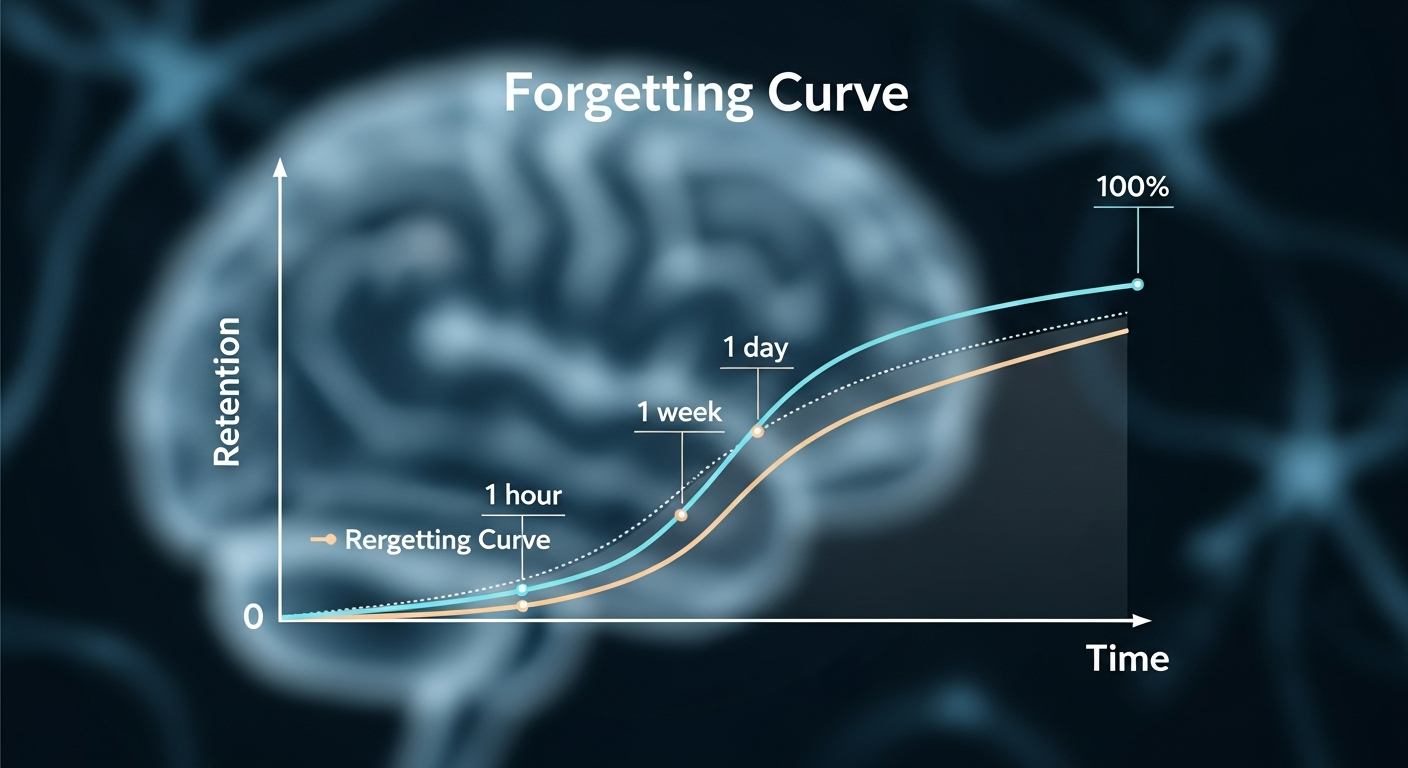
Ebbinghaus's research demonstrated that within just one hour, we forget approximately 50% of new information without active retention efforts. Within 24 hours, this figure can rise to 70%, and after a week, it might be as high as 90%. Imagine the implications for traditional, one-off training: employees spend hours absorbing vital skills or complex regulations, only for a significant portion to vanish within days. This leads to wasted resources, critical skill gaps, and increased risk.
The Cost of Forgetting in Key Industries
The economic and operational impact of forgotten knowledge is profound and tangible:
- Healthcare: Forgotten protocols lead to medical errors, impacting patient safety and increasing liability.
- Finance & Banking: Overlooked regulatory changes result in non-compliance, fines, and reputational damage.
- Mining & Oil and Gas: Failure to recall safety procedures causes catastrophic accidents and environmental harm.
- Pharma: Sales representatives lacking drug information hinder sales and misinform prescribers.
- Insurance: Agents unable to articulate policy terms lead to lost sales and eroded customer trust.
- Retail: Staff forgetting product features results in poor customer experiences and lost revenue.
These scenarios highlight the urgent need for L&D strategies that ensure lasting knowledge retention.
Bending the Curve: Modern Strategies for Enhanced Retention
The Curve of Forgetting is not an inevitable fate. Through strategic instructional design and innovative technology, L&D departments can significantly mitigate its effects. Proven strategies include:
Microlearning: Bitesize Knowledge for Better Retention
Breaking down complex content into short, focused microlearning modules aligns perfectly with modern attention spans. Learners absorb key concepts quickly, making reinforcement highly effective. Platforms like MaxLearn Microlearning Platform are ideal for delivering content in this digestible format, ensuring knowledge is retained, not just consumed.
Spaced Repetition: Strategic Reinforcement Over Time
This powerful technique involves revisiting information at calculated, increasing intervals. Learners encounter key concepts multiple times over days or weeks, effectively transferring information from short-term to long-term memory. Integrated quizzes and interactive exercises are excellent tools for applying spaced repetition.
Gamification: Engaging Learning That Sticks
Incorporating game-like elements—points, badges, leaderboards, and challenges—transforms learning into an engaging experience. Gamification boosts motivation, encouraging frequent interaction with content, which supports spaced repetition and deeper processing. A Gamified LMS can dramatically increase participation and knowledge retention.
Adaptive Learning: Personalized Paths to Mastery
Recognizing unique learner needs, adaptive learning systems use data and algorithms to tailor the educational experience. If a learner struggles, the system provides additional resources; mastery allows quicker progression. This personalized approach ensures efficient learning and targeted remediation, significantly improving retention. Discover the methodology behind Adaptive Learning.
Leveraging AI to Supercharge Knowledge Retention
Artificial Intelligence (AI) has revolutionized how L&D can combat the forgetting curve, offering unparalleled capabilities for personalization, efficiency, and effectiveness.
Addressing Key Questions on AI in L&D:
-
How does advanced technology specifically counter the forgetting curve in corporate training?
AI-driven platforms analyze learner data to predict memory decay, then proactively deliver personalized refreshers or microlearning modules at optimal intervals, directly addressing predicted forgetting. -
What is the ROI of investing in retention-focused training solutions powered by AI?
Substantial. Higher retention reduces errors, improves compliance, boosts productivity, and enhances customer satisfaction. In high-stakes industries, this translates to reduced risk, fewer incidents, and significant cost savings, making AI-powered L&D a strategic investment. -
How do organizations around the globe implement technology to improve knowledge decay?
Globally, organizations adopt cloud-based, AI-integrated learning platforms. These offer personalized learning paths and data analytics, enabling consistent, high-quality training across diverse regions while tracking progress to address knowledge gaps efficiently. -
Can AI help create more effective training materials faster?
Yes. An AI Powered Authoring Tool dramatically accelerates content development. It assists in generating quizzes, summaries, and adapting material into engaging microlearning formats, optimizing for engagement and retention.
Strategic Focus: Risk-Aware Training with AI
For industries where forgotten knowledge has severe consequences, AI enables truly Risk-focused Training. AI identifies individuals or departments most vulnerable to knowledge gaps (e.g., compliance, safety). It then delivers targeted, mandatory refreshers, ensuring high-risk areas are consistently reinforced, minimizing liabilities and fostering a resilient workforce.
Conclusion: The Future of Learning is Retention
The Curve of Forgetting remains a fundamental human challenge, but it is no longer an insurmountable barrier. By integrating modern L&D methodologies—microlearning, spaced repetition, gamification, and adaptive learning—and amplifying their impact with advanced AI technology, organizations can move beyond mere training delivery to truly embedding knowledge. This transformation elevates L&D to a strategic driver of performance, compliance, and innovation across all industries. Investing in solutions that prioritize long-term retention is investing in a more skilled, safer, and ultimately more successful future for your workforce and your business.
.jpg)


