

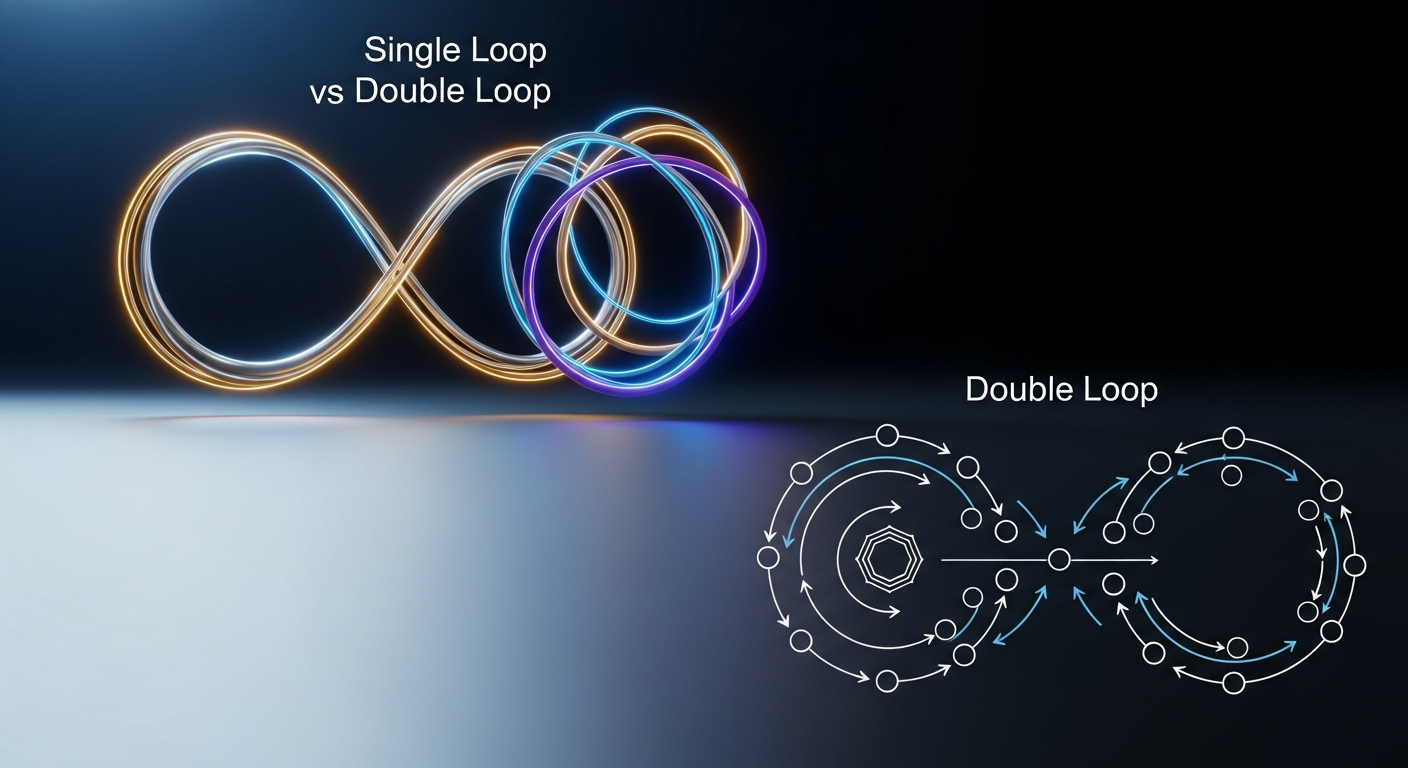
Single-Loop Vs. Double-Loop Learning: Driving Deeper Organizational Transformation in L&D
In the dynamic landscape of modern business, learning and development (L&D) leaders face a perpetual challenge: how to not just keep pace, but to proactively shape the future of their organizations. This requires more than just updating training modules; it demands a fundamental shift in how we approach problem-solving and strategic evolution. At the heart of this distinction lie two powerful concepts: single-loop learning and double-loop learning.
For Vice Presidents, Directors, Senior Managers, and Managers of L&D across industries like Compliance, Sales, Banking, Finance, Insurance, Retail, Pharma, Healthcare, Hospitality, Oil and Gas, and Mining, understanding these two modes of learning is not merely academic. It's crucial for designing effective training programs, fostering innovation, ensuring robust compliance, and ultimately, driving sustainable organizational growth.
Understanding Single-Loop Learning: The "Fix-It" Approach
Single-loop learning is akin to a thermostat. When the room gets too cold, the thermostat registers the deviation from the desired temperature and switches on the heater. The system learns to correct the error by adjusting its actions within a set of existing governing variables or rules. It asks, "Are we doing things right?"
-
What it is:
This type of learning involves detecting and correcting errors without questioning the underlying assumptions, policies, or goals of the system itself. It focuses on improving efficiency and effectiveness within the current framework. Think of it as refining existing processes or skills.
-
L&D Examples:
- Updating a sales training module to reflect new product features or a revised script, without questioning the overall sales methodology.
- Providing refresher compliance training on a specific regulation after an audit reveals minor procedural errors, rather than re-evaluating the entire compliance framework.
- Implementing a new software tutorial because employees are struggling with a specific feature, without exploring if the software itself is the best fit for the workflow.
-
Benefits:
- Efficiency: Quick correction of immediate problems.
- Practicality: Focuses on tangible, measurable improvements.
- Stability: Maintains existing structures and norms.
-
Limitations:
- Surface-Level Change: Doesn't address root causes.
- Lack of Innovation: Fails to challenge established norms or spark transformative ideas.
- Reinforces Status Quo: Can lead to organizational rigidity and an inability to adapt to fundamental shifts.
Understanding Double-Loop Learning: The Transformative Inquiry
Double-loop learning, in contrast, questions the very design of the thermostat. It asks, "Why is the room getting cold in the first place? Is our current heating system adequate? Do we even need a thermostat, or is there a better way to manage climate control?" It challenges the governing variables themselves. It asks, "Are we doing the right things?"
-
What it is:
This more profound form of learning involves questioning and potentially modifying the underlying values, assumptions, policies, and goals that guide action. It's about systemic change, critical reflection, and a willingness to reinvent. It seeks to understand why errors occur, not just how to fix them.
-
L&D Examples:
- Redesigning the entire sales training strategy after realizing that the previous customer engagement model is outdated and no longer effective in the market, even if individual sales skills were strong.
- Overhauling a company's entire compliance culture and training approach, moving beyond reactive policy updates to embed ethical decision-making and proactive risk identification at every level, particularly vital in sectors like Banking or Pharma.
- Implementing a new Microlearning LMS and Gamified LMS after a deep analysis reveals traditional e-learning methods are failing to engage modern learners and don't support continuous skill development effectively.
-
Benefits:
- Innovation: Fosters radical solutions and new ways of thinking.
- Systemic Change: Addresses root causes, leading to lasting improvements.
- Resilience: Equips organizations to adapt to unforeseen challenges and paradigm shifts.
- Strategic Advantage: Leads to truly differentiated practices and competitive edge.
-
Challenges:
- Time and Resource Intensive: Requires significant investment in reflection and experimentation.
- Resistance to Change: Challenges deeply held beliefs and power structures.
- Requires Psychological Safety: People must feel safe to question norms and admit errors without fear of reprisal.
The Critical Distinction for L&D Leaders
For L&D VPs, Directors, and Managers, the choice isn't necessarily single-loop or double-loop. Both are essential. However, true strategic leadership lies in knowing when and how to engage in double-loop learning, particularly in high-stakes environments like Healthcare or Oil and Gas where safety and compliance are paramount.
Reliance solely on single-loop learning can lead to what Peter Senge calls the "boiled frog" syndrome – gradual deterioration that goes unnoticed until it's too late. Organizations may become highly efficient at doing the wrong things.
Embracing double-loop learning means:
- Challenging the efficacy of current training methodologies.
- Re-evaluating the fundamental assumptions behind talent development strategies.
- Questioning if the organization's learning culture truly supports future business goals and industry disruptions.
- Moving beyond merely fixing symptoms of poor performance or compliance breaches to transforming the underlying systems and beliefs that create them.
Integrating Advanced Technology for Deeper Learning
In today's digitally driven world, intelligent systems play a pivotal role in facilitating both types of learning, especially guiding us towards deeper, double-loop insights.
How can advanced analytics inform our L&D strategy for systemic improvement?
Intelligent platforms can analyze vast datasets from learning interactions, performance metrics, and business outcomes. They move beyond simply reporting completion rates to identifying subtle patterns, correlations, and causal links that human observation might miss. For instance, in Retail or Hospitality, advanced analytics might reveal that customer service issues aren't just about individual employee skill gaps (single-loop), but about a fundamental flaw in the onboarding process or the organizational reward system (double-loop). This allows L&D to pinpoint the root causes of underperformance or inefficiency, enabling a shift from reactive fixes to proactive, transformative interventions.
What predictive capabilities does intelligent technology offer for anticipating future skill gaps and compliance risks?
Predictive algorithms can analyze industry trends, regulatory changes, and internal performance data to forecast future skill demands or potential compliance vulnerabilities. Imagine an intelligent system flagging an emerging risk in the Finance or Insurance sector and, instead of just suggesting a new policy update, prompting L&D to reconsider the entire ethical decision-making framework or to develop new cross-functional competencies. This forward-looking intelligence facilitates Risk-focused Training, pushing organizations to question current assumptions about future readiness and strategically adapt their learning ecosystems before crises emerge.
How can personalized learning paths foster a culture of continuous questioning and adaptive performance?
Tailored learning experiences, powered by advanced algorithms, can encourage learners to think critically and challenge existing norms. Rather than a one-size-fits-all approach, platforms leveraging Adaptive Learning can present content and challenges specifically designed to provoke deeper thought, simulate complex scenarios, and encourage questioning of established practices. An AI Powered Authoring Tool can even help create content that specifically targets critical thinking and problem-solving skills, empowering employees to identify and articulate systemic issues rather than just follow procedures. This personalization supports the development of a workforce that is not only skilled but also reflective and innovative, essential for navigating rapid change in any industry.
Practical Application: Shifting Towards Double-Loop Thinking
To foster double-loop learning within your organization, consider these strategies:
- Cultivate a Culture of Inquiry: Encourage employees at all levels to ask "why" and "what if." Promote psychological safety where challenging the status quo is valued, not penalized.
- Implement Reflective Practices: Integrate structured reflection, post-mortems, and "lessons learned" sessions into L&D programs, focusing not just on what happened, but on the underlying assumptions that led to those outcomes.
- Utilize Data Strategically: Leverage analytics not just for reporting, but for deep diagnostic analysis. Look for patterns, anomalies, and correlations that point to systemic issues.
- Design for Experimentation: Support pilot programs, A/B testing, and iterative development in training design. Be willing to test new approaches and abandon those that don't yield transformative results.
- Empower Frontline Workers: They often have the most direct insights into operational flaws. Create mechanisms for their insights to feed into strategic L&D decisions.
Conclusion
Both single-loop and double-loop learning are vital for organizational health. Single-loop learning ensures operational efficiency and adherence to existing standards, while double-loop learning fuels innovation, strategic resilience, and true adaptation. For L&D leaders, the challenge—and the opportunity—lies in intentionally fostering an environment where both can thrive. By strategically leveraging advanced eLearning tools and embracing a culture of continuous inquiry, L&D can move beyond mere training delivery to become a powerful catalyst for profound and sustainable organizational transformation.
.jpg)


