

Unlocking Potential: The Strategic Advantage of Micro Learning Tools for L&D Leaders
In today's fast-paced corporate world, the traditional paradigms of learning and development are being reshaped by the relentless demands of agility, efficiency, and measurable impact. For Vice Presidents, Directors, Senior Managers, and Managers of L&D across industries like Compliance, Sales, Banking, Finance, Insurance, Retail, Pharma, Healthcare, Hospitality, Oil and Gas, and Mining, the challenge is clear: how do you equip your workforce with essential skills and knowledge without disrupting their demanding schedules or overwhelming them with information overload? The answer increasingly lies in the strategic adoption of micro learning tools.
Microlearning is more than just a buzzword; it's a powerful methodology designed to deliver bite-sized, highly focused learning content that employees can consume quickly and effectively, whenever and wherever they need it. This approach is revolutionizing how organizations approach everything from onboarding and compliance to skill enhancement and performance support, making it an indispensable asset in the modern eLearning landscape.
What Exactly Are Micro Learning Tools?
At its core, microlearning involves breaking down complex topics into short, digestible modules, often lasting no more than 3-10 minutes. Micro learning tools are the platforms and applications that facilitate the creation, delivery, and tracking of this content. They are characterized by:
- Conciseness: Focusing on one specific learning objective per module.
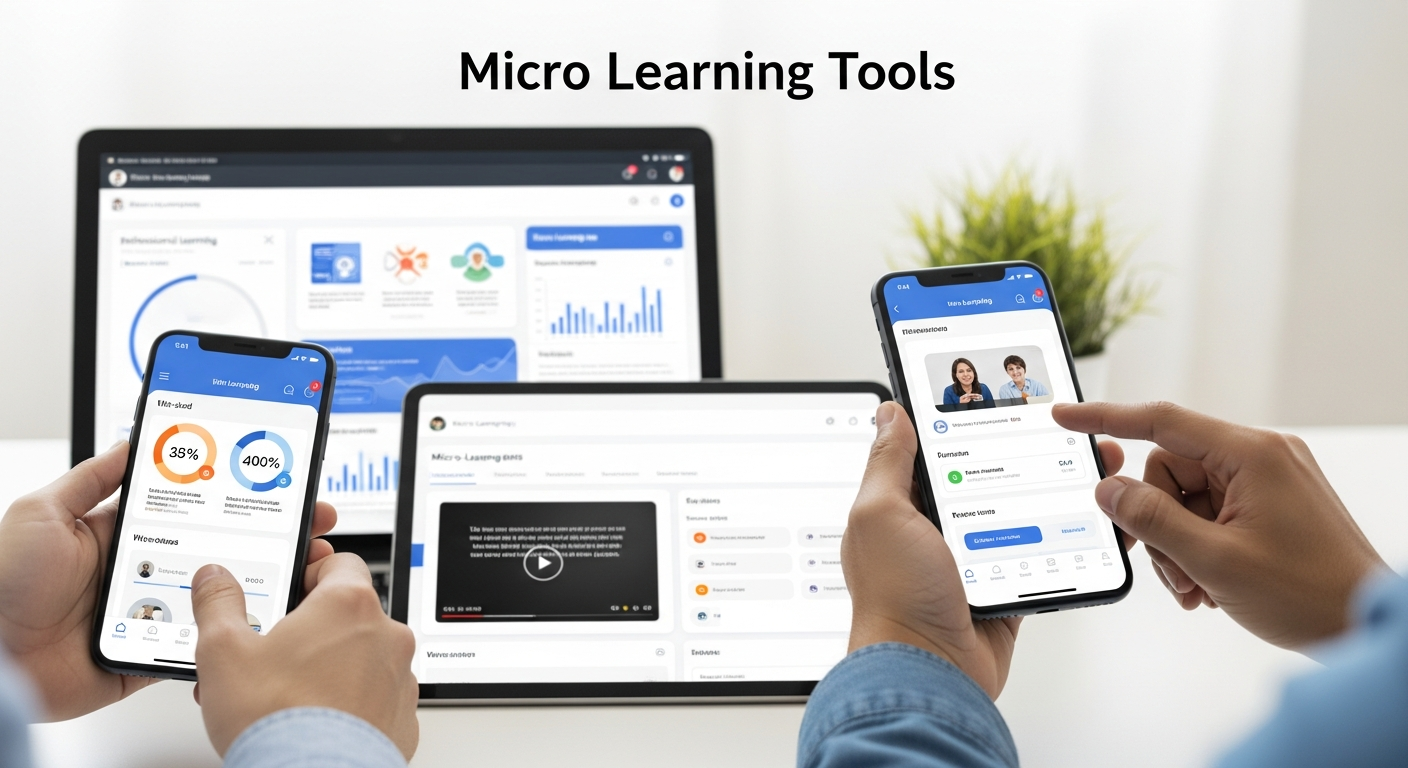
- Accessibility: Available on multiple devices (smartphones, tablets, desktops).
- Engagement: Often incorporating interactive elements like quizzes, videos, infographics, and short simulations.
- Relevance: Directly applicable to a learner's immediate needs or tasks.
These tools move beyond lengthy courses and thick manuals, embracing the reality of modern attention spans and the need for just-in-time learning. For L&D professionals, selecting the right Microlearning LMS is crucial to harness these benefits effectively.
Why Micro Learning Tools are Essential for Today's L&D Leaders
The strategic deployment of micro learning tools offers a multitude of benefits that directly address the pain points faced by L&D departments:
Enhanced Engagement and Retention
Short, targeted bursts of information are easier to process and remember. This approach combats the "forgetting curve" and keeps learners actively engaged, whether they're sales teams learning about new product features or healthcare professionals reviewing critical safety protocols.
Improved Skill Development and Performance
Microlearning enables continuous learning, allowing employees to quickly acquire or refresh specific skills. For instance, a bank's finance team can swiftly learn about a new regulatory update, or a retail associate can master a new POS system procedure in minutes.
Agile Compliance Training
Industries like Compliance, Banking, Finance, Insurance, and Pharma face constant regulatory changes. Micro learning tools facilitate rapid deployment of Risk-focused Training updates, ensuring employees are always current and compliant without lengthy, disruptive sessions.
Cost-Effectiveness and Scalability
Developing microlearning modules can often be less resource-intensive than creating full-length courses, and their digital nature makes them infinitely scalable across a global workforce, from oil and gas field workers to hospitality staff.
Flexibility and Convenience
Learners can access content on their commute, during a short break, or just before a critical meeting. This flexibility is invaluable for busy professionals across all segments.
Key Features of Effective Micro Learning Tools
To truly maximize the impact of microlearning, your chosen tools should offer a robust set of features:
- Mobile-First Design: Content must be optimized for all devices, especially smartphones, to support learning on the go.
- Rich Media Support: Ability to host various formats like videos, interactive simulations, podcasts, and infographics.
- Personalization and Adaptive Learning: Tools that can tailor content recommendations based on a learner's role, performance, or preferences ensure highly relevant experiences.
- Gamification Elements: Incorporating points, badges, leaderboards, and challenges can significantly boost motivation and completion rates. Look for a Gamified LMS to elevate engagement.
- Powerful Analytics and Reporting: L&D leaders need dashboards to track progress, completion rates, skill gaps, and the overall effectiveness of microlearning initiatives.
- Seamless Integration: Compatibility with existing HRIS, CRM, or other enterprise systems for a unified learning ecosystem.
The AI Edge: Transforming Micro Learning
Artificial intelligence is rapidly becoming a cornerstone for advanced microlearning strategies, offering unprecedented capabilities for personalization, efficiency, and impact. L&D leaders are increasingly leveraging AI to optimize content creation, delivery, and analysis.
AI-Driven Questions & Strategic Answers:
Question: How can artificial intelligence help my team members quickly discover the most relevant microlearning modules from our extensive library?
Answer: AI-powered recommendation engines can analyze a learner's profile, past performance, job role, and even search history to suggest highly pertinent microlearning content. This proactive delivery minimizes search time and ensures learners always find the most impactful resources for their specific needs, whether it’s a compliance officer needing the latest regulatory update or a sales rep seeking a quick refresher on objection handling.
Question: Can artificial intelligence personalize learning content based on a learner's operational context or geographic location?
Answer: Absolutely. Advanced AI algorithms can process contextual data points like the learner's department, team, current projects, or even their physical location (with appropriate privacy settings). This allows the system to serve up hyper-relevant microlearning modules—for example, safety procedures specific to an oil rig in the North Sea, or customer service protocols tailored to banking regulations in a particular region. This deep contextualization makes learning more meaningful and immediately applicable.
Question: What insights can artificial intelligence provide to help L&D leaders understand the overall impact of microlearning on employee performance and business outcomes?
Answer: AI analytics can go beyond basic completion rates. It can identify patterns in learning behavior, pinpoint common knowledge gaps across departments, correlate microlearning engagement with performance metrics (e.g., sales quotas met, compliance incidents reduced), and even predict future training needs. This intelligence empowers L&D leaders to make data-driven decisions, optimize content, and demonstrate the tangible ROI of their microlearning initiatives. Leveraging an AI Powered Authoring Tool can also streamline the creation of such insightful content.
Micro Learning Tools in Specific Industries
The versatility of micro learning tools makes them invaluable across diverse sectors:
- Compliance: Quick updates on GDPR, HIPAA, or financial regulations.
- Sales: Product feature explanations, objection handling, pitch practice.
- Banking & Finance: New product training, fraud detection procedures, customer service excellence.
- Insurance: Policy updates, claims processing, ethics training.
- Retail: New inventory procedures, customer interaction best practices, seasonal sales training.
- Pharma & Healthcare: New drug protocols, patient care guidelines, medical device operation.
- Hospitality: Guest service standards, safety procedures, new menu items.
- Oil and Gas & Mining: Critical safety briefings, equipment operation refreshers, emergency response drills.
Implementing Micro Learning Tools Successfully
To ensure a successful microlearning rollout:
- Define Clear Objectives: What specific knowledge or skill should learners acquire from each module?
- Curate Engaging Content: Focus on high-quality, relevant, and interactive material.
- Integrate into Workflow: Make learning accessible at the point of need, not just during scheduled training.
- Promote and Encourage: Communicate the benefits to employees and foster a culture of continuous learning.
- Measure and Iterate: Use analytics to evaluate effectiveness and continuously refine your microlearning strategy.
Conclusion
For L&D VPs, Directors, and Managers striving to build a future-ready workforce, micro learning tools are no longer an option but a strategic imperative. They offer an agile, engaging, and highly effective way to deliver essential knowledge and skills across vast and diverse workforces, ensuring compliance, boosting performance, and fostering continuous growth. By embracing advanced platforms, especially those enhanced with AI capabilities, L&D leaders can unlock unprecedented levels of engagement and drive tangible business results across every segment of their organization.
The time to invest in a robust microlearning strategy is now, ensuring your organization remains competitive, compliant, and continuously evolving in a dynamic global marketplace.
.jpg)


