

Mastering the Forgetting Curve: The Power of the Spaced Repetition Algorithm in Corporate Learning
In the fast-paced world of corporate learning and development, the challenge isn't just delivering information; it's ensuring that information sticks. L&D Vice Presidents, Directors, and Managers across industries like Compliance, Sales, Banking, Finance, Insurance, Retail, Pharma, Healthcare, Hospitality, Oil and Gas, and Mining constantly grapple with the "forgetting curve" – the natural decline of memory retention over time. Traditional training methods often fall short, leading to wasted resources and knowledge gaps that impact performance, compliance, and ultimately, the bottom line.
Enter the Spaced Repetition Algorithm. This scientifically-backed methodology is not a new concept, but its sophisticated integration into modern eLearning platforms is revolutionizing how organizations approach continuous learning. By strategically re-exposing learners to content at increasing intervals, spaced repetition transforms passive learning into active, reinforced knowledge, ensuring critical information is not just learned, but truly mastered.
What Exactly is the Spaced Repetition Algorithm?
At its core, a Spaced Repetition Algorithm is an intelligent scheduling system designed to optimize the review of learned material. Instead of cramming all information at once or reviewing content at fixed, arbitrary intervals, the algorithm adapts to each learner's individual performance. It presents information just as the learner is about to forget it, reinforcing memory and pushing it further into long-term retention.
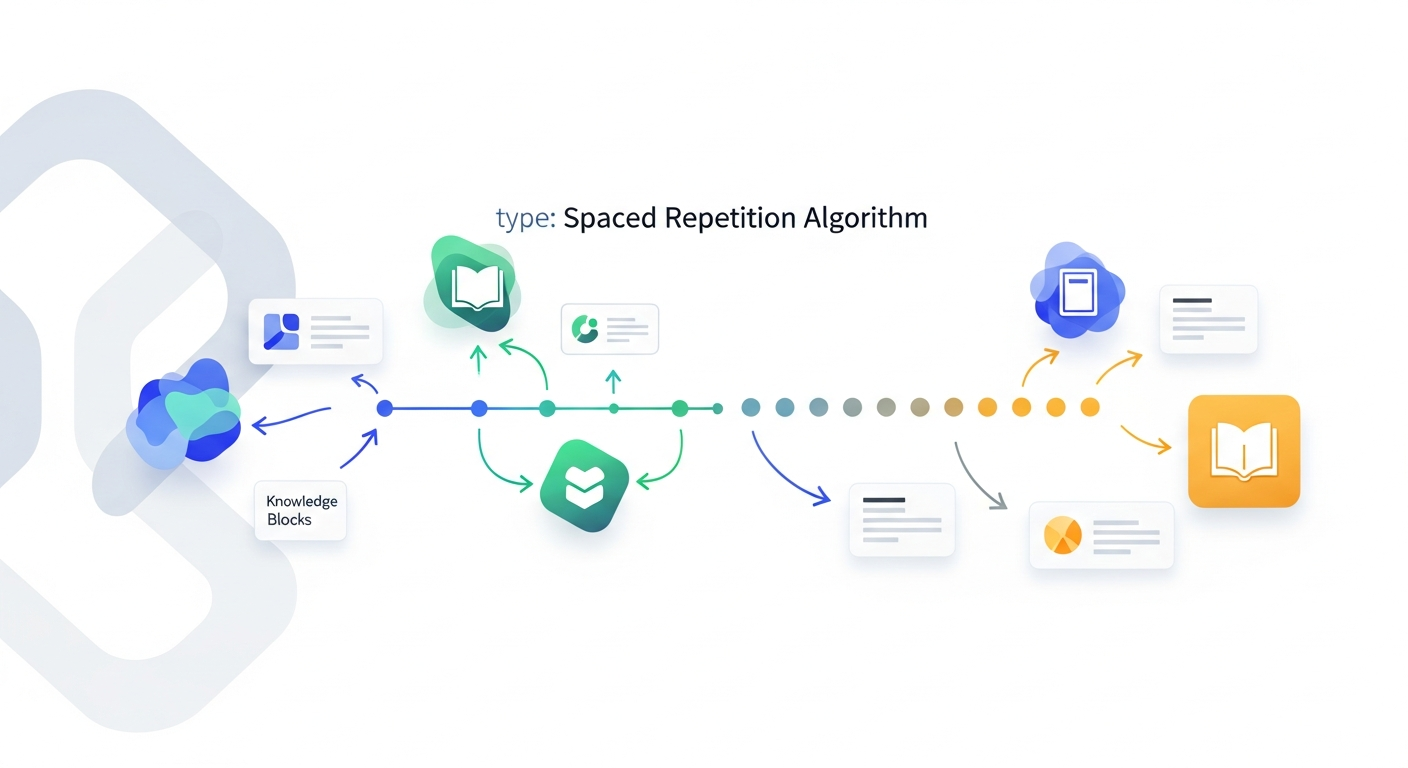
Think of it like this: after you learn something new, the algorithm waits a short period before prompting you to recall it. If you recall it successfully, the next interval is slightly longer. If you struggle, the interval shortens, indicating a need for more frequent reinforcement. This dynamic adjustment is what makes it so powerful and efficient compared to static review schedules.
The Science Behind Lasting Knowledge
The effectiveness of spaced repetition is rooted in cognitive psychology, particularly in Ebbinghaus's Adaptive Learning. His pioneering work on the forgetting curve demonstrated that memory retention decreases exponentially over time without reinforcement. Spaced repetition directly counters this by leveraging two key principles:
- Active Recall: Instead of passively re-reading, learners actively retrieve information from memory, strengthening neural pathways.
- Optimal Spacing: Presenting information at the precise moment it's about to be forgotten ensures maximum memory consolidation with minimal effort. This "sweet spot" is where the algorithm truly shines.
Why Spaced Repetition is Indispensable for Modern L&D Leaders
For L&D professionals, the Spaced Repetition Algorithm offers a compelling solution to many persistent challenges:
- Enhanced Knowledge Retention: Dramatically improves the long-term recall of critical information, from complex product specifications to vital compliance regulations.
- Increased Training ROI: By ensuring knowledge retention, training investments yield better, more sustained performance outcomes, reducing the need for costly retraining.
- Improved Compliance and Risk Mitigation: In regulated industries like Banking, Finance, Healthcare, and Oil & Gas, continuous recall of safety protocols, ethical guidelines, and legal requirements is paramount. Spaced repetition acts as a continuous audit, reinforcing crucial Risk-focused Training.
- Personalized Learning Journeys: The adaptive nature of the algorithm caters to individual learning paces, making training more efficient and engaging for everyone.
- Time Efficiency: Learners spend less time reviewing already-known material and more time on challenging concepts, optimizing study efforts.
Implementing Spaced Repetition in Your eLearning Strategy
Integrating spaced repetition into your corporate learning ecosystem is more accessible than ever, thanks to advanced eLearning platforms. Here’s how it typically plays out:
- Content Segmentation: Break down complex topics into digestible, self-contained learning units, often through Microlearning LMS.
- Initial Learning: Learners engage with new content.
- Algorithmic Scheduling: The platform's built-in algorithm monitors performance and schedules subsequent review sessions. These often take the form of quick quizzes, flashcards, or short scenarios.
- Feedback and Adaptation: Based on correct or incorrect answers, the algorithm adjusts the interval for the next review of that specific piece of content.
- Continuous Reinforcement: This cycle continues, gradually increasing the intervals for well-retained information and frequently reviewing challenging areas.
Modern learning platforms often combine spaced repetition with other engaging features. For instance, a Gamified LMS can turn review sessions into competitive challenges or rewards-based systems, further boosting motivation and engagement. Similarly, an AI Powered Authoring Tool can help L&D teams create vast amounts of spaced repetition content rapidly, tailoring it to specific roles and industries.
The Future is Smart: AI and Spaced Repetition
The true potential of spaced repetition blossoms when combined with artificial intelligence and advanced analytics. AI enhances the algorithm's precision, predictive capabilities, and scalability.
How can intelligent systems personalize and optimize learning schedules based on individual performance for maximum knowledge retention?
Intelligent systems leverage machine learning to analyze vast datasets of learner interactions, performance trends, and even cognitive styles. They go beyond simple correct/incorrect feedback to understand the nuances of a learner's mastery. For example, an AI can predict not just *if* a learner will forget a concept, but *when* and *why*, allowing it to fine-tune review intervals with unprecedented accuracy. This dynamic, hyper-personalized scheduling ensures that each employee, from a new hire in Retail to a seasoned engineer in Oil and Gas, receives the exact reinforcement they need, exactly when they need it, optimizing their learning path for peak efficiency and knowledge retention.
What are the key considerations for implementing a spaced repetition strategy effectively across geographically dispersed and diverse workforces?
Implementing spaced repetition globally requires a thoughtful approach to ensure equity and effectiveness. Key considerations include bandwidth limitations, language localization, cultural relevance of content, and diverse learning preferences across regions. An effective strategy would utilize platforms that offer offline access, multilingual support, and content customization features. Furthermore, L&D leaders must consider time zone differences for communication and support, and ensure that the learning content is compliant with local regulations and industry standards applicable to sectors like Pharma or Banking operating across different countries. Leveraging cloud-based solutions can provide consistent access and data synchronization, irrespective of physical location.
Beyond simple recall, what deeper insights can advanced analytics provide when analyzing the long-term impact of spaced repetition training on professional development?
Advanced analytics, fueled by AI, can uncover profound insights that extend far beyond a learner's ability to recall facts. By correlating spaced repetition performance with job role, project success rates, compliance audit results, and even employee promotion trajectories, analytics can reveal the direct impact of knowledge retention on career progression and organizational health. It can identify critical skill gaps across entire departments, predict future training needs, and pinpoint areas where current training content might be insufficient. For instance, in Healthcare, it could link consistent recall of patient protocols to reduced incidents, or in Sales, connect product knowledge retention to higher conversion rates, providing concrete evidence of ROI and informing strategic L&D decisions.
Empowering Your Workforce for a Knowledge-Driven Future
The Spaced Repetition Algorithm is more than just a learning technique; it's a strategic tool for L&D leaders committed to building a highly skilled, knowledgeable, and compliant workforce. By harnessing its power, especially when augmented by AI, organizations can transform their training programs from episodic events into continuous, effective learning journeys.
For L&D VPs, Directors, and Managers, adopting spaced repetition means moving beyond traditional metrics to measure true knowledge mastery and its direct impact on business outcomes. It’s an investment not just in training, but in the sustained performance, innovation, and resilience of your entire enterprise.
.jpg)


