

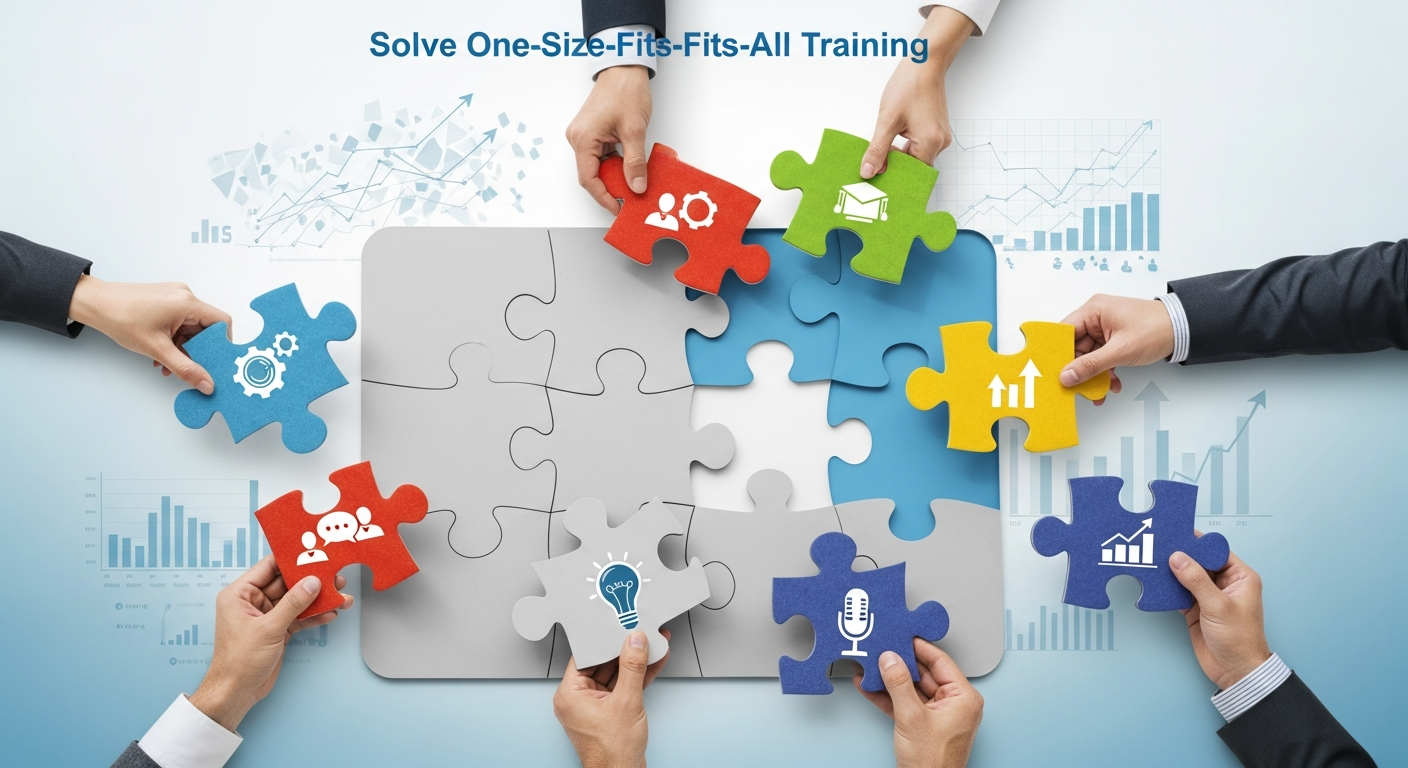
Solve One-Size-Fits-All Training: A Tailored Approach to Unleash Potential
In today's fast-paced corporate world, continuous learning and development are not just buzzwords; they are critical drivers of success and competitive advantage. Yet, for too long, many organizations have relied on a "one-size-fits-all" approach to training – a universal curriculum delivered uniformly to every employee, regardless of their role, prior knowledge, learning style, or specific development needs. This antiquated methodology is increasingly proving ineffective, leading to disengaged learners, wasted resources, and a significant gap between training efforts and tangible business outcomes. It's time to acknowledge that what works for one may not work for another, and to MaxLearn Microlearning Platform and similar innovative solutions are paving the way for a revolutionary shift.
The solution lies in personalization – a dynamic, learner-centric approach that tailors educational content and delivery to individual requirements. By moving away from generic programs, companies can foster a culture of genuine learning, improve skill acquisition, boost employee morale, and ultimately drive greater organizational performance. This article will delve into the shortcomings of traditional training, explore the immense power of personalization, and outline strategic approaches to effectively solve one-size-fits-all training, transforming your learning ecosystem into a powerhouse of productivity and proficiency.
The Pitfalls of Uniformity: Why One-Size-Fits-All Training Misses the Mark
The inherent flaw in a uniform training model is its failure to recognize human diversity. Employees come from varied educational backgrounds, possess different levels of experience, have distinct learning preferences, and perform a multitude of roles, each requiring a unique set of skills. Expecting a single course to cater to such a wide spectrum of needs is, quite simply, unrealistic and inefficient. Here's why this approach often falls short:
- Lack of Engagement: When content is irrelevant or too basic/advanced for a learner, engagement plummets. Boredom sets in quickly, leading to passive participation and minimal retention. Learners tune out when they feel the material doesn't directly apply to their job functions or career aspirations.
- Inefficient Use of Time: Forcing employees to sit through hours of training on topics they already know, or topics irrelevant to their role, wastes valuable time that could be spent on productive work. This inefficiency impacts both the individual's productivity and the company's bottom line.
- Poor Knowledge Retention: Information not perceived as immediately useful or directly applicable is quickly forgotten. The human brain is wired to prioritize relevance; generic content struggles to make a lasting impression, resulting in a minimal transfer of learning to real-world application.
- Failure to Address Specific Skill Gaps: A general training program cannot pinpoint and address the unique skill deficiencies of each employee. It might offer a broad overview but fails to provide the targeted, in-depth instruction needed to close specific performance gaps.
- Demotivation and Frustration: Employees can become frustrated and demotivated when they perceive training as a bureaucratic obligation rather than a beneficial development opportunity. This can negatively impact their overall job satisfaction and perception of the company's investment in their growth.
Embracing Individuality: The Power of Personalized Learning
Personalized learning is not merely a trend; it's a fundamental shift in pedagogical philosophy. It places the learner at the center, designing an educational journey that is responsive to their unique characteristics, goals, and pace. This approach recognizes that every individual learns differently and thrives when content is:
- Relevant: Directly applicable to their job role, current projects, or career development path.
- Adaptive: Adjusts difficulty, pace, and content based on the learner's performance and progress.
- Accessible: Available in various formats and at the learner's convenience, fitting into their workflow.
- Engaging: Utilizes interactive elements, real-world scenarios, and feedback mechanisms to maintain interest.
By tailoring the learning experience, organizations can unlock unprecedented levels of engagement, accelerate skill development, and ensure that every training dollar invested yields maximum returns. It's about empowering employees to take ownership of their development, providing them with the precise tools and knowledge they need, exactly when they need them.
Strategic Pillars for Personalized Training Success
Transitioning from a generic model to a personalized one requires a strategic rethink of how training is conceived, delivered, and measured. Modern learning technologies and methodologies offer powerful tools to achieve this transformation.
Leveraging Microlearning for Focused Impact
One of the most effective strategies to break away from lengthy, generic courses is through microlearning. This approach breaks down complex topics into bite-sized, easily digestible modules, typically lasting 2-10 minutes. Each module focuses on a single learning objective, making content highly targeted and engaging.
Microlearning's efficacy lies in its ability to deliver knowledge just-in-time, preventing cognitive overload and enhancing retention. It seamlessly integrates into busy work schedules, allowing employees to learn at their own pace and convenience. Platforms like MaxLearn Microlearning Platform exemplify how microlearning can deliver focused, impactful training that is both efficient and highly effective, ensuring that every learning moment counts.
Dynamic Learning Paths with Adaptive Learning
True personalization goes beyond just offering choices; it involves dynamically adjusting the learning journey based on individual needs and performance. This is the essence of adaptive learning. Instead of a fixed sequence of modules, an Adaptive Learning system assesses a learner's current knowledge and skill gaps, then prescribes a unique learning path designed to bridge those specific deficits. It can skip content they already know, provide remedial modules for areas of weakness, and offer advanced content for those ready for greater challenges.
This dynamic approach ensures that learners are always challenged appropriately, staying engaged and motivated without wasting time on redundant material. It optimizes the learning process for each individual, leading to faster skill acquisition and a more profound understanding of the subject matter.
Boosting Engagement with a Gamified LMS
Engagement is the cornerstone of effective learning, and nothing boosts engagement quite like gamification. Incorporating game-like elements such as points, badges, leaderboards, challenges, and rewards into the learning process transforms training from a chore into an enjoyable and competitive experience. A Gamified LMS leverages our natural human inclination for play and achievement, fostering a sense of accomplishment and encouraging learners to progress through their modules.
Gamification not only makes learning more fun but also provides immediate feedback, encourages healthy competition among peers, and motivates continuous engagement. By turning learning into an interactive game, organizations can dramatically increase completion rates and improve knowledge application.
Streamlining Content Creation with AI
The prospect of creating personalized content for every individual might seem daunting, but advancements in technology have made it far more achievable. An AI Powered Authoring Tool can dramatically streamline the content creation process for personalized learning. These tools can assist in generating relevant content rapidly, adapting existing materials, and even suggesting personalized learning paths based on learner data and predefined objectives. AI can analyze vast amounts of data to identify patterns, recommend resources, and even create interactive exercises tailored to specific learning profiles.
This not only saves instructional designers countless hours but also ensures that the personalized content is consistently high-quality and relevant. AI becomes a force multiplier, enabling organizations to scale their personalized training efforts without exponential increases in resource allocation.
Targeting Critical Gaps with Risk-focused Training
Another powerful application of personalized training is Risk-focused Training. This approach identifies critical areas where errors or knowledge gaps could lead to significant operational risks, compliance failures, or financial losses. Instead of broad brushstroke training, risk-focused programs provide highly targeted education to mitigate specific vulnerabilities within the organization. For example, a sales team might receive specialized training on ethical selling practices, or an engineering team on specific safety protocols that have been identified as high-risk areas.
By focusing training efforts on high-impact areas, companies can proactively address potential problems, ensure regulatory compliance, and build a more resilient and responsible workforce. This strategic focus ensures that training resources are directed where they can have the most critical impact, turning learning into a strategic asset for risk management and business growth.
The Tangible Benefits of Personalization
Moving beyond the one-size-fits-all model delivers a multitude of tangible benefits that directly impact an organization's bottom line and culture:
- Increased Employee Engagement & Satisfaction: When training is relevant and tailored, employees feel valued and invested in their development, leading to higher morale and reduced turnover.
- Improved Knowledge Retention & Application: Personalized content that is timely and relevant is more likely to be remembered and applied in real-world scenarios.
- Faster Skill Acquisition: Learners can master new skills more quickly when the learning path is optimized for their individual needs and pace.
- Higher ROI on Training Investments: By eliminating wasted time and ineffective programs, personalized training ensures that every dollar spent contributes directly to measurable skill improvement and business objectives.
- Enhanced Productivity & Performance: A skilled and confident workforce performs better, driving innovation, efficiency, and overall organizational success.
- Culture of Continuous Learning: Personalized approaches foster a proactive learning culture where employees are eager to develop new skills and stay current.
How to Transition from Generic to Genuinely Effective Training
Implementing personalized training requires a structured approach:
- Assess Current Needs & Gaps: Utilize surveys, performance reviews, and skill assessments to understand individual and team-specific learning requirements.
- Define Clear Learning Objectives: For each role and skill, establish specific, measurable, achievable, relevant, and time-bound (SMART) objectives.
- Invest in the Right Technology: Select a modern Learning Management System (LMS) that supports microlearning, adaptive paths, gamification, and integrates with AI-powered authoring tools.
- Develop or Curate Diverse Content: Create a rich library of microlearning modules, interactive simulations, videos, and quizzes that can be mixed and matched to form personalized paths.
- Iterate and Optimize: Continuously gather feedback, analyze learning data, and refine your personalized training programs to ensure ongoing effectiveness and relevance.
Beyond Uniformity: A Future of Empowered Learning
The era of one-size-fits-all training is drawing to a close. Organizations that embrace personalization are not just keeping up with the times; they are investing in a future where every employee can reach their full potential, contributing meaningfully to the company's growth and innovation. By leveraging modern methodologies like microlearning, adaptive learning, and gamification, supported by powerful tools like an AI Powered Authoring Tool and strategies like Risk-focused Training, businesses can solve one-size-fits-all training challenges and cultivate a highly skilled, engaged, and adaptive workforce ready to tackle tomorrow's challenges. The journey towards truly effective, personalized learning is not just a strategic advantage—it's a necessity for sustained success in the modern world.
.jpg)


