

Mastering the Forgetting Curve: Strategies for Lasting Learning in Modern Business
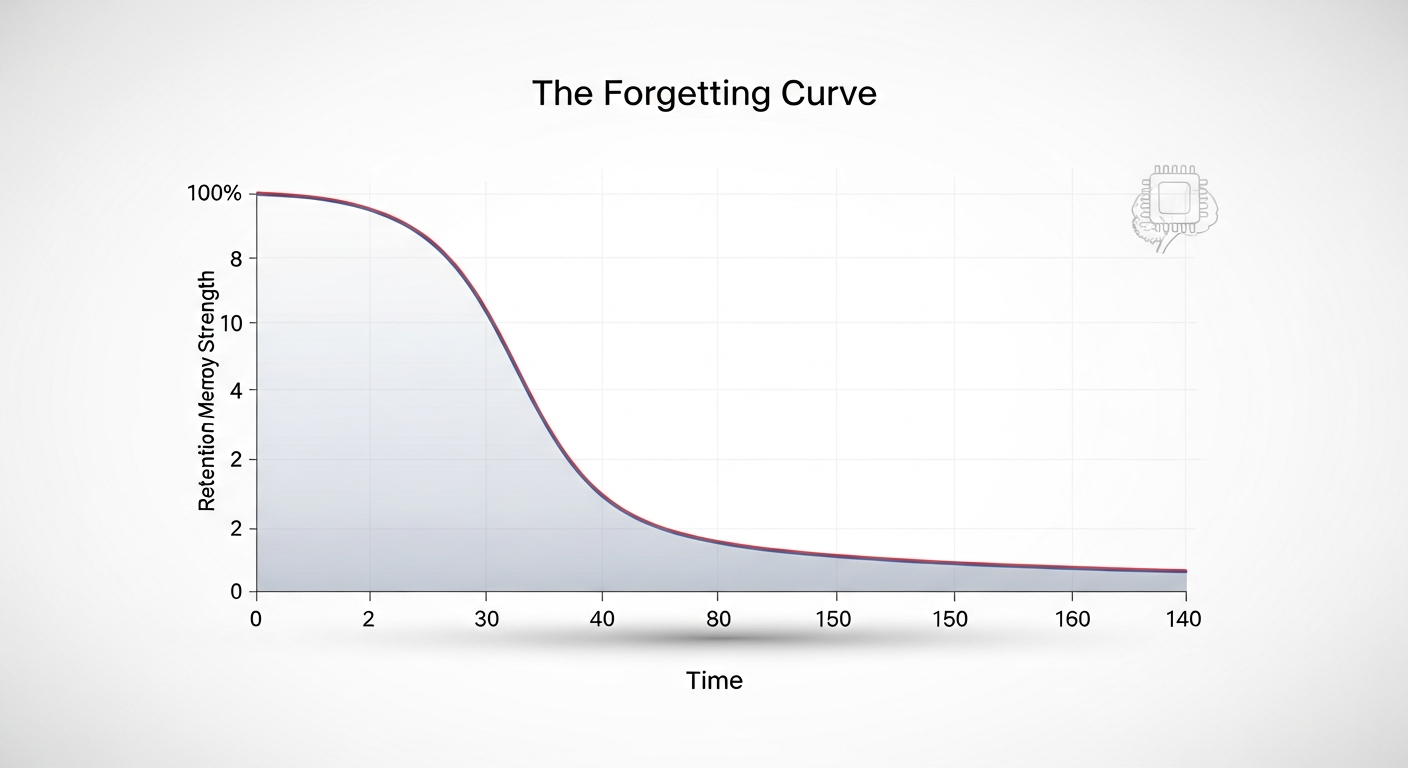
In the fast-paced world of business, knowledge is power. Yet, a fundamental challenge often undermines even the most robust training programs: the Forgetting Curve. First identified by German psychologist Hermann Ebbinghaus in the late 19th century, this concept illustrates how newly acquired information fades from our memory over time if not reinforced. Within hours, a significant portion of what we learn can be lost, posing substantial risks and inefficiencies across diverse industries.
For Learning & Development (L&D) professionals, understanding and actively combating the Forgetting Curve isn't just an academic exercise—it's a strategic imperative. From ensuring compliance in finance to enhancing safety in mining, the ability to retain critical information directly impacts productivity, profitability, and even human lives. This article delves into the Forgetting Curve's impact across key sectors and explores cutting-edge L&D strategies, including the pivotal role of artificial intelligence, to transform transient knowledge into enduring expertise.
The Forgetting Curve: A Universal Challenge
Ebbinghaus's research showed that within just an hour of learning, people forget roughly 50% of new information. Within a day, that number jumps to 70%, and after a week, it can be as high as 90%. This rapid decay of knowledge translates into tangible problems for organizations:
- Reduced ROI on Training: Significant investment in training yields diminishing returns if knowledge isn't retained.
- Compliance Risks: Forgetting regulations can lead to costly fines and legal repercussions.
- Operational Inefficiencies: Employees who forget procedures work slower or make more errors.
- Decreased Productivity: Time spent relearning or correcting mistakes eats into productive hours.
- Poor Customer Experience: Lack of product knowledge or service protocols harms customer satisfaction.
- Safety Hazards: Forgetting critical safety procedures can lead to accidents and injuries.
Industry-Specific Impact of Knowledge Decay
The implications of the Forgetting Curve resonate uniquely across various industries:
Finance, Banking, and Insurance
In sectors governed by strict regulations, the cost of forgotten information is immense. Employees in finance, banking, and insurance must stay current with anti-money laundering (AML) protocols, data privacy laws (like GDPR), new product features, and complex underwriting guidelines. A lapse in memory can lead to non-compliance penalties, reputational damage, and financial losses. Continuous, reinforced learning is essential for risk mitigation and customer trust.
Retail
Retail thrives on product knowledge, sales techniques, and exceptional customer service. When associates forget details about new inventory, promotional offers, or even how to operate point-of-sale systems, sales suffer, and customer satisfaction plummets. High employee turnover exacerbates this, making effective, long-term training crucial for maintaining a competitive edge.
Mining, Oil and Gas
Safety is paramount in these high-risk industries. Workers must remember intricate operational procedures, emergency response protocols, and environmental compliance standards. Forgetting how to properly use heavy machinery or react to a gas leak can have catastrophic consequences, leading to injuries, fatalities, and environmental disasters. Risk-focused Training is not just beneficial; it's life-saving.
Healthcare
Healthcare professionals are constantly absorbing new information—from evolving medical procedures and drug interactions to patient care best practices and health privacy regulations. The Forgetting Curve here can directly impact patient outcomes, leading to misdiagnoses, medication errors, or compromised care quality. Lifelong learning and robust memory reinforcement are non-negotiable.
Pharmaceuticals
The pharmaceutical industry demands precision in everything from drug development and manufacturing processes to regulatory submissions and sales strategies. Forgetting details about drug efficacy, side effects, compliance standards, or sales messaging can delay product launches, lead to regulatory hurdles, and impact market share. Ensuring sales teams retain complex product information is critical for effective market penetration.
Combating the Forgetting Curve with Modern L&D Strategies
Fortunately, L&D professionals are not powerless against the Forgetting Curve. Modern learning methodologies, often enhanced by technology, offer powerful ways to embed knowledge deeply and durably.
1. Microlearning and Spaced Repetition
Instead of lengthy, one-off training sessions, MaxLearn Microlearning Platform delivers information in small, digestible chunks. These short bursts of learning are more easily absorbed and can be reinforced over time through spaced repetition – revisiting key information at increasing intervals. This method directly counteracts the forgetting curve by regularly nudging memory.
2. Gamification for Engagement and Retention
Turning learning into a game significantly boosts engagement. A Gamified LMS uses elements like points, badges, leaderboards, and interactive challenges to motivate learners. The fun and competitive aspects encourage repeated interaction with content, naturally reinforcing memory without the user even realizing they are "studying."
3. Adaptive Learning Paths
One-size-fits-all training is inefficient. Adaptive Learning tailors the content and pace to each individual learner's needs, strengths, and weaknesses. By focusing on areas where an individual struggles and skipping content they already master, adaptive systems ensure efficient learning and targeted reinforcement, making every learning moment count against memory decay.
Leveraging Artificial Intelligence to Outsmart Forgetting
Artificial intelligence is rapidly transforming how organizations approach learning and development, offering unprecedented tools to combat the Forgetting Curve.
Q: How can intelligent systems help mitigate knowledge decay?
A: Intelligent systems analyze learner performance data to predict when an individual is likely to forget specific information. They can then trigger timely reminders, mini-quizzes, or relevant content snippets to reinforce that knowledge just before it starts to fade. This proactive, data-driven approach dramatically improves long-term retention.
Q: What are the benefits of integrating AI into content creation for learning?
A: An AI Powered Authoring Tool can significantly streamline the creation of engaging and effective learning content. It can suggest optimal content structures for microlearning, personalize examples based on industry-specific scenarios, and even generate assessment questions that target common areas of forgetting. This makes content development faster, more scalable, and inherently more effective at building lasting knowledge.
Q: How can data-driven content strategies enhance knowledge retention in digital environments?
A: By analyzing learner interactions, search queries, and performance data within digital learning platforms, organizations can identify content gaps or areas where employees consistently struggle. This insight allows for the optimization of learning materials, making them more relevant, accessible, and structured for better long-term recall. For instance, if employees frequently search for specific compliance rules, the system can proactively push short, reinforcing modules on those rules.
Q: Can advanced learning technologies provide value for geographically dispersed teams?
A: Absolutely. Modern learning platforms, especially those leveraging intelligent features, ensure consistent access to high-quality training regardless of location. They can even tailor content to local regulations or cultural nuances, ensuring relevance for all employees. Furthermore, these platforms provide centralized analytics, allowing L&D teams to monitor knowledge retention rates across different regions and implement targeted interventions where needed.
Conclusion: Building a Culture of Lasting Knowledge
The Forgetting Curve is a natural human phenomenon, but it doesn't have to be a business inhibitor. By adopting forward-thinking L&D strategies that integrate microlearning, gamification, adaptive learning, and the power of artificial intelligence, organizations across Insurance, Finance, Retail, Banking, Mining, Health care, Oil and Gas, and Pharma can transform their approach to knowledge retention.
Investing in platforms and methodologies that proactively fight knowledge decay ensures that valuable training translates into sustained competence, enhanced compliance, improved safety, and ultimately, a more productive and resilient workforce. The future of L&D is about not just delivering information, but ensuring it sticks, empowering employees to remember, apply, and innovate continuously.
.jpg)


