

What Is Ebbinghaus Forgetting Curve and How to Combat It in Modern L&D?
In the dynamic world of business, where knowledge is power and continuous learning is paramount, understanding how the human mind retains and loses information is critical. Enter Hermann Ebbinghaus, a pioneering German psychologist who, in 1885, unveiled a concept that continues to shape our approach to education and training: the Ebbinghaus Forgetting Curve. This groundbreaking theory illustrates the rate at which newly acquired information is forgotten over time if no attempt is made to retain it. For industries like Insurance, Finance, Retail, Banking, Mining, Healthcare, Oil and Gas, and Pharma, where compliance, safety, and up-to-date knowledge are non-negotiable, grasping this phenomenon is not just academic—it's foundational to success.
The Science Behind Forgetting
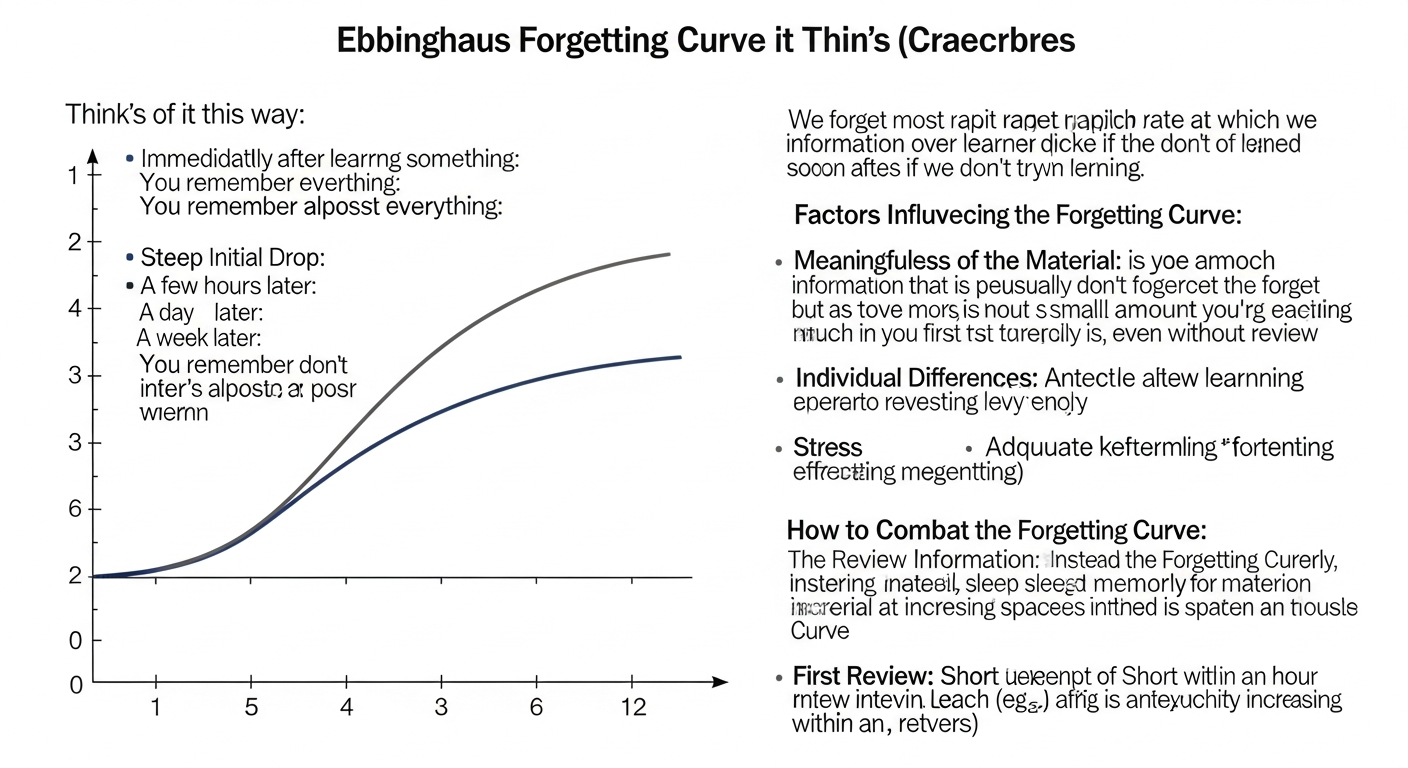
Ebbinghaus conducted a series of experiments on himself, memorizing lists of nonsense syllables and then testing his recall over varying periods. His findings revealed a consistent pattern: we tend to forget information very rapidly shortly after learning it, with the rate of forgetting slowing down over time. Imagine a steep drop-off initially, gradually leveling out. Within just one hour, a significant portion of what was learned could be lost, and after a day, even more. This curve demonstrated that without active reinforcement, memory decays predictably.
Several factors influence the steepness of this curve:
- Meaningfulness of Material: Information that is relevant or personally significant is remembered better.
- Prior Knowledge: Connecting new concepts to existing knowledge improves retention.
- Attention and Engagement: Distractions during learning contribute to faster forgetting.
- Stress and Sleep: Both adequate rest and a stress-free environment are crucial for memory consolidation.
Impact Across Key Industries
The implications of the Ebbinghaus Forgetting Curve are profound across virtually every sector, particularly those with complex regulations, high-stakes operations, or rapid technological advancements. In Learning & Development (L&D), this curve represents a significant challenge that, if ignored, can lead to costly errors, non-compliance, and reduced productivity.
Healthcare and Pharma
For healthcare professionals, retaining knowledge about new drug protocols, patient care techniques, or surgical procedures is a matter of life and death. In Pharma, keeping sales teams updated on product details, clinical trials, and regulatory changes is vital. Forgetting here can lead to medical errors, misinformed patient care, or compliance breaches.
Insurance and Finance
These industries are characterized by ever-evolving regulations, intricate product offerings, and stringent compliance standards. Financial advisors must recall complex investment strategies, while insurance agents need to understand a myriad of policy details. Forgetting can result in mis-selling, compliance fines, or poor customer advice.
Retail and Banking
Frontline staff in Retail and Banking require constant updates on new products, services, fraud detection methods, and customer service protocols. A forgotten policy update or a misunderstood product feature can lead to customer dissatisfaction or security vulnerabilities.
Mining, Oil and Gas
Safety is paramount in these high-risk environments. Employees must constantly retain and recall critical safety procedures, equipment operation protocols, and emergency response plans. A lapse in memory can have catastrophic consequences, leading to accidents, environmental damage, and operational shutdowns.
Effective L&D Strategies to Maximize Knowledge Retention
Understanding the forgetting curve is the first step; the next is to implement strategies that actively combat its effects. Modern L&D leverages several proven techniques, often amplified by technology, to flatten the curve and maximize knowledge retention.
- Spaced Repetition: This is arguably the most effective antidote to forgetting. Instead of cramming, information is reviewed at increasing intervals over time. For example, a concept learned today might be reviewed tomorrow, then in three days, then a week, and so on. This technique reinforces memory exactly when it's on the verge of being forgotten.
- Active Recall: Instead of passively rereading, learners actively retrieve information from memory, for instance, through quizzes, flashcards, or self-testing. This strengthens neural pathways and makes recall easier in the future.
- Microlearning: Delivering information in small, digestible chunks allows learners to focus and absorb content more effectively. Short modules, videos, or quick challenges fit perfectly into busy schedules and make spaced repetition easier. Platforms like MaxLearn Microlearning Platform specialize in this approach.
- Gamification: Incorporating game-like elements such as points, badges, leaderboards, and interactive challenges can significantly boost engagement and motivation, making learning more enjoyable and memorable. A Gamified LMS can transform tedious compliance training into an engaging experience.
- Adaptive Learning: This personalized approach uses algorithms to adjust the learning path based on an individual's performance and learning style. It identifies knowledge gaps and provides targeted content or practice, ensuring that learners spend time on what they need most. Discover more about Adaptive Learning.
- Contextual Learning and Real-World Scenarios: Presenting information within relevant contexts or through simulations helps learners connect theory to practice, making the knowledge more meaningful and easier to recall.
- Elaborative Rehearsal: Encouraging learners to connect new information with what they already know, elaborate on concepts, or teach them to others deepens understanding and strengthens memory.
- Risk-Focused Training: Identifying critical areas where forgetting poses the highest risk (e.g., safety protocols, compliance regulations) and then designing targeted, high-frequency training for these areas ensures essential knowledge is retained. Explore more about Risk-focused Training.
Leveraging Advanced Technology for Superior Retention
The advent of sophisticated technology has provided unprecedented tools to counteract the Ebbinghaus Forgetting Curve. Intelligent systems are revolutionizing how organizations approach L&D.
How can smart algorithms dynamically adjust learning content to prevent knowledge decay?
Intelligent algorithms embedded in modern learning platforms continuously monitor a learner's progress, performance on assessments, and interaction patterns. By analyzing this data, these systems can predict when specific pieces of information are likely to be forgotten. They then dynamically re-introduce relevant content, present adaptive quizzes, or suggest micro-lessons precisely at the optimal moment before complete memory decay sets in. This proactive approach ensures that knowledge is reinforced efficiently, optimizing retention rates and making learning highly personalized and effective.
How can advanced computational intelligence personalize learning paths to improve retention?
Advanced computational intelligence excels at tailoring individual learning experiences. By processing vast amounts of data on a learner's previous knowledge, cognitive strengths, weaknesses, and even preferred learning styles, these systems can generate highly personalized learning paths. They recommend specific modules, resources, or challenges that directly address identified knowledge gaps, pace content delivery based on individual absorption rates, and adjust the difficulty of material. This level of personalization significantly enhances engagement and ensures that each learner receives the most relevant information at the right time, thereby directly combating the uniform and often ineffective "one-size-fits-all" training that often leads to rapid forgetting.
What role does performance data analysis play in optimizing training deployment for distributed teams?
Analyzing performance data, especially from teams spread across various locations, is crucial for optimizing training deployment. By examining how different regional or operational groups perform on assessments, complete tasks, or adhere to procedures, organizations can pinpoint specific knowledge deficits or compliance issues that might be more prevalent in certain areas. This data allows for the strategic deployment of targeted training interventions. For example, if a particular mining site consistently struggles with a specific safety protocol, specialized micro-training modules can be delivered to only that site. This targeted approach ensures that resources are allocated efficiently, training addresses actual needs, and essential knowledge relevant to specific operational contexts is effectively reinforced, leading to improved overall performance and compliance across the entire distributed workforce.
Tools like an AI Powered Authoring Tool can help create this dynamic and personalized content efficiently.
Conclusion: Investing in Knowledge Retention is Investing in Success
The Ebbinghaus Forgetting Curve is a persistent challenge, but it's not an insurmountable one. By acknowledging its existence and proactively implementing evidence-based and technology-driven L&D strategies, organizations across all industries can significantly improve knowledge retention. From the critical safety protocols in Mining and Oil and Gas to the complex regulatory landscapes of Finance and Pharma, ensuring that employees remember what they learn is paramount. Investing in sophisticated learning platforms that incorporate spaced repetition, adaptive learning, gamification, and intelligent personalization is not merely an L&D expense; it's a strategic investment in a more skilled, compliant, productive, and ultimately, successful workforce. Flattening the forgetting curve transforms learning from a transient event into a sustained asset, empowering individuals and organizations to thrive in an ever-evolving world.
.jpg)


