

Level Up Your Learning: The Transformative Power of a Gamified Learning Platform
In an increasingly digital world, traditional learning methods often struggle to capture and sustain the attention of learners. The passive consumption of information can lead to disengagement, poor retention, and a lack of motivation. Enter the gamified learning platform – a revolutionary approach that harnesses the captivating elements of games to transform education and corporate training into an immersive, enjoyable, and highly effective experience.
Far more than just adding points or badges, gamified learning integrates game design principles and mechanics into non-game contexts to make the learning process inherently more engaging, interactive, and rewarding. It's about tapping into our innate human desire for achievement, competition, collaboration, and immediate feedback, turning mundane tasks into exciting challenges.
What Exactly is a Gamified Learning Platform?
A gamified learning platform is a digital environment designed to deliver educational content using game-like elements to motivate learners, improve engagement, and enhance knowledge retention. It's not about playing games instead of learning; it's about making learning feel like a game.
The core philosophy revolves around making the learning journey active rather than passive. By introducing challenges, progress tracking, and reward systems, these platforms create a stimulating environment where learners are encouraged to explore, experiment, and master new concepts at their own pace.
Key Elements of Gamification in Learning
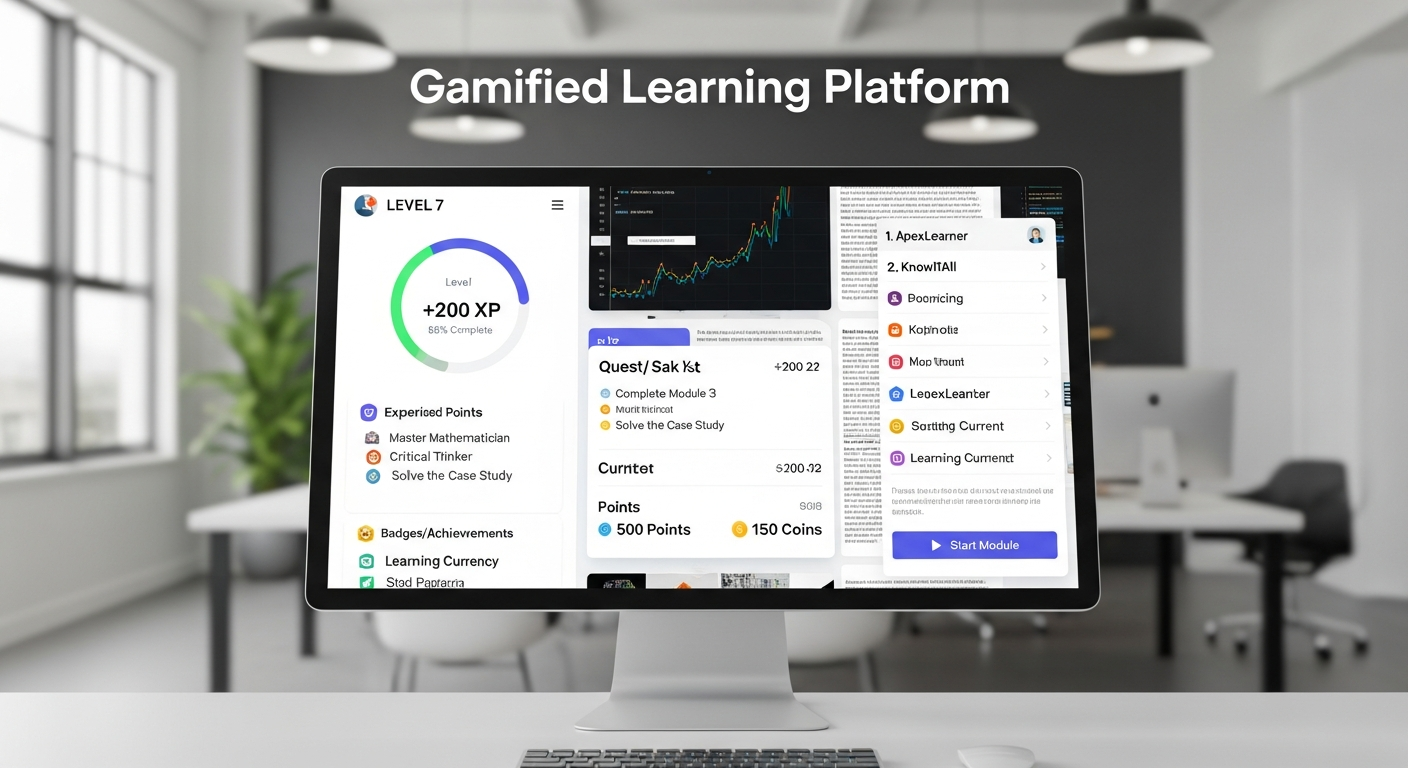
- Points and Rewards: Learners earn points for completing modules, quizzes, or activities, which can unlock new content or virtual rewards.
- Badges and Achievements: Digital accolades awarded for mastering specific skills, completing milestones, or demonstrating proficiency.
- Leaderboards: Fostering healthy competition by displaying rankings among peers, encouraging learners to strive for top positions.
- Progress Bars and Levels: Visual indicators that show learners how far they've come and how much more they have to achieve, creating a sense of advancement.
- Quests and Challenges: Structuring learning content as a series of missions or problems to solve, making the learning path more adventurous.
- Immediate Feedback: Providing instant responses to actions and answers, allowing learners to understand their mistakes and correct them promptly.
- Narrative and Storytelling: Embedding learning within a compelling story can make the content more relatable and memorable.
Why Gamified Learning Platforms are a Game-Changer
The benefits of integrating gamification into learning extend far beyond simply making education "fun." It addresses fundamental challenges in traditional learning and provides measurable improvements in several key areas.
Boosting Engagement and Motivation
One of the most significant advantages of a gamified approach is its unparalleled ability to captivate learners. By introducing elements of challenge, curiosity, and accomplishment, it transforms the learning experience from a chore into an enjoyable pursuit. This heightened engagement naturally leads to increased motivation, as learners are driven by the desire to earn points, unlock achievements, and climb leaderboards. Platforms like the MaxLearn Microlearning Platform exemplify how breaking content into bite-sized, interactive modules enhances sustained engagement, making learning less intimidating and more approachable.
Enhancing Knowledge Retention and Skill Development
Gamification encourages active participation rather than passive reception. Through interactive quizzes, simulations, and problem-solving scenarios, learners are constantly applying what they learn. This active recall and practical application significantly boost knowledge retention. A sophisticated Gamified LMS goes beyond simple quizzes, incorporating complex simulations and decision-making scenarios that help develop critical thinking and problem-solving skills in a low-stakes environment, mimicking real-world challenges.
Personalized and Adaptive Learning Paths
Modern gamified platforms are often designed to be highly adaptive, catering to individual learning styles and paces. They can track a learner's progress and performance, identifying areas where they might struggle or excel. This allows the platform to adjust the difficulty, provide additional resources, or offer more challenging content as needed. This Adaptive Learning approach ensures that each learner receives a personalized journey, maximizing their potential and making the learning process more efficient and effective for everyone.
Real-time Feedback and Performance Tracking
Immediate feedback is a cornerstone of effective learning, and gamified platforms excel at providing it. Learners instantly know if their answers are correct or incorrect, allowing them to adjust their understanding without delay. This continuous feedback loop is crucial for reinforcing correct concepts and correcting misunderstandings. Furthermore, robust analytics within these platforms allow administrators and instructors to track individual and group performance, identify learning gaps, and measure the overall effectiveness of the training programs.
Implementing a Gamified Learning Platform: Best Practices
To truly unlock the potential of a gamified learning platform, thoughtful design and strategic implementation are crucial. It's not enough to simply add game elements; they must be integrated meaningfully.
Define Clear Learning Objectives
The gamified elements must always serve the educational goals. Before developing or choosing a platform, clearly define what learners should know, understand, or be able to do upon completion. Gamification should augment these objectives, not overshadow them. Each challenge, badge, or point system should directly relate to a specific learning outcome.
Design Engaging Challenges and Rewards
The challenges should be appropriately difficult – neither too easy to be boring nor too hard to be frustrating. Rewards should feel meaningful and attainable, whether they are virtual badges, access to advanced content, or recognition. The balance between challenge and reward is key to maintaining sustained engagement.
Leverage Technology for Seamless Experience
The platform itself must be intuitive, reliable, and accessible across various devices. The technology should enhance the learning experience, not hinder it. Advanced tools, such as an AI Powered Authoring Tool, can streamline content creation, allowing educators and trainers to design interactive and personalized learning modules with greater efficiency and sophistication. This ensures that the focus remains on learning, free from technological friction.
Foster a Sense of Community and Competition
Many gamified platforms incorporate social learning features, allowing learners to interact, collaborate on challenges, and compete on leaderboards. This sense of community and friendly competition can significantly boost motivation and provide opportunities for peer-to-peer learning and support.
Applications Across Industries
The versatility of gamified learning platforms makes them valuable across a wide spectrum of sectors.
Corporate Training
From onboarding new hires and ensuring compliance with regulations to upskilling employees in new technologies, gamified training makes corporate learning more effective. It can simulate real-world scenarios, prepare sales teams for client interactions, or provide Risk-focused Training to help employees navigate complex ethical or operational challenges with confidence.
Education
In K-12 and higher education, gamified platforms can make subjects like math, science, and history more captivating. They provide interactive ways to explore complex concepts, conduct virtual experiments, and collaborate on projects, fostering a love for lifelong learning.
Healthcare
Gamification is used to train medical professionals on new procedures, educate patients about managing chronic conditions, or promote healthy lifestyle choices. Simulations can prepare surgeons, while interactive modules can help patients understand medication regimens.
The Future is Playful: Evolving Learning Landscapes
As technology continues to advance, so too will the capabilities of gamified learning platforms. We can anticipate even deeper integration of artificial intelligence for hyper-personalization, more sophisticated virtual reality (VR) and augmented reality (AR) experiences for truly immersive learning, and even more dynamic content generation.
The move towards making learning more engaging, adaptive, and effective is not just a trend; it's a fundamental shift in pedagogy. Gamified learning platforms are at the forefront of this evolution, proving that education doesn't have to be a daunting task but can be an exciting journey of discovery and achievement. By embracing these innovative tools, organizations and educational institutions can unlock unprecedented levels of potential in their learners, fostering a culture of continuous growth and mastery.
.jpg)


