

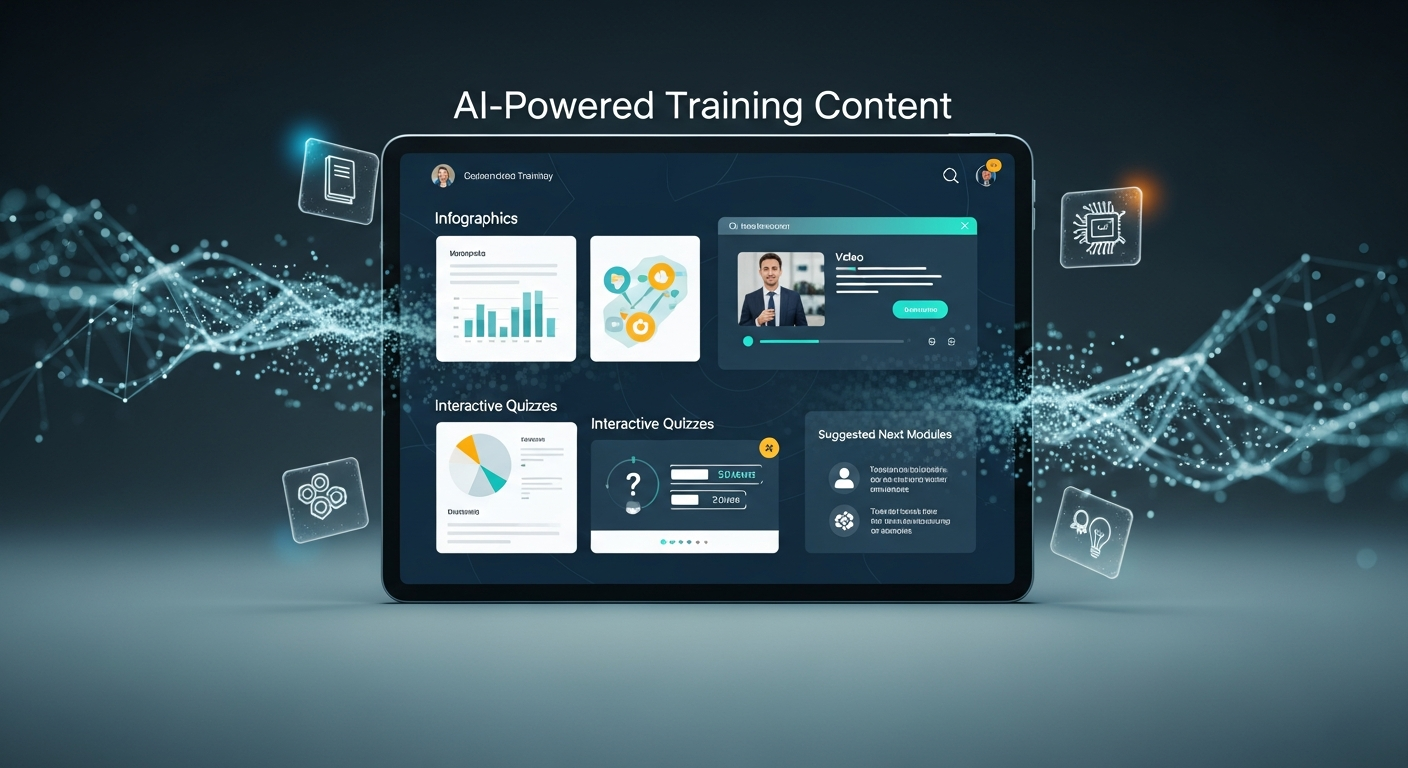
Unlocking Potential: The Transformative Power of AI-Powered Training Content
In today’s rapidly evolving business landscape, continuous learning is not just an advantage—it’s a necessity. Organizations worldwide are constantly seeking innovative ways to equip their workforces with the skills needed to thrive. Traditional training methods, however, often fall short in delivering personalized, engaging, and efficient learning experiences at scale. Enter Artificial Intelligence (AI), a game-changer poised to revolutionize how we create, deliver, and consume training content. AI-powered training content isn't merely an upgrade; it's a paradigm shift towards hyper-personalized, dynamic, and incredibly effective learning.
From multinational corporations to nimble startups, the demand for adaptable and impactful training is universal. AI addresses this by moving beyond one-size-fits-all modules to offer learning paths that are as unique as each individual learner. This article delves into the transformative power of AI in corporate training, exploring its benefits, applications, and how it’s shaping the future of workforce development.
The Evolution of Training: From Static to Dynamic
For decades, corporate training largely relied on static content: lengthy manuals, generic presentations, and standardized e-learning modules. While these methods served their purpose, they often struggled with engagement, relevance, and retention, leading to suboptimal learning outcomes and wasted resources.
Why Traditional Training Falls Short
- Lack of Personalization: Generic content fails to address individual learning styles, prior knowledge, or specific skill gaps.
- Low Engagement: Monotonous formats and passive learning can lead to learner disinterest and poor completion rates.
- Rapid Obsolescence: In fast-paced industries, content quickly becomes outdated, requiring constant, manual updates.
- Inefficient Delivery: Delivering the right content to the right person at the right time is a logistical challenge without intelligent systems.
These limitations highlight a clear need for a more agile, intelligent approach to training. AI provides the technological backbone for this evolution, moving us from static information dissemination to dynamic, adaptive, and highly relevant learning journeys.
What is AI-Powered Training Content?
AI-powered training content leverages artificial intelligence and machine learning algorithms to create, curate, deliver, and optimize learning materials. This involves a spectrum of capabilities, from automatically generating text and media to personalizing learning paths based on individual performance and preferences.
Personalization at Scale
One of the most profound impacts of AI in training is its ability to deliver personalized learning experiences on a massive scale. AI algorithms analyze learner data—performance on quizzes, time spent on topics, areas of struggle, and even career aspirations—to dynamically adjust content difficulty, format, and sequence. This concept, known as Adaptive Learning, ensures that each learner receives content that is precisely tailored to their needs, maximizing comprehension and retention. Instead of forcing everyone through the same curriculum, AI crafts unique pathways that resonate with individual learners, making the process far more effective.
Dynamic Content Generation
Imagine a tool that can instantly generate new training modules, update existing ones with the latest information, or even create scenario-based simulations based on predefined parameters. This is the promise of an AI Powered Authoring Tool. These sophisticated systems can analyze vast amounts of data, identify trends, and then autonomously generate high-quality text, images, videos, and interactive elements. This drastically reduces the time and cost associated with content creation, allowing organizations to keep their training materials fresh, relevant, and responsive to immediate business needs.
Key Benefits of AI-Powered Training Content
The integration of AI into training content offers a multitude of advantages that transcend traditional approaches, providing both learners and organizations with significant value.
Enhanced Engagement and Retention
AI can transform mundane training into engaging experiences. By personalizing content, recommending relevant materials, and incorporating interactive elements, AI makes learning more enjoyable and effective. Furthermore, many AI-driven platforms integrate elements of Gamified LMS, where learners can earn points, badges, and compete on leaderboards, fostering a sense of achievement and healthy competition. This approach significantly boosts learner motivation and, consequently, knowledge retention.
Efficiency and Cost Savings
Automating content creation, curation, and delivery processes through AI drastically reduces the manual effort and financial investment typically associated with training development. Organizations can produce more content, faster, and with fewer resources, leading to substantial long-term cost savings while simultaneously improving the quality and timeliness of their training programs.
Data-Driven Optimization
AI systems constantly collect and analyze data on learner performance, content effectiveness, and engagement levels. This wealth of data provides invaluable insights, allowing organizations to continuously refine their training strategies. AI can identify specific topics where learners struggle, pinpoint ineffective content modules, and even predict future skill requirements, enabling proactive adjustments to the curriculum.
Scalability and Accessibility
AI-powered training platforms can effortlessly scale to accommodate any number of learners, from a small team to a global workforce. This ensures consistent, high-quality training is accessible to everyone, regardless of their location or device. AI can also facilitate multilingual content generation and translation, breaking down language barriers and promoting inclusivity.
How AI Transforms Content Creation and Delivery
AI's influence extends far beyond mere personalization; it fundamentally changes the entire lifecycle of training content.
Intelligent Content Curation
With an overwhelming amount of information available, finding truly relevant and high-quality training materials can be a challenge. AI excels at this by intelligently curating content from diverse sources, ensuring that learners always have access to the most up-to-date and pertinent information. It can recommend articles, videos, courses, and experts based on a learner's profile and progress.
Microlearning and Just-in-Time Support
In today's fast-paced work environment, long, drawn-out training sessions are often impractical. AI facilitates MaxLearn Microlearning Platform solutions, delivering learning in bite-sized, digestible modules precisely when and where they are needed. This "just-in-time" learning approach ensures that employees can quickly acquire specific skills or information to solve immediate problems, without disrupting their workflow. AI can trigger microlearning modules based on job role, performance metrics, or even real-time operational needs.
Proactive Skill Development and Risk Mitigation
AI can analyze market trends, industry changes, and internal performance data to identify emerging skill gaps or potential areas of organizational risk. This predictive capability allows companies to implement Risk-focused Training proactively, ensuring their workforce is prepared to navigate future challenges. Whether it's cybersecurity threats, compliance requirements, or new technological advancements, AI helps organizations stay ahead of the curve by developing targeted training to mitigate potential downsides and foster growth.
Implementing AI-Powered Training: Best Practices
Embracing AI in training requires thoughtful planning and execution. Here are some best practices for successful implementation:
- Start Small, Think Big: Begin with a pilot program in a specific department or for a particular skill set to demonstrate value before scaling.
- Focus on Data Quality: AI thrives on data. Ensure your existing learner data is accurate, comprehensive, and privacy-compliant to fuel effective personalization.
- Combine Human Expertise with AI: AI is a powerful tool, but it doesn't replace human instructional designers and subject matter experts. The best results come from a symbiotic relationship where AI handles automation and personalization, while humans provide strategic oversight and creative input.
- Prioritize Ethical AI Use: Address concerns around data privacy, bias in algorithms, and transparency to build trust among learners.
The Future is Now: Embracing AI in Learning
The landscape of corporate learning is being reshaped by AI, moving towards systems that are inherently more intelligent, responsive, and human-centric. As AI technologies continue to advance, we can expect even more sophisticated tools for virtual reality training, intelligent tutoring systems, and hyper-realistic simulations. The future of training content is not just about delivering information; it's about fostering continuous growth, adaptability, and peak performance for every individual within an organization.
Organizations that embrace AI-powered training content today will be better positioned to attract top talent, retain skilled employees, and navigate the complexities of tomorrow's business world. It’s an investment in human capital that yields exponential returns.
.jpg)


