

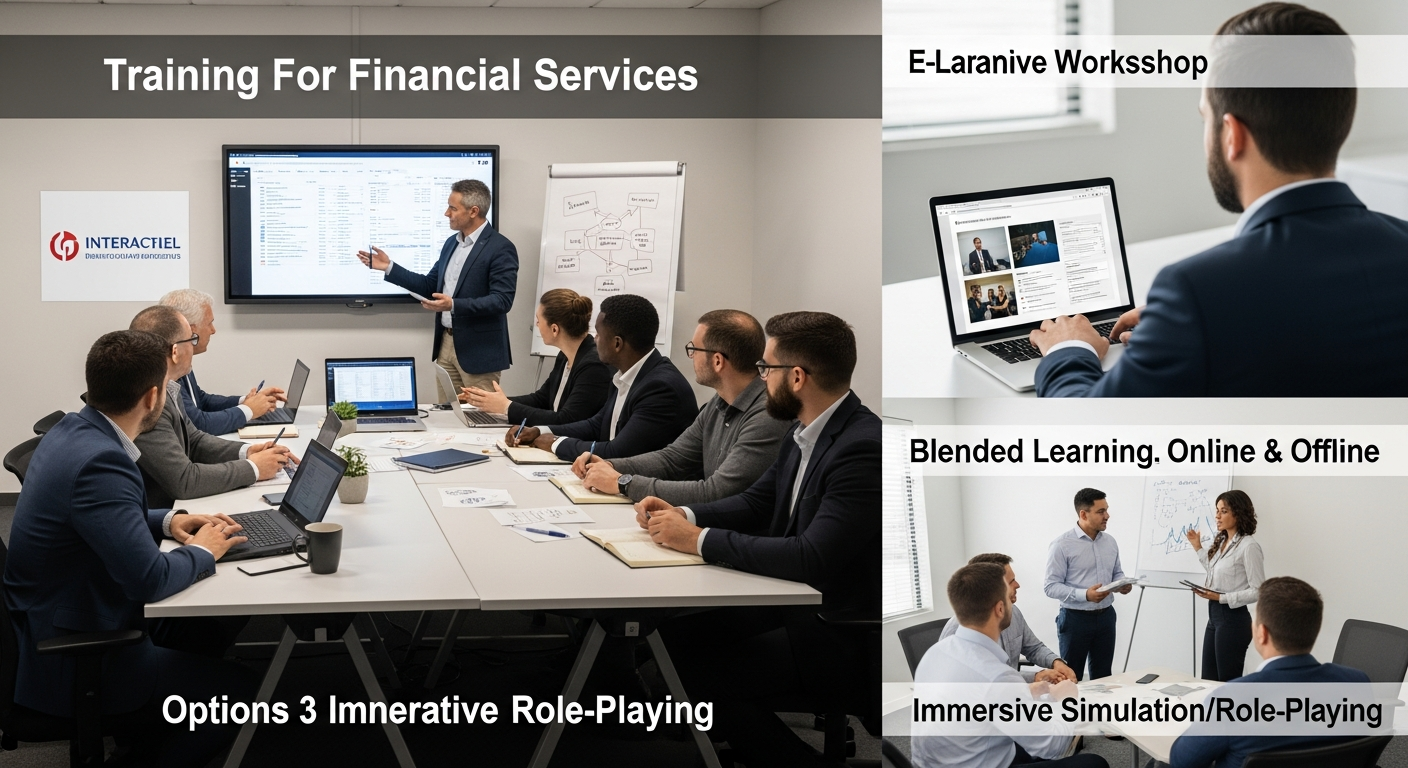
Elevating Expertise: The Imperative of Training in Financial Services
The financial services industry is a relentless current of change, constantly reshaped by new technologies, evolving regulations, and shifting market dynamics. In this high-stakes environment, the difference between thriving and merely surviving often boils down to one critical factor: a well-trained, highly skilled workforce. More than just a compliance checkbox, strategic training has become a fundamental pillar for innovation, risk management, customer trust, and sustainable growth within financial institutions.
From complex regulatory frameworks to the rapid ascent of fintech, employees must continuously update their knowledge and refine their skills to remain effective and competitive. Ignoring this imperative not only stagnates growth but also exposes institutions to significant operational and reputational risks. This article delves into why robust training is non-negotiable in financial services and explores how modern, agile learning solutions are revolutionizing how professionals acquire and apply knowledge.
Why Training is Non-Negotiable in Financial Services
Regulatory Compliance & Risk Mitigation
Perhaps no industry is as heavily regulated as financial services. Compliance is not static; it's a moving target with new directives on anti-money laundering (AML), Know Your Customer (KYC), data privacy (GDPR, CCPA), and consumer protection emerging regularly. A single misstep can lead to astronomical fines, severe reputational damage, and even loss of operating licenses. Effective training ensures that every employee, from front-line staff to senior management, understands their obligations and the intricate nuances of the regulatory landscape. Comprehensive, Risk-focused Training is paramount to embedding a culture of compliance and proactively mitigating potential pitfalls.
Adapting to Technological Advancements
The rise of artificial intelligence, blockchain, cloud computing, and advanced data analytics is transforming how financial services are delivered. Robo-advisors, digital payment systems, and algorithmic trading are no longer futuristic concepts but present-day realities. Employees need to be equipped not just to understand these technologies but also to leverage them effectively to enhance service delivery, improve efficiency, and develop innovative products. This requires continuous learning beyond initial onboarding, keeping pace with the rapid innovation cycle.
Enhancing Customer Experience & Trust
In a saturated market, client relationships are built on trust and expertise. Customers expect their financial advisors, bankers, and wealth managers to be knowledgeable, empathetic, and capable of guiding them through complex financial decisions. Well-trained professionals can offer personalized advice, clearly explain intricate products, and navigate client concerns with confidence and competence. This directly translates into higher customer satisfaction, loyalty, and positive referrals, solidifying the institution's reputation.
Employee Retention & Skill Development
Top talent is attracted to organizations that invest in their growth. Providing opportunities for continuous learning and skill development not only enhances individual capabilities but also boosts morale and job satisfaction. Employees who feel valued and see a clear path for professional advancement are more likely to stay, reducing costly turnover and preserving institutional knowledge. A robust training program is a key component of a compelling employee value proposition.
The Challenges of Traditional Training in Financial Services
While the need for training is clear, traditional approaches often fall short in the fast-paced financial sector:
- Time Constraints: Financial professionals often have demanding schedules, making it difficult to allocate significant blocks of time for lengthy seminars or classroom sessions.
- Information Overload: The sheer volume and complexity of financial information can overwhelm learners in traditional settings, leading to poor retention.
- Lack of Engagement: Generic, one-size-fits-all training modules can be disengaging and fail to address the specific needs or learning styles of diverse employees.
- High Costs: Developing and delivering traditional training, especially for a large, geographically dispersed workforce, can be prohibitively expensive.
- Difficulty in Measurement: Quantifying the impact of traditional training on performance and compliance is often challenging, making ROI hard to prove.
Modern Solutions: Revolutionizing Financial Services Training
To overcome these challenges, financial institutions are increasingly turning to innovative learning technologies and methodologies. These modern approaches prioritize flexibility, engagement, and measurable outcomes.
Microlearning: The Future of Knowledge Delivery
Microlearning breaks down complex topics into short, digestible bursts of information (2-7 minutes long). This format is ideal for busy financial professionals, allowing them to learn on the go, during small breaks, or whenever convenient. It improves knowledge retention by focusing on one concept at a time and is highly effective for delivering updates on regulations, new product features, or software procedures. A dedicated MaxLearn Microlearning Platform provides the infrastructure for delivering this efficient, impactful training.
Personalized & Adaptive Learning Paths
Gone are the days of mandatory, identical training for everyone. Modern learning platforms leverage data and algorithms to create personalized learning paths based on an individual's role, existing knowledge, performance data, and career aspirations. Adaptive Learning ensures that employees only focus on what they need to learn, filling specific skill gaps efficiently and preventing redundancy. This approach respects individual learning paces and maximizes relevance.
Gamification for Engagement & Motivation
To combat disengagement, learning platforms are incorporating gamified elements such as points, badges, leaderboards, and challenges. These features transform learning into an interactive and enjoyable experience, fostering healthy competition and intrinsic motivation. A Gamified LMS can significantly boost participation rates, completion rates, and knowledge recall, making even dry compliance topics more palatable.
AI-Powered Content Creation & Curation
Keeping training content current in a rapidly changing industry is a monumental task. Artificial intelligence is now playing a pivotal role in streamlining this process. AI Powered Authoring Tool can assist in generating training modules, updating content based on new regulations or market trends, and even translating materials. This dramatically reduces the time and resources required to produce high-quality, relevant learning materials, ensuring that training is always up-to-date and impactful.
Advanced Analytics and Reporting
Modern learning management systems (LMS) offer robust analytics capabilities. These tools track learner progress, identify areas of difficulty, measure completion rates, and assess knowledge retention. This data is invaluable for institutions to understand the effectiveness of their training programs, pinpoint skill gaps across teams, and demonstrate ROI to stakeholders. It allows for continuous improvement and strategic adjustments to the training curriculum.
Key Benefits of a Modern Training Approach
- Improved Compliance Rates: Consistent, up-to-date training minimizes regulatory violations.
- Faster Skill Adoption: Agile learning methods enable quicker mastery of new technologies and products.
- Enhanced Employee Performance & Productivity: A highly skilled workforce operates more efficiently and effectively.
- Greater Employee Satisfaction & Retention: Investment in growth fosters loyalty and reduces turnover.
- Stronger Client Relationships & Trust: Knowledgeable staff deliver superior service and build confidence.
- Competitive Advantage: A well-trained team can outmaneuver competitors in a dynamic market.
Implementing an Effective Training Strategy
Successfully integrating modern training solutions requires a strategic approach:
- Assess Needs: Conduct thorough skill gap analyses and compliance risk assessments.
- Choose the Right Platform: Select a learning platform that supports microlearning, adaptive paths, gamification, and robust analytics.
- Content Strategy: Develop engaging, relevant content, leveraging AI authoring tools where appropriate.
- Foster a Learning Culture: Encourage continuous learning from the top down and integrate training into daily workflows.
- Evaluate and Iterate: Regularly review training effectiveness using data analytics and make necessary adjustments.
Conclusion
In the complex and ever-evolving world of financial services, training is no longer a peripheral activity; it is a strategic imperative. By embracing modern methodologies like microlearning, adaptive paths, and gamification, powered by platforms that leverage AI, financial institutions can cultivate a workforce that is not only compliant and technologically proficient but also deeply engaged and committed to excellence. Investing in smart, dynamic training solutions is not just about mitigating risks; it's about future-proofing your organization, driving sustained growth, and maintaining the highest standards of integrity and service in a competitive global market.
.jpg)


