

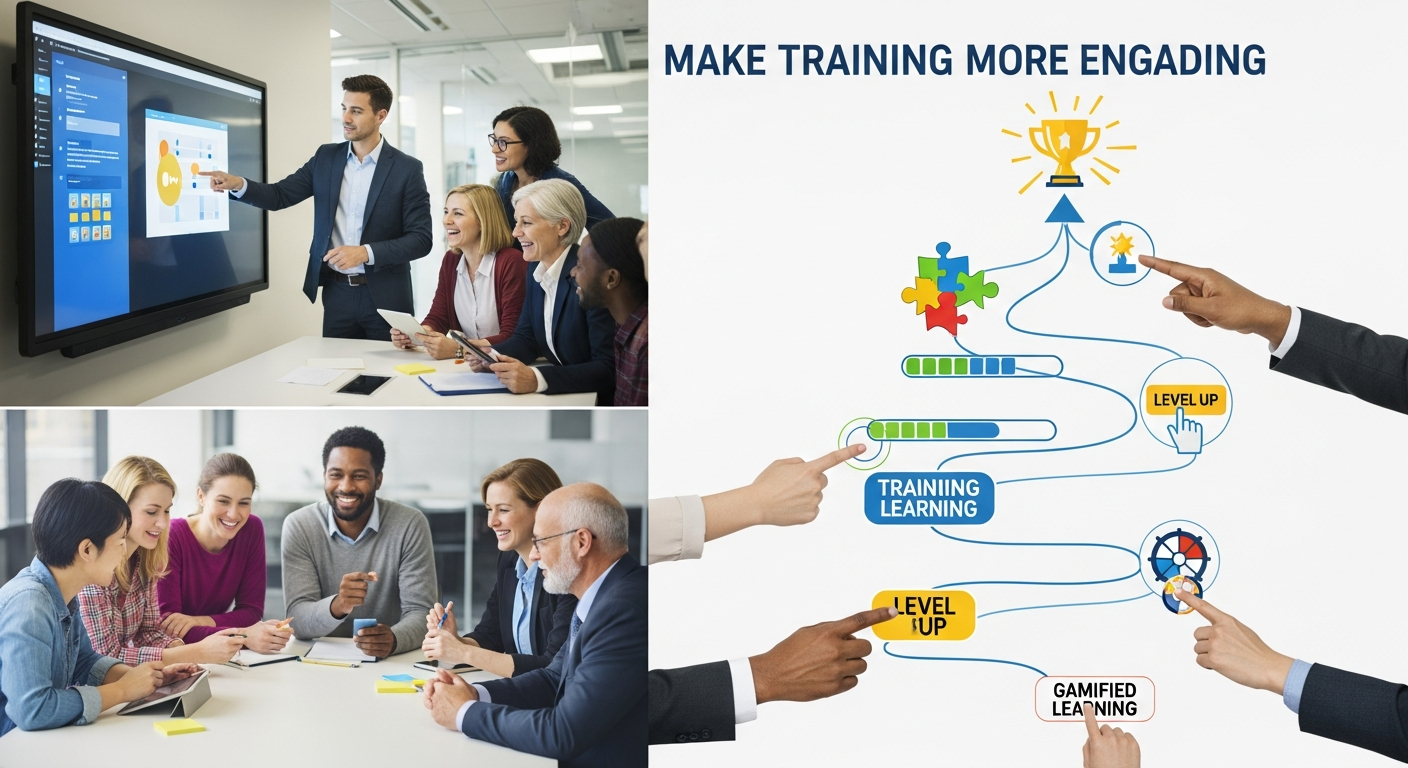
Beyond Boring: Strategies to Make Your Training Programs Unforgettable and Effective
In today's fast-paced corporate world, effective employee training is no longer a luxury but a critical necessity for business growth and competitive advantage. Yet, how often do we hear groans at the mention of an upcoming training session? The truth is, many traditional training approaches fall short, leading to disengaged learners, poor knowledge retention, and ultimately, a wasted investment. The challenge isn't just about delivering information; it's about making that information stick, resonate, and inspire action. So, how can organizations transform tedious training into a dynamic, engaging, and genuinely impactful experience?
The Core Problem: Disengagement Sucks the Life Out of Learning
The biggest enemy of effective training is disengagement. When learners are bored, overwhelmed, or see no immediate relevance, their minds wander, and the learning opportunity evaporates. This disinterest can stem from several factors: overly long modules, passive presentation styles, a lack of interactivity, or content that feels disconnected from their daily tasks. The costs of disengagement are steep: low completion rates, shallow understanding, minimal behavior change, and a significant drain on company resources spent on ineffective programs. To truly empower employees and drive business outcomes, we must first conquer the engagement gap.
Strategies to Supercharge Your Training Engagement
Making training more engaging isn't about gimmicks; it's about adopting learner-centric methodologies and leveraging modern technological advancements. Here are proven strategies to revitalize your learning programs:
Embrace Microlearning: Small Bites, Big Impact
One of the most powerful shifts in modern learning is the move towards microlearning. Instead of lengthy courses, microlearning breaks down complex topics into short, focused bursts of information, typically 3-10 minutes long. These bite-sized modules are perfect for busy professionals, allowing them to absorb new concepts during natural breaks in their day, right at the moment of need. This approach significantly boosts retention and makes learning feel less daunting and more achievable. Platforms like the MaxLearn Microlearning Platform are designed specifically to deliver this efficient, engaging content.
- **Short and Sweet:** Focus on one learning objective per module.
- **Varied Formats:** Utilize videos, infographics, quizzes, and quick simulations.
- **Accessibility:** Ensure content is easily accessible on mobile devices, allowing for on-the-go learning.
Gamification: Turning Learning into Play
Who said learning can't be fun? Gamification integrates game-like elements into non-game contexts to drive engagement and motivation. By incorporating points, badges, leaderboards, levels, and challenges, training can tap into learners' natural competitive spirit and desire for achievement. This not only makes the learning process more enjoyable but also provides immediate feedback and a clear sense of progression, encouraging continuous participation. A Gamified LMS can transform ordinary courses into exciting challenges, fostering healthy competition and a greater sense of accomplishment among learners.
- **Points and Badges:** Reward progress and mastery of concepts.
- **Leaderboards:** Foster friendly competition and recognize top performers.
- **Challenges and Quests:** Structure learning paths as a series of engaging missions.
Personalization and Adaptive Learning: Tailoring the Journey
One size rarely fits all, especially in learning. Traditional training often assumes a uniform starting point and learning pace, which can alienate both advanced learners who get bored and struggling learners who fall behind. Adaptive Learning addresses this by dynamically adjusting the learning path based on an individual's prior knowledge, performance, and preferred learning style. This personalized approach ensures that content is always relevant, appropriately challenging, and delivered in a way that maximizes understanding and retention for each learner, making the experience far more engaging and efficient.
- **Pre-Assessments:** Gauge existing knowledge to skip irrelevant content.
- **Dynamic Content Delivery:** Present material in formats and at paces best suited for each individual.
- **Personalized Feedback:** Offer targeted guidance based on learner performance.
Interactive Content and AI-Powered Authoring
Passive learning is largely ineffective. To truly engage learners, training must be interactive. This means moving beyond static slides to incorporate elements that demand active participation. Think simulations, scenario-based exercises, interactive quizzes, drag-and-drop activities, and decision-making challenges. Modern tools, including an AI Powered Authoring Tool, can significantly streamline the creation of such dynamic and engaging content, allowing L&D teams to quickly develop rich, immersive learning experiences without extensive technical expertise.
- **Simulations and Role-Plays:** Allow learners to practice skills in a safe environment.
- **Interactive Quizzes:** Provide immediate feedback and reinforce learning.
- **Scenario-Based Learning:** Present real-world problems for learners to solve.
Real-World Relevance and Risk-focused Training
Learners are most engaged when they understand the "why" behind their training. Connecting learning content directly to their job responsibilities, company goals, and the potential impact of their actions on business outcomes dramatically increases relevance. Implementing Risk-focused Training, for example, helps employees understand the potential consequences of errors and highlights best practices to mitigate those risks, making the training immediately applicable and highly motivating. When training clearly solves a problem or improves a specific skill needed for their role, engagement naturally skyrockets.
- **Case Studies:** Use real company examples to illustrate concepts.
- **Problem-Solving Scenarios:** Present challenges directly related to their work.
- **Direct Application:** Encourage learners to apply new skills immediately.
Foster a Culture of Continuous Learning
Engagement isn't a one-time event; it's an ongoing journey. Encourage a company culture that values and promotes continuous learning beyond formal training sessions. This involves providing access to resources, fostering peer-to-peer learning, encouraging knowledge sharing, and recognizing those who actively pursue self-development. When learning is integrated into the daily workflow and supported by leadership, it becomes a natural and engaging part of the employee experience.
Measuring Engagement and Iterating for Success
To truly know if your training is engaging, you need to measure it. Don't just track completion rates; delve deeper into learner behavior and feedback. Utilize data analytics from your LMS to understand what content is resonating, where learners are dropping off, and how quickly they are progressing. Gather qualitative feedback through surveys, focus groups, and one-on-one discussions. Use this valuable data to iterate and continuously improve your training programs, ensuring they remain fresh, relevant, and highly engaging.
- **Completion Rates & Time Spent:** Basic metrics for participation.
- **Quiz Scores & Performance Metrics:** Indicate knowledge acquisition.
- **Learner Feedback:** Surveys, comments, and ratings on content and delivery.
- **Post-Training Performance:** Observe changes in job performance and business KPIs.
Conclusion
Making training more engaging is not merely a nicety; it's a strategic imperative for any organization aiming for sustained growth and innovation. By moving away from passive, one-size-fits-all approaches and embracing modern methodologies like microlearning, gamification, personalized adaptive paths, and interactive content, businesses can transform their training programs. Leveraging cutting-edge solutions and fostering a culture of continuous learning ensures that employees are not just attending training, but actively participating, retaining knowledge, and applying new skills to drive real-world results. Invest in engaging training, and you invest in your people, your productivity, and your future.
.jpg)


