

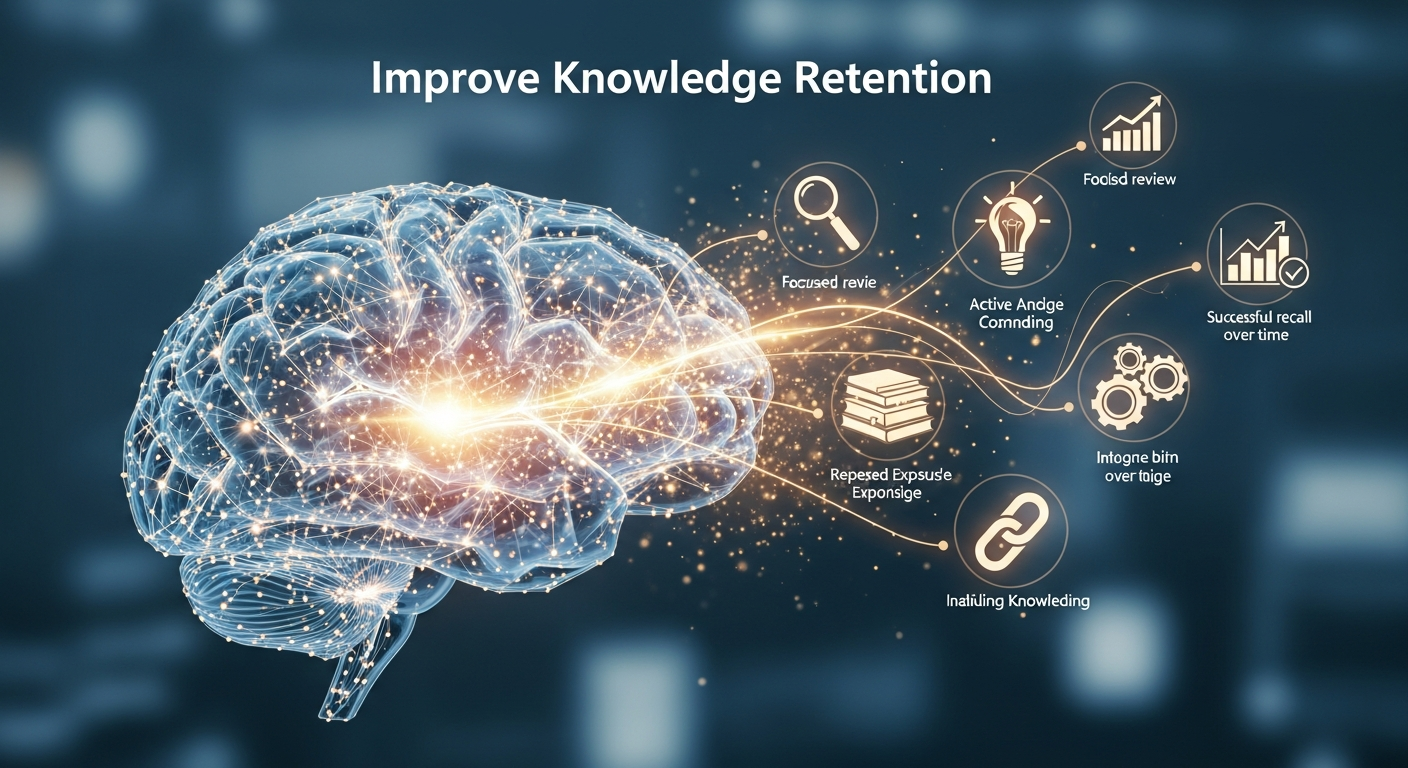
Improve Knowledge Retention: Strategies for Lasting Knowledge
In today's information-rich world, simply acquiring knowledge isn't enough; the true challenge lies in making it stick. "Improve knowledge retention" is a universal goal for students, professionals, and organizations alike. It's about transforming temporary information into lasting understanding, ensuring that what's learned today remains accessible and actionable tomorrow. This article explores why knowledge retention is more vital than ever, the common obstacles that hinder it, and actionable strategies to ensure your valuable insights endure.
Why Knowledge Retention Matters More Than Ever
The constant influx of new information makes effective knowledge retention a critical skill. For individuals and organizations, forgotten knowledge carries significant, often hidden, costs.
The Cost of Forgetting
For businesses, forgotten procedures, product details, or compliance regulations lead directly to lost productivity, increased error rates, and the costly necessity of re-training. These hidden expenses erode profitability and competitive advantage over time. Customer service lapses or missed sales opportunities due to poor recall directly impact operational efficiency and growth, while in highly regulated sectors, compliance failures can result in severe penalties or even catastrophic events.
The Learning Curve and Forgetting Curve
Hermann Ebbinghaus’s famous "forgetting curve" vividly demonstrates how quickly new information fades without reinforcement. His research showed that a substantial portion of what was learned could be forgotten within hours. This highlights the passive nature of human memory and underscores the necessity of active strategies to combat this natural decline. Without deliberate efforts to reinforce learning, the time and resources invested in education and training are often wasted as knowledge dissipates.
Common Hurdles to Effective Knowledge Retention
Despite the best intentions, numerous factors frequently hinder effective knowledge retention. Information overload causes cognitive fatigue, making it difficult for the brain to encode new data effectively. Passive learning methods, such as lengthy lectures or static text, often fail to engage learners sufficiently to create strong memory traces. A lack of perceived relevance can also disconnect learners from the material, as they struggle to see its application to their real-world tasks. Additionally, infrequent practice, inadequate feedback, and insufficient opportunities for practical application are major culprits, leaving learners with a fragile grasp of new concepts.
Proven Strategies to Boost Knowledge Retention
Fortunately, modern learning science and technological advancements offer powerful solutions to enhance retention. By adopting a multi-faceted approach, individuals and organizations can significantly improve how knowledge is absorbed and retained, transforming temporary learning into enduring expertise.
Embrace Microlearning
One of the most effective strategies to combat the forgetting curve is embracing microlearning. This approach breaks down complex topics into short, digestible modules that can be consumed quickly and on-demand. Bite-sized chunks allow learners to focus more intensely on specific concepts, improving comprehension and encoding into long-term memory. Platforms like the MaxLearn Microlearning Platform specialize in delivering this precise, impactful learning experience, ensuring that knowledge is not just consumed but truly absorbed.
The Power of Active Recall and Spaced Repetition
Active recall involves actively retrieving information from memory, such as through self-quizzing or explaining concepts in one's own words. This forces the brain to work harder, strengthening neural pathways. Spaced repetition complements this by strategically scheduling reviews of material at increasing intervals, prompting recall just before the information is likely to be forgotten. This powerful combination leverages natural memory patterns to embed knowledge deeply into long-term memory, making learning more durable and resistant to fading.
Make Learning Engaging with Gamification
Monotonous learning experiences are a death knell for retention. Injecting elements of gamification—such as points, badges, leaderboards, and challenges—transforms learning into an interactive and enjoyable activity. Gamified learning taps into our intrinsic motivation, fosters engagement, and provides immediate feedback, leading to deeper immersion and better recall. A Gamified LMS seamlessly integrates these engaging elements, making learning fun and sticky for lasting impact and improved knowledge retention.
Personalize the Learning Journey
Not all learners absorb information in the same way or at the same pace. Adaptive Learning tailors the content, pace, and pathway of learning to individual needs, strengths, and weaknesses. By dynamically adjusting the material based on a learner's performance, adaptive systems ensure they are appropriately challenged without being overwhelmed or bored. This personalized approach optimizes engagement and efficiency, allowing individuals to focus on areas where they need the most improvement, thereby significantly enhancing overall retention.
Leverage AI for Content Creation and Delivery
Artificial intelligence is revolutionizing how learning content is created and delivered. An AI Powered Authoring Tool can dramatically speed up the development of high-quality, relevant learning modules. AI can analyze vast amounts of data to identify knowledge gaps, personalize content recommendations, and even generate dynamic practice questions. This not only streamlines the creation process but also ensures that the content is precisely targeted and optimized for maximum retention, making learning more efficient and effective for both content creators and learners.
Focus on Practical Application and Relevance
Knowledge is best retained when it can be immediately applied to real-world scenarios. Designing training that emphasizes practical application, problem-solving, and critical thinking helps learners connect theory to practice. This is particularly crucial in areas requiring immediate action or decision-making. Risk-focused Training, for example, directly links learning to potential real-world consequences, increasing the perceived importance and urgency of the information, leading to stronger retention and better on-the-job performance and decision-making.
Facilitate Collaborative Learning
Humans are social creatures, and learning often thrives in collaborative environments. Group discussions, peer teaching, case studies, and team projects encourage learners to articulate their understanding, challenge assumptions, and learn from diverse perspectives. Explaining a concept to someone else is a powerful form of active recall, solidifying one's own comprehension. Creating opportunities for learners to interact and share knowledge can significantly boost overall retention within a group or organization.
Regular Reinforcement and Feedback
Knowledge retention is an ongoing process, not a one-time event. Regular reinforcement through short quizzes, refreshers, or quick application exercises helps to combat the forgetting curve. Equally important is timely and constructive feedback. Knowing what one did right or wrong, and why, allows learners to correct misconceptions and strengthen their understanding. Without this continuous loop of practice and feedback, even well-designed initial learning can quickly degrade, diminishing its long-term value.
Implementing a Retention-Focused Learning Strategy
Implementing an effective knowledge retention strategy requires more than just picking one or two methods; it demands a holistic approach. It involves integrating advanced learning technologies with sound pedagogical principles, fostering a culture of continuous learning, and consistently measuring the impact of training on actual performance. By combining microlearning, active recall, gamification, adaptive pathways, and AI-driven content, organizations can build robust learning ecosystems designed for lasting knowledge and skill development.
Conclusion
In an era where information overload is the norm, the capacity to effectively retain knowledge is a significant competitive advantage for individuals and organizations alike. Moving beyond passive learning to embrace dynamic, engaging, and personalized strategies is no longer optional; it's imperative. By understanding the science of learning and leveraging modern tools and methodologies, we can significantly improve knowledge retention, transforming fleeting information into enduring expertise. Invest in smart learning strategies today, and ensure your knowledge—and your organization's collective intelligence—remains a powerful, lasting asset for years to come.
.jpg)


