

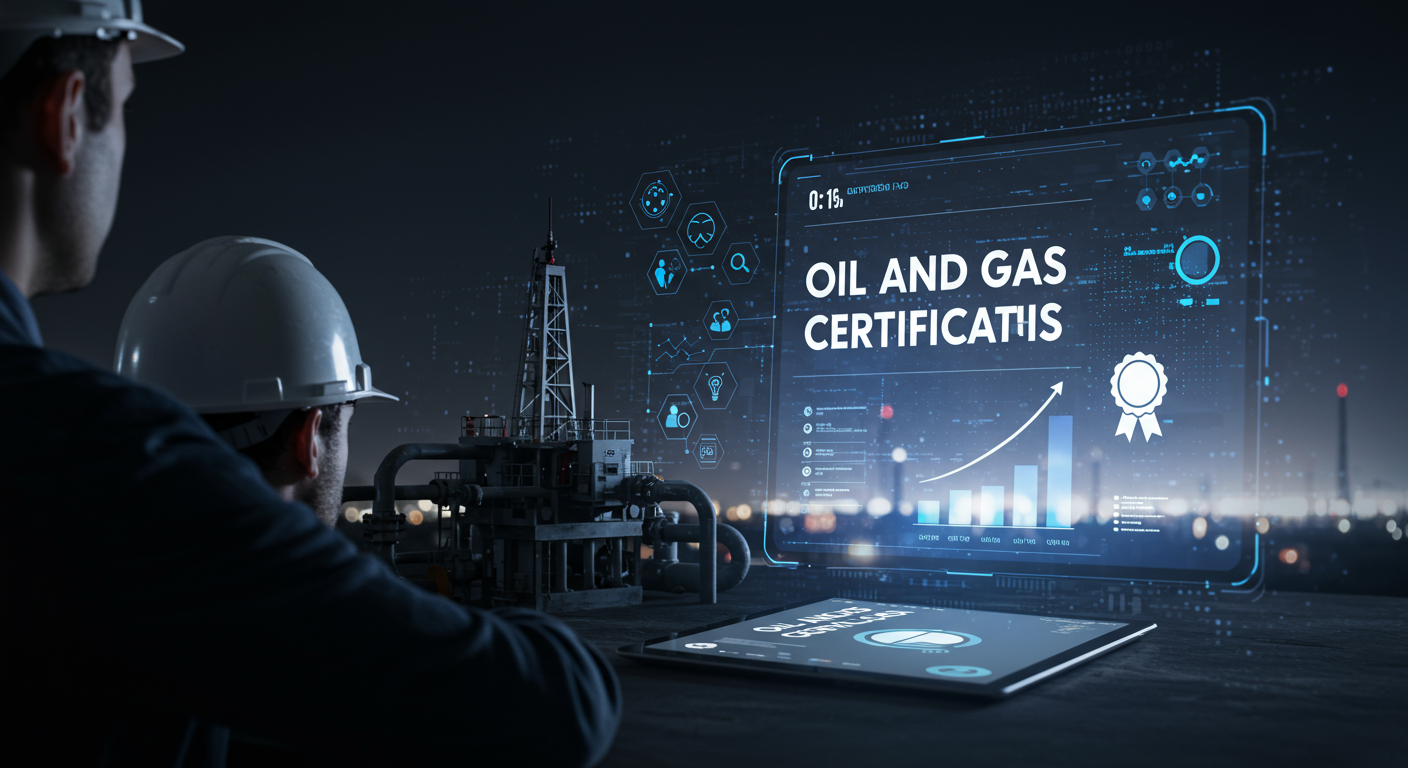
Oil And Gas Certification Online: Fueling Your Career in the Digital Age
The oil and gas industry is a cornerstone of the global economy, providing the energy that powers our world. It's a field characterized by rapid technological advancements, stringent safety regulations, and a constant demand for skilled professionals. To thrive in this dynamic environment, continuous learning and professional development are not just beneficial, but essential. In recent years, the landscape of professional training has undergone a significant transformation, with online certification programs emerging as a powerful and flexible solution for oil and gas professionals seeking to enhance their expertise and career prospects. This article delves into the burgeoning world of Oil And Gas Certification Online, exploring its benefits, the types of courses available, and what to look for in a quality online learning experience.
Why Online Certification is Revolutionizing Oil And Gas Training
The traditional model of in-person training, while valuable, often presents logistical and financial hurdles. Online certification addresses these challenges head-on, offering a modern, accessible, and often more effective alternative.
Flexibility and Accessibility
One of the most compelling advantages of online certification is its unparalleled flexibility. Professionals in the oil and gas sector often work demanding schedules, frequently traveling to remote locations. Online courses allow them to learn at their own pace, on their own schedule, from virtually anywhere with an internet connection. This eliminates the need for time-consuming travel and accommodation, making continuous education a realistic endeavor even for those with the busiest calendars.
Cost-Effectiveness
Beyond the direct tuition fees, traditional classroom-based training incurs significant hidden costs, including travel, accommodation, and lost productivity time. Online certification typically reduces these expenses drastically, offering a more economical pathway to professional development. Many online programs provide high-quality education at a fraction of the cost, making advanced certifications more accessible to a broader range of individuals and companies.
Staying Current with Industry Standards
The oil and gas industry is constantly evolving, with new technologies, regulatory updates, and best practices emerging regularly. Online platforms are uniquely positioned to deliver up-to-date content quickly and efficiently. This ensures that certified professionals are always equipped with the latest knowledge and skills, maintaining a competitive edge in a fast-paced sector.
Career Advancement
Acquiring specialized certifications demonstrates a commitment to professional growth and an eagerness to take on greater responsibilities. Online certifications can open doors to new roles, promotions, and higher earning potential. Employers increasingly value candidates who take initiative to enhance their skills through recognized certification programs, viewing them as valuable assets ready to contribute significantly to their operations.
Types of Oil And Gas Certifications Available Online
The range of online certifications available for the oil and gas industry is vast, covering various disciplines and experience levels. Here are some key categories:
Safety Certifications
- HAZWOPER (Hazardous Waste Operations and Emergency Response): Essential for workers dealing with hazardous materials.
- OSHA (Occupational Safety and Health Administration) Certifications: Covers general industry safety, construction safety, and more specific oil and gas safety protocols.
- Well Control Certification: Crucial for drilling and well operations personnel to prevent blowouts and maintain well integrity.
- HSE (Health, Safety, and Environment) Management: Comprehensive programs for managing safety and environmental risks.
Technical Certifications
- Drilling Technology: Covers drilling operations, equipment, and best practices.
- Production Operations: Focuses on oil and gas extraction, processing, and transportation.
- Reservoir Engineering: Deals with reservoir characterization, fluid flow, and recovery techniques.
- Pipeline Integrity Management: For professionals involved in the safe operation and maintenance of pipelines.
- Geoscience and Geophysics: Training in exploration, subsurface analysis, and data interpretation.
Management and Project Certifications
- Project Management for Oil & Gas: Adapts general project management principles to the unique challenges of the energy sector.
- Oil & Gas Supply Chain Management: Optimizing logistics and procurement within the industry.
- Risk Management in Oil & Gas: Identifying, assessing, and mitigating operational and financial risks.
Environmental Certifications
- Environmental Compliance: Understanding and adhering to environmental regulations.
- Sustainable Energy Management: Focusing on renewable energy integration and environmental impact reduction.
Key Features of Effective Online Learning Platforms for O&G
Not all online learning platforms are created equal. For the specialized needs of the oil and gas industry, certain features are paramount to ensure effective and impactful training.
Interactive and Engaging Content
Traditional long-form lectures can be less effective online. Modern platforms employ innovative approaches to keep learners engaged. A good Microlearning Platform breaks down complex topics into bite-sized modules, making learning more manageable and digestible for busy professionals. Furthermore, a Gamified LMS (Learning Management System) incorporates game-like elements such as points, badges, leaderboards, and interactive challenges to motivate learners, improve retention, and make the educational journey more enjoyable and competitive.
Personalized Learning Paths
Every learner comes with a unique background and set of existing knowledge. Effective online platforms should cater to these individual differences. Adaptive Learning technologies are crucial here, dynamically adjusting the course content and pace based on the learner's performance and prior knowledge. This ensures that individuals spend time on topics they need to master, rather than repeating what they already know, leading to more efficient and effective learning outcomes.
Up-to-Date Content Creation
The industry's rapid pace demands that training content remains current. Platforms that utilize an AI Powered Authoring Tool can significantly streamline the process of creating and updating course materials. This technology allows for faster content generation, ensures accuracy, and helps in quickly incorporating the latest industry standards, regulations, and technological advancements into the curriculum, keeping the training relevant and impactful.
Focus on Critical Skills and Risks
Given the high-stakes nature of the oil and gas industry, training must be deeply rooted in practical application and risk mitigation. A focus on Risk-focused Training is essential. This means the curriculum should not only impart knowledge but also simulate real-world scenarios, emphasize safety protocols, and train professionals to identify and respond to potential hazards effectively. Such training is paramount for preventing incidents, ensuring operational safety, and promoting responsible practices.
Choosing the Right Online Certification Program
With numerous options available, selecting the ideal online certification program requires careful consideration:
Accreditation and Recognition
Always verify that the certification program and the issuing body are accredited by reputable industry organizations. Recognized accreditation ensures that the certification holds value and is respected by employers globally.
Course Content and Instructors
Review the curriculum to ensure it covers the specific knowledge and skills you aim to acquire. Research the instructors' credentials and industry experience. Expert instructors with real-world experience can provide invaluable insights.
Platform Features and Support
Beyond the content, consider the learning platform's user-friendliness, technical support, and the availability of interactive tools, simulations, and discussion forums. A robust support system is vital for a smooth online learning experience.
Reviews and Testimonials
Look for reviews and testimonials from past participants. Their experiences can offer valuable insights into the program's effectiveness, the quality of instruction, and the overall learning environment.
Challenges and Solutions in Online Learning
While highly beneficial, online learning also comes with its unique set of challenges.
Self-Discipline
Online courses demand a high degree of self-motivation and discipline. Setting a schedule, creating a dedicated study space, and utilizing time management techniques can help learners stay on track.
Practical Experience
Some aspects of oil and gas work require hands-on experience that cannot be fully replicated online. Online certifications often complement practical training, not replace it. Look for programs that integrate virtual labs, simulations, or project-based assignments to bridge this gap.
Technology Access
Reliable internet access and appropriate devices are necessary. Ensure you have the required technical infrastructure to participate effectively in online programs.
The Future of Oil And Gas Training
As technology continues to advance, the role of online learning in the oil and gas industry is only set to expand. We can anticipate even more immersive experiences through virtual reality (VR) and augmented reality (AR) simulations, further enhancing practical training from remote locations. The integration of AI for personalized learning paths will become more sophisticated, tailoring educational content to an unprecedented degree. Online certifications will increasingly be recognized as the standard for professional development, providing a flexible, cost-effective, and highly effective means for individuals to keep their skills sharp and their careers on an upward trajectory.
Conclusion
Oil And Gas Certification Online offers a transformative pathway for professionals seeking to advance their careers and stay competitive in a critical global industry. The flexibility, accessibility, and cost-effectiveness of online programs, combined with advanced learning technologies like microlearning, gamification, and adaptive learning, make them an indispensable tool for continuous professional development. By carefully selecting accredited programs that leverage cutting-edge educational features and focusing on self-discipline, oil and gas professionals can unlock new opportunities, enhance their expertise, and contribute to a safer, more efficient, and sustainable energy future.
.jpg)


