

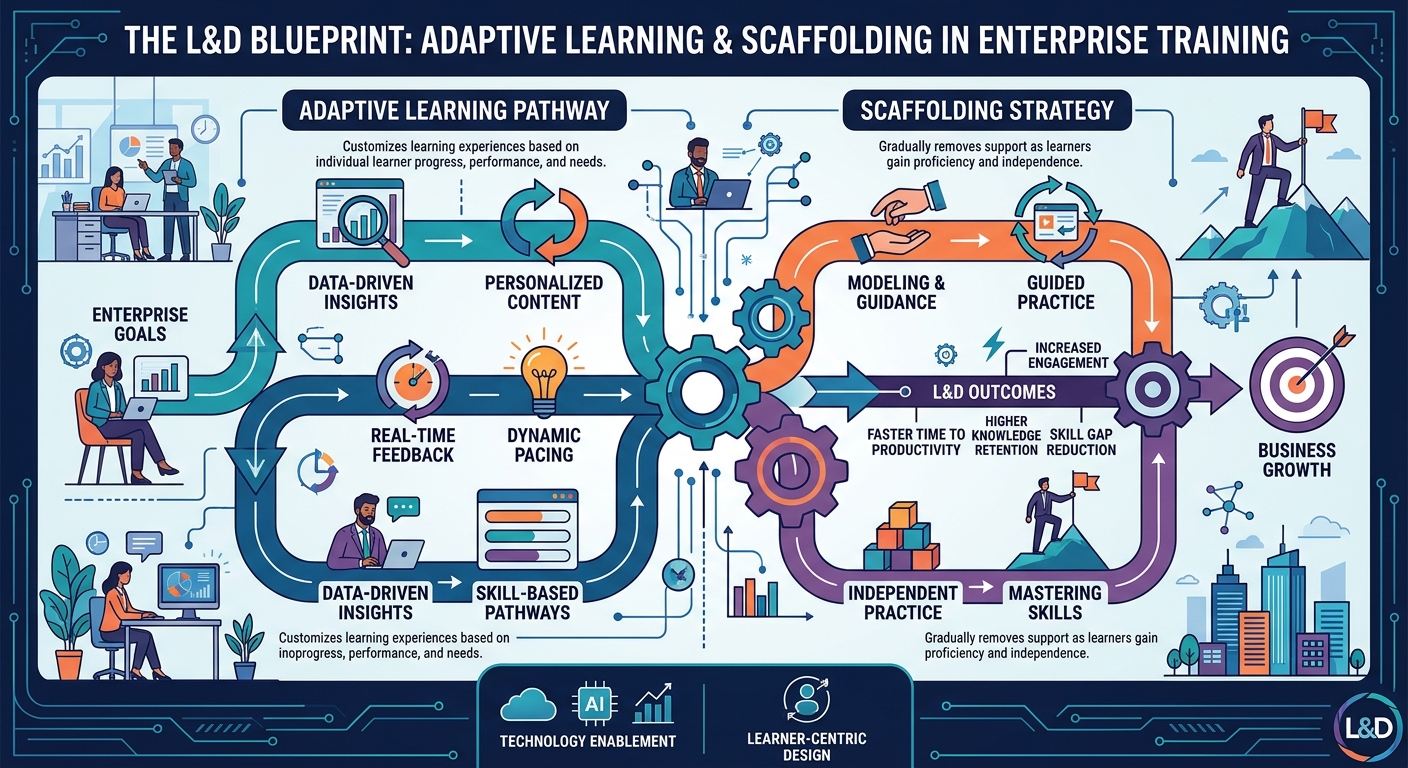
The L&D Blueprint for Adaptive Learning and Scaffolding in Enterprise Training
In today's rapidly evolving business landscape, enterprise training is no longer a static requirement but a dynamic imperative for sustained growth and competitiveness. Learning and Development (L&D) leaders, from Vice Presidents to Senior Managers, face the challenge of equipping their workforce with essential skills at an unprecedented pace. The answer lies in crafting a robust L&D blueprint that integrates adaptive learning and scaffolding techniques, leveraging modern Microlearning LMS solutions to deliver impactful, personalized, and scalable training across diverse industries like Compliance, Sales, Banking, Finance, Insurance, Retail, Pharma, Health care, Hospitality, Oil and Gas, and Mining.
Traditional, one-size-fits-all training models often fall short, failing to cater to individual learning styles, prior knowledge, or job-specific needs. This leads to disengagement, wasted resources, and ultimately, a skills gap that hinders organizational agility. A strategic shift towards adaptive and scaffolded learning is crucial for building a resilient, high-performing workforce.
The Evolving Landscape and the Need for Agility
The modern workforce is diverse, comprising multiple generations with varying tech proficiencies and learning preferences. Industries like Banking and Finance demand constant updates on regulations, while Pharma and Healthcare require rigorous compliance training and quick assimilation of new research. Retail and Hospitality depend on excellent customer service skills that evolve with market trends. In sectors like Oil and Gas or Mining, safety protocols and complex operational procedures necessitate precise and effective skill acquisition. An effective LMS is no longer just a repository; it's a strategic tool for developing and deploying training that adapts to these complex demands.
Against this backdrop, the adoption of advanced learning management system functionalities becomes non-negotiable. Organizations need more than just basic course delivery; they require sophisticated platforms that can truly personalize the learning journey.
Understanding Adaptive Learning: Personalization at Scale
At its core, Adaptive Learning dynamically adjusts the learning path based on an individual's performance, preferences, and progress. It's about providing the right content, at the right time, in the right format. Imagine a new sales associate in the Insurance sector learning about complex policy structures: an adaptive system can identify areas where they struggle and provide additional resources, practice scenarios, or quizzes, while fast-tracking them through concepts they already grasp. This isn't just about efficiency; it's about deeper comprehension and application.
Key Benefits of Adaptive Learning:
- Increased Engagement: Learners stay motivated when content is relevant and challenging, but not overwhelming.
- Optimized Efficiency: Reduces time spent on redundant material, allowing learners to focus on skill gaps.
- Improved Retention: Personalized reinforcement leads to better long-term memory and application.
- Scalability: Delivers individualized experiences to thousands of employees simultaneously, which is critical for enterprise learning management.
The Power of Scaffolding in Skill Development
Scaffolding in L&D refers to the strategic provision of support that helps learners master new skills or concepts, gradually withdrawing that support as they become more proficient. Think of it as building a bridge: initial support structures are strong, then slowly removed as the bridge becomes self-sustaining. For instance, in Compliance training for Banking, new employees might first encounter simplified explanations of regulations, then practice with guided scenarios, and finally tackle complex case studies independently. This structured approach builds confidence and competence effectively.
A well-implemented learning management software can embed scaffolding through features like guided practice, interactive simulations, contextual hints, and progressive difficulty levels. This is particularly effective in industries where complex procedures or sensitive information handling are critical, such as Pharma and Healthcare, ensuring a solid foundation before advancing.
Building Your L&D Blueprint: A Phased Approach
Developing an adaptive and scaffolded training ecosystem requires a strategic, phased approach:
Phase 1: Comprehensive Needs Assessment and Strategy Definition
Begin by identifying specific skill gaps and learning objectives across departments and roles. What are the critical competencies for success in Sales, or the mandatory Risk-focused Training for Finance professionals? Leverage data from performance reviews, skill audits, and compliance records. This phase defines the 'what' and 'why' of your training initiatives, informing your choice of learning management solutions.
Phase 2: Content Curation, Creation, and AI Integration
Modern training demands highly engaging and relevant content. This means moving beyond static PDFs to interactive modules, simulations, videos, and virtual reality experiences. An AI Powered Authoring Tool can dramatically accelerate content creation, suggesting relevant topics, generating initial drafts, and even personalizing content snippets based on learner profiles. This ensures that your Learning content management system (LCMS) is always stocked with fresh, effective material, supporting both adaptive paths and scaffolding elements.
Phase 3: Technology Integration and Platform Selection
The backbone of any modern L&D blueprint is a robust lms learning management system. Look for a cloud based learning management system that offers advanced features for adaptive learning, microlearning, and gamification. A Gamified LMS, for example, can enhance engagement by incorporating points, badges, and leaderboards, turning learning into an interactive experience. Your chosen MaxLearn LMS should seamlessly integrate content delivery, progress tracking, and performance analytics to power your adaptive strategies.
Phase 4: Implementation, Iteration, and Continuous Improvement
Pilot your adaptive and scaffolded programs with a smaller group, gather feedback, and iterate. Data analytics from your LMS will be invaluable here, providing insights into learner performance, completion rates, and areas of difficulty. This iterative process ensures continuous optimization, adapting the training itself based on real-world results.
Leveraging Advanced Technology for Adaptive and Scaffolding Strategies
The advent of sophisticated technology, particularly intelligent automation, is transforming how L&D departments approach training personalization and delivery. Leaders are increasingly asking how they can harness these tools to their strategic advantage.
How can L&D leaders harness advanced technology to tailor learning paths for each employee?
By integrating predictive analytics and machine learning algorithms into the learning management system, L&D can automatically assess learner profiles, skill gaps, and performance data. This allows the system to dynamically recommend relevant modules, adjust the difficulty of assessments, and offer supplementary resources in real-time. For example, a new hire in Pharma might receive a customized onboarding track that emphasizes the specific regulations relevant to their role, skipping general corporate information already known. This level of precision ensures that every minute spent on training is impactful and directly contributes to skill acquisition and application.
What strategic advantages does intelligent automation offer in streamlining content delivery and updating training programs across diverse global operations?
Intelligent automation significantly reduces the manual effort involved in content management and distribution. It can automatically tag and categorize learning resources within a robust LCMS, making them easily discoverable for adaptive paths. Furthermore, when regulations change in Compliance or new products launch in Retail, automated systems can identify all affected learning modules, flag them for updates, and even suggest revised content using natural language processing. For organizations with geographically dispersed teams, such as those in Oil and Gas or Hospitality, this ensures consistent, up-to-date training can be deployed globally with unprecedented speed and efficiency, minimizing operational risks.
How does intelligent automation contribute to fostering a more engaging and effective learning environment for the modern workforce?
Intelligent automation enhances engagement by creating highly interactive and personalized experiences that go beyond static content. This includes developing realistic simulations for Sales teams to practice pitches, generating dynamic quizzes that adapt to a learner's mastery level, and providing instant, intelligent feedback. These systems can also predict potential disengagement based on learning patterns and proactively offer motivational nudges or alternative learning formats. By delivering tailored challenges and triumphs, intelligent automation transforms passive consumption into active, self-directed learning, making the experience more compelling and ultimately, more effective in achieving desired learning outcomes.
Realizing the Benefits for Your Enterprise
Implementing an L&D blueprint centered on adaptive learning and scaffolding, powered by a modern enterprise learning management solution, yields significant returns:
- Enhanced Performance: A highly skilled workforce that can adapt to challenges.
- Improved Compliance: Ensures adherence to regulations in critical sectors like Banking, Finance, and Healthcare.
- Reduced Training Costs: Efficient learning means less time away from work and optimized resource allocation.
- Higher Employee Retention: Investment in personalized development fosters loyalty and growth.
- Future-Proofing: Equips your organization to respond swiftly to market shifts and technological advancements.
Conclusion
The L&D blueprint for adaptive learning and scaffolding isn't just about adopting new technologies; it's about a strategic shift towards a learner-centric, performance-driven approach to enterprise training. By leveraging sophisticated learning management system features, organizations across all segments—from Compliance to Mining—can cultivate a continuously learning, highly skilled workforce. It’s time for L&D leaders to build this blueprint, ensuring their enterprise not only survives but thrives in the dynamic future of work.


