

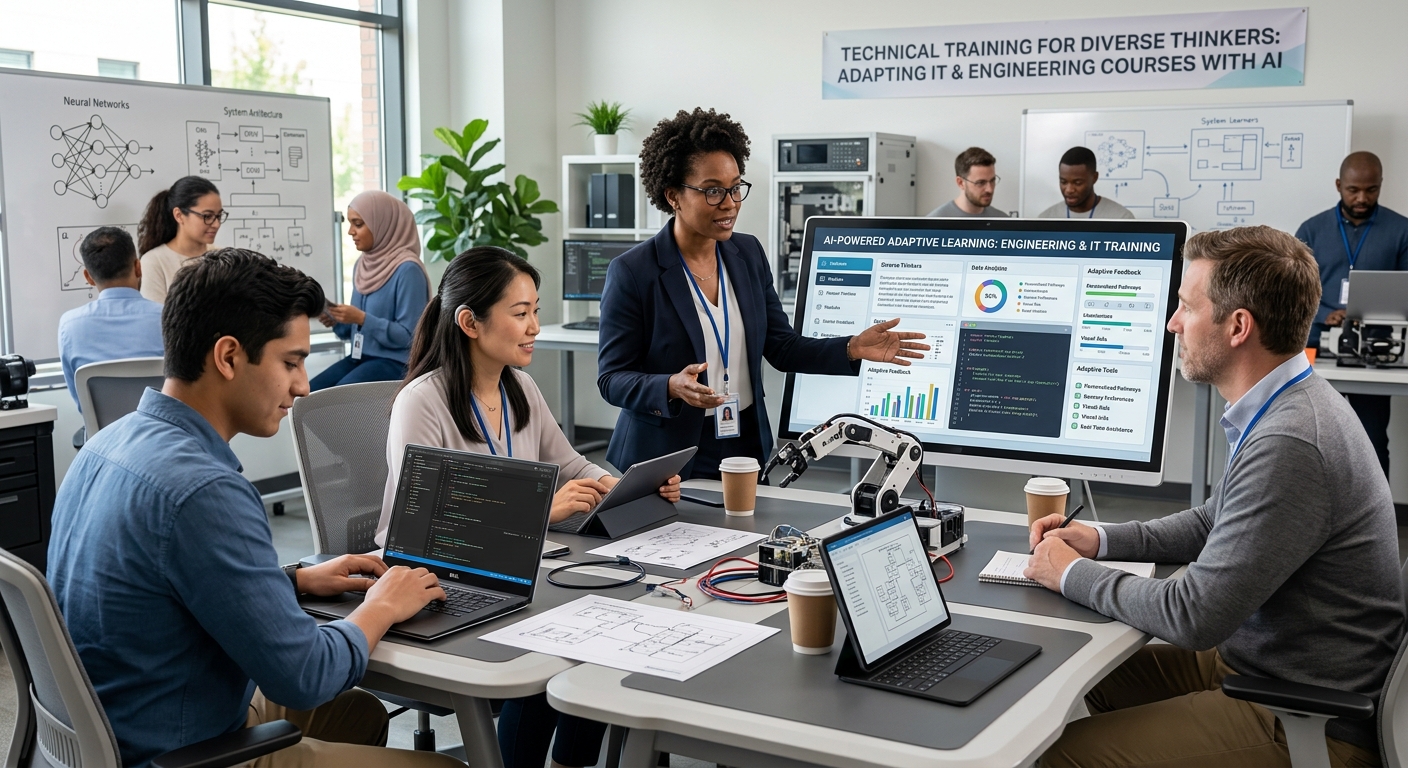
Technical Training for Diverse Thinkers: Adapting IT and Engineering Courses with AI
In today’s rapidly evolving digital landscape, the demand for highly skilled IT and engineering professionals has never been greater. Yet, the traditional "one-size-fits-all" approach to technical training often falls short, especially when catering to a workforce rich in cognitive diversity. As leaders in Learning & Development across industries like Compliance, Sales, Banking, Finance, Insurance, Retail, Pharma, Healthcare, Hospitality, Oil and Gas, and Mining, you understand the critical need for training that not only imparts technical knowledge but also engages every learner effectively. The solution? Artificial Intelligence (AI) – a transformative force that promises to revolutionize how we adapt IT and engineering courses for diverse thinkers.
Cognitive diversity is a superpower in technical teams, fostering innovation, resilience, and superior problem-solving. However, it also presents a unique challenge for training designers. Some learners thrive in highly structured environments, others excel with hands-on exploration. Some prefer visual aids, while others benefit from auditory explanations or kinesthetic activities. How can we ensure every brilliant mind, regardless of their preferred learning style or neurological profile, receives the most impactful and efficient training experience?
The Imperative for Personalized Technical Training
Traditional training often assumes a uniform learning curve and identical foundational knowledge. This oversight can lead to disengagement, slower skill acquisition, and a significant return-on-investment drain. For complex IT and engineering topics, this inadequacy is amplified. Imagine a team of engineers, each with different academic backgrounds, professional experiences, and even neurodivergent traits, all forced through the same rigid training module. The result is often frustration for some and boredom for others.
Modern enterprises need a learning management system that can truly adapt. A robust Microlearning LMS can break down complex topics into digestible segments, making them more accessible. But true personalization goes deeper, requiring an intelligent system that understands and responds to individual learner needs.
AI: The Architect of Adaptive Learning Experiences
AI is not just a buzzword; it's a practical tool for creating dynamic, responsive, and truly personalized learning environments. By leveraging machine learning, natural language processing, and predictive analytics, AI can analyze learner data to sculpt an educational journey unique to each individual. This means moving beyond simple content delivery to a sophisticated process of understanding, adapting, and optimizing the learning path in real-time.
How AI Elevates IT and Engineering Training:
- Dynamic Content Adaptation: AI can reorder modules, suggest supplementary materials, or even generate explanations in different formats (text, video, interactive simulation) based on a learner's past performance, expressed preferences, and cognitive load.
- Personalized Learning Paths: Instead of a linear progression, AI can create branching pathways, allowing learners to skip known topics, dive deeper into challenging areas, or explore adjacent subjects relevant to their role and interests. This is the core of Adaptive Learning.
- Intelligent Assessment and Feedback: AI-driven assessments can identify knowledge gaps with precision, providing immediate, constructive feedback that is tailored to help the learner understand why an answer was incorrect, not just that it was.
- Real-time Support and Coaching: AI-powered virtual tutors and chatbots can provide on-demand assistance, answer questions, and offer guidance, mimicking a human mentor but with 24/7 availability and scalable reach.
Addressing Key Questions for L&D Leaders
Optimizing Global Technical Training Efforts
How can organizations effectively scale personalized technical training across a global workforce, ensuring consistency and local relevance?
Scaling personalized training globally is a significant challenge, especially for multi-national organizations in sectors like Oil and Gas, Banking, or Pharma. AI, integrated within a sophisticated LMS, provides the framework. A cloud based learning management system can host and deliver adaptive content to any location, anytime. AI engines within the system can analyze language preferences, cultural nuances, and regional compliance requirements to present content that resonates locally while maintaining core curriculum consistency. An AI Powered Authoring Tool further empowers L&D teams to rapidly localize and update content without extensive manual effort, making an enterprise learning management strategy truly global and efficient. Solutions like MaxLearn LMS are designed precisely for this scale, transforming how companies manage their learning content management system.
Enhancing Learning Outcomes for Dispersed Teams
What are the most impactful AI tools for enhancing learning outcomes for geographically dispersed engineering and IT teams?
For teams scattered across different time zones and locations, engagement and effective knowledge transfer are paramount. AI brings several impactful tools to the table. Interactive simulations and virtual labs, powered by AI, allow engineers to practice complex procedures in a safe, virtual environment, replicating real-world scenarios without geographical constraints. Gamified LMS platforms, infused with AI, can introduce competitive elements, personalized challenges, and rewards that keep remote learners motivated and connected. Furthermore, AI can analyze learning patterns across different regions, highlighting areas where specific teams might be struggling, allowing L&D to proactively intervene with targeted support or alternative learning resources. A comprehensive learning management software becomes an indispensable hub for these AI-driven functionalities.
Fostering Critical Thinking and Problem-Solving with AI
Beyond specific technical skills, how can AI-driven training foster critical thinking and problem-solving abilities in diverse IT professionals?
Developing critical thinking and problem-solving skills is crucial for innovation and navigating complex challenges in any industry. AI goes beyond rote memorization by creating scenarios that require learners to apply knowledge, analyze situations, and make decisions. For instance, Risk-focused Training, often leveraging AI, can simulate high-stakes IT security breaches or engineering design flaws, compelling learners to identify problems, assess risks, and devise solutions under simulated pressure. The AI system provides feedback not just on the outcome, but on the decision-making process itself, guiding learners toward more effective strategies. This iterative, experiential learning, supported by intelligent learning management solutions, cultivates deep analytical skills and prepares diverse thinkers to tackle unforeseen challenges with confidence. An advanced LCMS is essential for managing such rich, scenario-based content.
Implementing AI-Powered Training: A Strategic Imperative
For L&D leaders, the journey towards AI-powered technical training begins with a strategic vision and the right technology partner. Implementing an intelligent learning management system is the foundational step. This means looking beyond basic functionalities to an LMS that integrates AI capabilities seamlessly, offering features like adaptive content delivery, personalized pathways, and robust analytics.
Consider the following steps:
- Assess Current Needs: Identify specific technical skills gaps and the diversity of your learner population within IT and engineering departments.
- Pilot AI Solutions: Start with a pilot program for a specific course or team to demonstrate the value and gather feedback.
- Invest in the Right Platform: Choose an lms learning management system that is scalable, flexible, and built with AI integration in mind, such as MaxLearn LMS.
- Empower Content Creators: Utilize an AI Powered Authoring Tool to streamline content creation and adaptation.
- Monitor and Iterate: Leverage AI-driven analytics to continuously improve training modules and personalize experiences further.
The Future is Adaptive, Inclusive, and Intelligent
Adapting IT and engineering courses with AI is not just about adopting new technology; it’s about embracing a more inclusive and effective future for talent development. By personalizing learning, organizations can:
- Accelerate skill acquisition and reduce training time.
- Increase learner engagement and retention, particularly for diverse thinkers.
- Foster a culture of continuous learning and innovation.
- Ensure higher compliance rates through more effective Risk-focused Training.
- Build a more competent, confident, and diverse technical workforce.
The time for generic technical training is over. The era of intelligent, adaptive, and deeply personalized learning is here. For L&D professionals seeking to empower their IT and engineering talent, AI offers an unparalleled opportunity to build a workforce ready for tomorrow's challenges.