

Can Microlearning Integrate with Existing SCORM and Enterprise HR Systems?
In today's fast-paced corporate environment, the demand for efficient, engaging, and measurable employee development is higher than ever. Learning and Development (L&D) leaders – Vice Presidents, Directors, and Senior Managers – are constantly seeking innovative solutions to enhance skills, ensure compliance, and drive performance across their organizations. Microlearning has emerged as a powerful methodology, offering bite-sized, focused content that fits seamlessly into busy work schedules. However, a critical question often arises: can this agile approach truly integrate with the robust, often entrenched, SCORM standards and enterprise HR systems that form the backbone of existing training infrastructures?
The short answer is a resounding yes, but the path to seamless integration requires a strategic approach, a clear understanding of current capabilities, and the right technological partners. This article explores how microlearning can not only coexist but thrive within your existing ecosystem, enhancing learning outcomes for industries ranging from Compliance and Sales to Banking, Finance, Insurance, Retail, Pharma, Health care, Hospitality, Oil and Gas, and Mining.
Understanding Microlearning and Its Appeal
Microlearning delivers learning content in small, digestible chunks, typically lasting from 2 to 10 minutes. This format is ideal for just-in-time learning, performance support, and addressing specific skill gaps. Its benefits are numerous:
- Increased Engagement: Shorter modules reduce cognitive load and combat attention decay.
- Improved Retention: Focused content allows learners to concentrate on one concept at a time.
- Flexibility: Learners can access content anywhere, anytime, on any device.
- Agility: Content can be created, updated, and deployed rapidly to meet evolving business needs.
- Cost-Effectiveness: Often more efficient to produce and maintain than lengthy courses.
For organizations looking to implement a modern Microlearning LMS, these advantages represent a significant step forward in optimizing their training strategy.
SCORM: The Lingua Franca of eLearning
SCORM (Sharable Content Object Reference Model) has been the industry standard for packaging, communicating, and tracking online learning content for decades. It ensures that content developed on one system can be launched and tracked by any SCORM-compliant learning management system (LMS). SCORM handles key data points like completion status, scores, and learner progress, making it indispensable for formal training programs, especially in highly regulated sectors like Compliance and Pharma.
The challenge for microlearning, traditionally seen as less formal, is to fit within this structured framework without losing its inherent agility.
The Integration Challenge: Bridging Microlearning with SCORM and HR Systems
Integrating microlearning isn't just about playing a short video. It involves ensuring that these compact learning experiences contribute to a cohesive learning journey, that their completion is recorded accurately, and that this data can be leveraged by broader enterprise systems like HRIS (Human Resources Information Systems) or HCM (Human Capital Management) platforms. This is where a robust enterprise learning management solution becomes crucial.
Microlearning and SCORM Compliance
Many modern learning management software platforms are designed to handle microlearning modules that are still packaged as SCORM-compliant objects. This means that while the content itself is brief, the wrapper around it adheres to SCORM standards, allowing the LMS to track learner interactions just as it would with a longer course. This approach ensures that vital metrics for compliance training, skill validation, and performance reviews are captured effectively.
Connecting with Enterprise HR Systems
The true power of integration lies in connecting learning outcomes with HR data. Imagine linking a salesperson's completion of a Microlearning LMS module on a new product feature directly to their performance review or tying a compliance officer's Risk-focused Training completion to their certification status. This requires a seamless flow of data between the learning management system and the HRIS.
Leveraging Modern Learning Platforms for Seamless Integration
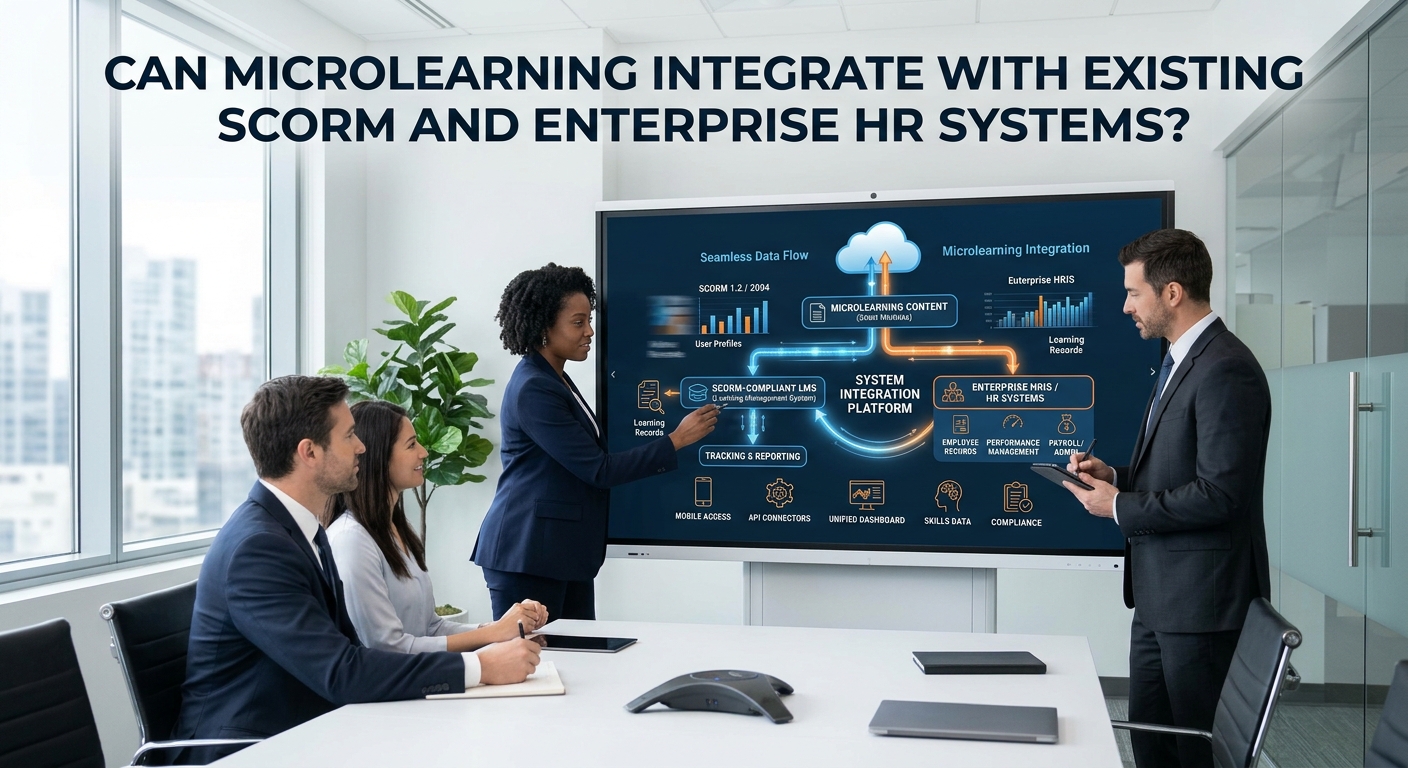
Modern cloud based learning management system solutions, like MaxLearn LMS, are built with integration in mind. They act as the central hub, managing diverse content types, including microlearning, while providing the necessary connectors to existing enterprise systems.
- SCORM-Agnostic yet Compliant: These platforms can host native microlearning content but also process and track SCORM packages, offering the best of both worlds.
- API-First Architecture: A key feature of advanced learning management solutions is an API-first design. This allows for robust, secure, and real-time data exchange with HRIS, payroll systems, and other enterprise applications.
- Single Sign-On (SSO): Implementing SSO means learners can access their microlearning modules and other training materials using their existing enterprise credentials, simplifying the user experience and reducing administrative overhead.
- Advanced Reporting: Unified dashboards provide a comprehensive view of learning progress, completion rates, and skill development, which can then be synchronized with HR performance metrics.
Key Integration Strategies in Practice
For L&D leaders, adopting these strategies can smooth the transition:
- Standardized Content Development: Ensure microlearning content can be exported or developed directly in a SCORM-compatible format using a robust Learning content management system (LCMS) or an AI Powered Authoring Tool.
- Robust API Connectors: Prioritize an LMS that offers pre-built or easily configurable API connections to common HR platforms.
- Data Mapping Strategy: Clearly define how learner data (enrollment, completion, scores, competencies) will flow between the learning management system and the HRIS to ensure accuracy and relevance.
- Phased Rollout: Begin with a pilot program to test the integration points and gather feedback before a full-scale deployment.
The Benefits of Integrated Microlearning
When microlearning is integrated seamlessly, organizations unlock significant advantages:
- Enhanced Employee Experience: A unified platform reduces friction and makes learning a natural part of work, especially with Gamified LMS elements.
- Improved Data-Driven Decisions: L&D teams gain a holistic view of skills gaps and training effectiveness, informing future talent development strategies.
- Regulatory Compliance Assurance: Accurate tracking of microlearning completions within a SCORM framework provides an auditable trail for critical compliance training in sectors like Banking and Healthcare.
- Agile Skill Development: Rapid deployment of microlearning modules allows organizations to respond quickly to market changes or new internal processes, supported by Adaptive Learning paths.
AI-Driven Solutions for Seamless Integration
L&D leaders increasingly consider how advanced technologies can optimize their learning ecosystem. Modern intelligent systems play a pivotal role in streamlining the integration process between microlearning, SCORM, and HR platforms. Organizations often ponder how machine learning can assist in tailoring microlearning content to individual needs, even within a SCORM framework. The answer lies in AI's capability to analyze learner data from both the LMS and HR systems, creating highly personalized learning paths and automatically recommending relevant micro-modules. This ensures that every learner receives the most pertinent content at the right time, maximizing engagement and skill development.
Furthermore, advanced analytics powered by AI significantly improve reporting and insights across disparate systems. By synthesizing vast amounts of data from the learning management system and HRIS, AI provides comprehensive performance metrics that highlight the true impact of training on business outcomes. Consider how an AI Powered Authoring Tool can help in authoring microlearning content that is not only SCORM-compliant but also hyper-relevant to specific roles identified in HR systems. Such tools can automate content tagging, suggest learning objectives, and even generate initial drafts, drastically reducing content creation time while ensuring compliance and relevance.
The impact of intelligent automation extends to the deployment and management of microlearning modules within existing enterprise infrastructure. AI can monitor system performance, identify potential integration issues proactively, and automate routine tasks like user provisioning or content updates based on HR data changes. This ensures a stable and efficient learning environment, allowing L&D teams to focus on strategy rather than manual oversight.
Conclusion
The integration of microlearning with existing SCORM standards and enterprise HR systems is not merely possible but represents the future of effective corporate training. By leveraging advanced learning management system platforms with robust API capabilities, embracing intelligent tools, and adopting a strategic approach to data flow, L&D leaders can build a cohesive, dynamic, and highly effective learning ecosystem. Solutions like MaxLearn LMS provide the technological backbone to achieve this, transforming short, impactful learning moments into a powerful engine for organizational growth and compliance across all industries. Embrace this evolution to empower your workforce, enhance performance, and secure your competitive edge.


