

What the Future of Cognitive Ergonomics Means for Enterprise Learning Programs
In today's rapidly evolving business landscape, the effectiveness of enterprise learning programs is paramount. From LMS platforms to advanced learning content management system tools, organizations are constantly seeking ways to enhance employee knowledge, skills, and performance. At the forefront of this evolution is cognitive ergonomics – a discipline focused on optimizing the interaction between humans and systems by considering human cognitive capabilities and limitations. For Vice Presidents, Directors, and Managers of L&D, understanding the future of cognitive ergonomics isn't just an advantage; it's a strategic imperative for cultivating a high-performing, resilient workforce across all industries, from Compliance and Banking to Pharma and Mining.
The traditional model of enterprise learning, often characterized by lengthy, one-size-fits-all modules, is increasingly insufficient. It struggles to cater to diverse learning styles, combat information overload, and adapt to the rapid pace of change. This is where cognitive ergonomics offers a powerful lens, providing the framework to design learning experiences that truly align with how the human brain processes information, learns, and retains knowledge.
Understanding Cognitive Ergonomics in the L&D Context
Cognitive ergonomics is essentially about making learning easier, more efficient, and less taxing on the brain. It addresses critical aspects such as attention, memory, problem-solving, decision-making, and mental workload. When applied to enterprise learning, it means designing training that:
- Minimizes cognitive load, preventing learners from feeling overwhelmed.
- Enhances retention by aligning content delivery with memory formation processes.
- Boosts engagement by making learning intuitive and contextually relevant.
- Improves transfer of learning to real-world job performance.
In a world where employees in industries like Finance, Healthcare, and Retail are bombarded with information, optimizing their learning environment through cognitive ergonomic principles is no longer a luxury but a necessity for effective skill development and compliance.
The Evolution Driven by Technology and Data
The future of cognitive ergonomics in L&D is inextricably linked to technological advancements, particularly in artificial intelligence (AI) and data analytics. These technologies provide the tools to implement cognitive ergonomic principles at scale, creating truly personalized and effective learning journeys. The shift from generic learning management software to intelligent, adaptive platforms marks a significant leap.
How exactly will intelligent systems redefine the very fabric of content creation and delivery within organizational training?
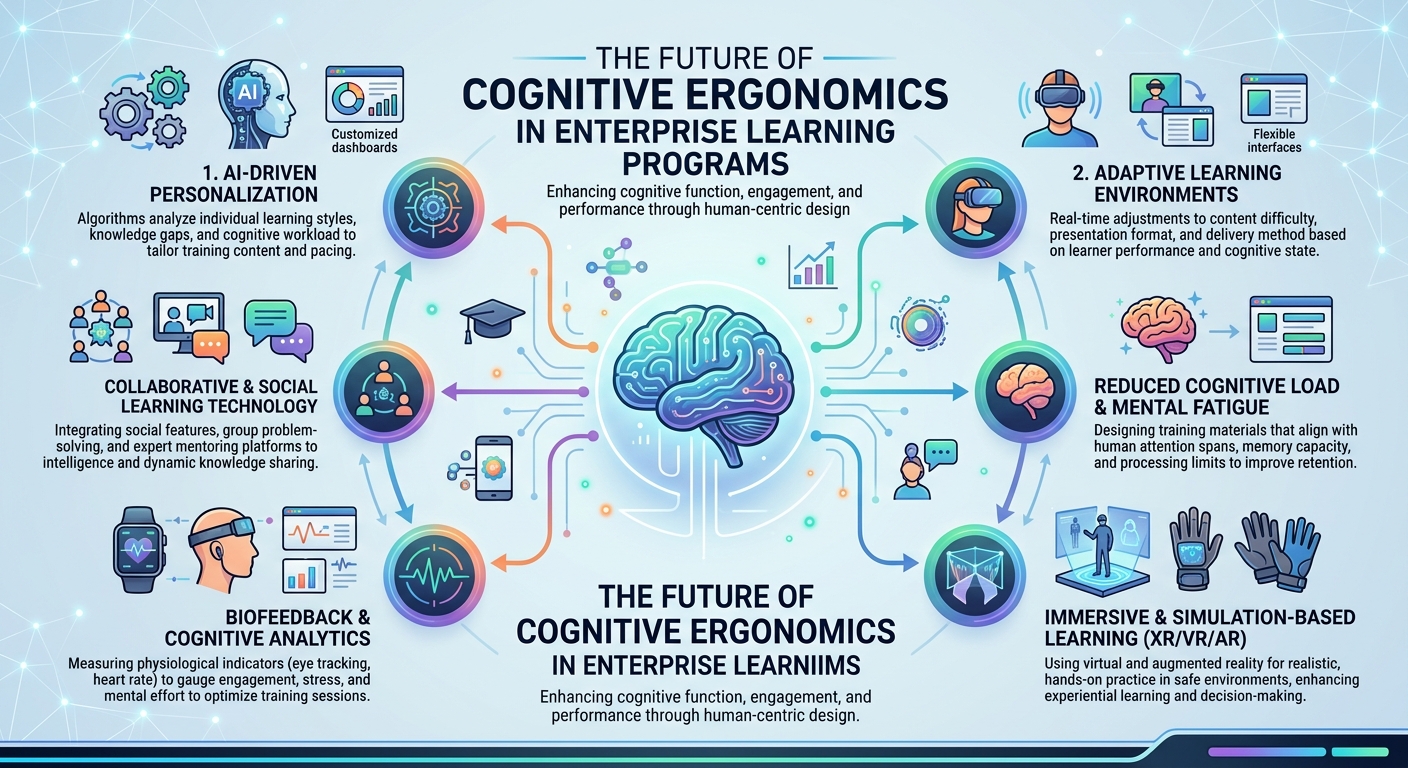
Intelligent systems, powered by advanced algorithms, are set to revolutionize how learning content is developed and disseminated. Imagine an Adaptive Learning platform that dynamically adjusts the pace, difficulty, and even the format of content based on a learner's real-time performance and cognitive state. This goes beyond simple branching scenarios. It involves AI analyzing eye-tracking data, response times, and even biometric feedback to tailor the experience precisely. An AI Powered Authoring Tool can automatically generate multiple versions of a single lesson, optimized for different learning preferences or cognitive profiles, ensuring that each learner receives the most effective material.
What transformative potential do advanced analytical tools hold for ensuring that learning initiatives resonate globally, adapting to diverse cultural contexts and regulatory landscapes?
For multinational corporations in industries like Hospitality, Oil and Gas, or Pharma, ensuring consistent yet culturally sensitive training is a major challenge. Advanced analytical tools can sift through vast datasets of learner interactions, performance metrics, and cultural feedback to identify patterns. This intelligence allows organizations to understand which learning modules perform best in specific geographic regions or demographic segments. It enables the nuanced customization of content, imagery, and language, ensuring global relevance while respecting local sensitivities and compliance regulations. This data-driven approach moves beyond generic translation to true localization, making enterprise learning programs genuinely global in scope and impact.
Key Pillars of Future Cognitive Ergonomics in Enterprise Learning
1. Hyper-Personalization and Adaptive Pathways
The future lies in learning paths that are not just personalized but hyper-personalized. Leveraging AI, a sophisticated lms learning management system can assess individual cognitive profiles, prior knowledge, and learning pace to construct unique learning journeys. This ensures that content is delivered in the most digestible format, at the optimal time, preventing overload and maximizing retention. It's about moving from "what should everyone know?" to "what does *this individual* need to know right now, and how can they learn it best?"
2. Optimized Content Delivery with Microlearning
The human brain thrives on manageable chunks of information. The future of cognitive ergonomics strongly advocates for Microlearning LMS solutions, delivering content in short, focused bursts. This approach reduces cognitive load, respects attention spans, and allows for just-in-time learning. For employees in high-stakes environments such as Banking or Compliance, accessing precise, bite-sized information instantly can be critical for decision-making and Risk-focused Training.
3. Enhanced Engagement through Gamification and Immersive Experiences
Engagement is a cognitive enhancer. Future enterprise learning will heavily rely on Gamified LMS platforms and immersive technologies like VR/AR. These not only make learning enjoyable but also leverage cognitive principles of reward, challenge, and experiential learning to solidify knowledge and promote skill application. For Sales training, simulated customer interactions can provide a safe space for practice and immediate feedback, profoundly impacting real-world performance.
4. Reduced Cognitive Load through Intelligent Design
From intuitive user interfaces to clear, concise language, every aspect of a learning experience can be optimized for cognitive ease. Future platforms will utilize AI to analyze content readability, visual clutter, and navigational complexity, offering real-time suggestions to instructional designers. This ensures that the mental energy of learners is directed towards understanding the content, not deciphering the platform or instructions. Such design principles are vital for any modern enterprise learning management solution.
5. Performance Support and Real-time Feedback
Cognitive ergonomics isn't just about initial learning; it's also about sustained performance. Future learning programs will integrate real-time performance support, offering contextual help exactly when and where an employee needs it. Imagine an intelligent assistant providing immediate guidance for a complex task in a manufacturing plant or a quick policy lookup for an insurance agent. This reduces reliance on memory recall in critical moments and reinforces learning through application.
The Imperative for L&D Leaders
For L&D professionals, embracing cognitive ergonomics and the technologies that enable it is crucial for driving organizational success. A modern cloud based learning management system or LCMS like MaxLearn LMS, designed with these principles in mind, can transform your training initiatives. It allows you to move beyond simply delivering content to truly facilitating learning and behavior change.
Beyond current capabilities, what advanced cognitive insights can future AI-driven platforms provide to preemptively address learning gaps and cultivate a truly adaptive workforce?
The future holds the promise of predictive analytics that can identify potential skill gaps before they become critical, based on industry trends, individual performance data, and even external market signals. AI could analyze patterns of successful learners to recommend optimal pathways for others, essentially learning from the collective intelligence of the workforce. This proactive approach allows organizations to cultivate an adaptive workforce, equipping employees with future-proof skills rather than merely reacting to present deficiencies. This level of foresight transforms a learning management system from a reactive tool into a strategic asset for talent development.
Conclusion
The future of cognitive ergonomics in enterprise learning programs signifies a profound shift towards human-centric, data-driven, and technologically advanced training. By prioritizing how the human brain processes information, L&D leaders can design learning experiences that are not only more engaging and efficient but also deeply impactful on individual and organizational performance. Investing in intelligent learning management solutions that embed cognitive ergonomic principles is no longer a choice but a competitive necessity for any forward-thinking enterprise aiming to thrive in the complex landscapes of today and tomorrow.
.jpg)


