

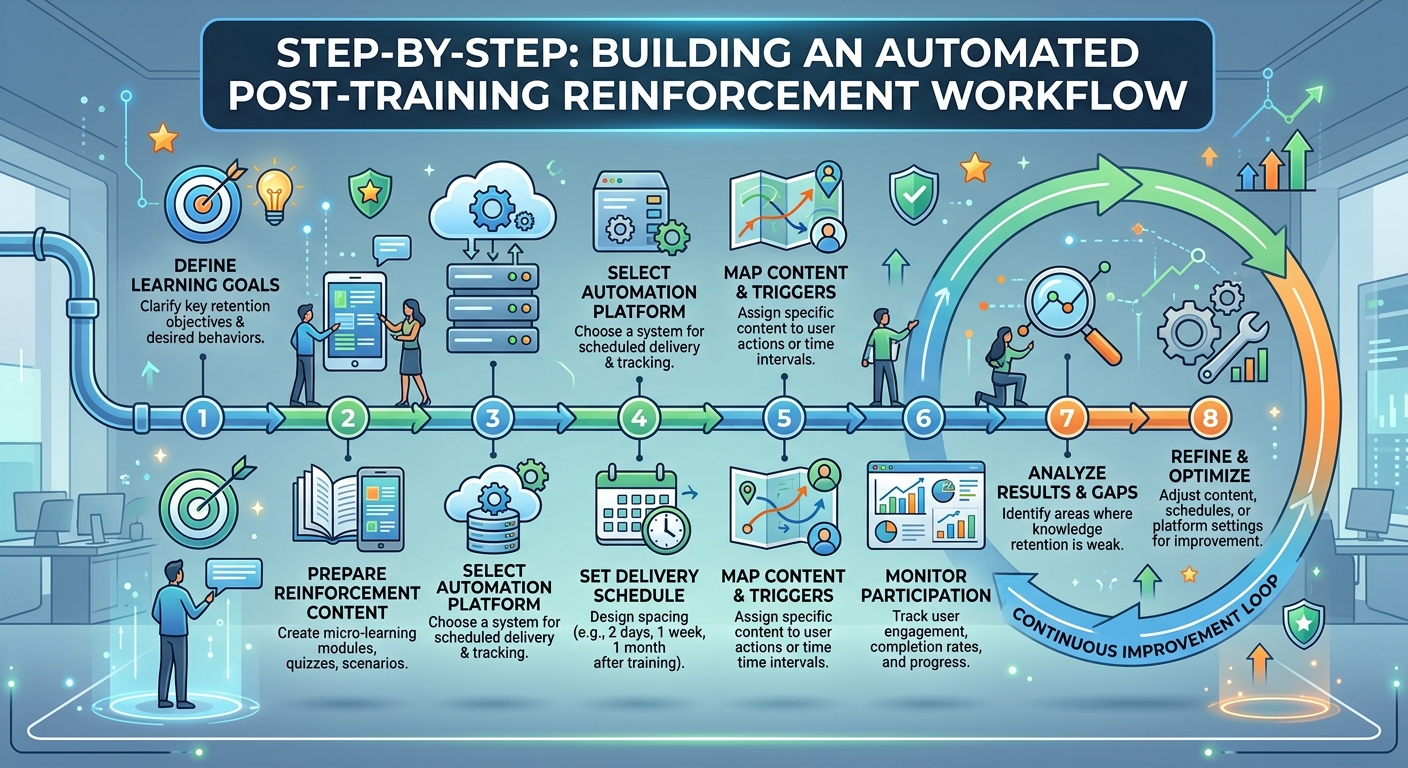
Step-by-Step: Building an Automated Post-Training Reinforcement Workflow
In the dynamic landscape of corporate learning, L&D leaders like you constantly seek innovative ways to ensure training investments yield lasting results. The proverbial "forgetting curve" is a persistent challenge, threatening to erode newly acquired knowledge and skills soon after a training program concludes. This isn't merely an inconvenience; it's a significant drain on resources and a barrier to achieving organizational goals across diverse sectors such as Compliance, Sales, Banking, Finance, Insurance, Retail, Pharma, Health care, Hospitality, Oil and Gas, and Mining.
Imagine a world where learning isn't a one-off event but a continuous, adaptive journey. This is the promise of an automated post-training reinforcement workflow, supercharged by artificial intelligence. By systematically reinforcing key concepts, we can embed learning deeper, improve retention, and foster sustained performance. This article will guide you through building such a workflow, turning transient training into enduring expertise.
Why Post-Training Reinforcement Matters More Than Ever
The imperative for effective post-training reinforcement is clear:
- Combatting the Forgetting Curve: Studies show that learners forget a significant portion of what they've learned within days if not reinforced. An automated system actively pushes relevant content at strategic intervals to counter this natural decay.
- Driving Tangible ROI: Your investment in training, whether it's for new hires in retail or complex compliance procedures in finance, is maximized when employees retain and apply their knowledge. Reinforcement directly translates to higher skill application and productivity.
- Ensuring Skill Retention and Application: In industries like healthcare or oil and gas, skill retention is not just about efficiency but safety and adherence to critical protocols. Consistent reinforcement ensures skills are not just learned but mastered and applied.
The Role of AI in Modern L&D Transformation
Artificial intelligence is no longer a futuristic concept; it's a present-day catalyst for transforming learning and development. Leveraging an advanced Microlearning LMS with AI capabilities is pivotal for creating truly impactful reinforcement.
Question: How can artificial intelligence personalize learning experiences for diverse global teams?
AI's analytical prowess allows it to process vast amounts of learner data – performance, engagement, progress, and even demographics. It can identify individual learning gaps and preferences, then automatically recommend the most relevant reinforcement content. For instance, an employee in the APAC region might receive different content recommendations or learning pathways than one in EMEA, based on localized compliance needs or market nuances, all without manual intervention. This level of personalized content delivery significantly boosts engagement and effectiveness.
Question: What is the impact of AI on optimizing learning content delivery across different devices and environments?
AI algorithms embedded within a robust LMS can dynamically adapt content format and delivery based on the learner's device, connectivity, and even time of day. This means microlearning modules might be condensed for mobile on-the-go learning, or interactive simulations optimized for desktop use, ensuring a seamless and effective experience regardless of location or access method. It ensures that critical sales training or banking regulations are accessible and engaging whether accessed from a tablet in a remote branch or a laptop in a corporate office.
Step-by-Step: Building Your Automated Workflow
Implementing an effective automated post-training reinforcement workflow requires a strategic approach. Here’s how L&D leaders can build one:
Step 1: Define Clear Learning Objectives and Reinforcement Goals
Before automating, clarify what knowledge, skills, or behaviors you want to reinforce. Are you aiming for 100% comprehension of new compliance regulations, faster adoption of a new sales technique, or improved safety protocols in mining? Specific goals will guide content creation and measurement. This foundational step ensures your reinforcement efforts are targeted and measurable.
Step 2: Select the Right Technology Stack
A powerful learning management system is the backbone of your workflow. Look for an enterprise learning management solution that integrates seamlessly with AI. A Microlearning LMS platform is ideal for delivering bite-sized content, while a Gamified LMS can significantly boost engagement. Ensure your chosen LMS supports automated scheduling, content delivery, and robust analytics. Many modern learning management software platforms now offer cloud based learning management system flexibility, crucial for distributed teams.
Step 3: Design Engaging Microlearning Content
Reinforcement works best with digestible content. Develop short, focused microlearning modules that reiterate key concepts, offer practice scenarios, or provide quick knowledge checks. An AI Powered Authoring Tool can significantly accelerate content creation, helping you transform existing materials into engaging, interactive formats. Consider incorporating diverse formats: short videos, quizzes, infographics, and interactive simulations.
Step 4: Implement AI-Driven Personalization and Adaptive Learning
This is where AI truly shines. Configure your LMS learning management system to use AI to analyze learner performance data from initial training and subsequent reinforcement activities. Based on this, the system can dynamically adjust the frequency, type, and difficulty of reinforcement content. For example, learners struggling with specific topics might receive more frequent or alternative content, while those excelling move to more advanced applications. This Adaptive Learning approach ensures maximum relevance and efficiency for each individual, whether they're in insurance or hospitality.
Step 5: Automate Delivery and Scheduling
Set up automated triggers and schedules for your reinforcement content. This could involve spaced repetition, where content is delivered at increasing intervals over time, or event-triggered reinforcement, such as a reminder before a quarterly compliance audit. A sophisticated learning content management system (LCMS) within your learning management solutions suite will allow you to pre-program these sequences, ensuring timely and consistent delivery without manual oversight.
Step 6: Integrate Gamification and Social Learning Elements
To further boost engagement, embed gamified elements like points, badges, leaderboards, and challenges into your reinforcement activities. Encourage social learning through discussion forums or peer challenges within the Gamified LMS. This makes reinforcement feel less like a chore and more like an engaging, competitive, or collaborative experience. Imagine a sales team competing for top spots in a product knowledge challenge or banking employees collaborating on scenario-based compliance exercises.
Step 7: Establish Feedback Loops and Analytics
The final, critical step is continuous monitoring and optimization. Your MaxLearn LMS should provide detailed analytics on completion rates, knowledge retention scores, time spent, and performance improvements. Use this data to refine your content, adjust delivery schedules, and identify areas where training or reinforcement needs improvement. This data-driven approach is particularly crucial for Risk-focused Training, where identifying and mitigating knowledge gaps can prevent significant operational issues or regulatory non-compliance.
Question: How can AI analysis contribute to better L&D decision-making and forecasting for future training needs?
Beyond individual personalization, AI's ability to analyze aggregate data from the entire learning ecosystem provides L&D leaders with invaluable insights. It can identify company-wide skill gaps, predict future training requirements based on evolving industry trends (e.g., new financial regulations or pharmaceutical breakthroughs), and even forecast the impact of training on key business metrics. This predictive capability allows L&D departments to be proactive rather than reactive, strategically allocating resources and designing programs that directly align with long-term organizational success, whether in retail management or complex engineering in oil and gas.
Benefits of an Automated Post-Training Workflow
Embracing an automated, AI-driven post-training reinforcement workflow offers a multitude of advantages for your organization:
- Improved Knowledge Retention: Sustainably embeds learning, leading to a more skilled and knowledgeable workforce.
- Enhanced Performance & Productivity: Employees apply learned skills more effectively, boosting individual and team output.
- Scalability and Efficiency: Automate processes that would be impossible to manage manually, especially for large, distributed workforces.
- Data-Driven Insights: Gain actionable intelligence into learning effectiveness and areas for improvement, directly from your lms learning management system.
- Better Compliance and Reduced Risk: Crucial for sectors like banking and pharma, ensuring regulatory knowledge is current and consistently applied, minimizing errors and associated risks.
Conclusion
The journey from initial training to sustained expertise is often fraught with challenges, but with an automated, AI-powered post-training reinforcement workflow, L&D leaders can bridge this gap effectively. By leveraging cutting-edge learning management solutions and intelligent content delivery, you can transform your organization's learning culture, ensuring that every training investment pays dividends in enhanced performance, compliance, and competitive advantage.
Ready to revolutionize your post-training strategy? Explore how a comprehensive MaxLearn LMS can empower your organization to build an intelligent, automated reinforcement workflow for lasting learning impact.
.jpg)


