

How Smart LMS Platforms Predict and Prevent Knowledge Drop-Off
In today's fast-paced corporate landscape, the adage "knowledge is power" has never been more relevant. Yet, for many organizations, the power of knowledge is frequently diluted by a persistent, often unaddressed challenge: knowledge drop-off. For Vice Presidents, Directors, and Senior Managers in Learning & Development, this phenomenon represents a significant drain on investment in training, leading to skill gaps, compliance risks, and ultimately, hindered performance. The solution? Enter the intelligent learning management system – a sophisticated platform leveraging advanced technology to not only identify but actively combat the erosion of critical information.
Traditional training methods often fall short in ensuring long-term retention. Employees attend courses, complete modules, and pass assessments, only for much of that hard-won knowledge to fade over time. This article explores how smart LMS platforms are revolutionizing corporate learning by predicting when and where knowledge decay is likely to occur, and then implementing proactive strategies to prevent it.
The Pervasive Challenge of Knowledge Erosion
Why does knowledge drop-off happen? The human brain, while remarkable, is also forgetful. The "forgetting curve" illustrates how quickly information can vanish from memory without reinforcement. Add to this the constant influx of new data, the demands of daily tasks, and the natural disuse of specific skills, and it becomes clear why maintaining knowledge is an uphill battle. For businesses, the implications are severe:
- Compliance Failures: In sectors like Banking, Finance, Insurance, and Healthcare, forgotten regulations can lead to hefty fines and reputational damage.
- Reduced Sales Performance: Forgetting product features, sales techniques, or customer service protocols directly impacts revenue.
- Operational Inefficiencies: In industries like Manufacturing, Oil and Gas, or Mining, lapses in procedural knowledge can lead to safety hazards and costly errors.
- Skill Gaps: As technology evolves, static knowledge quickly becomes outdated, creating critical skill gaps across the workforce.
This is where the distinction between a mere content delivery system and an intelligent learning management software becomes crucial.
The Rise of Intelligent Learning Platforms
What differentiates a smart learning content management system from its predecessors? It's the integration of sophisticated algorithms and data analytics. These platforms move beyond simply hosting courses; they learn from learner behavior, anticipate needs, and adapt to individual learning styles. They transform the lms learning management system into a proactive partner in talent development.
Predicting Knowledge Drop-Off: Leveraging Data Intelligence
The first step in prevention is prediction. Smart learning platforms achieve this through robust data collection and analytical capabilities.
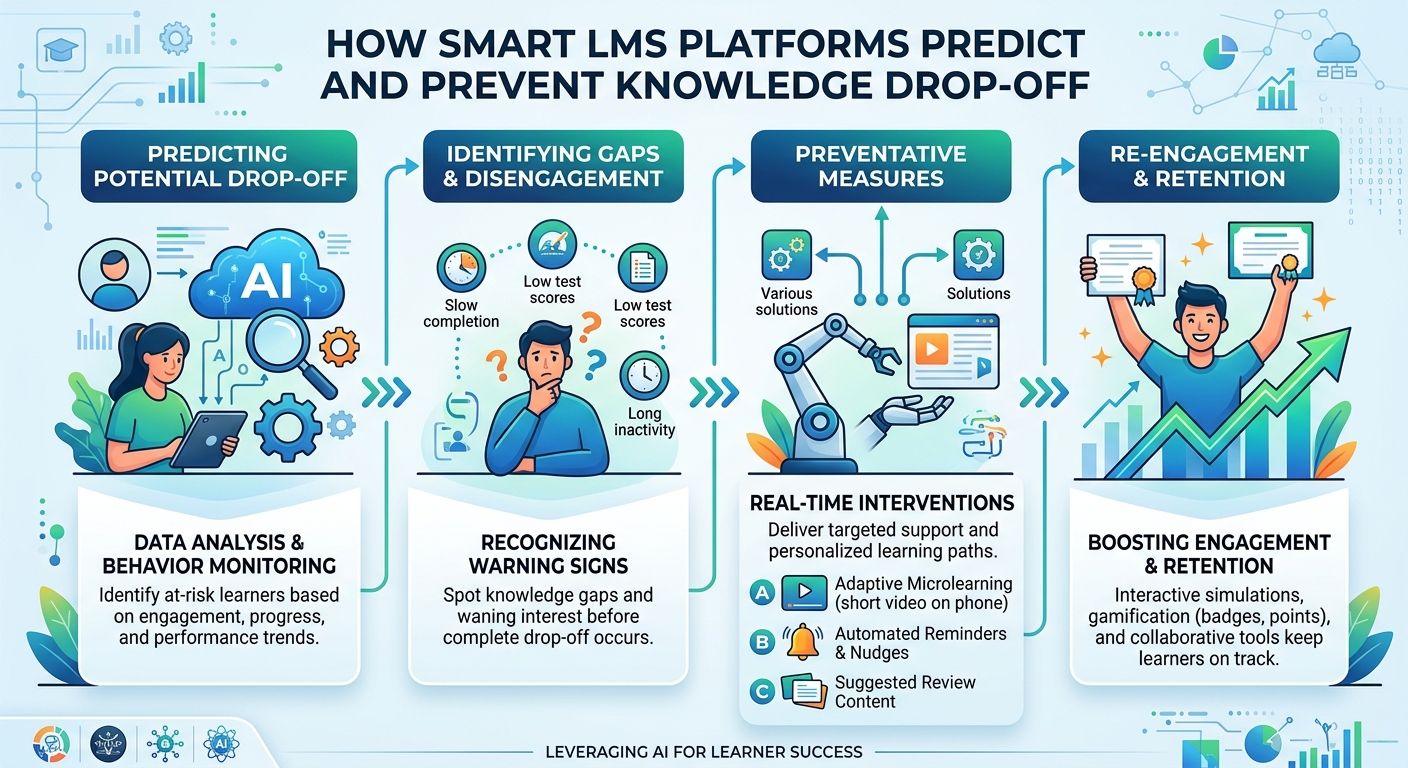
- Behavioral Analytics: By tracking login frequency, course completion rates, time spent on modules, quiz scores, and interaction patterns, the platform can identify learners who are disengaging or struggling. For instance, a decline in engagement after a critical compliance module might flag an employee at risk of forgetting key information.
- Performance Trends: Analyzing past assessment results and correlating them with job performance data allows the system to build predictive models. If a specific topic consistently shows low retention rates among a group, the system can flag that content or audience for intervention.
- Early Warning Systems: These platforms use machine learning to detect patterns indicative of future knowledge gaps, such as prolonged inactivity, repeated failures on specific question types, or low confidence ratings during self-assessments.
Question: How can advanced analytics within a learning platform pinpoint specific learning deficiencies across a global workforce?
Answer: Intelligent learning platforms aggregate performance data, engagement metrics, and assessment results from diverse geographical regions and business units. They employ sophisticated statistical models to identify patterns, such as a particular module causing difficulty in specific regions, or consistent struggles with certain concepts across different departments. This granular insight, derived from analyzing vast datasets, allows L&D leaders to understand not just 'who' is struggling, but 'what' specific knowledge areas are deficient, and 'where' these deficiencies are most prevalent, enabling highly targeted interventions regardless of location.
Preventing Knowledge Drop-Off: Proactive and Personalized Interventions
Once potential knowledge gaps are identified, smart learning platforms deploy an array of proactive strategies.
Personalized Learning Paths
One size no longer fits all. Intelligent systems leverage individual learner data to create personalized learning journeys. If a learner struggles with a particular concept, the system can automatically recommend supplementary materials, micro-modules, or alternative explanations. This tailored approach ensures that learners receive exactly the content they need, when they need it, vastly improving retention. This is particularly effective when integrated with a Microlearning LMS, delivering bite-sized, relevant content at the point of need.
Spaced Repetition and Reinforcement
Overcoming the forgetting curve requires spaced repetition. Smart platforms automate this process by scheduling follow-up quizzes, flashcards, and quick knowledge checks at scientifically optimized intervals. These aren't random; they're strategically timed based on the learner's previous performance and the perceived difficulty of the content. This is crucial for Risk-focused Training where consistent reinforcement of critical procedures is non-negotiable.
Gamification and Engagement
Engagement is key to retention. A Gamified LMS transforms learning into an interactive and rewarding experience. Features like points, badges, leaderboards, and challenges motivate learners to engage more frequently and deeply with content. This not only makes learning enjoyable but also encourages active recall and competition, which are powerful drivers of knowledge retention.
Dynamic Content Curation and Creation
Content relevance is paramount. An AI Powered Authoring Tool within an intelligent learning platform can analyze existing content, suggest updates based on performance data or external trends, and even assist in generating new, relevant modules. This ensures that training materials are always current and impactful, adapting to evolving business needs and industry standards.
Question: Can intelligent learning systems adapt training content to cultural nuances and regulatory differences for various operational regions?
Answer: Absolutely. Modern intelligent learning platforms are designed with flexibility for content localization. They can tag content with geographical and regulatory metadata, allowing for dynamic content delivery based on a learner's region. This means an employee in one country might receive training modules tailored to their local compliance laws and cultural context, while a counterpart in another region receives different, equally relevant content. This adaptive capability ensures that training is not only effective but also culturally appropriate and legally compliant everywhere the organization operates.
Question: What mechanisms do these platforms use to create a truly individualized learning journey that optimizes knowledge retention for each employee?
Answer: These systems leverage sophisticated adaptive algorithms. Initially, they assess a learner's existing knowledge, role, and learning style. As the learner progresses, the platform continuously analyzes their interactions, performance on assessments, time spent on different topics, and even emotional responses (if measured). Based on this data, it dynamically adjusts the learning path, recommending specific resources, altering the difficulty of content, varying the presentation format (e.g., video, text, simulation), and scheduling personalized review sessions. This continuous feedback loop ensures the learning journey is always optimized for maximum individual engagement and retention.
Industry-Specific Impact of Smart Learning Management Solutions
The benefits of a smart learning management solutions ripple across various industries:
- Compliance: In Banking, Finance, Insurance, and Healthcare, smart platforms ensure continuous adherence to complex regulations by identifying and rectifying knowledge gaps before they lead to non-compliance.
- Sales & Retail: Constant product updates and sales technique refinements can be delivered and reinforced, directly boosting sales performance.
- Pharma & Healthcare: Critical medical procedures and drug information can be consistently reinforced, reducing errors and improving patient outcomes.
- Hospitality: Maintaining high service standards through continuous, relevant training for staff across various roles and locations.
- Oil & Gas, Mining: Ensuring safety protocols and operational procedures are deeply ingrained through ongoing, reinforced training.
For large organizations, an enterprise learning management system powered by intelligence becomes indispensable, offering a comprehensive and cohesive approach to talent development.
Choosing the Right Smart Learning Platform
When evaluating an LCMS, L&D leaders should prioritize:
- Robust Analytics: The ability to track, analyze, and predict learning trends.
- Personalization Capabilities: Features for adaptive learning paths and content recommendations.
- Engagement Tools: Gamification, social learning, and interactive elements.
- Scalability & Integration: Can it grow with your organization and integrate with existing HR systems?
- Content Authoring: Tools that empower L&D teams to create and update dynamic content efficiently.
Solutions like MaxLearn LMS exemplify these capabilities, offering a comprehensive and intuitive platform designed to maximize knowledge retention. Opting for a cloud based learning management system further enhances accessibility, scalability, and ease of management.
Conclusion
Knowledge drop-off is no longer an inevitable byproduct of learning. With the advent of smart learning management system platforms, L&D leaders now have powerful tools to predict where and when knowledge erosion might occur, and to implement proactive, data-driven strategies to prevent it. By embracing these intelligent solutions, organizations can foster a culture of continuous learning, ensure critical information sticks, and ultimately, drive sustainable business growth and competitive advantage. The future of corporate learning is intelligent, personalized, and designed for lasting impact.
.jpg)


