

Dynamic Reinforcement: Using Data Analytics to Target Individual Learning Gaps
In today's fast-paced corporate environment, the efficacy of Learning and Development (L&D) initiatives is paramount. For Vice Presidents, Directors, and Managers of L&D, the challenge isn't just delivering training, but ensuring that every learning minute translates into measurable skill enhancement and improved performance. The traditional one-size-fits-all approach to corporate training often falls short, leaving critical skill gaps unaddressed and valuable resources underutilized. This is where the paradigm of dynamic reinforcement, powered by advanced data analytics, emerges as a game-changer.
Understanding Dynamic Reinforcement in Corporate Learning
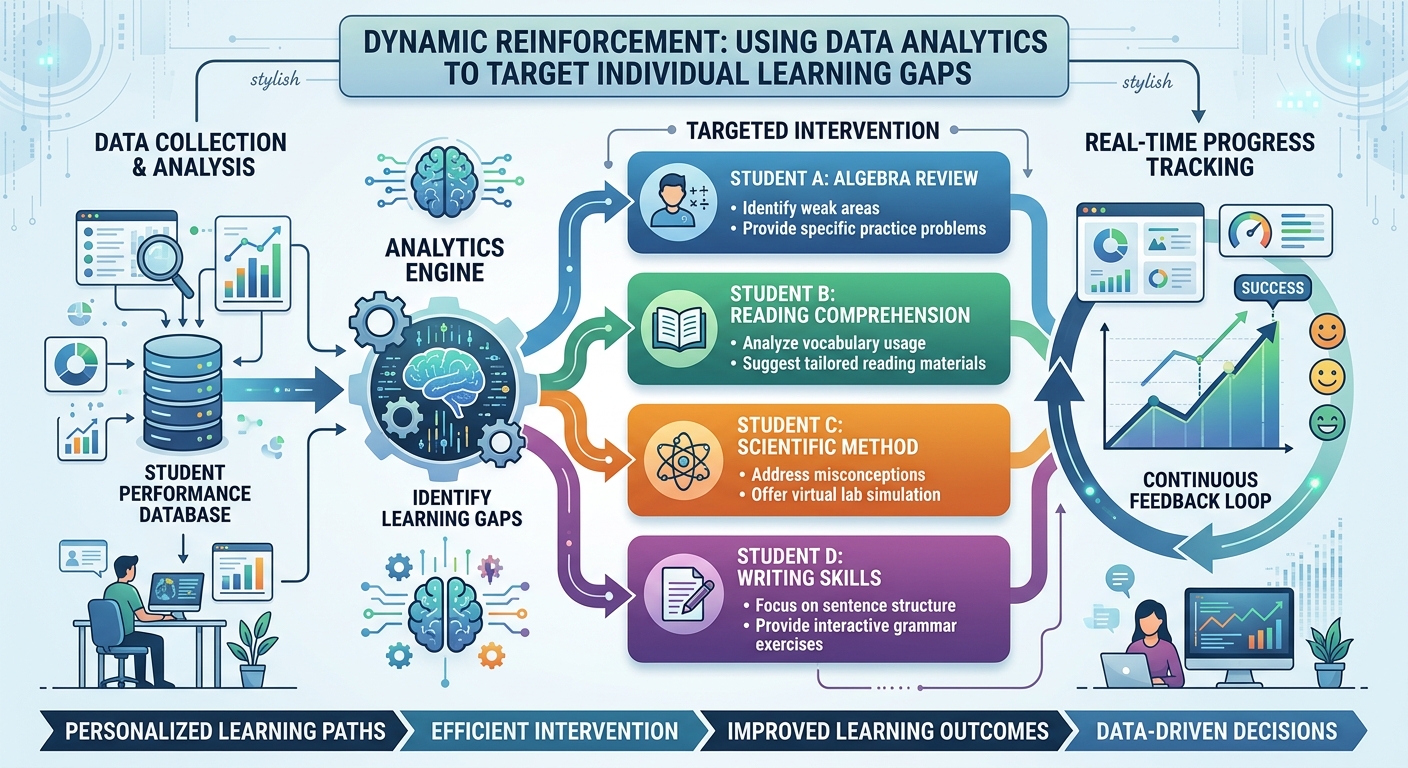
Dynamic reinforcement is a sophisticated approach to corporate training that moves beyond static courseware to provide personalized, timely, and adaptive learning experiences. Instead of a linear curriculum, it leverages data to identify specific knowledge or skill deficits at an individual level and then delivers targeted interventions to close those gaps. This adaptive methodology ensures that learners receive precisely what they need, when they need it, fostering deeper understanding and long-term retention.
Imagine a sales team where each member has unique strengths and weaknesses. A traditional sales training program might cover all topics equally. Dynamic reinforcement, however, analyzes performance data, quiz results, and engagement metrics to pinpoint, for example, that salesperson A struggles with objection handling, while salesperson B needs help with closing techniques. The system then delivers customized modules and practice scenarios directly addressing those individual needs.
The Power of Data Analytics in Pinpointing Learning Gaps
At the heart of dynamic reinforcement lies robust data analytics. Modern learning management software collects a wealth of data points, from completion rates and assessment scores to interaction patterns and time spent on specific topics. This data, when analyzed effectively, provides an unparalleled granular view of each learner's journey.
How L&D Can Leverage Data for Deeper Insights:
- Performance Tracking: Monitoring actual job performance data (e.g., sales figures, compliance adherence, error rates) against training outcomes to identify areas where learning hasn't translated into application.
- Assessment Analytics: Analyzing quiz and exam results not just for pass/fail, but to identify common misconceptions, challenging questions, or specific modules where learners consistently underperform.
- Engagement Metrics: Tracking which content types (videos, simulations, articles) learners engage with most, how long they spend, and their interaction patterns to understand learning preferences and efficacy.
- Sentiment Analysis: Gathering qualitative feedback from learners and analyzing it to identify perceptions of difficulty, relevance, or gaps in content coverage.
A common question L&D leaders ask is: How can L&D ensure their training content is easily discoverable and provides direct answers to specific learner needs, especially when learners use search engines or intelligent assistants to find information?
The key lies in structuring content clearly, using precise terminology, and tagging it comprehensively within a sophisticated learning management system. This allows internal search functions and external intelligent assistants to accurately interpret user queries and direct them to the most relevant, targeted learning modules or snippets. Data analytics on user search queries within the system can further refine content and tagging strategies.
Implementing Dynamic Reinforcement: Tools and Strategies
To successfully implement dynamic reinforcement, L&D departments require more than just data; they need the right ecosystem. A modern Microlearning LMS is often the foundational technology, providing the infrastructure to deliver bite-sized, targeted content effectively.
Key components for implementation include:
- Adaptive Learning Pathways: Systems that dynamically adjust a learner's path based on their performance, preferences, and identified gaps. This ensures personalized progression, avoiding redundant content and focusing on areas of need. Implementing true Adaptive Learning transforms the learning experience.
- Continuous Assessment & Feedback: Short, frequent assessments embedded throughout the learning journey provide real-time data on comprehension and retention, triggering immediate reinforcement loops.
- Personalized Content Delivery: Leveraging an intelligent content delivery system that can pull from a rich library of micro-modules and deliver them based on individual profiles and performance data.
- Actionable Analytics Dashboards: Providing L&D managers with clear, intuitive dashboards to visualize learning data, identify trends, and measure the impact of interventions.
Benefits Beyond Engagement: ROI and Performance Improvement
The benefits of dynamic reinforcement extend far beyond simply making learning more engaging. For industries such as Compliance, Banking, Finance, Pharma, and Healthcare, where the cost of error is high, targeted training can significantly mitigate risks. For Sales and Retail, it directly impacts revenue generation by honing specific skills that drive performance.
Key advantages include:
- Improved ROI: By focusing resources on actual needs, training budgets are utilized more efficiently, leading to a higher return on investment.
- Enhanced Skill Proficiency: Directing learners to specific areas of weakness ensures those gaps are systematically closed, leading to higher overall skill levels across the workforce.
- Reduced Time to Competency: Learners achieve proficiency faster by not spending time on what they already know.
- Increased Learner Satisfaction: Personalized learning is more relevant and less frustrating, leading to higher engagement and satisfaction. Incorporating a Gamified LMS can further boost motivation and retention.
- Mitigation of Business Risks: Especially critical in sectors requiring Risk-focused Training, dynamically reinforcing critical compliance knowledge or safety protocols directly reduces the likelihood of errors and costly incidents.
AI's Transformative Role in Content Creation and Delivery
The advent of artificial intelligence is further revolutionizing how L&D can implement dynamic reinforcement, from content generation to intelligent delivery.
Another critical question for L&D professionals is: How can instructional designers leverage advanced computational models to efficiently create and refine diverse learning content that adapts to individual paces and styles?
An AI Powered Authoring Tool can dramatically accelerate content development. These tools can generate initial drafts of course materials, quizzes, and simulations based on input topics and learning objectives. They can also suggest variations in content presentation to suit different learning styles, analyze existing content for readability and clarity, and even propose microlearning segments based on larger modules, all contributing to a more adaptive learning ecosystem.
And finally, L&D leadership often asks: What methods can L&D leaders employ to ensure that the critical knowledge from their extensive training libraries is accurately and effectively delivered by intelligent tutoring systems or chatbots when learners seek assistance?
Ensuring content is atomized, well-indexed, and semantically rich is paramount. When content is broken down into granular, distinct learning objects, intelligent systems can more easily identify and retrieve the precise information required by a learner's query. Implementing robust metadata and semantic tagging allows these systems to understand the context and intent behind a learner's question, delivering highly relevant and accurate responses, effectively transforming the traditional learning content management system into an intelligent knowledge base.
Industry Applications Across the Board
Dynamic reinforcement holds immense potential across a diverse range of industries:
- Compliance: For banking, finance, and healthcare, ensuring all employees understand evolving regulations is vital. Data analytics can pinpoint individuals struggling with specific compliance modules, providing targeted refreshers to prevent costly non-compliance.
- Sales: Identifying skill gaps in product knowledge, pitching, or negotiation allows for personalized coaching and training, directly impacting revenue.
- Pharma & Healthcare: For clinical trials, new drug launches, or patient care protocols, dynamic reinforcement ensures critical medical knowledge is retained and applied correctly, minimizing risks and improving outcomes.
- Retail & Hospitality: Training on customer service standards, product features, or operational procedures can be tailored to individual roles and performance, enhancing customer experience and efficiency.
- Oil & Gas / Mining: Safety training is paramount. Data can highlight specific safety protocols or equipment operation procedures where employees show weaknesses, prompting immediate, targeted remediation to prevent accidents.
Conclusion
The future of corporate L&D is personalized, data-driven, and adaptive. By embracing dynamic reinforcement and leveraging the power of data analytics, L&D leaders can move beyond generic training to cultivate a truly skilled, agile, and high-performing workforce. Investing in sophisticated learning management solutions that enable this level of personalization is no longer a luxury but a strategic imperative. The ability to precisely identify and address individual learning gaps not only optimizes learning outcomes but also drives tangible business results, ensuring your organization remains competitive and resilient in an ever-changing landscape.
.jpg)


