

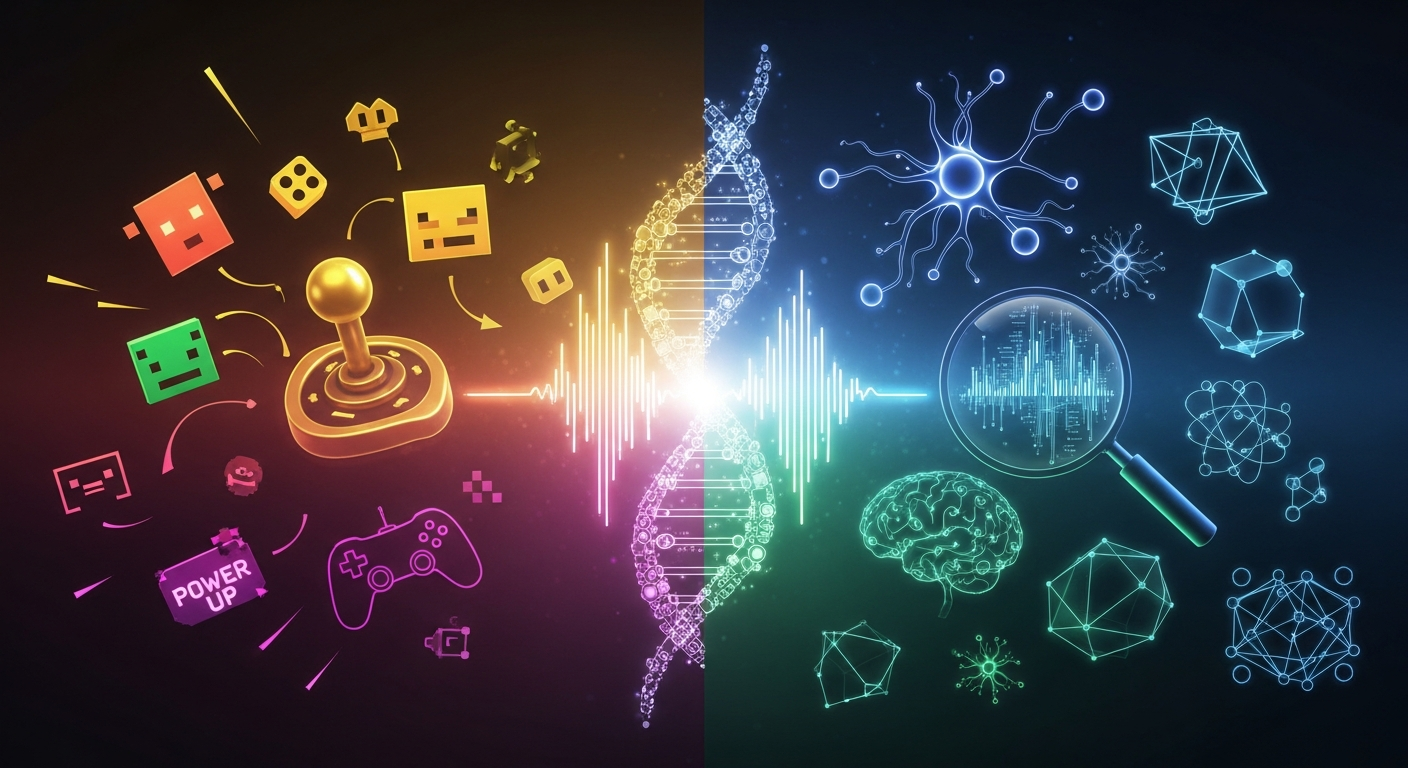
The Science of Fun: How Game Psychology and Learning Science Synergize
In the dynamic world of corporate learning and development, the quest for truly effective and engaging training solutions is perennial. Vice Presidents, Directors, and Senior Managers of L&D are constantly seeking innovative strategies to enhance skill acquisition, foster behavioral change, and ensure high retention rates across diverse sectors like Compliance, Sales, Banking, Finance, Insurance, Retail, Pharma, Healthcare, Hospitality, Oil and Gas, and Mining. The answer might lie in a fascinating convergence: the strategic synergy between game psychology and learning science.
Imagine a learning environment where employees are not just passively absorbing information, but actively participating, driven by intrinsic motivation, and achieving mastery through enjoyable challenges. This isn't a futuristic dream; it's the present reality enabled by a deep understanding of what makes games compelling and how humans truly learn. By blending these two powerful disciplines, L&D professionals can unlock unprecedented levels of engagement and effectiveness in their training programs, making learning an experience employees actively seek out.
The Irresistible Pull of Game Psychology
Why are games so inherently captivating? The answer lies in their meticulously crafted psychological frameworks. Game psychology leverages several core principles that resonate deeply with human nature, driving engagement and persistence:
- Motivation: Games provide clear objectives, immediate feedback, and a sense of progress, fueling both intrinsic and extrinsic motivation. The desire to overcome challenges and achieve goals is a powerful driver.
- Challenge & Mastery: They offer tasks that are just difficult enough to be engaging, fostering a "flow state" where learners are fully immersed and optimally challenged, leading to a profound sense of accomplishment upon mastery.
- Reward Systems: Points, badges, leaderboards, and virtual currencies are not mere trinkets; they are tangible representations of progress and achievement, reinforcing desired behaviors and effort.
- Social Interaction: Many games thrive on collaboration, competition, and community, tapping into our social needs and enhancing the overall experience.
- Narrative & Immersion: Engaging stories and immersive environments transport players, making the learning experience memorable and contextual.
- Autonomy & Control: Games often empower players with choices, allowing them to forge their own path and feel a sense of ownership over their journey.
These elements, when thoughtfully integrated into training, transform mundane tasks into meaningful experiences, significantly boosting learner involvement and commitment. The result is a shift from obligation to aspiration, where employees are eager to engage with the learning content.
The Foundational Principles of Learning Science
While game psychology provides the 'fun' and 'engagement,' learning science ensures the 'learning' is robust and lasting. It’s the bedrock upon which effective instructional design is built, drawing from cognitive psychology, educational neuroscience, and pedagogical research. Key principles include:
- Cognitive Load Theory: Designing content to optimize the amount of information learners process at one time, preventing overload and facilitating understanding.
- Spaced Repetition: Distributing learning over time with increasing intervals between reviews, significantly enhancing long-term memory retention.
- Retrieval Practice: Actively recalling information from memory, which strengthens neural pathways and improves comprehension more effectively than passive review.
- Constructivism: Learners actively construct their own understanding and knowledge through experience and reflection, rather than passively receiving information.
- Feedback Loops: Providing timely, specific, and actionable feedback that helps learners understand their performance and correct misconceptions.
- Contextual Learning: Presenting information in relevant, real-world scenarios to make it more meaningful and transferable.
A sophisticated LMS or Microlearning LMS platform, designed with these principles in mind, becomes more than just a content delivery system; it becomes a powerful engine for knowledge acquisition and skill development.
The Powerful Synergy: Where Fun Meets Function
The true magic happens when game psychology and learning science are not just coexisting but actively complementing each other. Game elements become powerful vehicles for delivering learning science principles:
- Gamified Feedback for Retrieval Practice: Instead of simple quizzes, imagine challenge levels that require recall, rewarding correct answers with points or progress, turning retrieval practice into an engaging pursuit.
- Narrative-driven Contextual Learning: A storyline can provide a compelling framework for real-world scenarios, making abstract concepts concrete and relatable, crucial for Risk-focused Training in finance or compliance.
- Adaptive Challenges for Cognitive Load Management: An Adaptive Learning system, gamified with difficulty levels that adjust based on performance, ensures learners are always in their optimal cognitive zone, preventing frustration or boredom.
- Microlearning with Immediate Rewards: Breaking down complex topics into bite-sized Microlearning LMS modules, each ending with a small gamified reward, reinforces frequent learning and encourages progression.
- Social Elements for Collaborative Constructivism: Team-based challenges or leaderboards foster collaboration and peer learning, allowing employees to construct knowledge together in a competitive or cooperative setting.
Modern learning management software, particularly a robust Gamified LMS, is specifically engineered to embed these synergistic mechanisms, delivering a holistic and highly effective learning experience. It transforms a basic learning management system into an enterprise learning management solution that truly moves the needle.
Unlocking L&D Potential with Intelligent Systems
L&D leaders are constantly evaluating how to maximize the impact of their training initiatives. The integration of intelligent systems significantly amplifies the synergy between game psychology and learning science. Here are some forward-thinking approaches L&D professionals are considering:
- Optimizing Content Through Advanced Analytics: Data collected from learner interactions, performance metrics, and engagement patterns within a sophisticated learning management system can be analyzed by intelligent algorithms. This allows L&D teams to identify areas where content excels or falls short, personalize learning paths, and even flag specific modules for revision to ensure continuous improvement in instructional design.
- Tailoring Educational Experiences with Smart Algorithms: Advanced computational models can assess individual learner needs, track their progress, and understand their preferences in real-time. This enables the delivery of highly customized content, recommending specific modules, adjusting the difficulty of challenges, and providing targeted, intelligent feedback. This level of personalization mimics the effectiveness of a skilled human tutor but at scale, making learning profoundly more relevant and efficient for each employee.
- Leveraging Computational Intelligence for Enhanced Immersion: The future of training environments will increasingly rely on computational intelligence to create deeply engaging experiences. Imagine immersive simulations that dynamically react to a learner's decisions, virtual coaches offering real-time guidance and nuanced feedback, and content generation that adapts on the fly to a learner's emotional state or specific skill gaps. This transforms learning into an interactive dialogue, where the system intuitively understands and responds to the learner, making it feel less like a course and more like a personalized journey of discovery. Tools like an AI Powered Authoring Tool are already paving the way, streamlining content creation for these dynamic environments.
Tangible Benefits for L&D Leaders
For VPs, Directors, and Senior Managers, the adoption of this integrated approach translates into clear, measurable advantages:
- Elevated Engagement & Participation: Employees are more likely to complete training, actively participate, and return for more when it's intrinsically rewarding.
- Improved Knowledge Retention: Principles like spaced repetition and retrieval practice, powered by gamified mechanics, ensure information sticks long-term.
- Faster Skill Acquisition: Immersive, feedback-rich environments accelerate the mastery of new skills, crucial for competitive industries.
- Enhanced Behavioral Change: By motivating consistent practice and providing immediate feedback, these methods are excellent for fostering new habits and desired behaviors, vital in compliance and customer service roles.
- Demonstrable ROI: Higher engagement and retention directly lead to a more skilled workforce, fewer errors, increased productivity, and ultimately, a stronger bottom line across all industries, from healthcare to oil and gas.
- Scalability and Consistency: A cloud based learning management system leveraging these synergies ensures that high-quality, engaging training is accessible to a global workforce, consistently delivering the same impactful experience.
Whether it’s onboarding new hires in retail, ensuring regulatory compliance in banking, mastering complex medical devices in pharma, or enhancing sales techniques in any sector, a learning management software that marries game psychology with learning science offers a robust, future-proof solution.
Conclusion
The convergence of game psychology and learning science represents a paradigm shift in corporate training. It’s about leveraging the inherent human desire for challenge, progress, and mastery to create educational experiences that are not only effective but genuinely enjoyable. For L&D leaders striving to build a highly skilled, motivated, and adaptable workforce, embracing this synergy is no longer an option but a strategic imperative. Explore how a modern MaxLearn LMS can help you transform your learning landscape, moving beyond traditional methods to a vibrant, engaging, and scientifically sound approach to professional development.


