

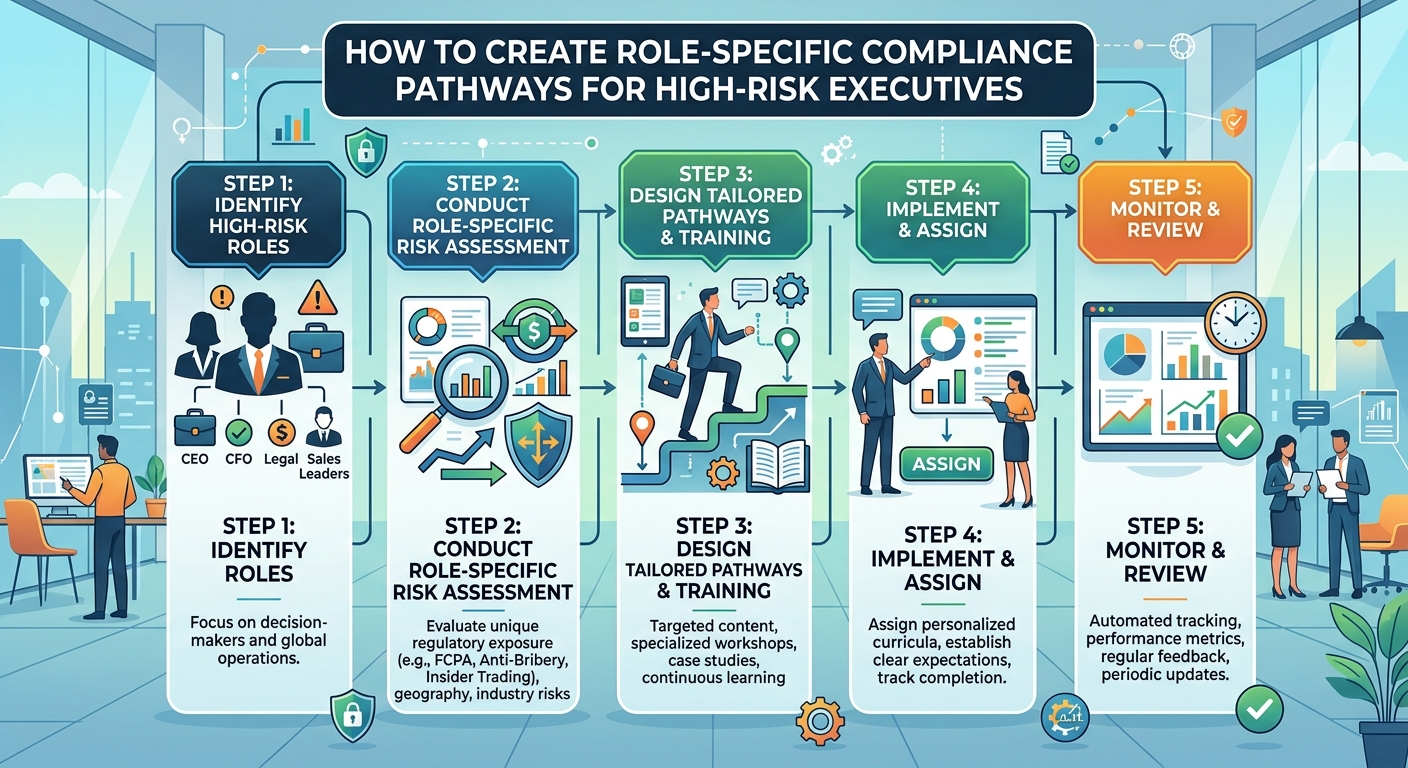
How to Create Role-Specific Compliance Pathways for High-Risk Executives
In today's complex and rapidly evolving business landscape, regulatory compliance is no longer a mere checkbox exercise, especially for an organization's leadership. High-risk executives, by virtue of their roles and decision-making power, operate at the nexus of significant corporate risk. Their actions, or inactions, can have profound implications, ranging from hefty fines and legal repercussions to devastating reputational damage and market erosion. Generic, one-size-fits-all compliance training simply doesn't cut it for these critical individuals. It fails to address the nuanced, specific risks inherent in their positions, leaving organizations vulnerable.
For L&D professionals – Vice Presidents, Directors, Senior Managers, and Managers – the challenge is clear: how do you design a compliance training strategy that is not only effective but also highly relevant, engaging, and directly mitigates the unique risks faced by your executive team? The answer lies in creating bespoke, role-specific compliance pathways, meticulously tailored to the distinct responsibilities, decision points, and regulatory exposures of each high-risk executive. This article delves into the strategies for building such robust pathways, leveraging modern eLearning tools and cutting-edge artificial intelligence to transform compliance from a burden into a strategic advantage across industries like Banking, Finance, Insurance, Retail, Pharma, Health care, Hospitality, Oil and Gas, and Mining.
Why Role-Specific Compliance is Indispensable for Executives
Executives in various sectors face a unique set of compliance challenges. A Chief Financial Officer, for instance, grapples with financial reporting integrity, anti-money laundering (AML), and investor protection regulations. A Head of Sales may contend with anti-bribery and corruption (ABC) laws, antitrust issues, and data privacy concerning customer information. A Chief Technology Officer navigates cybersecurity compliance, data governance, and intellectual property laws. These distinct profiles demand tailored education.
- Mitigating Unique Risks: Executives are often involved in high-stakes transactions, international dealings, and strategic decisions that expose them to complex regulatory frameworks like FCPA, GDPR, Sarbanes-Oxley, or industry-specific regulations.
- Preventing Costly Penalties: Non-compliance at the executive level can lead to severe fines, criminal charges, exclusion from government contracts, and significant legal fees, far outweighing the investment in specialized training.
- Protecting Reputation: A compliance failure involving an executive can severely damage public trust and brand equity, which takes years to build and moments to destroy.
- Fostering Ethical Leadership: Tailored training reinforces a culture of integrity and accountability from the top down, setting a powerful example for the entire organization.
Key Pillars of a Robust Executive Compliance Pathway
Comprehensive Risk Assessment
The foundation of any effective role-specific pathway is a granular understanding of the risks. This involves a thorough analysis of each executive role’s responsibilities, decision-making authority, access to sensitive information, and interactions with external stakeholders (regulators, partners, international entities). Collaborate with legal, compliance, and HR departments to map out potential pitfalls, regulatory obligations, and historical incident data.
Tailored Content Development
Once risks are identified, the content must be developed to directly address them. This isn't about lengthy policy documents; it's about practical, actionable insights. Incorporate real-world scenarios, case studies relevant to their industry and role, and decision-making simulations. Adaptive Learning techniques are crucial here, ensuring that content adjusts based on an executive's prior knowledge and learning pace. Utilize an AI Powered Authoring Tool to streamline content creation, ensuring it's always up-to-date and highly personalized.
Personalized Delivery Mechanisms
Executives are time-constrained. Training must be efficient, accessible, and engaging. This is where modern eLearning solutions shine.
- Microlearning LMS: Deliver compliance modules in short, digestible bursts (5-10 minutes) that can be completed on demand, fitting into an executive’s busy schedule. This approach enhances retention and reduces learning fatigue.
- Gamified LMS: Incorporate elements like leaderboards, badges, points, and challenges to boost engagement and create a competitive yet collaborative learning environment among peers.
- Risk-focused Training: Ensure every module directly relates to a specific risk area relevant to the executive's role, making the training immediately applicable and impactful.
- Comprehensive Learning Management System (LMS): A robust LMS (also known as a learning content management system or learning management software) is essential. An enterprise learning management system provides the infrastructure for delivering, tracking, and reporting on executive compliance. Look for a cloud based learning management system for accessibility and scalability. The right learning management solutions (or lms learning management system) combined with an LCMS (Learning Content Management System) ensures content is managed efficiently.
Leveraging AI for Enhanced Compliance Training
Artificial intelligence is revolutionizing how organizations approach executive compliance, moving beyond static courses to dynamic, intelligent learning environments.
How can AI help us understand individual executive learning needs and compliance readiness?
AI-driven analytics can process vast amounts of learning data – completion rates, quiz scores, time spent, specific questions struggled with – to create detailed profiles of each executive's knowledge strengths and weaknesses. By identifying patterns and predicting potential areas of non-compliance risk based on historical data and individual learning behaviors, the system can proactively recommend targeted remedial content or advanced modules. This capability ensures that training isn't just consumed, but truly understood and retained, thereby enhancing overall organizational compliance posture by identifying and mitigating vulnerabilities at an individual level.
In a global enterprise, how can AI streamline compliance across diverse regulatory landscapes?
For organizations operating across multiple jurisdictions, maintaining global compliance is a monumental task. AI excels at monitoring legislative changes in real-time across different regions and automatically updating relevant training modules to reflect these new regulations. Furthermore, AI can personalize content delivery based on an executive’s geographical location and specific responsibilities, ensuring they receive only the most pertinent, localized compliance information. This dynamic adaptation reduces the burden on compliance teams and ensures that executives worldwide are always up-to-date with the specific laws governing their operations, minimizing the risk of inadvertent violations due to outdated or irrelevant information.
How does AI enable truly personalized learning for each executive's unique compliance profile?
Traditional training often treats all learners the same. AI, however, can dynamically adjust the learning path for each executive. Based on their role, previous performance, and identified risk areas, AI can recommend specific modules, suggest additional resources, or even pose tailored scenario-based questions to test understanding in real-time. This individualized approach ensures that executives spend their valuable time on what they truly need to learn, maximizing the impact of their training and addressing specific knowledge gaps more effectively than a generic curriculum ever could. It creates a bespoke educational journey that is highly efficient and deeply relevant to their unique compliance requirements.
Implementing Your Executive Compliance Pathway
Building these pathways requires a structured approach:
- Stakeholder Alignment: Gain buy-in from senior leadership, legal, HR, and IT. Define clear objectives and success metrics.
- Technology Selection: Choose a powerful, flexible MaxLearn LMS that supports adaptive learning, microlearning, gamification, and robust reporting.
- Pilot Program: Start with a small group of high-risk executives, gather feedback, and iterate on the content and delivery mechanisms.
- Continuous Monitoring and Updates: Compliance is not static. Regularly review regulatory changes, internal policies, and executive roles. Leverage AI insights to identify new training needs and update content promptly.
- Reporting and Analytics: Use the learning management system's robust analytics to track completion rates, performance metrics, and overall compliance posture. This data is invaluable for demonstrating ROI and identifying areas for improvement.
The MaxLearn Advantage
For organizations seeking to implement cutting-edge executive compliance pathways, MaxLearn LMS offers a comprehensive suite of tools. With its focus on Microlearning LMS, Gamified LMS features, and support for Adaptive Learning, MaxLearn provides the ideal platform for delivering Risk-focused Training. The seamless integration of an AI Powered Authoring Tool further empowers L&D teams to create and manage highly personalized content efficiently. As a leading learning management system, MaxLearn enables enterprises to build sophisticated, role-specific compliance programs that protect their leaders and their bottom line.
Conclusion
Creating role-specific compliance pathways for high-risk executives is no longer optional; it is a strategic imperative for any organization aiming for sustained success and ethical operation. By moving beyond generic training to a tailored, dynamic, and AI-enhanced approach, L&D professionals can empower their executives with the precise knowledge and skills needed to navigate regulatory complexities with confidence. Investing in sophisticated learning management solutions ensures that your organization remains compliant, competitive, and resilient in an ever-changing global environment. Embrace this shift to elevate your compliance strategy and safeguard your leadership.
.jpg)


