

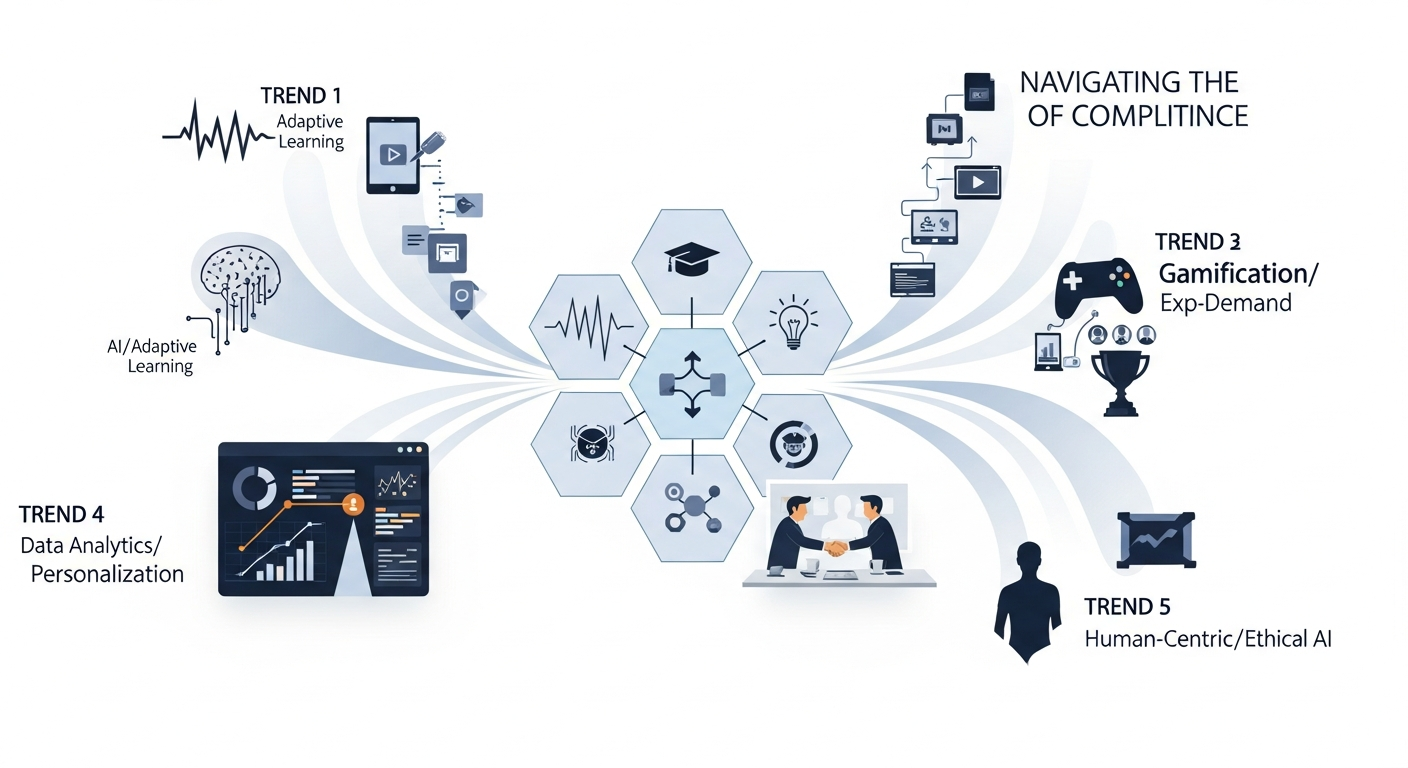
5 Key Compliance Training Trends Dominating Enterprise L&D This Year
In the rapidly evolving landscape of corporate governance and regulatory scrutiny, compliance training is no longer a mere box-ticking exercise. For Vice Presidents, Directors, and Senior Managers in Learning & Development across industries like Sales, Banking, Finance, Insurance, Retail, Pharma, Health Care, Hospitality, Oil and Gas, and Mining, the imperative to build a robust, effective, and engaging compliance culture has never been more critical. The stakes are incredibly high, ranging from hefty fines and reputational damage to significant operational disruptions. As such, enterprise L&D is embracing innovative approaches, driven by technology and a deeper understanding of adult learning principles, to transform mandatory training into meaningful engagement. This year, five pivotal trends are reshaping how organizations approach compliance education, ensuring their workforce is not just informed, but truly compliant.
1. The Rise of Microlearning for On-Demand Compliance
The days of lengthy, generic compliance modules are rapidly fading. Modern learners, inundated with information and time-poor, demand relevance and conciseness. This is where microlearning shines. Breaking down complex compliance topics into short, digestible, and focused modules – typically 3-7 minutes long – ensures higher engagement and retention. This approach is particularly effective for regulatory updates, policy changes, or refresher courses. Organizations are finding immense value in a Microlearning LMS that delivers these bite-sized lessons exactly when and where they are needed, supporting a just-in-time learning philosophy. A robust learning content management system is crucial here to manage and deploy these modular assets efficiently, turning what was once a chore into an accessible, continuous learning opportunity. This trend is about making compliance knowledge readily available and absorbable, moving away from annual marathon sessions to integrated, ongoing education.
Why Microlearning is Gaining Traction:
- Improved Retention: Shorter bursts of information are easier for the brain to process and remember.
- Flexibility: Employees can complete modules during brief breaks, commute, or between tasks, minimizing disruption to their workflow.
- Targeted Learning: Content can be highly specific to roles, risks, or recent incidents, increasing relevance.
- Cost-Effectiveness: Easier to update and deploy small modules than overhaul entire courses.
2. Gamification and Immersive Experiences for Engagement
Engagement remains one of the biggest challenges in compliance training. Traditional methods often lead to learner disinterest and low knowledge retention. This year, L&D leaders are increasingly turning to gamification and immersive experiences to inject life into compliance modules. By incorporating elements like points, badges, leaderboards, interactive scenarios, and simulations, organizations are transforming mundane topics into captivating challenges. A Gamified LMS goes beyond simple quizzes, allowing learners to navigate ethical dilemmas, identify potential risks in simulated environments, and see the real-world consequences of non-compliance. This not only boosts completion rates but also deepens understanding and fosters a proactive compliance mindset. The goal is to move beyond passive information consumption to active participation and experiential learning.
Key Gamification Elements in Compliance:
- Scenario-Based Learning: Realistic simulations of compliance breaches and ethical choices.
- Interactive Quizzes & Challenges: Testing knowledge in a fun, competitive format.
- Leaderboards & Rewards: Motivating learners through recognition and friendly competition.
- Story-Driven Content: Weaving compliance rules into engaging narratives that resonate with learners.
3. Adaptive Learning Paths for Personalized Compliance Training
One-size-fits-all compliance training is inherently inefficient. Different roles, departments, and even individual past performance necessitate varying learning needs. The third major trend is the widespread adoption of Adaptive Learning. Leveraging data and algorithms, adaptive learning systems dynamically adjust the learning path for each employee. This means someone in finance might receive deeper training on anti-money laundering regulations, while a marketing professional focuses more on data privacy and advertising guidelines. If a learner demonstrates proficiency in a certain area, they can skip introductory modules and move to advanced topics or specific use cases. Conversely, if they struggle, the system can provide additional resources, remedial modules, or alternative explanations. This personalized approach not only saves valuable employee time but also ensures that training is maximally relevant and impactful, leading to better overall compliance outcomes. A sophisticated learning management software can track progress and tailor content on the fly.
Benefits of Adaptive Compliance Training:
- Increased Efficiency: Learners focus only on what they need to know, reducing redundant content.
- Higher Engagement: Content relevance keeps learners more invested.
- Better Skill Development: Addresses individual knowledge gaps more effectively.
- Reduced Training Time: Optimizes the learning journey for each employee.
4. AI-Powered Content Creation and Curation
The sheer volume of compliance regulations and the pace of change present a monumental challenge for L&D teams responsible for content creation and updates. Artificial Intelligence is emerging as a powerful ally in this arena. The fourth trend sees L&D professionals utilizing AI not just for analytics, but also for generating and curating compliance training content. An AI Powered Authoring Tool can rapidly draft microlearning modules, create intelligent quizzes, translate content for global workforces, and even flag outdated information for review. Furthermore, AI can analyze regulatory documents and automatically suggest relevant updates to existing training materials, significantly reducing the manual effort and time required to keep content current. This empowers L&D teams to be more agile and responsive to regulatory shifts, ensuring that employees always have access to the most accurate and up-to-date information through their enterprise learning management system or LCMS.
How AI Transforms Content Management:
- Rapid Content Generation: AI assists in drafting initial content, scripts, and interactive elements.
- Automated Updates: AI flags regulatory changes and suggests revisions to existing modules.
- Personalized Recommendations: AI algorithms can recommend relevant training based on job role, performance, and risk profile.
- Content Translation & Localization: Efficiently adapts training for diverse global teams.
5. Shifting to Risk-Focused, Behavioral Compliance Training
Traditionally, compliance training focused heavily on legalistic definitions and rules. While important, this often failed to address the underlying behaviors that lead to non-compliance. The final, and perhaps most impactful, trend is a strategic pivot towards Risk-focused Training that aims to influence behavior and foster a culture of integrity. This involves identifying specific, high-risk behaviors within an organization – whether it's related to data handling, fraud, harassment, or environmental regulations – and designing training that directly addresses these scenarios. Instead of simply stating "do not do X," the training explores the "why" behind the rule, the potential impact of non-compliance, and equips employees with the decision-making frameworks to act ethically and compliantly in ambiguous situations. This holistic approach, often supported by a robust MaxLearn LMS or a similar cloud based learning management system, integrates compliance into the broader organizational culture, making it an intrinsic part of daily operations rather than an external mandate.
Elements of Behavioral Compliance Training:
- Real-World Case Studies: Learning from past incidents and their consequences.
- Ethical Decision-Making Frameworks: Tools to navigate complex situations.
- Cultural Reinforcement: Aligning compliance with company values and mission.
- Leadership Buy-in: Demonstrating top-down commitment to ethical behavior.
Navigating the Future of Compliance Training: Your Questions Answered
As L&D leaders, you're constantly seeking ways to optimize your training initiatives. Here are answers to common strategic inquiries:
How can we ensure our compliance training effectively reaches and resonates with every employee, regardless of their location or role, making it easy to discover and complete?
Leveraging a modern learning management system that supports mobile-first design and provides a highly intuitive user experience is key. Cloud-based learning management solutions allow access from anywhere, anytime. Personalized learning paths, driven by a powerful learning management software, ensure that content is always relevant to individual roles and needs. By focusing on easily searchable and accessible microlearning modules, employees can find the exact information they need instantly, enhancing both engagement and completion rates.
What are the most impactful strategies for developing compliance training that anticipates future regulatory changes and fosters a proactive, ethical culture across all our global operations?
The most impactful strategy involves integrating AI-powered tools for content generation and monitoring regulatory landscapes. This allows for agile content updates and anticipatory training. Furthermore, fostering a culture of risk-focused training, emphasizing ethical decision-making over mere rule memorization, empowers employees globally to make sound judgments. Investing in a learning content management system that facilitates rapid deployment and localization of content ensures consistency and relevance across diverse regions.
What is the optimal approach to measure the true impact of our compliance training programs on employee behavior and overall organizational risk reduction, beyond simple completion rates?
Moving beyond completion rates requires integrating training data with performance metrics and incident reports. Utilize a comprehensive lms learning management system that offers advanced analytics to track not just course completion, but also quiz scores, scenario outcomes, and post-training behavioral changes. Incorporate feedback mechanisms, observe incident reductions, and conduct surveys to gauge employees' confidence in handling compliance situations. Adaptive Learning features can also help track proficiency gaps, allowing for targeted interventions and demonstrating a tangible reduction in organizational risk.
Conclusion
The landscape of compliance training is undergoing a significant transformation. For L&D leaders, embracing these five key trends – microlearning, gamification, adaptive learning, AI-powered content, and risk-focused behavioral training – is not just about staying compliant, but about building a resilient, ethical, and high-performing organization. Investing in a modern enterprise learning management system that supports these innovations is paramount. By shifting from outdated methods to dynamic, engaging, and personalized approaches, organizations can turn a mandatory requirement into a strategic advantage, safeguarding their reputation, mitigating risks, and fostering a strong culture of integrity across all industries.
.jpg)


