

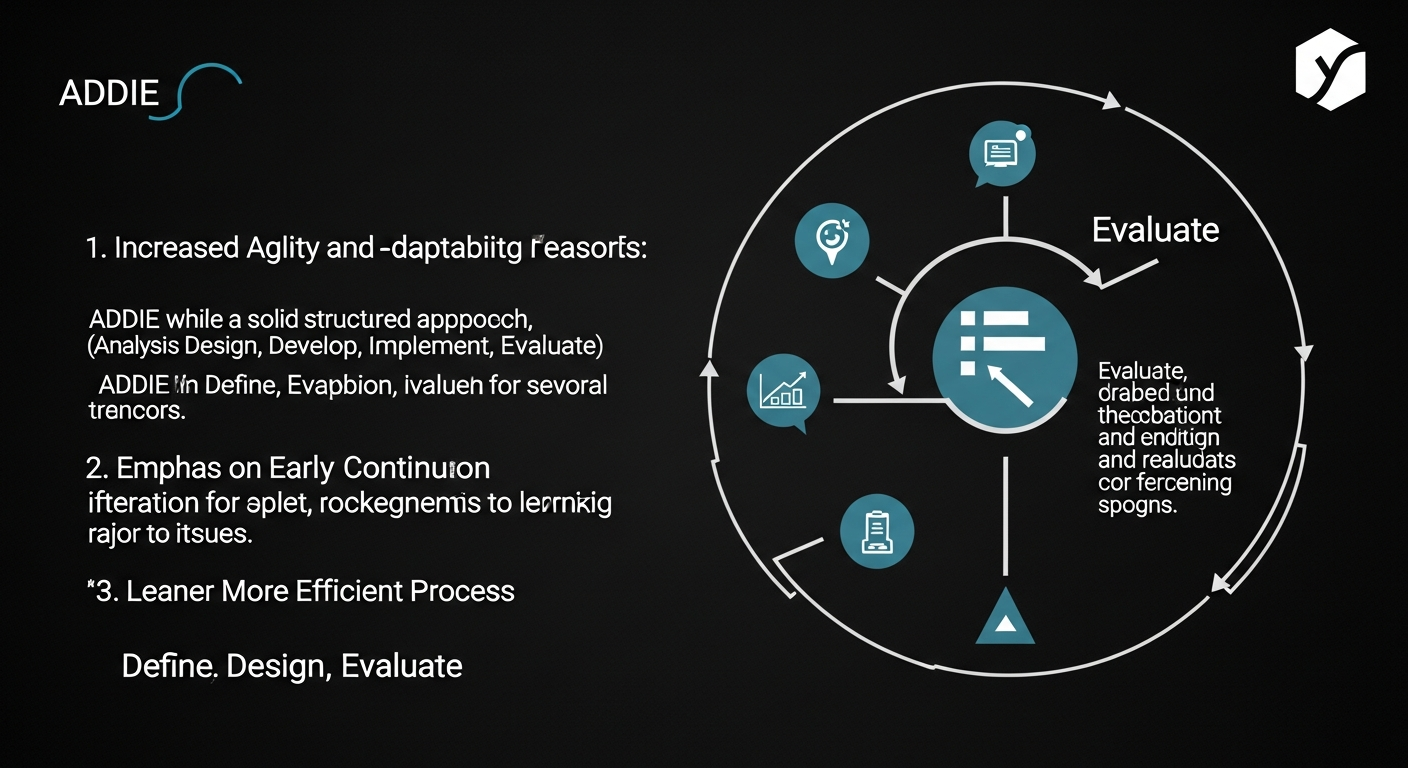
Why Should Instructional Designers Switch From MDA to the DDE Framework?
In the rapidly evolving landscape of corporate learning and development, the traditional methodologies that once defined instructional design are increasingly showing their age. For Vice Presidents, Directors, and Senior Managers of L&D, the imperative is clear: learning solutions must be agile, impactful, and directly aligned with business outcomes. This often means re-evaluating foundational approaches. While the Model-Driven Architecture (MDA) framework has served its purpose for years, a new paradigm, the Discover, Design, Evaluate (DDE) Framework, offers a far more dynamic and effective pathway to modern learning excellence. It’s time for instructional designers to make the strategic shift.
The Limitations of Model-Driven Architecture (MDA) in L&D
Model-Driven Architecture, originating from software engineering, has influenced instructional design by emphasizing a structured, top-down approach. It focuses on creating detailed, platform-independent models of learning solutions and then transforming them into platform-specific implementations. While this offers a degree of standardization and reusability, its rigid, sequential nature often struggles to keep pace with today’s demands:
- Slow to Adapt: In industries like finance, healthcare, or retail, where market conditions, compliance regulations, and product offerings change rapidly, MDA’s lengthy development cycles can render content obsolete before it’s even launched.
- Less Learner-Centric: The emphasis on abstract modeling can sometimes distance designers from the real-world needs and preferences of learners, leading to generic solutions rather than deeply engaging experiences.
- High Upfront Investment: Detailed modeling requires significant upfront time and resources, which can be risky if initial assumptions prove incorrect or business needs pivot.
- Limited Iteration: Feedback loops are often late in the process, making fundamental changes costly and time-consuming. This hinders the agile adjustments crucial for effective LMS content.
For organizations striving for high-impact, relevant training, the MDA approach can become a bottleneck, impeding innovation and responsiveness. The need for a more dynamic, iterative framework is undeniable.
Introducing the DDE Framework: Discover, Design, Evaluate
The DDE Framework emerges as a powerful alternative, embracing agility, learner-centricity, and continuous improvement. It represents a paradigm shift from a prescriptive, model-first approach to an iterative, data-driven cycle:
Discover: Unearthing True Needs and Opportunities
The "Discover" phase is foundational. It involves a deep dive into understanding the business challenges, learning objectives, and the unique characteristics of the target audience. This goes beyond surface-level requests to uncover the root causes of performance gaps and strategic opportunities. Instructional designers engage with stakeholders, conduct comprehensive needs assessments, analyze existing data, and identify key performance indicators (KPIs) that learning solutions aim to influence. The goal is to gain a holistic view, ensuring that subsequent design efforts are directly tied to measurable business value. This phase is crucial for developing Risk-focused Training that truly mitigates threats.
Design: Agile, Iterative, and Engaging
With a clear understanding established, the "Design" phase focuses on creating compelling and effective learning experiences. Unlike MDA’s rigid blueprints, DDE embraces iterative design. Small, manageable learning modules or prototypes are developed, often incorporating modern techniques like Microlearning LMS, Gamified LMS, and Adaptive Learning. The emphasis is on rapid prototyping, gathering early feedback, and making continuous adjustments. This phase leverages the strengths of a robust learning management system, creating content that is engaging, accessible, and aligned with discovery insights. It’s about building a learning content management system that is dynamic and responsive.
Evaluate: Continuous Measurement and Optimization
The "Evaluate" phase is not an end-of-project checkpoint but an ongoing process integrated throughout the learning lifecycle. It involves continuous data collection and analysis to assess the effectiveness of the learning solution against the KPIs identified in the "Discover" phase. This includes learner engagement metrics, performance improvements, and ultimately, business impact. Feedback from learners, managers, and performance data from the learning management software informs further iterations in the "Design" phase, creating a virtuous cycle of improvement. This allows for the optimization of the entire lms learning management system ecosystem.
Why the Shift to DDE is Imperative for L&D Leaders
For L&D leaders overseeing critical functions in areas like compliance, sales, banking, or pharma, the DDE Framework offers tangible benefits:
- Enhanced Agility and Responsiveness: DDE's iterative nature allows L&D teams to quickly adapt to changing business needs, market shifts, or regulatory updates, ensuring that training remains relevant and timely. This is crucial for an enterprise learning management strategy.
- True Learner-Centricity: By prioritizing deep discovery and continuous feedback, DDE ensures that learning solutions are genuinely tailored to learner needs, preferences, and performance contexts, driving higher engagement and retention.
- Measurable Business Impact: With a strong focus on aligning learning with KPIs from the outset and continuous evaluation, DDE makes it easier to demonstrate the ROI of L&D initiatives, justifying investment in your cloud based learning management system.
- Leveraging Modern Technology: DDE naturally accommodates the integration of advanced technologies like AI, virtual reality, and sophisticated analytics, transforming the learning management solutions landscape.
Addressing Modern Learning Challenges with DDE
As L&D leaders, you face a range of complex challenges in today's dynamic business environment. The DDE framework, coupled with advanced technology, provides robust answers:
How can organizations ensure learning content is perpetually relevant, accessible, and continuously updated for a dynamic workforce across various roles and time zones?
The DDE framework, particularly its "Evaluate" phase, emphasizes ongoing monitoring and iterative refinement. By leveraging a modern MaxLearn LMS, instructional designers can deploy Microlearning LMS modules that are easy to update. The continuous feedback loop ensures content never becomes stale. For global accessibility, cloud-based learning management platforms are key, offering 24/7 access regardless of location, ensuring a truly always-available educational experience.
How can instructional design strategies effectively cater to diverse linguistic, cultural, and regulatory requirements across different global operational regions, ensuring localized impact and compliance?
The "Discover" phase of DDE is crucial here, involving a deep dive into regional specificities, cultural nuances, and local compliance standards from the outset. Designers can then develop modular content within the "Design" phase, allowing for easy localization and translation. A robust LCMS can manage multiple versions of content efficiently, ensuring global learning opportunities are relevant and compliant for each specific region, from banking in Europe to mining in South America.
What role can advanced technologies play in dynamically optimizing learning paths, content recommendations, and feedback mechanisms to maximize individual learner engagement and performance at scale?
Advanced technologies are transformative within the DDE framework. In the "Design" and "Evaluate" phases, an AI Powered Authoring Tool can dramatically accelerate content creation and personalization. Adaptive Learning algorithms, integrated into your learning management system, can dynamically adjust learning paths based on a learner's progress and needs. This intelligent content delivery not only enhances engagement but also provides L&D leaders with actionable insights for continuous optimization, proving the value of their learning management system investment.
Making the Transition to DDE
For L&D departments accustomed to MDA, transitioning to DDE requires a shift in mindset and methodology. It involves:
- Investing in robust data analytics capabilities for the "Discover" and "Evaluate" phases.
- Fostering a culture of experimentation, rapid prototyping, and continuous feedback.
- Empowering instructional designers with skills in agile methodologies, data interpretation, and modern learning technology.
- Adopting flexible learning management solutions and learning management software that support iterative content deployment and analytics.
Conclusion
The move from MDA to the DDE Framework isn't just about adopting a new process; it's about embracing a strategic advantage for L&D. For VPs, Directors, and Managers across diverse industries from healthcare to oil and gas, DDE offers a pathway to create learning experiences that are not only effective and engaging but also deeply aligned with critical business objectives. By discovering true needs, designing iteratively, and continuously evaluating impact, instructional designers can future-proof their learning initiatives, drive tangible results, and position L&D as a strategic partner in organizational success. The time to switch is now, leveraging the power of an adaptive, data-driven learning management system to lead your organization into the next era of learning.
.jpg)


