

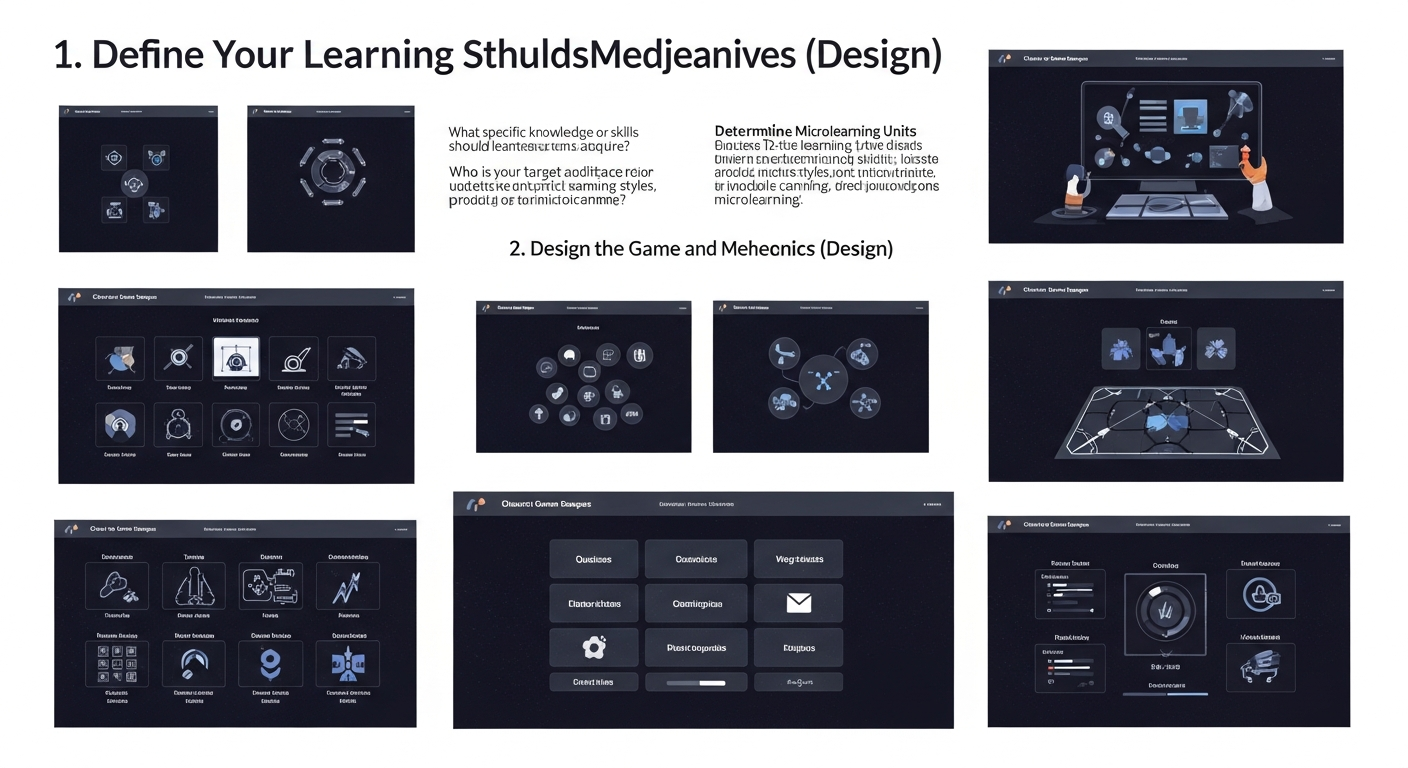
How Do You Build an Engaging Corporate Microlearning Game Using DDE?
In today's fast-paced corporate landscape, traditional long-form training often struggles to capture and sustain employee attention. Learning and Development leaders, from Vice Presidents to Managers, are constantly seeking innovative methodologies to enhance knowledge retention, boost performance, and ensure compliance. The answer increasingly lies in the strategic combination of microlearning, gamification, and a robust framework like DDE (Define, Design, Execute) to create highly engaging corporate microlearning games.
Imagine your employees eagerly logging into a learning platform, not out of obligation, but anticipation. This is the power of a well-crafted microlearning game. It transforms mundane training into an exciting, competitive, and rewarding experience, delivering bite-sized knowledge precisely when and where it's needed. This article will guide you through the DDE framework, demonstrating how to construct such a powerful learning tool that drives tangible business results across diverse industries from Compliance and Sales to Banking, Healthcare, and Oil and Gas.
The DDE Framework: Your Blueprint for Engagement
The DDE framework provides a systematic, iterative approach to developing effective microlearning games. It ensures that every aspect of your training initiative is strategically aligned with organizational goals and learner needs, maximizing impact and return on investment.
Phase 1: Define – The Strategic Foundation
The initial and perhaps most critical step is to thoroughly define the purpose, audience, and desired outcomes of your microlearning game. This phase sets the strategic direction, ensuring your game is not just fun, but fundamentally effective.
- Pinpoint Learning Objectives: What specific knowledge, skills, or behaviors must learners acquire or improve? For instance, in finance, it could be understanding new regulatory updates; in sales, mastering a new product line; or in healthcare, adherence to new safety protocols.
- Understand Your Audience: Who are your learners? What is their current knowledge level, their preferred learning styles, and their daily operational challenges? Tailoring content to resonate with their specific needs is paramount for engagement.
- Establish Success Metrics: How will you measure the effectiveness of your game? This could range from completion rates and knowledge scores to observable behavior changes, reduced error rates, or improved sales figures.
- Align with Business Goals: Ensure the training directly supports broader organizational objectives, whether it’s boosting customer satisfaction in retail, reducing accidents in mining, or enhancing data security in banking.
How can artificial intelligence help in identifying the most critical learning gaps within an organization? Intelligent analytics can process vast amounts of operational data, performance reviews, customer feedback, and existing training outcomes. By identifying patterns and correlations, it can pinpoint precisely where employees are struggling, which knowledge areas are weak, or which skills are missing. This data-driven insight empowers L&D leaders to define highly targeted learning objectives for their microlearning games, ensuring maximum relevance and impact.
Phase 2: Design – Crafting the Game Experience
With a clear definition in place, the design phase transforms objectives into an interactive, captivating game experience. This is where creativity meets instructional design, leveraging microlearning principles and gamification mechanics.
- Game Mechanics and Dynamics: Incorporate elements like points, badges, leaderboards, levels, challenges, and virtual rewards. These intrinsic motivators drive engagement and healthy competition.
- Storytelling and Narrative: Embed learning within a compelling story or scenario relevant to the learner's job role. For a compliance game, it could be navigating a virtual office environment to identify risks. For sales, it might be a choose-your-own-adventure simulation of customer interactions.
- Interactive Content Types: Design a variety of micro-interactions such as quick quizzes, drag-and-drop exercises, decision-making scenarios, short simulations, and flashcards. These keep learners active and reinforce learning in digestible chunks.
- Microlearning Principles: Ensure each game module is concise, focused, and addresses a single learning objective. Content should be easily consumable, typically within 2-5 minutes, fitting seamlessly into busy schedules.
- Personalization and Adaptive Learning: Design paths that adapt to individual learner performance. If a learner struggles with a concept, the game can provide remedial content or alternative explanations. For this, a robust AI Powered Authoring Tool is invaluable, enabling dynamic content generation and customization.
What innovative ways can intelligent systems enhance the design of game-based learning scenarios? Intelligent systems can revolutionize game design by suggesting dynamic content variations based on learner profiles and past performance. They can automatically generate complex branching scenarios, saving designers countless hours, and even assist in creating realistic avatars and immersive virtual environments. Furthermore, they can predict potential engagement pitfalls and recommend design adjustments, making the entire design process more efficient, personalized, and profoundly engaging.
Phase 3: Execute – Deployment and Continuous Improvement
The final phase involves bringing your microlearning game to life, deploying it to your target audience, and continuously refining it based on real-world data and feedback.
- Platform Selection: A powerful Microlearning LMS or Gamified LMS is essential. This learning management system provides the infrastructure for hosting content, managing users, tracking progress, and enabling gamification features. Your learning content management system choice should support mobile access and provide rich analytics.
- Strategic Rollout: Plan a communication strategy to build excitement and encourage participation. Provide clear instructions and ongoing support.
- Monitoring and Feedback: Utilize the analytics capabilities of your LMS or learning management software to track key metrics: completion rates, time spent, scores, and learner progress. Gather qualitative feedback through surveys and direct interaction.
- Iteration and Optimization: Based on the data and feedback, iterate on your game. This might involve refining content, adjusting difficulty levels, adding new challenges, or updating rewards. Continuous improvement is key to sustained engagement. An effective enterprise learning management solution will facilitate this agile process.
From a global perspective, what are the emerging best practices for deploying and scaling game-based microlearning across diverse corporate environments? Globally, organizations are increasingly leveraging cloud based learning management system solutions combined with sophisticated AI-driven localization tools. These tools translate and adapt content, ensuring cultural relevance and linguistic accuracy across multiple regions and languages. Real-time performance analytics provide insights into cross-cultural engagement patterns, allowing L&D teams to make agile adjustments to content and rollout strategies for global deployment. The integration of a comprehensive LCMS within the overall learning management solutions suite is becoming a standard for seamless global scaling.
Key Elements for Building an Impactful Microlearning Game
Beyond the DDE framework, several core principles contribute to the success of any corporate microlearning game:
- Relevance to Job Role: The most engaging games directly connect to real-world tasks and challenges. For instance, Risk-focused Training in banking or insurance should simulate scenarios employees face daily.
- Balanced Challenge and Reward: The game should be challenging enough to prevent boredom but achievable enough to avoid frustration. Rewards, both intrinsic (sense of accomplishment) and extrinsic (badges, recognition), should be meaningful.
- Immediate and Constructive Feedback: Learners need to understand why they succeeded or failed immediately. This reinforces correct behaviors and guides improvement.
- Social Learning Opportunities: Incorporate elements that encourage interaction, such as leaderboards, team challenges, or discussion forums. Peer learning and friendly competition boost engagement.
- Accessibility Across Devices: Ensure your game is responsive and accessible on desktops, tablets, and smartphones. This flexibility is crucial for modern workforces.
- Measurable Outcomes: Design the game so that performance within it translates to measurable improvements in job performance. This demonstrates the game's tangible value to the business.
Platforms like MaxLearn LMS exemplify how a modern lms learning management system can integrate these elements seamlessly, offering a comprehensive suite for all your learning management solutions needs.
Unlocking Industry-Specific Advantages
The DDE framework for microlearning games offers distinct advantages across various sectors:
- Compliance: In industries like Pharma, Healthcare, and Finance, microlearning games make complex regulatory training engaging, significantly improving understanding and adherence.
- Sales: Sales teams can rapidly acquire product knowledge, practice objection handling, and master new selling techniques through interactive scenarios.
- Retail & Hospitality: Enhance customer service skills, streamline operational procedures, and onboard new staff efficiently with role-playing games.
- Pharma, Oil & Gas, Mining: Critical safety protocols, equipment operation, and emergency procedures can be learned and reinforced through realistic simulations, mitigating risks.
Conclusion
Building an engaging corporate microlearning game using the DDE framework is more than just a training initiative; it's a strategic investment in your workforce's capabilities and your organization's future. By meticulously defining objectives, creatively designing the experience, and thoughtfully executing and iterating, L&D leaders can transform corporate training from a chore into a highly anticipated and effective learning journey.
Embrace the power of gamified microlearning. Leverage advanced learning management software and learning management system capabilities to create immersive experiences that boost engagement, improve retention, and drive measurable performance improvements across your organization. The future of enterprise learning is interactive, personalized, and above all, genuinely engaging.
.jpg)


