

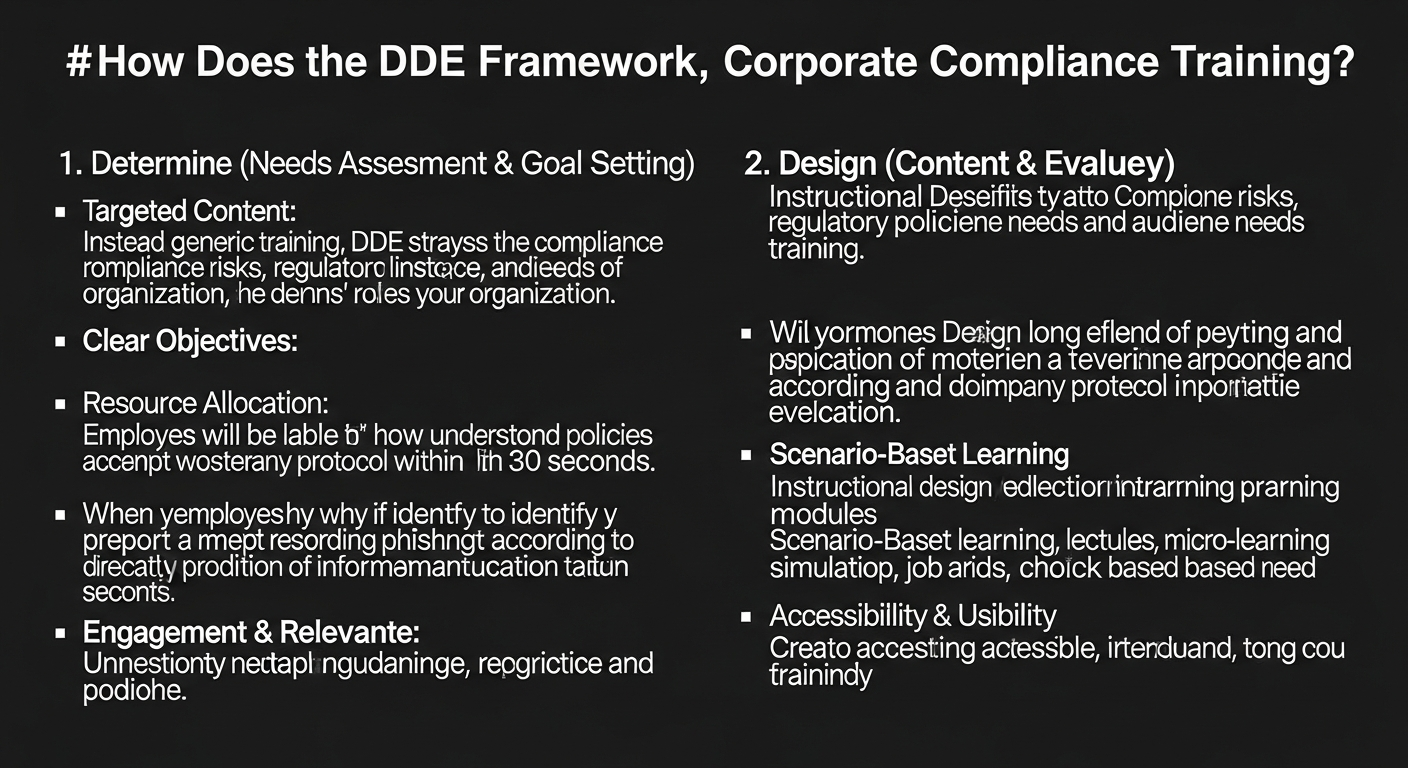
How Does the DDE Framework Improve Corporate Compliance Training?
In today's complex regulatory landscape, corporate compliance is not merely a legal obligation; it's a cornerstone of reputational integrity, operational stability, and sustained business growth. For Vice Presidents, Directors, Senior Managers, and Managers of Learning & Development across industries like Sales, Banking, Finance, Insurance, Retail, Pharma, Healthcare, Hospitality, Oil & Gas, and Mining, ensuring effective compliance training is a persistent challenge. Traditional approaches often fall short, struggling with engagement, relevance, and measurable impact. This is where the Detect, Deter, Educate (DDE) Framework emerges as a transformative strategy, offering a holistic and proactive approach to compliance education.
The DDE Framework moves beyond tick-box exercises, creating a robust ecosystem where compliance risks are not only identified but actively prevented, and employees are empowered with the knowledge and understanding to make ethical, compliant decisions. By integrating detection, deterrence, and education, organizations can build a resilient compliance culture that mitigates risks, protects assets, and fosters a trustworthy environment.
Understanding the DDE Framework
The DDE Framework is a three-pronged strategy designed to create a comprehensive and impenetrable compliance program. Each element plays a crucial, interconnected role in fortifying an organization's defense against non-compliance.
Detect
The "Detect" phase focuses on proactively identifying potential compliance breaches, vulnerabilities, and emerging risks within the organization. This isn't just about finding existing problems; it's about anticipating future ones. It involves:
- Data Analytics and Monitoring: Utilizing advanced tools to analyze internal data, transaction patterns, communication logs, and employee behavior for anomalies that might indicate non-compliance.
- Risk Assessments: Regularly evaluating departmental and organizational processes against regulatory requirements to pinpoint areas of high risk.
- Feedback Mechanisms: Establishing anonymous reporting channels and fostering an open culture where employees feel safe to raise concerns without fear of reprisal.
By effectively detecting risks, L&D teams can tailor training programs to address specific vulnerabilities, making them highly relevant and impactful. This forms the foundation of Risk-focused Training, ensuring resources are allocated where they are most needed.
Deter
The "Deter" phase aims to prevent non-compliance from occurring in the first place. It establishes clear boundaries, communicates expectations, and outlines the consequences of non-adherence. This phase involves:
- Policy Dissemination: Ensuring all employees have access to and understand the organization's compliance policies, codes of conduct, and ethical guidelines.
- Clear Expectations and Consequences: Explicitly communicating the repercussions of non-compliance, which can range from disciplinary action to legal penalties, thereby reinforcing the seriousness of adherence.
- Leadership Buy-in: Demonstrating strong commitment from senior leadership to compliance, setting an example for the entire organization.
Deterrence works hand-in-hand with education, as employees are more likely to comply when they fully understand both the rules and the consequences of breaking them.
Educate
The "Educate" phase is the proactive element of the DDE Framework, focusing on empowering employees with the knowledge, skills, and understanding necessary to comply with regulations and internal policies. This goes beyond rote memorization, aiming for true behavioral change. Key aspects include:
- Targeted Training: Delivering compliance education that is relevant to an employee's role, department, and specific risks they might encounter.
- Engaging Content: Moving away from dry, text-heavy modules towards interactive, scenario-based, and practical learning experiences.
- Continuous Learning: Recognizing that compliance is not a one-time event but an ongoing process, requiring regular refreshers, updates, and access to resources.
This phase is where L&D leaders can truly shine, leveraging innovative eLearning strategies to make compliance training effective and memorable.
The DDE Framework in Action: Transforming Corporate Compliance Training
Adopting the DDE Framework transforms compliance training from a bureaucratic necessity into a strategic advantage for enterprises across various sectors.
- From Reactive to Proactive: Instead of reacting to incidents, DDE allows organizations to predict and prevent them, significantly reducing legal fees, fines, and reputational damage.
- Enhanced Risk Mitigation: By continuously detecting vulnerabilities and educating employees on how to navigate them, the framework drastically lowers exposure to various risks, from data breaches to fraud and regulatory non-compliance.
- Cultivating a Culture of Compliance: DDE fosters an environment where compliance is seen as a shared responsibility and an integral part of business operations, not just a burden. Employees become advocates for ethical conduct, creating a stronger, more resilient organization.
Leveraging Technology: The Role of AI in DDE-driven Compliance Training
The power of the DDE Framework is exponentially amplified when integrated with advanced technologies, particularly Artificial Intelligence. AI offers unprecedented capabilities to automate, personalize, and optimize each phase of Detect, Deter, and Educate, making compliance training more effective and efficient than ever before.
Identifying Training Needs with Predictive Intelligence
One of the most significant challenges in compliance training is knowing precisely where and what kind of training is most needed. Generic, one-size-fits-all approaches often miss critical gaps.
How can advanced analytical systems pinpoint evolving compliance risks and training gaps before they become critical?
Intelligent algorithms analyze vast datasets, including past audit findings, incident reports, policy violations, employee performance data, and real-time regulatory changes. By identifying patterns and correlations, these systems can predict areas of high risk within specific departments, roles, or geographical regions. This predictive capability allows L&D teams to proactively develop and deploy Risk-focused Training content, allocating resources precisely where the potential for non-compliance is highest. This means training becomes preventative, rather than corrective.
Tailoring Content for Diverse Global Operations
For multinational corporations operating across different jurisdictions, the complexity of compliance training is immense. Regulations vary dramatically, and what's compliant in one region may not be in another.
How can intelligent platforms adapt compliance training content to specific regional regulations and operational contexts across a multinational organization?
AI-powered platforms can dynamically tailor learning experiences. Based on an employee's location, role, language preferences, and previous training history, the system delivers highly personalized content modules. This capability ensures that a sales manager in Germany receives training specific to GDPR and local financial regulations, while an HR professional in the US receives relevant HIPAA and employment law updates. This Adaptive Learning approach minimizes information overload and maximizes relevance, leading to greater comprehension and application of knowledge. It moves beyond generic content to deliver precision learning.
Streamlining Training Delivery and Integration
The administrative burden of managing compliance training – from content creation to delivery, tracking, and reporting – can be overwhelming for L&D departments.
What capabilities do intelligent systems offer to automate compliance training workflows, personalize learning paths, and seamlessly integrate with existing corporate systems?
AI-driven solutions significantly streamline these processes. An AI Powered Authoring Tool can rapidly generate or update training content based on new regulations or detected risks. A modern Microlearning LMS can automate the assignment of personalized learning paths, ensuring employees receive timely and digestible training modules. Features like a Gamified LMS boost engagement and retention. Furthermore, these intelligent systems can seamlessly integrate with HRIS (Human Resources Information Systems), GRC (Governance, Risk, and Compliance) platforms, and other enterprise tools. This integration ensures a unified view of employee compliance status, automates record-keeping, and simplifies audit preparedness, significantly reducing administrative overhead and improving data accuracy.
Key Benefits for L&D Leaders
Implementing the DDE Framework, especially with AI integration, offers profound benefits for L&D leaders:
- Improved Training Effectiveness and ROI: Targeted, engaging, and adaptive training leads to better knowledge retention and application, translating into fewer compliance incidents and a higher return on training investment.
- Reduced Compliance Risks and Potential Penalties: Proactive detection and education significantly lower the likelihood of regulatory breaches, saving the organization from substantial fines and legal costs.
- Enhanced Employee Engagement and Retention: Relevant and interactive training fosters a positive learning experience, contributing to higher employee morale and a stronger commitment to organizational values.
- Streamlined Administration and Reporting: AI-powered automation reduces the administrative burden, freeing up L&D teams to focus on strategic initiatives. Robust analytics provide clear, auditable reports on compliance status.
Implementing DDE: Practical Steps
For L&D professionals ready to adopt the DDE Framework, consider these practical steps:
- Conduct a Thorough Risk Assessment: Partner with legal and risk management teams to identify specific compliance risks pertinent to your industry and organization.
- Develop Clear Policies and Communication Strategies: Ensure policies are not just written but understood and consistently communicated across all levels.
- Invest in Engaging, Adaptive Learning Solutions: Explore modern Microlearning LMS platforms that support Adaptive Learning, Gamified LMS features, and potentially AI Powered Authoring Tool capabilities.
- Foster a Culture of Continuous Learning and Feedback: Encourage employees to ask questions, report concerns, and provide feedback on training efficacy.
Conclusion
The DDE (Detect, Deter, Educate) Framework represents a paradigm shift in corporate compliance training, moving from reactive measures to a proactive, integrated, and highly effective strategy. For L&D Vice Presidents, Directors, and Managers striving to build truly compliant and ethical organizations, DDE offers a clear roadmap. When augmented by the power of AI, this framework transforms compliance training into an intelligent, adaptive, and highly engaging experience that not only mitigates risk but also cultivates a strong culture of integrity. Embrace DDE, leverage intelligent technology, and empower your workforce to navigate the complexities of today's regulatory environment with confidence and competence.
.jpg)


