

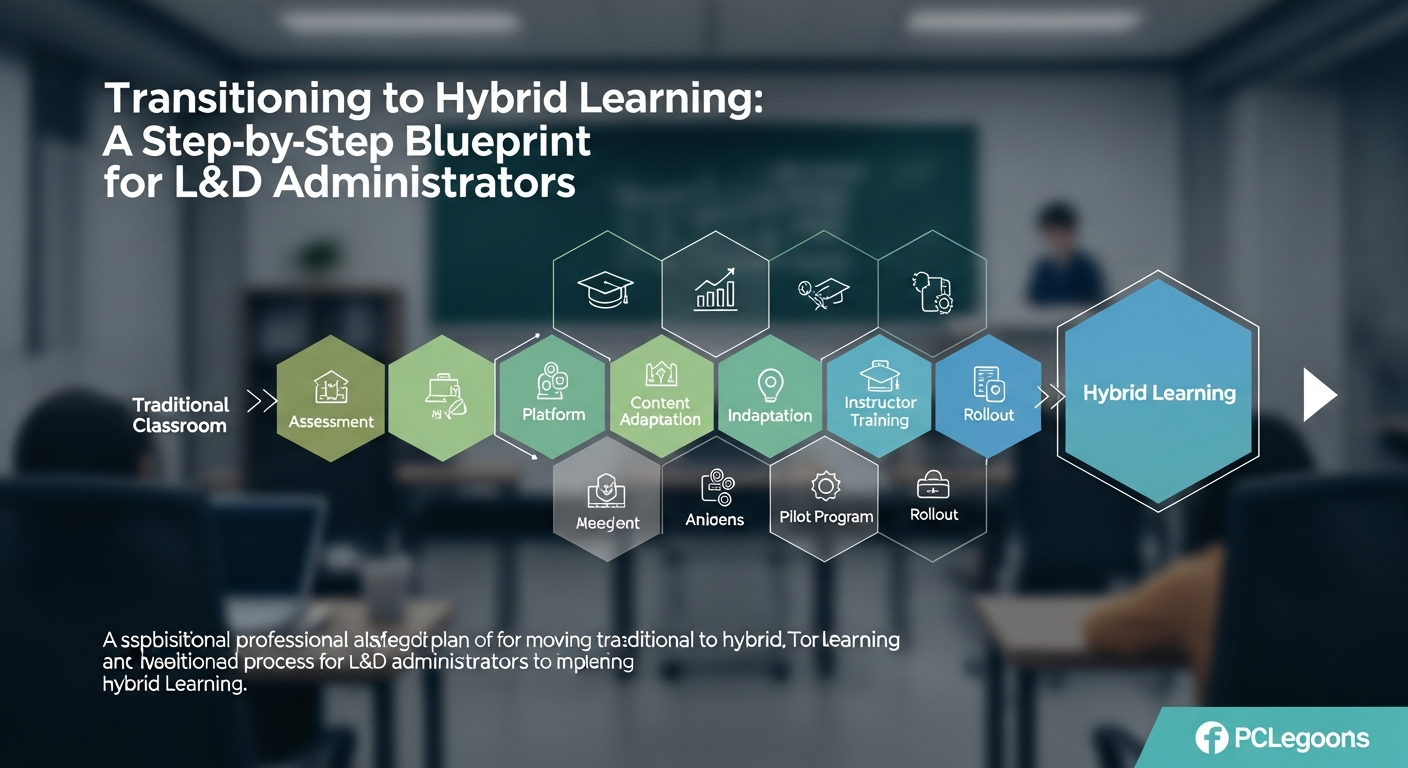
Transitioning to Hybrid Learning: A Step-by-Step Blueprint for L&D Administrators
The landscape of corporate learning is undergoing a profound transformation. As organizations navigate the complexities of a dynamic global environment, the traditional lines between in-person and remote learning have blurred, giving rise to hybrid learning. For Vice Presidents, Directors, Senior Managers, and Managers of Learning and Development across industries like Compliance, Sales, Banking, Finance, Insurance, Retail, Pharma, Health care, Hospitality, Oil and Gas, and Mining, the shift to hybrid learning isn't just a trend; it's a strategic imperative for fostering continuous growth and maintaining a competitive edge.
Hybrid learning, a blend of face-to-face and online instruction, offers unparalleled flexibility, accessibility, and personalization. However, a successful transition requires more than just adopting new tools; it demands a well-thought-out strategy, robust execution, and a commitment to continuous improvement. This article provides a comprehensive, step-by-step blueprint to guide L&D administrators through this critical journey.
Why Hybrid Learning is Your Next Strategic Imperative
In today’s fast-paced corporate world, adaptability is key. Hybrid learning environments empower employees to learn at their own pace, leverage diverse learning styles, and apply knowledge directly to their roles, whether they are in a branch office in finance, on a sales floor in retail, or at a remote site in oil and gas. It addresses the growing need for scalable training solutions that can reach a dispersed workforce while still offering the benefits of collaborative, in-person experiences. This approach optimizes resource allocation, enhances learner engagement, and ensures that critical skills development keeps pace with business demands, from understanding complex compliance regulations to mastering new sales techniques.
Phase 1: Assessment and Strategic Foundation
Step 1: Conduct a Comprehensive Needs Analysis
- Evaluate Current State: Understand your existing learning programs, technologies, and delivery methods. What’s working? What’s not?
- Identify Learner Needs: Survey your workforce across different departments and seniority levels. What are their preferred learning styles? What are their technological proficiencies? Do they require specific training for Risk-focused Training, or more interactive sales methodologies?
- Assess Technological Infrastructure: Can your current systems support a hybrid model? Do you have the bandwidth, devices, and necessary software?
- Define Business Objectives: Align your hybrid learning strategy with overarching organizational goals. What specific KPIs (Key Performance Indicators) will demonstrate success in areas like employee retention, productivity, or compliance adherence?
Step 2: Develop a Hybrid Learning Strategy and Vision
Based on your needs analysis, formulate a clear vision for your hybrid learning ecosystem. Define the optimal blend of synchronous (live, in-person or virtual) and asynchronous (self-paced online) components. Establish success metrics, budget allocations, and a realistic timeline for implementation.
Phase 2: Content Transformation and Curation
Step 3: Convert and Create Engaging Content
Transitioning to hybrid learning necessitates a fresh look at your existing content. Not all in-person material translates directly to an online format. Focus on creating modular, digestible content that supports different learning modalities.
- Modularization: Break down lengthy courses into smaller, focused learning units. This is where a Microlearning LMS becomes invaluable, providing bite-sized content that learners can access on demand.
- Interactivity: Incorporate quizzes, simulations, interactive videos, and discussion forums to maintain engagement.
- Leverage AI Powered Authoring Tool: Utilize intelligent tools to rapidly create, update, and personalize content. AI can help in converting existing material, suggesting relevant content, and even generating assessments, streamlining the content development process significantly.
- Curate External Resources: Don’t reinvent the wheel. Integrate relevant industry articles, videos, and online courses into your learning paths.
Phase 3: Technology Integration and Platform Selection
Step 4: Choose the Right Learning Management System (LMS)
The success of your hybrid initiative heavily relies on the right technology backbone. An effective Learning content management system (LCMS) or learning management software is crucial. Look for a robust LMS that offers seamless integration, scalability, and an intuitive user experience.
- Key Features: Seek out a system that supports both synchronous and asynchronous learning, offers robust analytics, and integrates with other HR and business tools. Consider a cloud based learning management system for maximum accessibility and scalability.
- Engaging Features: To boost learner motivation, explore platforms with Gamified LMS capabilities, including points, badges, leaderboards, and interactive challenges.
- Personalization: An Adaptive Learning system is key for tailoring learning paths to individual needs, skills gaps, and career goals, making the learning experience more relevant and effective for every employee.
- Enterprise Capabilities: For large organizations across diverse sectors, an enterprise learning management system like MaxLearn LMS is essential for managing complex training requirements, global workforces, and stringent compliance needs.
Step 5: Integrate Essential Tools
Beyond the core learning management system, you'll need complementary tools:
- Video conferencing platforms for live virtual sessions.
- Collaboration tools for group projects and discussions.
- Authoring tools (potentially AI-powered) for content creation.
- Assessment tools for evaluating knowledge retention and skill application.
Phase 4: Pilot Programs and Feedback Loops
Step 6: Launch a Pilot Program
Before a full-scale rollout, implement your hybrid learning model with a smaller, representative group. This could be a specific department, a team, or a cohort of new hires. This allows you to identify pain points, test technology, and gather crucial feedback in a controlled environment. Focus on critical training needs first, such as mandatory compliance modules or foundational sales training.
Step 7: Collect and Analyze Feedback
Gather feedback from learners and instructors through surveys, interviews, and focus groups. Pay attention to both quantitative data (completion rates, assessment scores) and qualitative insights (user experience, perceived effectiveness). Your LMS learning management system should provide robust analytics to aid this.
Phase 5: Scaling and Continuous Optimization
Step 8: Iterate and Refine
Based on pilot feedback, make necessary adjustments to your content, technology, and delivery methods. This iterative process is vital for continuous improvement. Remember, a successful learning management solutions implementation is an ongoing journey, not a destination.
Step 9: Full-Scale Rollout and Ongoing Support
Once refined, roll out the hybrid learning model to your entire organization. Provide comprehensive training and ongoing technical and pedagogical support for both learners and instructors. Establish clear communication channels for questions and assistance.
Step 10: Measure, Evaluate, and Optimize
Continuously monitor key metrics such as learner engagement, course completion rates, skill acquisition, and business impact. Use this data to identify areas for further optimization, adapt content to evolving needs, and demonstrate the ROI of your hybrid learning investment. This continuous cycle of improvement ensures your MaxLearn LMS initiative remains effective and aligned with organizational objectives.
Strategic Insights for the Modern L&D Administrator
As L&D leaders, you’re not just implementing technology; you’re shaping the future of workforce development. Here are some advanced questions to consider that drive optimal outcomes:
How can learning and development efforts be universally applied across various global business units while still catering to unique regional cultural and regulatory nuances?
Achieving global consistency with local relevance requires a modular content strategy enabled by a powerful learning management system. Core curriculum can be developed centrally, but localized modules, case studies, and compliance-specific training can be layered on top using an advanced LCMS. The system should allow for content versioning and permission-based access, ensuring that specific groups receive relevant information. For instance, a global banking compliance training might have universal anti-money laundering principles, but specific regional modules on local financial regulations. This approach ensures maximum efficiency and legal adherence.
What methodologies most effectively predict learner success and engagement within a flexible hybrid framework, allowing for proactive intervention and personalized pathways?
Predicting learner success in a hybrid model involves leveraging analytics from your LMS. An Adaptive Learning system, combined with data on engagement metrics (login frequency, completion rates, forum participation) and assessment scores, can identify learners who might be struggling or those who are excelling. This data can then trigger proactive interventions, such as recommending additional resources, personalized coaching, or alternative learning pathways. For example, a sales professional struggling with a new product line could be automatically assigned additional Microlearning LMS modules or a one-on-one virtual session.
Beyond immediate skill acquisition, how can hybrid learning initiatives be structured to foster long-term career growth and contribute measurably to an organization’s strategic objectives?
To foster long-term career growth and strategic alignment, hybrid learning must be integrated into a broader talent development strategy. This means connecting learning pathways directly to career progression frameworks, competency models, and performance management systems. The enterprise learning management system should support a comprehensive view of an employee's learning journey, skill development, and aspirations. By embedding features like internal mentorship programs, stretch assignments tied to specific learning outcomes, and continuous feedback loops, L&D can ensure that hybrid learning not only imparts skills but also builds capabilities for future roles and directly supports business objectives, such as innovation in pharma or digital transformation in retail.
Conclusion
The transition to hybrid learning is a complex yet rewarding endeavor for L&D administrators. By following this step-by-step blueprint – from thorough assessment and strategic planning to content transformation, technology integration, and continuous optimization – organizations can build a resilient, engaging, and effective learning ecosystem. Embracing advanced learning management solutions and intelligent approaches will not only future-proof your training programs but also empower your workforce to thrive in an ever-evolving professional landscape.
.jpg)


