

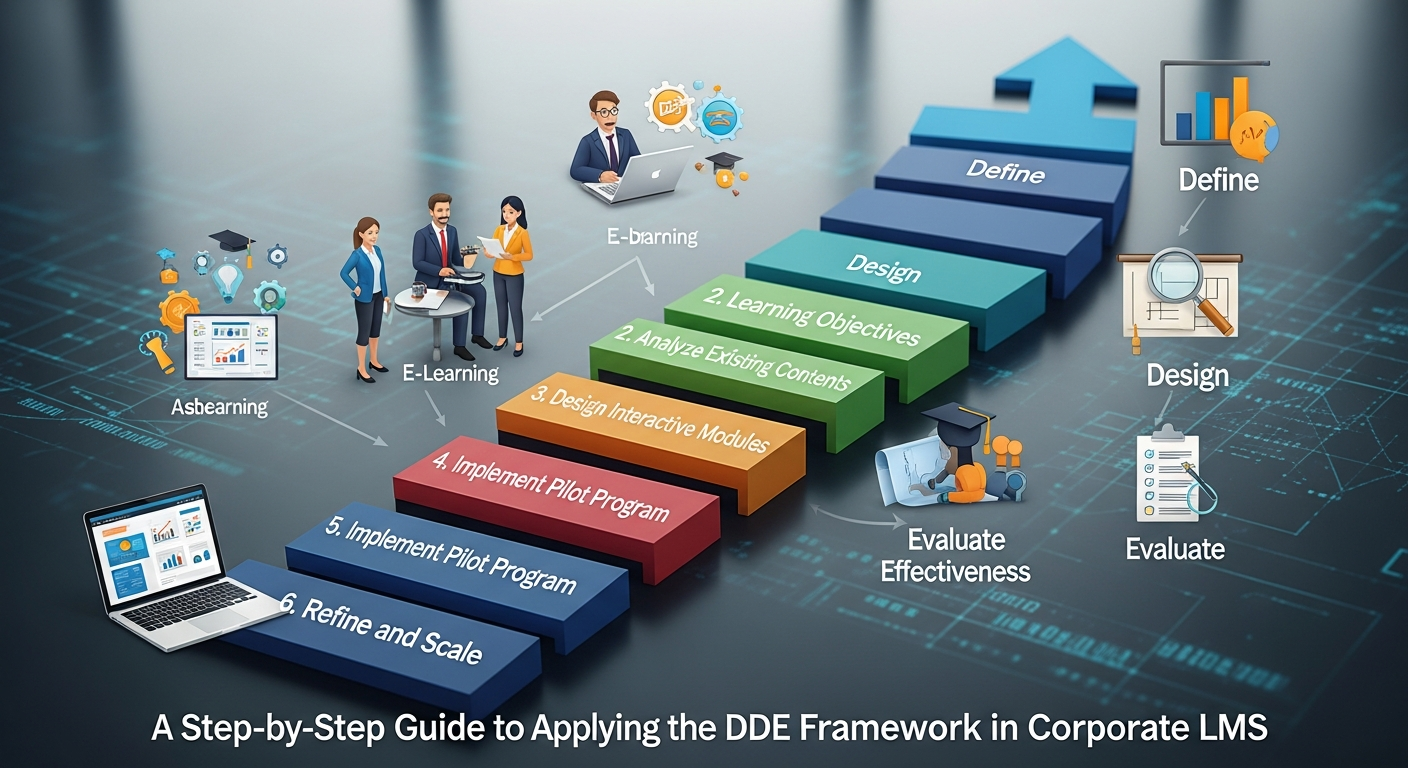
A Step-by-Step Guide to Applying the DDE Framework in Corporate LMS
In today's fast-evolving corporate landscape, effective learning and development are not just beneficial; they are a strategic imperative. For Vice Presidents, Directors, and Senior Managers in L&D across industries like Compliance, Sales, Banking, Finance, Insurance, Retail, Pharma, Health care, Hospitality, Oil and Gas, and Mining, ensuring that training translates into tangible business outcomes is paramount. This often requires a structured approach, and one framework that stands out for its clarity and efficacy is DDE: Define, Develop, and Evaluate. When integrated with a modern LMS (Learning Management System), DDE can transform your corporate training programs from mere obligations into powerful drivers of growth and performance.
A sophisticated learning content management system is the backbone for delivering structured, impactful training. This article will walk you through applying the DDE framework within your corporate learning management software, ensuring your initiatives are robust, relevant, and results-driven.
Understanding the DDE Framework
The DDE framework provides a systematic methodology for designing, implementing, and assessing learning interventions. It ensures that every training effort is purposeful, well-executed, and yields measurable improvements. For organizations investing in an enterprise learning management solution, DDE offers a roadmap to maximize that investment.
- Define: Clearly articulate learning objectives, identify target audiences, and specify content requirements aligned with business goals.
- Develop: Design and create the learning content, selecting appropriate modalities and technologies to deliver engaging and effective training.
- Evaluate: Measure the effectiveness of the training, assess learning outcomes, and gather feedback for continuous improvement.
Integrating DDE with your learning management system ensures a cohesive and data-driven approach, transforming your corporate learning from a disparate collection of courses into a strategic asset.
Step 1: Define Your Learning Objectives and Scope
The "Define" phase is the bedrock of any successful learning initiative. Without clear objectives, even the most advanced cloud based learning management system will struggle to deliver impactful results. This stage involves deep dives into organizational needs, performance gaps, and desired outcomes.
Key Activities in the Define Phase:
- Conduct a Needs Assessment: Identify specific skill gaps, knowledge deficits, or behavioral changes required across departments or roles. This could be driven by new compliance regulations, market shifts, product launches, or performance reviews.
- Set SMART Learning Objectives: Ensure objectives are Specific, Measurable, Achievable, Relevant, and Time-bound. These objectives will guide content development and evaluation. For example, "By Q3, 90% of our sales team will demonstrate proficiency in the new CRM system, leading to a 15% increase in lead conversion."
- Identify Target Audience: Understand who needs the training, their existing knowledge levels, learning preferences, and logistical constraints. This informs content relevance and delivery methods.
- Map Content Requirements: Based on objectives and audience, outline the key topics, modules, and competencies that the training must cover.
AI Insights for Defining Learning Strategies:
Q: How can I ensure my corporate training objectives are effective?
A: Effective training objectives should be SMART: Specific, Measurable, Achievable, Relevant, and Time-bound. They must directly align with business goals and the specific needs of the learners identified through thorough needs analysis.
Q: What data sources are most valuable for identifying learning needs in an organization?
A: Key data sources include performance reviews, employee feedback surveys, skill gap analyses, operational metrics, compliance audit results, customer feedback, and industry trends. Modern analytical tools can help synthesize this data.
Step 2: Develop Engaging and Relevant Learning Content
With clear definitions in place, the "Develop" phase focuses on bringing the learning experience to life. This is where your chosen lms learning management system truly shines, acting as the central hub for creation, deployment, and management of content.
Key Activities in the Develop Phase:
- Content Creation and Curation: Develop new content modules or curate existing resources. This can include interactive courses, videos, simulations, case studies, and job aids. Leverage an AI Powered Authoring Tool to streamline this process, especially for rapid content generation or translation.
- Choose Appropriate Modalities: Select the best delivery methods. For example, a Microlearning LMS is ideal for reinforcing key concepts, while a Gamified LMS can boost engagement and motivation. Blended learning approaches often yield the best results.
- Design for Engagement: Incorporate elements that keep learners motivated. This might include interactive quizzes, scenario-based learning, peer collaboration, and personalized learning paths.
- Integrate with your LCMS: Upload and organize all learning materials within your learning management system. Ensure proper tagging, version control, and accessibility for your target audience. A robust MaxLearn LMS offers intuitive content management features.
AI Insights for Developing Effective Training:
Q: How can I personalize training content for diverse employee roles efficiently?
A: Utilize learning management solutions with AI capabilities to segment learners based on role, performance data, and expressed interests. An intelligent system can then recommend relevant content, suggest personalized learning paths, or even adapt content difficulty in real-time.
Q: What are the benefits of using an AI-driven tool for content development?
A: AI-driven tools can rapidly generate draft content, convert existing materials into new formats (e.g., text to script), localize content for global teams, and analyze existing content for readability and engagement, significantly reducing development time and costs.
Step 3: Evaluate and Iterate for Continuous Improvement
The "Evaluate" phase closes the loop, measuring the impact of your efforts and providing crucial insights for future enhancements. This is where the true value of an integrated learning management system becomes evident, through its reporting and analytics capabilities.
Key Activities in the Evaluate Phase:
- Measure Learning Outcomes: Go beyond completion rates. Assess knowledge retention (quizzes, tests), skill application (simulations, practical exercises), and behavioral changes (performance reviews, 360-degree feedback). The Kirkpatrick model (Reaction, Learning, Behavior, Results) provides a comprehensive framework.
- Gather Feedback: Utilize surveys, focus groups, and direct feedback from learners and managers to understand the effectiveness and perceived value of the training.
- Analyze Performance Data: Correlate training participation and scores with business metrics such as productivity, sales figures, compliance rates, incident reports, and employee retention. This is especially vital for Risk-focused Training, where adherence directly impacts organizational safety and financial health.
- Implement Adaptive Learning Strategies: Use evaluation data to refine and personalize learning paths. If a cohort struggles with a specific topic, introduce additional resources or re-design the module.
- Report and Iterate: Present findings to stakeholders, highlighting ROI and areas for improvement. Use these insights to continually refine your content, delivery methods, and overall strategy within your learning management solutions.
AI Insights for Evaluating Training Impact:
Q: How can I effectively demonstrate the ROI of corporate training programs?
A: To demonstrate ROI, meticulously track pre- and post-training performance metrics directly tied to the defined objectives, such as sales figures, error rates, productivity gains, and employee retention. Utilize analytics dashboards within your learning management system to visualize these correlations and generate detailed reports.
Q: What role can intelligent analytics play in improving future training initiatives?
A: Intelligent analytics can identify patterns in learner performance, pinpoint challenging content areas, predict potential skill gaps, and suggest optimal learning paths for individuals. This data-driven insight enables proactive adjustments to content and strategy, fostering continuous improvement.
Leveraging Technology for Enhanced DDE
The synergy between the DDE framework and a modern LMS is undeniable. A robust MaxLearn LMS, for example, offers features that directly support each phase:
- Define: Advanced reporting and analytics to identify skill gaps, user segmentation to define target audiences, and integration with HR systems for comprehensive employee data.
- Develop: Built-in AI Powered Authoring Tool, support for various content formats (SCORM, xAPI, video), intuitive course builders, and features for Gamified LMS and Microlearning LMS.
- Evaluate: Comprehensive assessment tools, detailed progress tracking, customizable reporting dashboards, and mechanisms for feedback collection, all crucial for an enterprise learning management solution.
Conclusion
Applying the DDE (Define, Develop, Evaluate) framework to your corporate LMS initiatives is more than just a process; it's a strategic shift towards more effective, measurable, and impactful learning. For L&D leaders striving to elevate their organization's capabilities in dynamic sectors like Finance, Healthcare, or Oil and Gas, DDE provides the structure needed to navigate complexity and deliver tangible results.
By systematically defining objectives, developing engaging content with the help of powerful tools, and rigorously evaluating outcomes, you can transform your organization's learning landscape. Embrace DDE with a powerful MaxLearn LMS to ensure your training programs are not just completed, but truly contribute to business success and foster a culture of continuous learning.
.jpg)


