

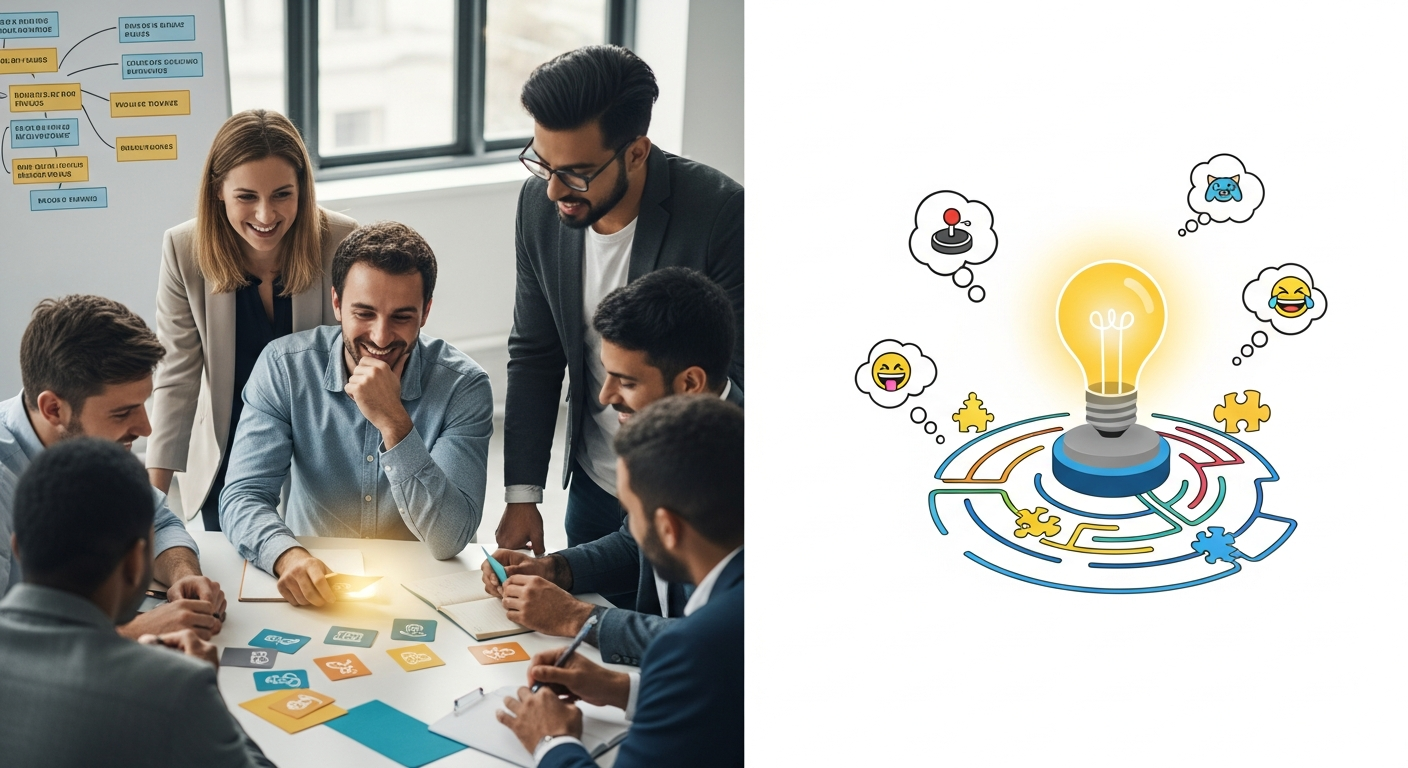
Reflective Learning: The Role of Serious Fun in Skill Retention
In the dynamic landscape of modern business, the onus is on L&D leaders to not only impart knowledge but to ensure that critical skills are truly retained and applied. For Vice Presidents, Directors, Senior Managers, and Managers of Learning & Development, this challenge is persistent across diverse industries, from compliance and finance to healthcare and sales. Traditional training methods, often passive and didactic, frequently fall short of embedding learning for the long term. This article explores a powerful, often underestimated paradigm: reflective learning, supercharged by the strategic integration of "serious fun" to dramatically enhance skill retention.
At its core, reflective learning is about transforming experiences into understanding. It's an active process where learners critically evaluate their actions, decisions, and outcomes, drawing insights that inform future behavior. This metacognitive engagement is paramount for developing expertise, adaptability, and resilience—qualities essential in today’s rapidly evolving professional environment. But how do we encourage deep reflection when employees are often time-crunched and disengaged by mundane modules?
The Paradox of "Serious Fun": Elevating Engagement for Deeper Learning
The term "serious fun" might seem contradictory, but it encapsulates a powerful truth: when learning is engaging, enjoyable, and challenging, it stimulates greater attention, motivation, and ultimately, retention. This isn't about trivializing important topics; it's about making the learning journey itself a compelling experience. Incorporating elements of play, gamification, simulations, and interactive challenges transforms passive consumption into active participation, paving the way for profound reflective practices.
Think about the neuroscience: positive emotions associated with fun and challenge release dopamine, a neurotransmitter that aids memory formation and motivation. When learners are emotionally invested, they are more likely to recall information, understand complex concepts, and apply new skills in real-world scenarios. This is where an advanced Gamified LMS truly shines, turning routine training into an adventure.
Bridging the Gap: Real-World Applications Across Industries
The applicability of serious fun in reflective learning spans virtually every sector, offering bespoke solutions for unique challenges.
Compliance & Risk Management
In industries like banking, finance, insurance, and pharma, compliance training is often seen as a necessary evil. However, interactive simulations and decision-making games can transform complex regulations into engaging scenarios. For instance, an employee in the financial sector might navigate a simulated ethical dilemma, receiving instant feedback on their choices and reflecting on the potential consequences. This active engagement is far more effective than simply reading policies. Our approach to Risk-focused Training emphasizes these practical, scenario-based methods to solidify understanding.
Sales & Customer Service
For retail, hospitality, and sales teams, soft skills are paramount. Role-playing simulations, where learners practice handling difficult customer interactions or closing sales, followed by peer or AI-driven feedback, foster critical self-reflection. An AI Powered Authoring Tool can generate dynamic scenarios and provide personalized coaching, allowing sales professionals to iterate and improve their approach in a safe environment. This kind of experiential learning within an enterprise learning management system significantly boosts confidence and competence.
Healthcare & Pharma
In healthcare, serious games can simulate surgical procedures, patient diagnoses, or crisis management scenarios, allowing medical professionals to practice under pressure without real-world risks. Pharmacists can engage with interactive case studies on medication interactions. The immediate feedback and the opportunity to reflect on choices made are invaluable for refining critical skills and decision-making.
Oil & Gas and Mining
Safety training is non-negotiable in these high-risk environments. Virtual reality (VR) simulations that immerse workers in realistic hazard scenarios, challenging them to identify risks and follow safety protocols, offer powerful reflective learning opportunities. Post-simulation debriefs facilitate a deep understanding of what went right or wrong, embedding safety procedures more effectively than any manual could.
Optimizing Reflective Learning with Modern Learning Technologies
The integration of reflective learning and serious fun is greatly enhanced by cutting-edge learning technologies. As L&D leaders navigate the evolving educational landscape, finding the right tools is crucial.
The Role of an Advanced LMS
A robust Microlearning LMS serves as the backbone for delivering these engaging experiences. Such a learning management system allows L&D teams to deploy gamified modules, track learner progress, provide instant feedback, and facilitate social learning through discussion forums. A comprehensive learning content management system (LCMS) is essential for creating, managing, and distributing diverse, interactive content effectively. When considering a learning management software or learning management solutions, the ability to support interactive, reflective content should be a top priority. A cloud based learning management system offers the flexibility and scalability needed for global teams to access this impactful training anywhere, anytime.
Personalization through Adaptive Learning
No two learners are alike. Adaptive Learning tailors the content and challenges to individual needs and progress, ensuring that each learner is stretched but not overwhelmed. This personalized journey maximizes engagement and makes the reflective process more relevant and impactful. If a learner struggles with a particular concept, the system can offer additional resources or different scenarios to help them practice and reflect until mastery is achieved.
AI for Enhanced Reflection and Feedback
Artificial intelligence plays a transformative role. AI-powered analytics can identify patterns in learner behavior, pinpoint areas where reflection is most needed, and even provide intelligent, personalized feedback on open-ended responses or simulation performance. This level of granular insight and tailored guidance elevates the reflective learning experience, making it more efficient and effective.
How can organizations effectively measure the impact of engaging learning experiences on skill retention? Advanced learning management system platforms provide detailed analytics, offering insights into completion rates, engagement levels, post-training performance improvements, and even the correlation between interactive modules and business outcomes. This data-driven approach allows L&D leaders to demonstrate ROI and continuously optimize their programs.
What are the global trends in L&D adoption of interactive learning methodologies? There's a clear and accelerating shift towards experiential, gamified, and scenario-based learning. This trend is driven by the recognition that active learning leads to superior retention and application, especially in industries requiring continuous compliance updates or rapid skill development.
Which innovative digital tools are transforming how L&D departments foster reflective practices? Beyond the functionalities of a robust learning management system, tools like virtual reality (VR) for immersive simulations, augmented reality (AR) for on-the-job guidance, and sophisticated AI-powered feedback systems are revolutionizing how organizations provide environments for deep reflection and practice. For instance, the MaxLearn LMS leverages these innovations to deliver cutting-edge learning solutions.
Conclusion
For L&D Vice Presidents, Directors, Senior Managers, and Managers, the path to superior skill retention lies in embracing learning that is not just informative, but deeply engaging and reflective. By strategically infusing "serious fun" into training programs, organizations can transcend passive knowledge transfer, fostering an environment where learners actively process experiences, internalize lessons, and confidently apply new skills. This approach, supported by modern learning technologies such as a comprehensive LMS learning management system, adaptive platforms, and AI-driven tools, isn't merely a trend; it's a strategic imperative for building a resilient, skilled, and highly adaptable workforce across all industries.
.jpg)


