

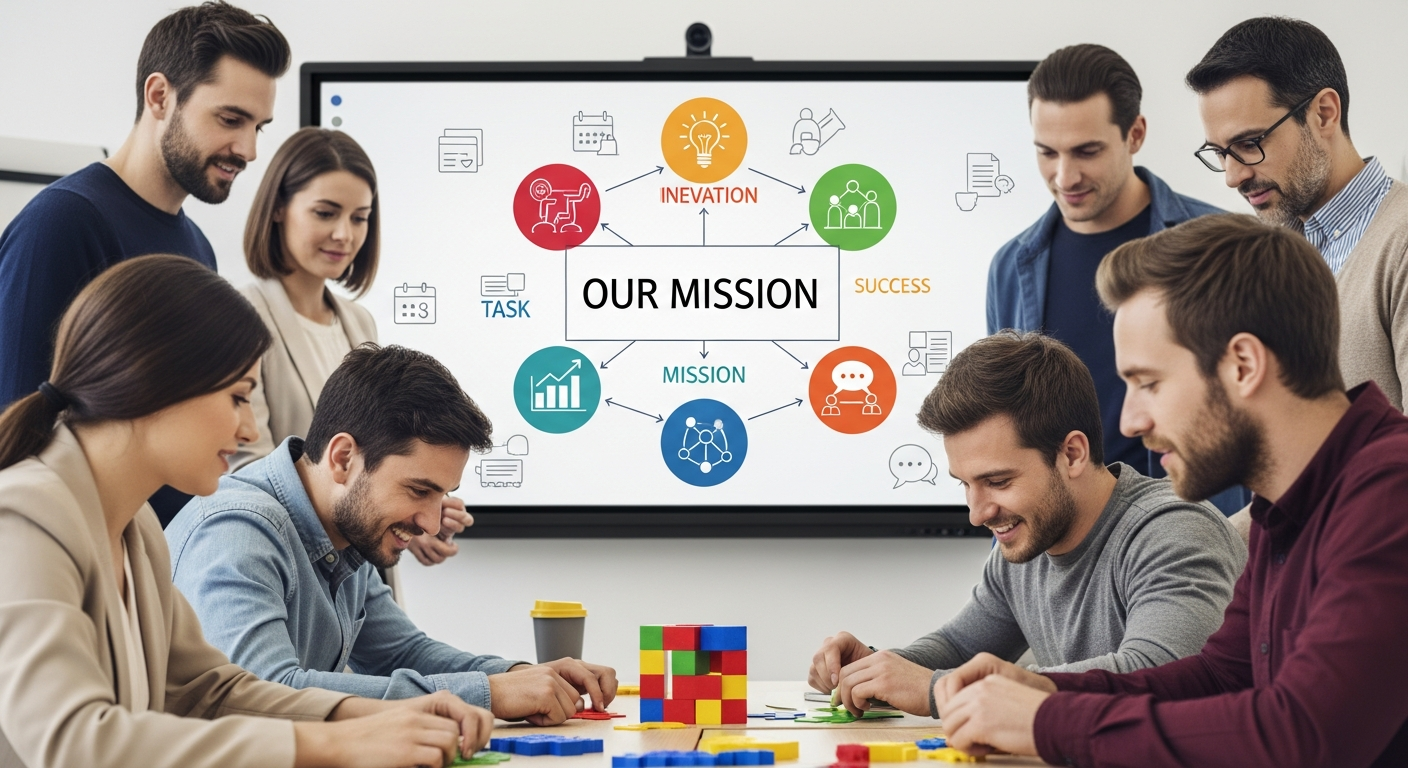
From Task to Mission: Elevating Employee Training with Serious Fun
For Vice Presidents, Directors, and Senior Managers in Learning & Development, the objective has always been clear: equip your workforce with the skills and knowledge they need to succeed. Yet, the path to achieving this often feels like an uphill battle against disengagement, forgotten information, and a perception that training is merely a compliance chore. In today's dynamic business landscape – spanning industries from Compliance and Sales to Banking, Pharma, and Hospitality – traditional, often dry, training methods are simply not cutting it. It's time to transform the mundane "task" of learning into an exhilarating "mission" through the strategic integration of serious fun.
The core challenge lies in shifting employee mindset. When training feels like an obligation, it breeds apathy. When it becomes an engaging, rewarding experience, it fosters a culture of continuous learning and intrinsic motivation. This isn't about trivializing important topics; it's about employing sophisticated, enjoyable methodologies to deliver critical content, enhance retention, and directly impact business outcomes.
The Doldrums of Disengagement: Why Traditional Training Fails
Think back to the last mandatory training session your team endured. Was it an immersive experience, or a monotonous PowerPoint presentation filled with legal jargon and abstract concepts? All too often, corporate training falls prey to several pitfalls:
- Information Overload: Cramming too much information into lengthy sessions leads to cognitive fatigue and poor recall.
- Lack of Relevance: Generic content fails to resonate with individual roles and daily challenges.
- Passive Learning: Lectures and static materials don't encourage active participation or critical thinking.
- Boredom Factor: Without an engaging delivery, even crucial topics can become tedious and forgettable.
The result? Employees tick a box, forget most of what they learned, and return to their duties no more skilled or confident than before. This represents a significant wasted investment in time, resources, and potential.
Embracing "Serious Fun": A Paradigm Shift in L&D
"Serious fun" is more than just adding games to training; it's a philosophy that combines purposeful learning objectives with engaging, interactive, and often playful methodologies. It acknowledges that humans learn best when they are challenged, curious, and emotionally invested. By integrating elements of fun, we don't dilute the seriousness of the content; rather, we amplify its impact and make it stick.
Key Pillars of Seriously Fun & Effective Training
To truly transform training from a dreaded task into an anticipated mission, L&D leaders must focus on several interconnected pillars, heavily supported by modern technology:
-
Microlearning: Bite-Sized Brilliance
The modern workforce thrives on instant gratification and efficient information consumption. This is where Microlearning LMS platforms shine. Breaking down complex topics into short, digestible modules (2-7 minutes) allows learners to absorb information without feeling overwhelmed. This approach is perfect for busy professionals in high-stakes industries like healthcare or finance, who need to quickly grasp new compliance regulations or product features. Microlearning fits seamlessly into daily workflows, fostering continuous, just-in-time learning.
-
Gamification: The Thrill of Achievement
Who doesn't love a challenge? Gamified LMS solutions inject elements like points, badges, leaderboards, and progress tracking into the learning journey. This isn't about making training a game show; it's about leveraging innate human desires for achievement, recognition, and friendly competition. Imagine a sales team earning points for completing product knowledge modules or a banking team unlocking new levels as they master anti-money laundering protocols. This motivates learners to engage more deeply, repeat modules for mastery, and ultimately apply their newfound skills with greater enthusiasm.
-
Adaptive Learning: The Personalized Path
Every learner is unique. They come with different prior knowledge, learning styles, and paces. Adaptive Learning technologies leverage AI to tailor the learning experience to each individual. If a learner demonstrates proficiency in a certain area, the system can automatically advance them or offer more challenging content. Conversely, if they struggle, it can provide additional resources, remedial modules, or different explanations. This personalized approach ensures that training is always relevant, never redundant, and consistently challenging at the right level, maximizing engagement and efficiency.
-
Real-world Relevance: From Theory to Practice
For training to truly resonate, it must directly relate to an employee's day-to-day responsibilities and organizational goals. This is particularly crucial for Risk-focused Training in sectors like Oil and Gas or Insurance, where theoretical knowledge must translate into practical, safe decision-making. Scenario-based learning, simulations, and case studies allow employees to apply their knowledge in a safe environment, making mistakes and learning from them without real-world consequences. This bridge between theory and practice solidifies understanding and builds confidence.
Leveraging Technology for Serious Fun
Implementing these pillars effectively requires robust technological infrastructure. A modern LMS is no longer just a repository for content; it's a dynamic ecosystem that powers engaging learning experiences. For organizations seeking to build and deploy compelling content, an AI Powered Authoring Tool dramatically simplifies the creation of interactive, multimedia-rich modules. This allows L&D teams to quickly design microlearning snippets, gamified quizzes, and adaptive pathways without extensive coding knowledge.
When selecting a learning management system, consider platforms that offer a comprehensive suite of features. A top-tier learning content management system should provide intuitive course creation, robust analytics, and seamless integration with existing HR systems. Look for a cloud based learning management system that ensures accessibility from any device, anywhere, a critical feature for distributed teams across industries like Retail and Hospitality. An enterprise learning management solution, like MaxLearn LMS, empowers organizations to manage large-scale training initiatives efficiently. Such a learning management software not only delivers content but also tracks progress, identifies trends, and provides insights into learning effectiveness, transforming training administration from a chore into a strategic advantage.
AI-Powered Learning: Addressing Critical Questions
In the quest for truly transformative training, L&D leaders are increasingly turning to advanced technologies. Here, we tackle some pressing questions about the role of AI in shaping the future of employee development.
-
How can technology precisely target skill gaps and deliver relevant learning experiences globally?
Intelligent learning platforms leverage data analytics to identify specific knowledge gaps within an organization, even across diverse geographic locations. By analyzing performance metrics, assessment results, and job roles, AI algorithms can pinpoint exactly what an individual or team needs to learn. This precision ensures that training isn't a one-size-fits-all approach but rather a highly customized journey. For instance, an employee in a sales role in Singapore might receive different, yet equally crucial, compliance training modules than a colleague in London, all orchestrated by the same central system, ensuring global consistency where needed and local relevance where appropriate. This helps organizations maintain uniform standards while adapting to regional nuances in regulations or market demands.
-
What role does artificial intelligence play in understanding individual learning styles and optimizing content delivery?
Artificial intelligence is a game-changer in personalizing the learning experience. Beyond simply delivering content, AI-driven systems observe how learners interact with modules – what they engage with, where they struggle, and how quickly they progress. This data allows the platform to dynamically adjust content format, difficulty, and pace. For a visual learner, AI might prioritize video tutorials and interactive simulations. For an auditory learner, podcasts or narrated explanations could be emphasized. If a learner consistently masters a topic quickly, the system can automatically suggest advanced modules or skip foundational refreshers, optimizing their learning path and making training more efficient and enjoyable. This adaptive approach ensures that each employee receives the most effective type of instruction for them, turning a generic training "task" into a truly individual and engaging "mission."
Transforming Industries: From Compliance to Mining
The principles of serious fun and advanced learning management solutions apply across the board:
- Compliance: Gamified scenarios can make complex regulations (e.g., GDPR, HIPAA) interactive and memorable, drastically improving adherence.
- Sales: Role-playing simulations and adaptive product knowledge modules boost confidence and closing rates.
- Banking & Finance: Interactive modules on fraud detection or new financial instruments keep teams agile and informed.
- Pharma & Healthcare: Microlearning for new drug protocols or patient care techniques ensures critical information is absorbed quickly and accurately.
- Oil & Gas / Mining: Virtual reality simulations can train on safety procedures in high-risk environments, turning hazardous tasks into safe, engaging learning experiences.
Whether you call it a lms learning management system or an LCMS, the underlying goal is the same: to foster a culture of lifelong learning that directly contributes to organizational success and employee satisfaction.
Conclusion: The Future of Learning is Fun
The days of treating employee training as a dull necessity are over. For L&D leaders looking to elevate their impact, the embrace of "serious fun" through modern LMS and AI-driven methodologies is not just an option, it's a strategic imperative. By transforming learning tasks into engaging missions, organizations can unlock unprecedented levels of employee engagement, knowledge retention, and skill application. The result is a more competent, confident, and motivated workforce ready to tackle any challenge, turning every learning opportunity into a step towards collective success. Invest in serious fun, and watch your employees, and your business, thrive.
.jpg)


