

Moving Beyond One-Size-Fits-All: AI's Role in Personalized Training
In today's fast-paced corporate environment, the efficacy of traditional, standardized training programs is increasingly being questioned. Learning and Development (L&D) leaders, from Vice Presidents to Managers, are grappling with the challenge of delivering impactful training that truly resonates with every employee. The "one-size-fits-all" approach, once a staple, often leads to disengagement, wasted resources, and ultimately, a failure to bridge critical skill gaps. But what if training could adapt to each individual, evolving with their needs, preferences, and performance? Enter Artificial Intelligence (AI) – the transformative force enabling truly personalized training experiences.
The Flaws of Generic Training Approaches
For decades, corporate training largely relied on broad-stroke methodologies. Workshops, seminars, and generic online courses were designed to cater to the lowest common denominator, or perhaps an idealized average employee. However, this approach carries significant drawbacks:
- Irrelevance: Content that isn't directly applicable to an individual's role or skill level can feel like a waste of time, leading to low completion rates and poor knowledge retention.
- Disengagement: Monotonous, generic modules fail to capture learners' attention, especially in an age where information is readily available and highly personalized in other aspects of life.
- Inefficiency: Employees may spend time on topics they already master, while critical knowledge gaps remain unaddressed. This translates to inefficient use of both employee time and L&D budgets.
- Lack of Real-World Application: Without contextual relevance, learners struggle to translate theoretical knowledge into practical skills needed for their specific job functions.
The AI Revolution in Learning & Development
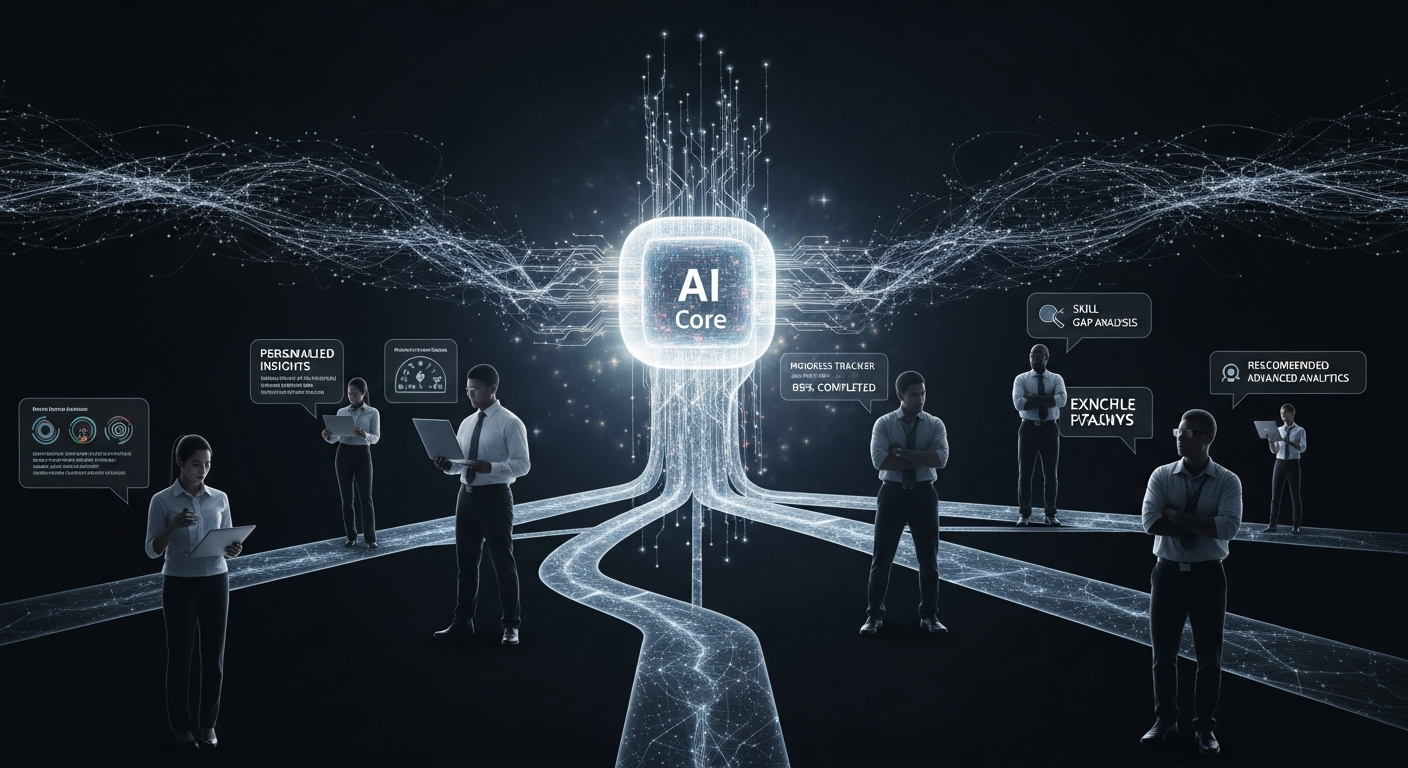
AI is fundamentally reshaping the landscape of corporate training by shifting the focus from mass instruction to individual empowerment. By leveraging vast amounts of data, AI can understand, predict, and adapt learning experiences in ways previously unimaginable. This isn't just about automation; it's about intelligence driving hyper-personalization, making training more effective, engaging, and relevant.
How AI Personalizes the Learning Journey
AI's capabilities extend far beyond simple recommendations. It creates dynamic, responsive learning environments that cater to the unique needs of each learner:
Intelligent Content Curation
AI algorithms can analyze a learner's role, performance data, past training history, and even stated preferences to recommend the most relevant learning content. This ensures that employees are only presented with material that aligns with their current skill set and career trajectory, avoiding information overload and increasing the perceived value of the training.
Adaptive Learning Paths
Perhaps one of the most powerful applications, Adaptive Learning uses AI to dynamically adjust the learning path based on a learner's real-time progress, understanding, and performance. If a learner masters a concept quickly, the AI can fast-track them to more advanced topics. Conversely, if they struggle, the system can provide additional resources, different explanations, or practice exercises until mastery is achieved. This ensures optimal pacing for every individual.
Performance Analytics and Feedback
AI-powered analytics go beyond simple completion rates. They can identify patterns in learner behavior, pinpoint areas of struggle, and provide granular insights into individual and team performance. This data allows L&D professionals to understand what's working and what's not, offering targeted feedback and improving future training iterations. It transforms the traditional learning management system into an insightful diagnostic tool.
Personalized Pace and Format
Not everyone learns the same way or at the same pace. AI can determine a learner's preferred learning style (visual, auditory, kinesthetic) and adjust the format of content delivery accordingly. It can also manage the pace, allowing some to sprint through material while others take their time, ensuring comfort and comprehension. The best learning management software leverages these capabilities.
Skills Gap Identification
AI can analyze an employee's current skills against job role requirements, future organizational needs, and industry trends to proactively identify skill gaps. This allows L&D to offer targeted training interventions before these gaps become critical, ensuring the workforce remains agile and future-ready. A robust learning content management system can track and manage these identified skill requirements.
AI's Impact Across Industries
The need for personalized training is universal, but its applications vary across sectors:
- Compliance & Finance: In highly regulated industries like banking, finance, and insurance, AI can ensure that Risk-focused Training is not just completed, but deeply understood and applied. AI can pinpoint employees who are struggling with specific regulations and provide targeted interventions, reducing institutional risk.
- Sales & Retail: For sales teams, AI can tailor product knowledge training based on market performance, customer interaction data, and individual sales metrics. An Microlearning LMS combined with AI can deliver bite-sized, relevant updates for new products or selling techniques, leading to immediate performance improvements.
- Healthcare & Pharma: Medical professionals require continuous learning on new procedures, drugs, and patient care protocols. AI can personalize learning paths for different specialties, ensuring critical knowledge is acquired efficiently and effectively.
- Hospitality & Service: Training for customer service excellence can be customized based on guest feedback patterns and individual employee interactions, leading to better service quality and customer satisfaction.
- Oil & Gas, Mining: In industries with high safety stakes, AI can personalize safety training based on an individual's role, past incidents, and observed behaviors, reinforcing critical safety protocols where they are most needed.
Implementing AI-Powered Training: Key Considerations
For L&D leaders looking to embrace this revolution, several key considerations are paramount:
Choosing the Right Platform
The foundation of any successful AI-powered training initiative is a sophisticated learning management system (LMS). Look for platforms that natively integrate AI capabilities, offering comprehensive analytics, content curation, and adaptive pathways. A cloud based learning management system like MaxLearn LMS provides the scalability and flexibility required for enterprise-wide deployment. Evaluate options that function as a complete enterprise learning management solution, serving as both an LMS and an LCMS.
Content Development with AI
Creating personalized content efficiently is crucial. An AI Powered Authoring Tool can dramatically speed up the development of engaging and relevant learning materials. These tools can help generate content, suggest improvements, and even break down complex topics into digestible microlearning modules, easing the burden on content creators.
Engagement Strategies
While AI personalizes content, engagement remains key. Integrating features like a Gamified LMS can significantly boost learner motivation and completion rates. AI can even personalize gamification elements, making challenges and rewards more appealing to individual learners.
Addressing AI-Related Questions
What are the practical applications of AI in corporate training programs?
AI's practical applications are vast. It can automatically curate personalized content, create adaptive learning paths, provide real-time performance feedback, identify individual skill gaps, and even generate new training materials. For L&D teams, this means more efficient content creation and highly effective learning experiences.
How can AI customize training for diverse global teams?
AI excels at handling diversity. By analyzing data such as geographic location, cultural context, language preferences, and regional regulatory requirements, AI can tailor training content and delivery methods. This ensures that a global workforce receives relevant and culturally sensitive education, transcending geographical barriers.
Can AI truly understand individual learning styles?
Yes, through advanced machine learning algorithms, AI can infer individual learning styles by observing interactions with different types of content and assessments. It tracks how learners engage with videos, text, simulations, quizzes, and collaborative activities, then adjusts future content delivery to match these inferred preferences, optimizing comprehension and retention.
Where can L&D professionals find effective AI solutions for learning?
L&D professionals should seek out dedicated learning management solutions that have AI capabilities built into their core. Providers like MaxLearn LMS offer integrated AI features designed specifically for corporate training environments, ensuring that the technology is purpose-built for enterprise-level learning challenges.
The Future is Personalized
The transition from generic training to AI-powered personalized learning is not just an enhancement; it's a strategic imperative for organizations aiming to foster continuous growth, maintain a competitive edge, and cultivate a highly skilled, engaged workforce. AI empowers L&D leaders to move beyond reactive training to proactive, predictive, and profoundly impactful learning experiences.
Conclusion
The era of one-size-fits-all training is drawing to a close. AI is no longer a futuristic concept but a present-day solution transforming how employees learn and grow. By embracing intelligent learning management systems, L&D departments can deliver training that is not only highly effective but also deeply personal, respectful of individual differences, and perfectly aligned with organizational goals. The investment in AI-driven personalized training is an investment in the future readiness and success of your entire enterprise.
.jpg)


