

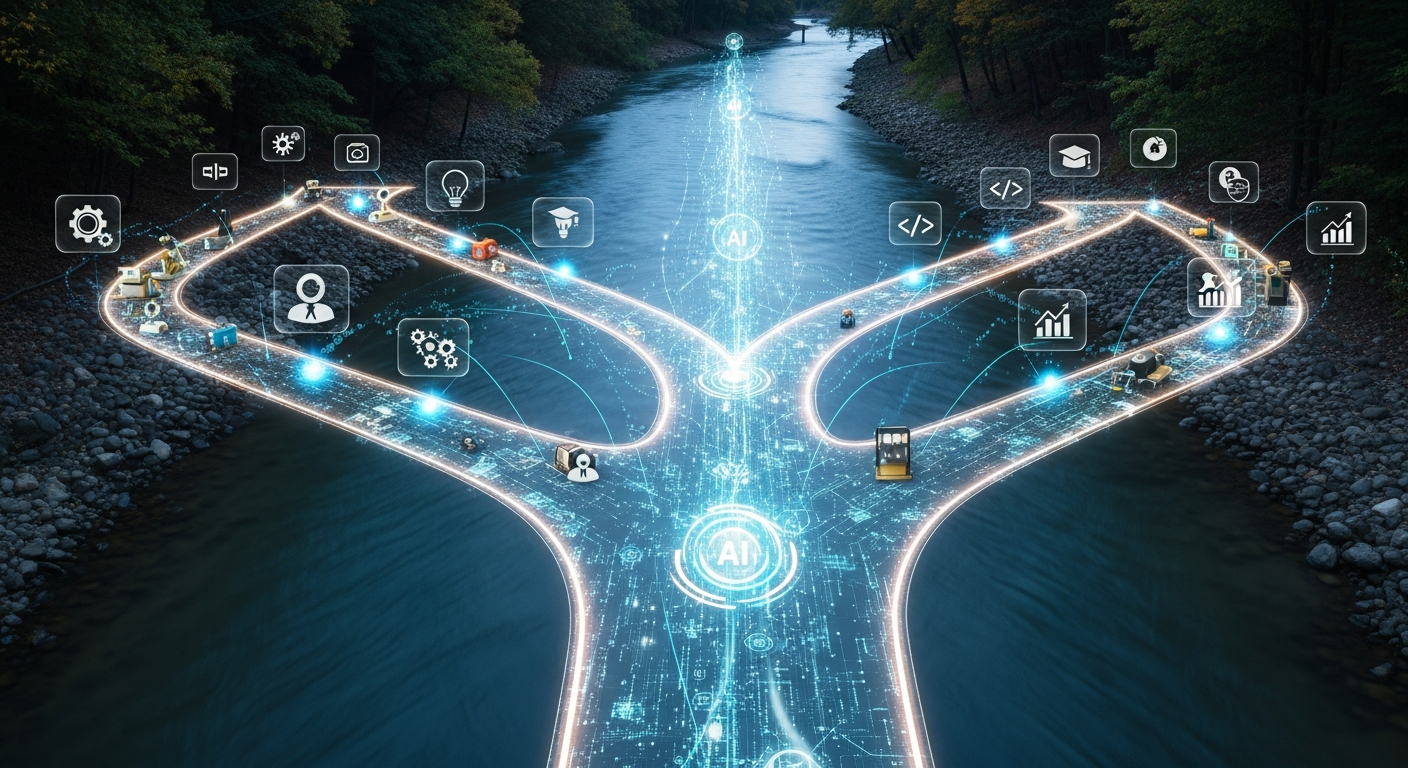
Adaptive Learning Paths: Tailoring The Employee Training Journey With Ai
In today's rapidly evolving business landscape, the effectiveness of employee training directly impacts an organization's competitiveness, compliance, and growth. Vice Presidents, Directors, and Managers of Learning & Development are constantly seeking innovative solutions to address the perennial challenges of engagement, relevance, and measurable ROI in their training programs. The traditional one-size-fits-all approach often falls short, leading to disengaged learners, wasted resources, and skill gaps that hinder performance across industries from Banking to Healthcare, Retail to Oil and Gas.
Enter Artificial Intelligence (AI) and the transformative power of adaptive learning paths. This isn't just a technological upgrade; it's a fundamental shift in how we conceive and deliver corporate education. By leveraging AI, organizations can move beyond generic courses to create truly personalized, dynamic, and highly effective training experiences that resonate with individual employees and drive superior business outcomes. This article delves into how AI is revolutionizing the employee training journey, making it more tailored, engaging, and impactful than ever before.
The Imperative for Personalized Training
The modern workforce is diverse, encompassing a wide range of learning styles, prior knowledge, and career aspirations. Employees in a pharmaceutical company, for instance, may require highly specialized compliance training, while sales teams across any industry need dynamic, up-to-date product knowledge and soft skill development. Generic training often results in:
- Low engagement and completion rates.
- Irrelevant content for experienced learners, and overwhelming content for novices.
- Inefficient use of employees' valuable time.
- Difficulty in tracking true skill mastery and its impact on performance.
These challenges highlight the critical need for a more intelligent and adaptable approach to training – one that can meet individual learners where they are and guide them precisely where they need to go. A robust learning management system (LMS) or learning content management system (LCMS) is the foundational technology to enable this transformation.
What Are Adaptive Learning Paths?
Adaptive learning paths represent a dynamic, data-driven approach to education where the learning journey is continuously adjusted based on a learner's individual performance, preferences, and progress. Unlike linear training models that present content in a fixed sequence, an adaptive system responds in real-time:
- It can skip content a learner already knows.
- It can provide remedial modules for areas of weakness.
- It can offer different types of content (e.g., videos, simulations, quizzes) based on engagement patterns.
- It can adjust the pace and difficulty of the material.
This level of precision is the cornerstone of Adaptive Learning, ensuring that every minute an employee spends in training is productive and directly contributes to their skill development and organizational goals.
AI as the Architect of Personalization
Artificial Intelligence is the engine that powers adaptive learning paths. It moves beyond simple rule-based systems to provide genuine intelligence and responsiveness. But how does intelligent technology actually personalize a learning journey? AI achieves this through several sophisticated mechanisms:
- Data Analysis and Profiling: AI algorithms analyze vast amounts of data, including a learner's historical performance, job role, department, previous training records, and even interaction patterns within the lms learning management system. This creates a detailed individual profile.
- Content Recommendation Engines: Similar to how streaming services suggest movies, AI recommends the most relevant learning modules, resources, and activities based on the learner's profile, current skill gaps, and learning objectives.
- Dynamic Path Adjustment: As a learner progresses, AI continuously assesses their understanding and mastery. If an employee quickly grasps a concept, the system can fast-track them to more advanced material. Conversely, if they struggle, AI can provide additional explanations, different formats, or supplementary exercises.
- Competency Mapping: AI can map learning activities directly to specific job role competencies, ensuring that training is always aligned with practical workplace needs. This is particularly valuable for complex roles in finance or engineering.
The creation of tailored content for these paths is also streamlined by innovation. An AI Powered Authoring Tool can assist L&D teams in rapidly generating, updating, and localizing content, ensuring that personalized paths are always stocked with fresh, relevant material.
Key Benefits of AI-Driven Adaptive Learning
Implementing an AI-driven adaptive learning solution offers profound benefits for both employees and the organization:
Enhanced Engagement and Motivation
When training is highly relevant and challenging at just the right level, learners are more likely to stay engaged. The personalized nature makes employees feel valued, and the sense of progression fuels motivation. Incorporating elements of a Gamified LMS further boosts engagement, turning learning into an interactive and rewarding experience.
Improved Skill Acquisition and Retention
By focusing on individual needs, AI ensures that learners spend time only on what they need to learn. This targeted approach leads to deeper understanding and better retention of knowledge and skills, directly impacting job performance in areas like compliance adherence or product knowledge.
Increased Efficiency and Faster Time-to-Competency
Adaptive paths eliminate redundant training, allowing employees to achieve proficiency faster. This efficiency translates into significant cost savings on training hours and quicker deployment of skilled personnel, a crucial advantage in fast-paced industries like retail or sales.
Scalability Across Diverse Industries and Geographies
Is this level of tailored learning accessible to organizations regardless of their operational footprint? Absolutely. A modern cloud based learning management system powered by AI can scale effortlessly to serve thousands of employees across different departments and global locations, from remote mining sites to bustling financial centers. This makes it an ideal enterprise learning management solution.
Data-Driven Insights for L&D Leaders
AI-powered platforms provide L&D teams with rich analytics on learner behavior, common knowledge gaps, and content effectiveness. This data empowers strategic decision-making, allowing continuous improvement of training programs and a clearer understanding of ROI. A comprehensive learning management software offers these insights at your fingertips.
Advanced Capabilities of Intelligent Learning Systems
What advanced capabilities does a smart learning system offer beyond basic course recommendations? Modern AI-driven learning management solutions go far beyond simple content suggestions. They can:
- Predict Performance: Based on early engagement and assessment results, AI can predict which learners might struggle, allowing for proactive intervention before knowledge gaps become critical. This is invaluable for Risk-focused Training in sectors like banking or healthcare.
- Automate Feedback and Coaching: AI can provide instant, personalized feedback on assignments or simulations, guiding learners just as a human coach would.
- Simulate Real-World Scenarios: Especially critical in industries like hospitality or oil and gas, AI can power sophisticated simulations that adapt to a learner's choices, providing realistic practice for complex situations.
- Support Microlearning LMS Strategies: AI excels at delivering bite-sized learning modules, perfectly timed and tailored, maximizing retention and minimizing disruption to work. This makes it ideal for continuous professional development.
Adaptive Learning in Specific Industries
The versatility of AI-driven adaptive learning makes it suitable for every sector:
- Compliance & Banking/Finance: Ensures employees receive highly targeted training on evolving regulations, anti-money laundering, and data privacy, reducing organizational risk.
- Sales & Retail: Provides up-to-the-minute product knowledge, sales techniques, and customer service skills, directly impacting revenue.
- Healthcare & Pharma: Delivers critical training on new protocols, drug information, patient safety, and medical device operation, ensuring high standards of care.
- Hospitality: Tailors training for customer experience, operational procedures, and brand standards, enhancing guest satisfaction.
- Oil & Gas/Mining: Focuses on critical safety procedures, equipment operation, and environmental compliance, mitigating high-stakes risks.
An effective MaxLearn LMS, as a comprehensive set of learning management solutions, provides the framework for housing and delivering these diverse adaptive paths across all these demanding environments.
Implementing AI-Driven Adaptive Learning
For L&D leaders considering this powerful shift, key steps include:
- Assess Needs: Understand current training gaps and desired outcomes.
- Choose the Right Platform: Select an LMS with proven AI capabilities for adaptive learning, robust analytics, and content authoring tools.
- Data Strategy: Plan how to collect and utilize learner data effectively and ethically.
- Start Small: Pilot programs can demonstrate success and build internal champions.
- Upskill L&D Teams: Train L&D professionals to leverage AI tools and data insights.
Embracing the Future of Employee Training
The journey of employee training is no longer a linear, static path but a dynamic, personalized expedition. AI is the compass and the guide, ensuring that every employee receives the precise knowledge and skills they need, exactly when they need them. For L&D Vice Presidents, Directors, and Managers, embracing adaptive learning paths with AI is not merely an option; it's a strategic imperative for fostering a skilled, engaged, and future-ready workforce.
By tailoring the employee training journey, organizations can unlock unprecedented levels of performance, compliance, and innovation. The investment in intelligent learning systems transforms training from a cost center into a powerful driver of competitive advantage and sustainable growth.


