

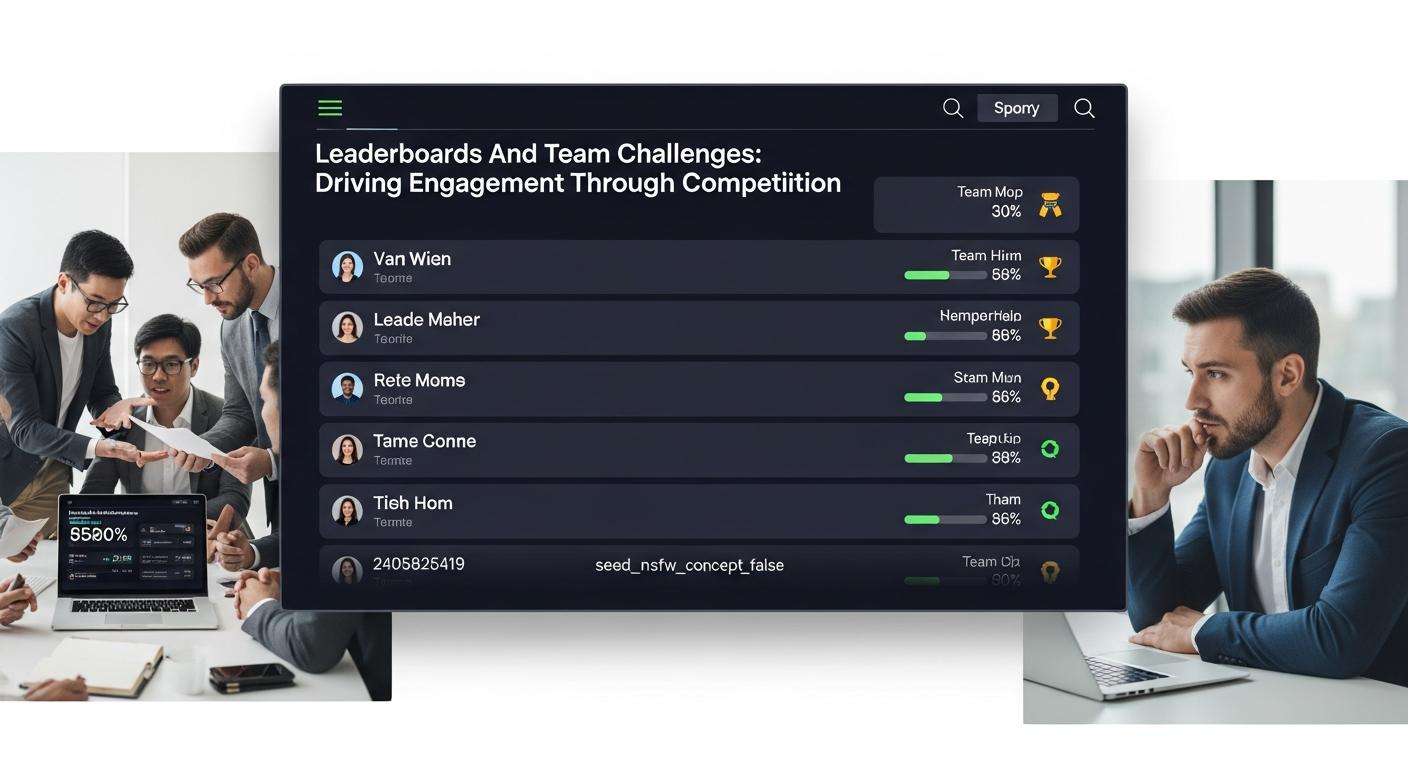
Leaderboards and Team Challenges: Igniting Engagement Through Competitive Learning
In today's fast-evolving corporate landscape, the efficiency and effectiveness of learning and development programs are under constant scrutiny. For Vice Presidents, Directors, and Senior Managers of L&D, the challenge isn't just delivering content, but ensuring that content genuinely engages employees, drives knowledge retention, and translates into measurable performance improvements. This is particularly critical across diverse sectors such as Compliance, Sales, Banking, Finance, Insurance, Retail, Pharma, Health care, Hospitality, Oil and Gas, and Mining, where upskilling and continuous learning are paramount. The solution often lies in tapping into a fundamental human drive: competition.
By strategically integrating leaderboards and team challenges into your learning management system, you can transform passive training into an active, motivating experience. This article explores how these powerful gamification elements can revolutionize engagement, foster skill development, and cultivate a culture of continuous learning within your organization.
The Psychology of Competition in Learning
Why are games so inherently captivating? The answer lies in psychology. Humans are naturally inclined towards achievement, recognition, and social connection. Gamification, through features like leaderboards and challenges, leverages these instincts to create a more immersive and rewarding learning journey. It shifts the perception of training from a mere obligation to an opportunity for personal growth and collective triumph.
A well-designed Gamified LMS transforms learning into a dynamic arena where participants can track their progress, celebrate milestones, and measure their development against peers. This intrinsic motivation, coupled with extrinsic rewards (like recognition or badges), creates a powerful feedback loop that encourages sustained participation and deeper engagement with course material.
Leaderboards: Highlighting Individual Excellence
Leaderboards serve as a public display of individual achievement, showcasing top performers based on various metrics such as course completion rates, quiz scores, content mastery, or even active participation. The benefits are multifold:
- Increased Motivation: The desire to see one's name at the top, or to improve a ranking, provides a strong incentive to engage more deeply with learning content.
- Visibility and Recognition: Top performers gain recognition from peers and management, reinforcing positive learning behaviors. This can be particularly impactful in enterprise learning management environments where individual contributions might otherwise go unnoticed.
- Transparent Progress Tracking: Learners can easily see their own progress relative to others, fostering a clearer understanding of their standing and areas for improvement.
- Benchmarking: Leaderboards inadvertently set benchmarks for what "good" performance looks like, inspiring others to strive for similar levels of excellence.
In industries like Sales, a leaderboard showcasing sales training module completion or product knowledge scores can directly correlate to improved performance in the field. For Compliance training, a leaderboard can drive timely completion of critical modules, reducing organizational risk.
Team Challenges: Fostering Collaboration and Collective Success
While leaderboards focus on individual prowess, team challenges harness the power of collective effort. These challenges pit groups against each other, encouraging collaboration, peer-to-peer learning, and shared accountability. This approach is invaluable for complex topics, large organizations, or when building specific departmental skills.
- Enhanced Collaboration: Teams work together to achieve a common goal, sharing knowledge, strategizing, and supporting each other through the learning process. This is crucial for cross-functional training or complex project-based learning.
- Peer Learning and Support: Less experienced team members can learn directly from their more knowledgeable colleagues, and everyone benefits from diverse perspectives.
- Shared Accountability: The success of the team depends on each member's contribution, fostering a sense of collective responsibility for learning outcomes.
- Stronger Team Cohesion: Successfully navigating a learning challenge together can strengthen team bonds and improve overall departmental morale.
Imagine a Banking or Finance sector team challenge focused on new regulatory updates, where teams collaboratively analyze case studies and present solutions. Or in Healthcare, where teams compete to master new patient care protocols, improving both individual competence and team synergy.
Beyond Engagement: Tangible Business Impact
The benefits of competitive learning extend far beyond mere engagement. For L&D leaders, the real value lies in the tangible impact on business outcomes:
- Improved Knowledge Retention: Active, competitive learning environments lead to deeper processing and better recall of information compared to passive methods.
- Accelerated Skill Development: The urgency and motivation induced by competition can fast-track the acquisition of new skills, essential for a rapidly changing workforce.
- Better Performance Outcomes: Whether it’s increased sales, improved compliance adherence, or enhanced operational efficiency, better-trained employees directly contribute to business growth. For example, Risk-focused Training, when gamified, can lead to a significant reduction in incidents and associated costs.
- Data-Driven Insights: A robust LMS captures valuable data on learner performance, participation, and progress within challenges, providing L&D teams with actionable insights to refine training programs. This data can inform future content development and identify specific areas where learners struggle.
Strategic Implementation: Making Competition Work for You
Implementing leaderboards and team challenges requires careful planning. Here's how to maximize their effectiveness:
- Clear Rules and Objectives: Ensure learners understand how points are earned, what constitutes winning, and what the learning objectives are.
- Fairness and Transparency: The scoring system must be perceived as fair and transparent to maintain trust and motivation.
- Meaningful Rewards: While recognition is often enough, consider tangible rewards that align with your organizational culture.
- Integrate with Microlearning: Shorter, focused Microlearning LMS modules are ideal for gamification, as they allow for frequent challenges and quick feedback loops, keeping momentum high.
- Leverage Technology: A modern cloud based learning management system or learning management software offers built-in gamification features, making implementation seamless. MaxLearn LMS, for instance, provides a comprehensive Learning content management system with powerful tools for competitive learning.
The Future of Competitive Learning: AI's Role
As L&D leaders look to the horizon, the integration of artificial intelligence promises to elevate competitive learning to new heights. Modern learning management solutions are increasingly leveraging AI to personalize, enhance, and optimize learning experiences globally.
Imagine a system that intelligently designs unique challenges for each learner. This is becoming a reality as AI analyzes individual learning styles, prior knowledge, and performance data to create bespoke competitive paths, ensuring that challenges are neither too easy nor too difficult, thereby maximizing engagement and learning efficacy. This level of tailoring transforms generic competition into a deeply personal growth journey.
Furthermore, AI can dramatically improve the effectiveness of competitive learning by precisely identifying learning gaps. By processing vast amounts of learner data, AI can pinpoint specific areas where individuals or teams consistently struggle. It can then automatically generate targeted team challenges or individual leaderboard goals that directly address these weaknesses, enhancing overall skill development and ensuring that competitive efforts are always aligned with critical learning objectives.
For organizations operating across multiple regions, ensuring fair and engaging competition is crucial. AI can play a pivotal role in this by accounting for diverse factors such as cultural nuances, language differences, and varying educational backgrounds. It can normalize scores across different groups, suggest contextually relevant challenges, and even adapt content delivery based on geographical considerations, fostering truly inclusive and equitable global competitions that transcend operational boundaries and unite diverse workforces under common learning goals.
An AI Powered Authoring Tool, coupled with Adaptive Learning capabilities, can dynamically adjust the difficulty and content of challenges based on real-time performance, ensuring that competition remains stimulating and relevant for every learner, everywhere.
Conclusion
Leaderboards and team challenges are not just buzzwords; they are powerful, proven strategies for driving engagement, fostering skill development, and achieving measurable business outcomes in your L&D programs. By tapping into the innate human desire for competition and recognition, and by leveraging advanced lms learning management system features, L&D leaders can transform corporate training from a routine task into an exciting, results-driven adventure.
Whether you are in Pharma needing to ensure product knowledge, Hospitality training for exceptional customer service, or Mining focused on safety protocols, integrating competitive elements into your LCMS can significantly enhance the impact of your learning initiatives. Embrace the power of competition, and watch your teams excel, grow, and achieve new levels of performance.
.jpg)


