

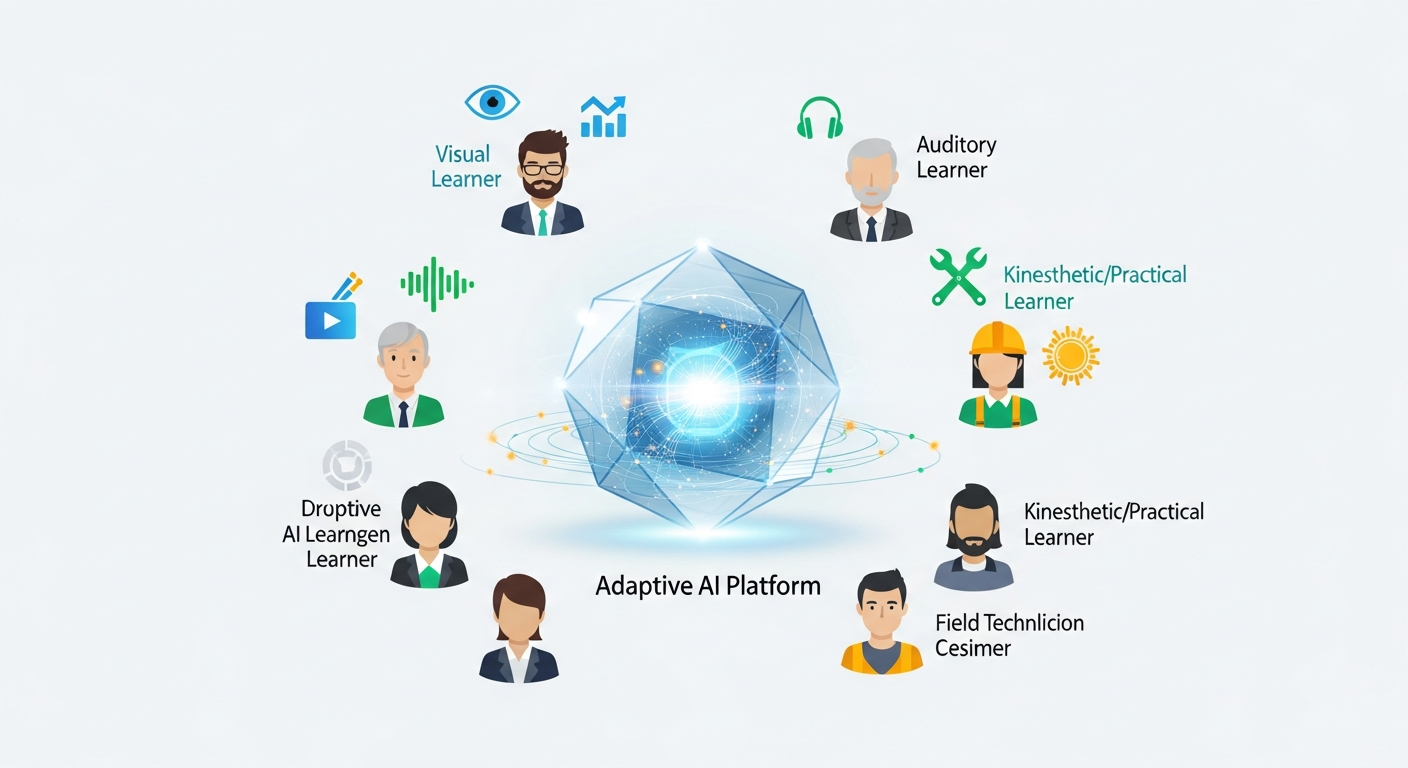
How Adaptive AI Platforms Dynamically Adjust to Employee Learning Preferences
In today's fast-evolving corporate landscape, the traditional one-size-fits-all approach to employee training is rapidly becoming obsolete. As a Vice President, Director, or Manager in Learning & Development, you understand the critical need for training programs that resonate deeply with each individual, driving engagement, retention, and ultimately, performance. The answer lies in adaptive artificial intelligence platforms – sophisticated solutions designed to dynamically adjust to employee learning preferences, ensuring every learner receives the most effective and personalized educational journey possible.
From compliance training in banking and finance to sales enablement in retail and pharma, and critical skill development in healthcare and hospitality, the demand for tailored learning is universal. An effective Microlearning LMS equipped with AI capabilities can transform how your organization approaches continuous learning and development.
Understanding the Dynamic Learning Landscape
Employees are not homogenous. They come with diverse backgrounds, prior knowledge, learning styles, job roles, and career aspirations. For L&D professionals, this diversity presents both a challenge and an opportunity. A challenge because generic content often fails to capture attention or transfer knowledge effectively. An opportunity because truly personalized learning can unlock unprecedented levels of potential within your workforce.
The modern workforce expects training that is relevant, accessible, and respectful of their time. This expectation is heightened across industries like oil and gas, and mining, where specialized skills are paramount. Stale, static content leads to disengagement, low completion rates, and a poor return on your training investment. This is where the power of an adaptive learning management system comes into play, offering a dynamic and responsive solution to these complex demands.
The Core Mechanism: How Adaptive AI Works
Adaptive AI platforms leverage advanced algorithms and machine learning to create a truly individualized learning experience. This isn't just about offering a few elective courses; it's about continuously analyzing learner behavior and adjusting the content, pace, and even format of training in real-time.
Data Collection and Analysis
At its heart, an adaptive platform constantly gathers data on a learner's interactions. This includes:
- Performance on assessments and quizzes
- Time spent on specific modules or topics
- Types of content consumed (videos, articles, interactive simulations)
- Preferred learning paths (linear vs. exploratory)
- Feedback provided by the learner
- Job role, department, and learning goals
Through sophisticated analytics, the platform identifies patterns and preferences. For instance, if an employee consistently struggles with a particular concept, the system might recommend supplementary materials or present the information in a different format. If another learner thrives with interactive simulations, the system will prioritize such content.
Personalized Content Delivery
Once preferences and knowledge gaps are identified, the adaptive learning system dynamically tailors the content delivery. This means:
- Customized Learning Paths: Instead of a fixed curriculum, learners receive a path designed specifically for their needs, skipping what they already know and focusing on areas where they require improvement. This is the essence of Adaptive Learning.
- Varied Content Formats: Recognizing that some prefer visual aids, others auditory, and some hands-on practice, the system can offer the same information through different media types.
- Paced Learning: The platform adjusts the speed at which content is presented, allowing fast learners to progress quickly and offering more time and resources to those who need it.
- Relevant Examples: Content can be contextualized with examples pertinent to the learner's industry (e.g., banking regulations for finance professionals, patient care scenarios for healthcare workers).
This dynamic adjustment ensures that every minute spent on training is productive and engaging, optimizing the overall employee experience with your learning management software.
Real-time Feedback and Adjustment
The process is continuous. As learners interact with the platform, it collects new data, refines its understanding of their preferences, and further adjusts the learning experience. This iterative feedback loop allows the LMS to become increasingly intelligent and effective over time. Imagine an AI Powered Authoring Tool that not only helps create content but also dynamically serves it based on these real-time adjustments!
Benefits for L&D Leaders
Implementing an adaptive AI learning platform offers tangible advantages for L&D departments across all industries, including retail, pharma, and even highly regulated sectors like banking and finance.
- Enhanced Engagement and Retention: When training is relevant and personalized, employees are more likely to stay engaged, complete courses, and retain information. A Gamified LMS further boosts motivation and completion rates.
- Improved Performance and Productivity: By addressing specific skill gaps and optimizing learning efficiency, employees become more competent and productive in their roles, leading to measurable business outcomes.
- Scalability and Efficiency: An intelligent learning content management system automates the personalization process, allowing L&D teams to deliver highly effective training to thousands of employees without a corresponding increase in manual effort. This makes it an ideal enterprise learning management solution.
- Risk-focused Training and Compliance: Especially critical in sectors like banking, insurance, and healthcare, adaptive AI ensures that compliance training is not just completed, but deeply understood, identifying and remediating individual weaknesses that could pose organizational risks.
- Data-Driven Insights: The extensive data collected by the platform provides L&D leaders with invaluable insights into the effectiveness of training programs, employee skill levels, and areas requiring further development, informing strategic decisions.
AI-Powered Solutions in Action
Consider the practical applications. In sales, an adaptive learning management system might identify that a particular sales representative struggles with objection handling. The system then automatically provides targeted microlearning modules, role-playing scenarios, or coaching tips, rather than making them re-do the entire sales training curriculum. In healthcare, an adaptive platform could identify a nurse's weakness in a specific emergency protocol and immediately provide a refresher course tailored to their preferred learning style.
Modern lms learning management system solutions, like MaxLearn LMS, are designed with these intelligent capabilities. They offer a cloud based learning management system infrastructure that ensures accessibility and scalability for organizations across various segments, including compliance and hospitality.
Addressing Key Questions for L&D Professionals
As you evaluate cutting-edge learning management solutions, you likely have specific questions about implementation and impact:
- How can artificial intelligence make training programs more relevant to individual employees? AI achieves relevance by analyzing each learner's past performance, preferences, job role, and explicit feedback to continuously adapt content. It identifies knowledge gaps and learning styles, then dynamically delivers the most appropriate content, format, and pace. This ensures that every piece of information presented is precisely what the individual needs to learn most effectively, eliminating irrelevant modules and maximizing engagement.
- What are the best strategies for personalizing employee training across different regions? For geographically dispersed teams, an adaptive platform can tailor content not only to individual preferences but also to regional nuances. This includes localizing language, cultural references, specific market regulations, and even regional examples for industries like oil and gas, or mining. By segmenting learners based on location and applying adaptive algorithms, the platform ensures content relevance and cultural appropriateness, regardless of where your employees are situated.
- Where can I find a learning management system that truly adapts to diverse learning styles? Look for a learning management software provider that explicitly highlights AI and machine learning capabilities in their platform. A robust system will feature comprehensive data analytics, personalized content engines, and flexible content delivery options (video, text, interactive, gamified elements). Providers like MaxLearn LMS offer adaptive functionalities designed to cater to a spectrum of learning styles and organizational needs, making it a powerful LCMS for any enterprise.
Choosing the Right Platform
When selecting a learning management system for your organization, prioritize platforms that offer robust adaptive AI capabilities. Look for a solution that provides detailed analytics, flexible content integration, and a user-friendly interface for both learners and administrators. The best learning management system will not only deliver personalized training but also empower your L&D team with actionable insights to continuously refine your learning strategy.
Conclusion
The future of corporate learning is undeniably personal. Adaptive AI platforms represent a paradigm shift, moving beyond static curricula to truly dynamic, learner-centric experiences. By embracing these intelligent learning management solutions, L&D leaders can significantly boost employee engagement, accelerate skill development, ensure compliance, and drive tangible business growth across all segments, from sales to healthcare and beyond. Invest in a smart, adaptive LMS and empower your workforce to learn, adapt, and excel like never before.
.jpg)


