

Unlocking Potential: The Strategic Advantage of a Microlearning LMS for L&D Leaders
In today's fast-paced corporate environment, the traditional approach to learning and development often struggles to keep pace with evolving skill requirements and shrinking attention spans. As L&D Vice Presidents, Directors, and Senior Managers, you face the constant challenge of delivering impactful training that resonates with a diverse workforce, drives measurable results, and aligns with strategic business objectives. This is where a modern Microlearning LMS emerges not just as a tool, but as a strategic imperative.
Across industries – from compliance-heavy sectors like banking, finance, and insurance, to rapidly innovating fields like pharma, healthcare, and retail, and resource-intensive operations in oil and gas and mining – the need for agile, effective training is paramount. A robust learning management system that embraces microlearning principles can transform your organization's learning landscape, fostering continuous skill development and enhancing performance.
What Exactly is a Microlearning LMS?
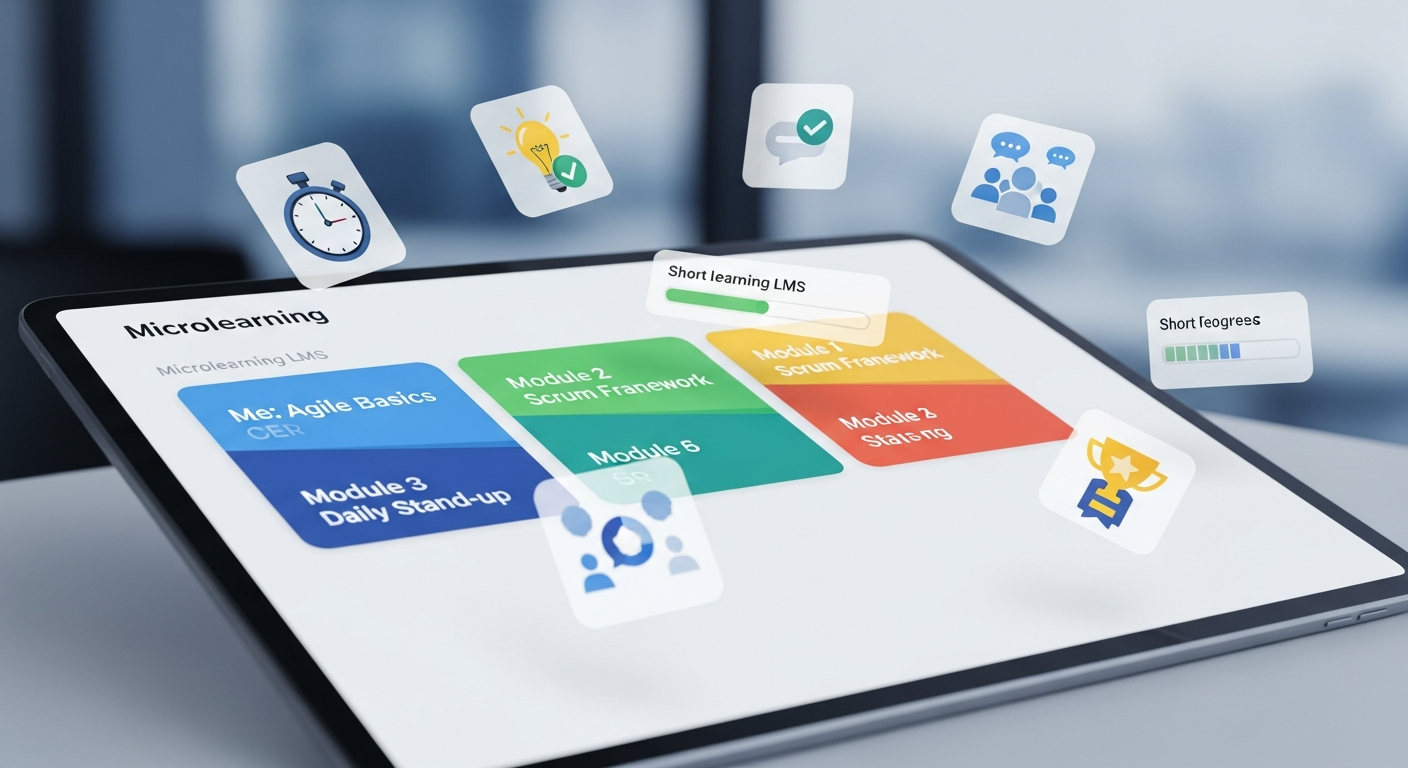
At its core, a Microlearning LMS is a specialized LMS designed to deliver educational content in short, digestible segments, typically ranging from 2 to 10 minutes. Unlike conventional enterprise learning management solutions that often host lengthy courses, a microlearning platform focuses on bite-sized modules, videos, infographics, quizzes, and interactive exercises. This approach aligns perfectly with modern learning habits, where individuals prefer to consume information quickly and on-demand.
Think of it as the antithesis of a traditional hour-long e-learning module. Instead, employees can access precisely the information they need, when they need it, whether it's understanding a new compliance regulation, learning a sales pitch technique, or mastering a piece of new software. This format greatly enhances knowledge retention and application, making it a powerful learning management software for today’s dynamic workforce.
Why Microlearning is Critical for Modern L&D Success
The benefits of adopting a microlearning approach through a dedicated Microlearning LMS are multifaceted, directly addressing many of the pain points L&D leaders experience:
- Enhanced Engagement and Retention: Short bursts of content prevent cognitive overload, keeping learners engaged and significantly improving recall. Employees are more likely to complete small modules than daunting multi-hour courses.
- Increased Flexibility and Accessibility: Learning can happen anytime, anywhere, on any device. This is crucial for remote teams, frontline workers in retail or hospitality, and professionals with demanding schedules in banking or healthcare. Many modern solutions offer a robust cloud based learning management system architecture.
- Immediate Applicability: Learners can acquire a specific skill or piece of knowledge and apply it immediately to their work, leading to faster skill transfer and performance improvement.
- Agile Content Development and Updates: Microlearning modules are quicker to create and easier to update. This is invaluable in industries like finance or pharma, where regulations and product knowledge change frequently, allowing your learning content management system to stay current.
- Reduced Training Costs and Time-to-Competency: By streamlining content and delivery, organizations can reduce the time employees spend away from their core duties, translating into significant cost savings and faster time to proficiency.
Key Features of an Effective Microlearning LMS
To truly unlock the potential of microlearning, your chosen lms learning management system should boast a suite of essential features:
Seamless Content Delivery and Variety
- Support for diverse content formats: short videos, interactive quizzes, infographics, simulations, podcasts, and gamified challenges.
- Mobile-first design ensuring optimal experience on smartphones and tablets.
Engagement and Motivation Tools
- Built-in Gamified LMS features like points, badges, leaderboards, and progress tracking to drive motivation and friendly competition.
- Social learning capabilities allowing peer-to-peer interaction and knowledge sharing.
Personalization and Adaptive Learning Paths
- The ability to tailor learning paths based on individual roles, skill gaps, performance data, and learning preferences. This ensures relevance and efficiency.
Intuitive Content Creation and Curation
- An easy-to-use AI Powered Authoring Tool that empowers L&D teams and even subject matter experts to quickly create and publish microlearning modules without extensive technical skills.
- Robust content management features for easy organization, version control, and repurposing of learning assets. This forms the backbone of your LCMS.
Powerful Analytics and Reporting
- Comprehensive dashboards to track learner progress, engagement rates, completion times, and knowledge acquisition.
- Insights into training effectiveness, identifying areas for improvement, and demonstrating ROI to stakeholders.
Addressing Industry-Specific Needs with Microlearning
The versatility of a Microlearning LMS makes it an ideal solution across a wide spectrum of industries:
- Compliance (Banking, Finance, Insurance, Pharma, Healthcare, Oil & Gas): Regular updates on regulations, protocols, and ethical guidelines can be delivered in concise modules, ensuring continuous adherence and reducing Risk-focused Training.
- Sales and Retail: New product launches, sales techniques, customer service best practices, and objection handling can be rapidly disseminated, enabling sales teams to stay competitive and responsive.
- Healthcare: Training on new medical procedures, patient safety protocols, and equipment operation can be delivered efficiently, supporting ongoing professional development.
- Hospitality: Onboarding for seasonal staff, specific service standards, and cultural sensitivity training can be made accessible and engaging.
- Mining and Oil & Gas: Safety procedures, equipment maintenance, and environmental compliance can be reinforced through regular, concise modules, critical for high-risk environments.
These sector-specific applications underscore the strategic value of microlearning solutions in driving operational excellence and mitigating risks.
Leveraging Intelligence for Enhanced Learning: Q&A
As organizations increasingly turn to advanced technology, the role of intelligent systems in refining learning outcomes becomes paramount. Here’s how smart capabilities within a learning management system can make a difference:
Q: How can smart systems optimize content delivery in learning platforms?
A: Intelligent algorithms can analyze learner behavior, preferences, and performance data to recommend the most relevant microlearning content at the optimal time. This personalization ensures learners receive training that directly addresses their specific skill gaps and learning styles, making every interaction more efficient and impactful. It can also automate the sequencing of modules, ensuring a logical and progressive learning journey.
Q: How do advanced analytical engines help in tailoring learning experiences for diverse global teams?
A: Advanced analytics can process vast amounts of data from different regions, languages, and cultural contexts. By identifying patterns in engagement, completion rates, and assessment scores across diverse demographics, these engines allow L&D leaders to adapt content, delivery methods, and even motivational strategies to suit specific global teams. This ensures that a uniform message can be delivered effectively while respecting local nuances, crucial for an effective enterprise learning management strategy.
Q: What insights can intelligent learning systems provide to improve overall training effectiveness and business results?
A: Beyond basic completion rates, intelligent learning systems offer deep insights by correlating training data with business metrics. They can predict potential skill gaps before they become critical, identify high-performing learning pathways, and even forecast the impact of specific training interventions on KPIs like sales performance, compliance adherence, or customer satisfaction. This enables L&D to move from reactive training to proactive, data-driven strategic development, clearly demonstrating the return on investment of your learning management solutions.
Choosing the Right Microlearning LMS
When evaluating different LMS providers, consider scalability, integration capabilities with existing HR and business systems, intuitive user experience, and the vendor's commitment to support and continuous innovation. Solutions like MaxLearn LMS are specifically designed to offer a comprehensive, engaging, and data-driven microlearning experience, empowering L&D professionals to build a future-proof learning culture.
Conclusion
For L&D leaders aiming to foster a culture of continuous learning, improve employee performance, and stay ahead in a competitive market, investing in a sophisticated Microlearning LMS is no longer an option but a strategic necessity. By embracing bite-sized learning, personalized paths, and intelligent insights, you can transform your organization's training initiatives, making learning an integrated, engaging, and highly effective part of daily operations. It’s time to empower your workforce with knowledge that sticks and skills that grow.
.jpg)


