

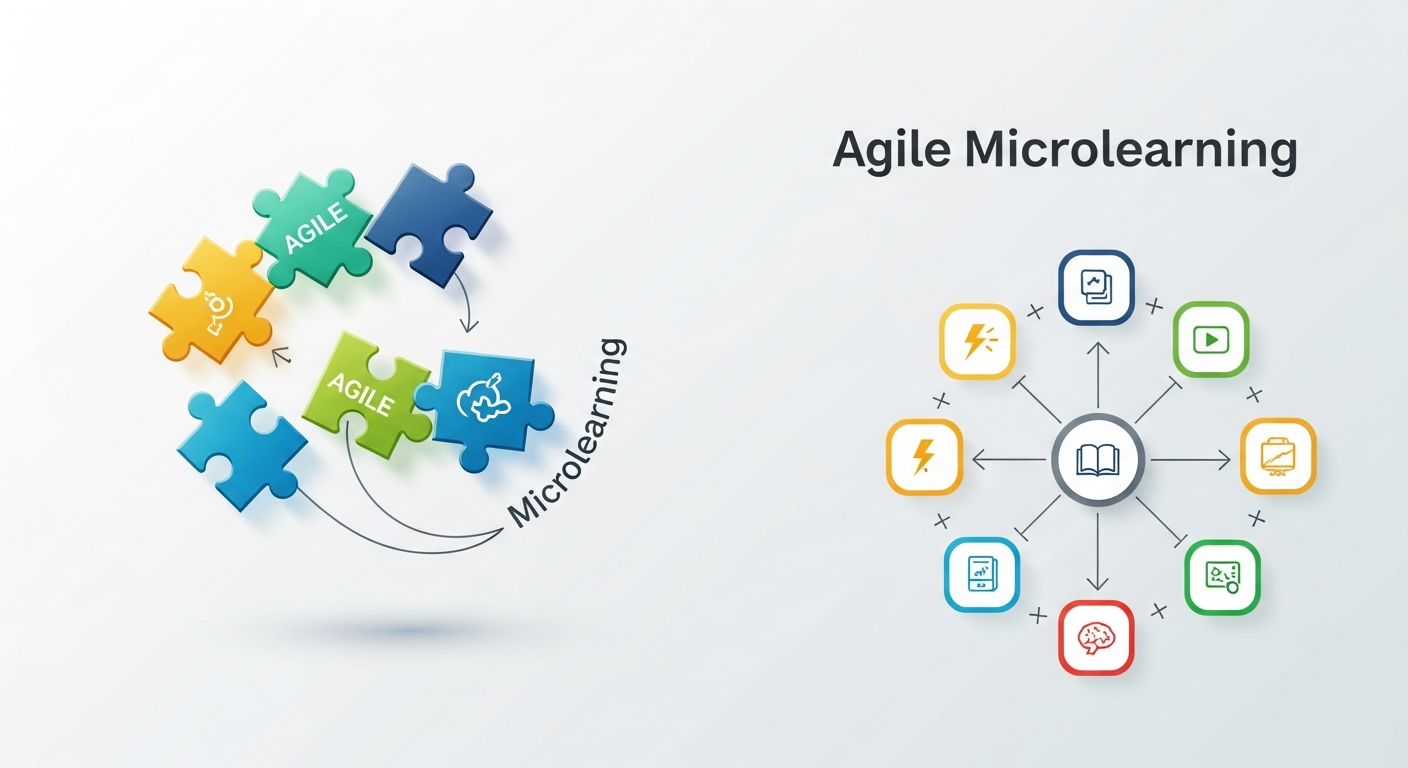
Agile Microlearning: The Future-Forward Strategy for L&D Leaders
In today's hyper-competitive and rapidly evolving business landscape, Learning and Development (L&D) leaders face an unprecedented challenge: how to equip employees with essential skills at the pace of change. Traditional, lengthy training programs often fall short, struggling to keep up with new regulations, product launches, market shifts, and technological advancements. This is where Agile Microlearning emerges not just as a trend, but as a strategic imperative for Vice Presidents, Directors, and Senior Managers in L&D across industries like Compliance, Sales, Banking, Finance, Insurance, Retail, Pharma, Healthcare, Hospitality, Oil and Gas, and Mining.
Agile Microlearning marries the flexibility and responsiveness of agile methodologies with the focused, bite-sized efficiency of microlearning. It’s a paradigm shift that promises not only to optimize learning delivery but also to significantly enhance employee engagement, performance, and organizational agility.
What is Agile Microlearning?
At its core, Agile Microlearning is an iterative approach to learning content design and delivery, characterized by short, focused modules that are developed and deployed rapidly in response to specific, immediate learning needs. It's about delivering the right information, to the right person, at the right time, in the most digestible format.
- Microlearning: This component breaks down complex topics into small, manageable units, typically 2-10 minutes in length. These units often focus on a single learning objective, making them highly effective for quick knowledge acquisition or skill refreshers. Think of them as atomic pieces of learning, easily consumed on demand.
- Agile Methodology: Borrowed from software development, agile principles emphasize iterative development, flexibility, collaboration, and continuous improvement. In an L&D context, this means content isn't developed in a vacuum through a lengthy, linear process. Instead, it’s created, tested, refined, and deployed in cycles, with constant feedback loops ensuring relevance and effectiveness.
Combined, Agile Microlearning creates a dynamic, adaptable, and highly efficient learning ecosystem. It ensures that your organization can respond swiftly to skill gaps and knowledge requirements, keeping your workforce always a step ahead.
Why Agile Microlearning Now? The L&D Imperative
The demand for immediate, relevant, and engaging learning has never been higher. L&D leaders are grappling with:
- Accelerated Change: Industries are transforming at breakneck speed. For example, new compliance regulations in Banking or Pharma require immediate dissemination of critical information. New sales strategies demand rapid training updates.
- Learner Preferences: Today’s workforce, especially digital natives, prefers self-directed, on-demand, and mobile-friendly content. Long courses often lead to high drop-off rates and poor retention.
- Business Impact: The ability to upskill and reskill employees quickly directly impacts productivity, customer satisfaction, and competitive advantage. Delayed learning means missed opportunities and increased risks.
Adopting an LMS built for the modern era, particularly a Microlearning LMS, becomes crucial. These platforms provide the infrastructure to host, deliver, and track bite-sized content effectively. Moreover, a Gamified LMS can further boost engagement, making learning an enjoyable and rewarding experience.
Key Benefits for L&D Leaders
Embracing Agile Microlearning offers a multitude of advantages for L&D professionals seeking to maximize their impact:
- Enhanced Engagement & Retention: Short, focused modules prevent cognitive overload and maintain learner interest. Combined with features found in a Gamified LMS, learning becomes more interactive and sticky.
- Rapid Development & Deployment: Agile methodologies drastically cut down content development time. Instead of months, critical training can be deployed in weeks or even days, ensuring employees always have the most up-to-date information, essential for industries like Healthcare or Mining where safety protocols are continuously refined.
- Improved Performance & Productivity: Learners can apply new knowledge immediately to their jobs, leading to quicker skill transfer and measurable performance improvements. This is particularly valuable in Sales training or customer service for Retail and Hospitality.
- Cost-Effectiveness & ROI: Smaller content units are generally less expensive to produce and update. Their direct impact on performance translates into a clear return on investment.
- Adaptability to Change: This is perhaps the most significant benefit. When regulations change in Finance or Oil and Gas, or a new product launches, relevant microlearning modules can be updated or created swiftly, ensuring compliance and preparedness.
Implementing Agile Microlearning: A Practical Guide
Transitioning to an Agile Microlearning strategy requires thoughtful planning and the right tools:
- Content Strategy: Start by identifying critical learning needs. Break down complex subjects into discrete, actionable learning objectives. Focus on "need-to-know" rather than "nice-to-know."
- Technology Integration: A robust learning management software is indispensable. Look for a learning content management system that supports various media formats, mobile access, and detailed analytics. Consider platforms that offer Adaptive Learning capabilities to personalize learning paths based on individual needs and progress.
- Feedback Loops: Implement continuous feedback mechanisms from learners and subject matter experts. Use this input to iterate and improve content regularly, embodying the agile spirit.
- AI for Smarter Learning: The integration of artificial intelligence is no longer a luxury but a necessity for truly agile and effective learning.
Leveraging Intelligence for Optimal Learning Experiences
Intelligent systems are revolutionizing how L&D leaders approach talent development. They offer unparalleled capabilities to tailor, localize, and measure the impact of microlearning initiatives.
How can intelligent systems pinpoint the exact learning needs of my team across diverse roles?
Sophisticated algorithms can analyze a vast array of data, including performance metrics, skill assessments, job role requirements, and even career aspirations. By identifying individual and collective skill gaps, these systems can recommend highly personalized learning paths composed of relevant microlearning modules. This prescriptive approach ensures that every employee receives the most impactful training at the opportune moment, turning a generic learning management system into a dynamic skill-building engine that truly optimizes your learning management solutions.
Our global operations have varying compliance standards. Can advanced algorithms help us deliver region-specific training efficiently?
Absolutely. Advanced algorithms are adept at processing and understanding contextual data, including geographical location, regulatory frameworks, and cultural nuances. This allows L&D teams to easily segment their audience and deliver highly localized microlearning content. For instance, specific compliance training for financial regulations in Europe can be automatically deployed to relevant employees, while a different set of modules is routed to teams in Asia. This capability is paramount for Risk-focused Training, ensuring that all regional teams adhere to specific, evolving local requirements without manual content distribution headaches.
With so much data, how can smart technologies ensure our microlearning initiatives genuinely translate into improved employee performance and business outcomes?
Intelligent platforms move beyond simple completion rates. They analyze engagement patterns, knowledge retention through assessments, and critically, how learned skills are applied in real-world scenarios. By integrating with performance management systems, smart technologies can draw correlations between microlearning consumption and improvements in key performance indicators (KPIs), such as sales targets, customer satisfaction scores, or safety incident reductions. An AI Powered Authoring Tool, for example, can also help rapidly create and iterate content based on performance feedback, closing the loop between learning and results and providing clear evidence of your learning management system's impact on your enterprise learning management strategy.
Agile Microlearning Across Industries
- Compliance (Banking, Finance, Pharma, Healthcare, Oil & Gas): Rapid deployment of updated policies and regulations ensures continuous adherence and minimizes risk.
- Sales: Quick updates on product features, competitor analysis, and sales techniques keep teams sharp and competitive.
- Retail & Hospitality: On-demand training for new customer service protocols, product knowledge, or operational procedures can be delivered instantly to frontline staff.
- Mining: Safety updates, equipment operation refreshers, and emergency procedures can be conveyed effectively in short, impactful bursts.
Choosing the Right Platform: The Role of an Advanced MaxLearn LMS
To fully leverage the power of Agile Microlearning and AI, selecting the right technology partner is paramount. A modern cloud based learning management system is essential. Look for an lms learning management system that offers:
- Seamless content creation and management, including an AI Powered Authoring Tool.
- Robust delivery across all devices.
- Advanced analytics to track engagement, progress, and performance impact.
- Integration capabilities with other HR and business systems.
- Support for Adaptive Learning and personalized learning paths.
The right platform transforms your L&D function from a cost center to a strategic growth driver, providing the agility and intelligence needed for today's dynamic business environment.
Agile Microlearning, empowered by intelligent systems, is not merely an innovation; it's the strategic framework L&D leaders need to navigate the complexities of the modern workforce. By adopting this approach, you can future-proof your organization, cultivate a culture of continuous learning, and ensure your workforce is always ready for what's next. It's time to empower your teams with timely, relevant, and engaging learning experiences that drive measurable business outcomes.
.jpg)


