

Unlocking Human Potential: What Is Skinner Theory and Its Impact on Modern L&D
In the dynamic world of corporate learning and development, where VPs, Directors, and Senior Managers are constantly seeking innovative strategies to enhance performance and drive business growth, understanding the foundational theories of human behavior is paramount. Among these, B.F. Skinner's theory, often referred to as Operant Conditioning, remains a powerful lens through which to analyze and design effective training programs. Far from being an outdated concept, Skinner's insights offer profound relevance for shaping behaviors, improving skills, and fostering compliance across diverse industries, from Banking and Finance to Pharma and Oil and Gas.
What Exactly Is Skinner Theory? The Core of Operant Conditioning
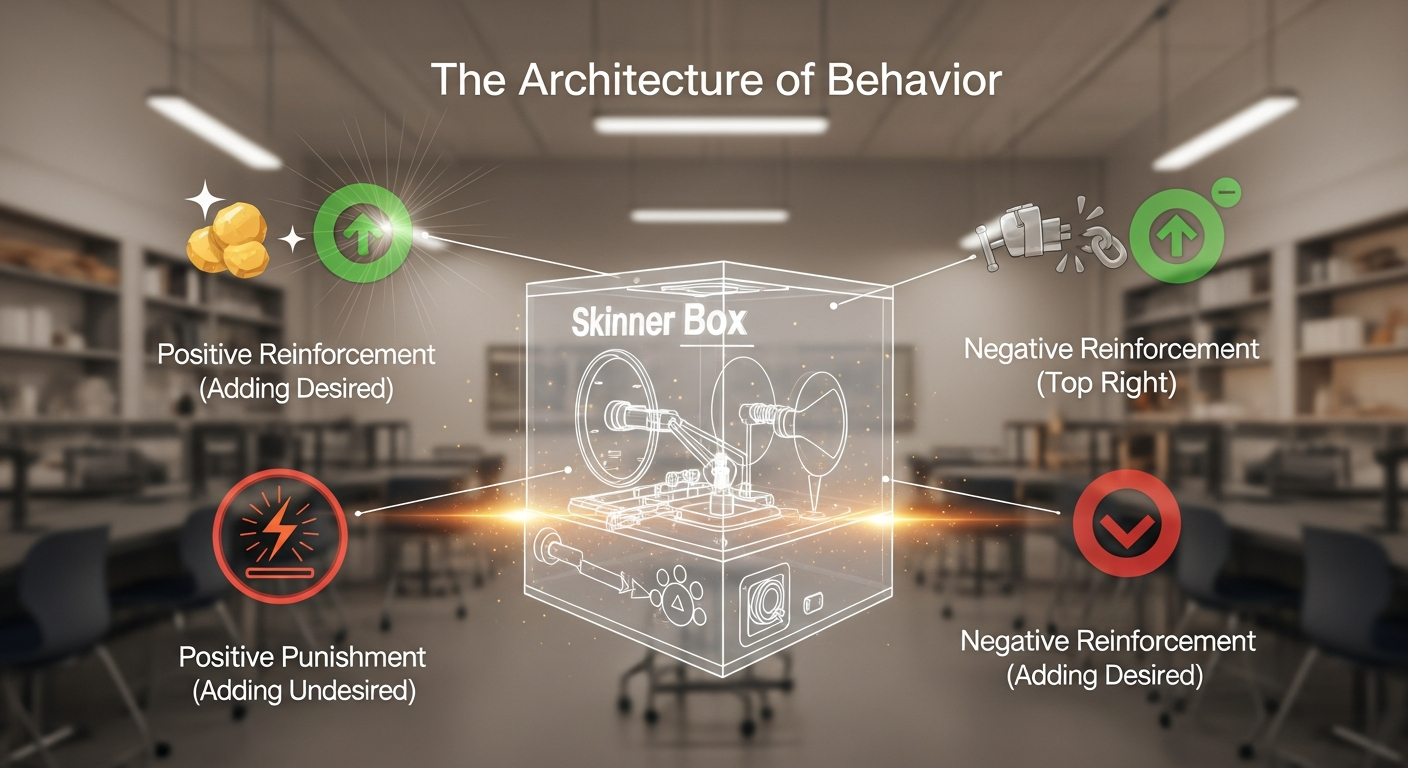
B.F. Skinner, a prominent psychologist, proposed that an individual's behavior is influenced by the consequences that follow it. This concept, known as Operant Conditioning, suggests that learning occurs through rewards and punishments for behavior. Unlike classical conditioning, which deals with involuntary responses, operant conditioning focuses on voluntary behaviors, or "operants," and how their likelihood of recurrence can be modified.
Key Principles of Operant Conditioning:
- Reinforcement: This is the cornerstone of Skinner's theory, aiming to increase the likelihood of a behavior recurring.
- Positive Reinforcement: Adding a desirable stimulus after a behavior. Example: A salesperson receives a bonus for exceeding their target, making them more likely to repeat high performance.
- Negative Reinforcement: Removing an undesirable stimulus after a behavior. Example: An employee completes a mandatory Risk-focused Training module, thereby avoiding a compliance warning. This encourages timely completion of future modules.
- Punishment: This aims to decrease the likelihood of a behavior recurring.
- Positive Punishment: Adding an undesirable stimulus after a behavior. Example: A manager issues a written warning for consistent policy violations in a retail setting, aiming to stop future infractions.
- Negative Punishment: Removing a desirable stimulus after a behavior. Example: An employee loses certain privileges due to unethical conduct in the financial sector, discouraging similar behavior.
- Extinction: This involves withholding reinforcement from a previously reinforced behavior, leading to its eventual decline. Example: Ignoring an employee's constant complaints about a new process, rather than giving them attention (positive reinforcement), can lead to the complaints decreasing over time.
- Schedules of Reinforcement: The timing and frequency of reinforcement play a critical role in how quickly a behavior is learned and how resistant it is to extinction. Different schedules (e.g., continuous, fixed-ratio, variable-ratio, fixed-interval, variable-interval) have distinct effects on learning speed and retention.
Why Skinner Still Matters in Modern L&D Today
For L&D professionals in any industry – be it Healthcare, Hospitality, or Mining – the implications of Skinner's theory are profound. It provides a robust framework for designing learning interventions that effectively drive desired behaviors, improve skill acquisition, and ensure adherence to critical policies and procedures.
Consider the need for behavioral change in compliance training within the banking sector. Reinforcing correct reporting procedures or ethical conduct through immediate, positive feedback can significantly reduce errors and misconduct. In sales, understanding reinforcement schedules can help design incentive programs that consistently motivate peak performance, leveraging the power of a Gamified LMS to provide engaging rewards and recognition.
Skinner's Principles in Modern eLearning Design
The core tenets of Operant Conditioning are highly applicable to the design of today's sophisticated eLearning solutions. A well-designed Microlearning LMS or any advanced learning management system (LMS) can embed these principles to create truly impactful learning experiences.
Integrating Skinnerian Concepts into eLearning:
- Immediate and Specific Feedback: Just as Skinner emphasized immediate consequences, modern eLearning platforms can provide instant feedback on quizzes, simulations, and practice exercises. This acts as positive reinforcement, guiding learners towards correct responses and reinforcing understanding.
- Progress Tracking and Recognition: Visual progress bars, badges, points, and leaderboards, often found in a Gamified LMS, serve as powerful positive reinforcers, motivating learners to complete modules and achieve milestones. This aligns with fixed-ratio or variable-ratio reinforcement schedules.
- Adaptive Learning Paths: Adaptive Learning tailors content based on a learner's performance, effectively reinforcing correct answers by moving them forward and offering remedial content (negative reinforcement) when struggling, to help them overcome obstacles. This personalized approach enhances engagement and efficiency.
- Shaping Complex Behaviors: Breaking down complex tasks (e.g., operating new machinery in the Oil and Gas sector, or mastering a new financial product) into smaller, manageable steps, and reinforcing each successful step, allows for the gradual "shaping" of desired behavior.
- Addressing Non-Compliance: While direct punishment in eLearning is rare, failing to complete mandatory compliance training or exhibiting unsafe behaviors in simulations can lead to consequences such as inability to progress, additional required modules, or supervisory notifications (forms of negative reinforcement or mild positive punishment).
Enhancing Skinnerian Principles with AI and Advanced Platforms
As L&D increasingly embraces technological advancements, the potential to apply Skinner's theory with unprecedented precision grows. Modern learning management software and learning content management systems are revolutionizing how we deliver and manage training.
How can technology enhance the application of Skinner's theories in corporate training?
Intelligent platforms can automate the delivery of personalized reinforcement. An AI Powered Authoring Tool, for instance, can dynamically generate scenarios and feedback loops that are most effective for an individual learner, based on their performance data. This ensures that reinforcement is timely, relevant, and impactful, mirroring Skinner's emphasis on immediate consequences.
What are the best practices for implementing Skinnerian principles across geographically dispersed teams?
A cloud based learning management system facilitates consistent application of reinforcement schedules regardless of location. Through a centralized learning management system (LMS), organizations can deploy uniform Risk-focused Training, sales simulations, or healthcare protocols. The LMS can automatically track progress, award points, issue badges, and provide instant feedback, creating a cohesive and motivating learning environment for every employee, from a remote retail associate to an offshore oil rig worker.
Can intelligent systems help personalize reinforcement schedules for individual learners?
Absolutely. Modern enterprise learning management solutions, particularly those with embedded AI, can analyze learner data to understand individual learning patterns and preferences. This allows the system to adjust the frequency and type of reinforcement (e.g., immediate feedback, points, peer recognition) to optimize engagement and learning outcomes. For instance, some learners might respond better to variable-ratio schedules (like a slot machine, where rewards are unpredictable but highly motivating), while others prefer consistent, immediate reinforcement.
Whether it's ensuring compliance in the financial sector, improving patient care protocols in healthcare, or boosting sales performance in retail, a sophisticated learning management system (LMS) like MaxLearn LMS provides the infrastructure to apply these behavioral principles effectively. It acts as the backbone for delivering engaging content and managing intricate reinforcement mechanisms that drive desired actions and foster a culture of continuous improvement.
Challenges and Ethical Considerations
While powerful, applying Skinner's theory in L&D requires careful consideration. Over-reliance on extrinsic motivators (rewards) can sometimes diminish intrinsic motivation. L&D leaders must strike a balance, using reinforcement to initially build skills and confidence, and then gradually shifting towards fostering a sense of accomplishment and mastery that is internally driven. Ethical considerations also arise when designing systems of punishment; transparency, fairness, and a focus on corrective rather than punitive measures are crucial.
Conclusion
B.F. Skinner's theory of Operant Conditioning offers a timeless and practical framework for L&D professionals to design highly effective corporate training programs. By strategically applying principles of reinforcement, punishment, and extinction, and leveraging the capabilities of modern learning management solutions – including Microlearning LMS, Gamified LMS, and Adaptive Learning platforms powered by an AI Powered Authoring Tool – organizations can cultivate desired behaviors, enhance skill acquisition, and ensure robust compliance across all segments. Understanding how to shape behavior through intelligent learning design is not just a theoretical exercise; it's a strategic imperative for any enterprise seeking to unlock its workforce's full potential and achieve sustained business success in today's competitive landscape.
.jpg)


