

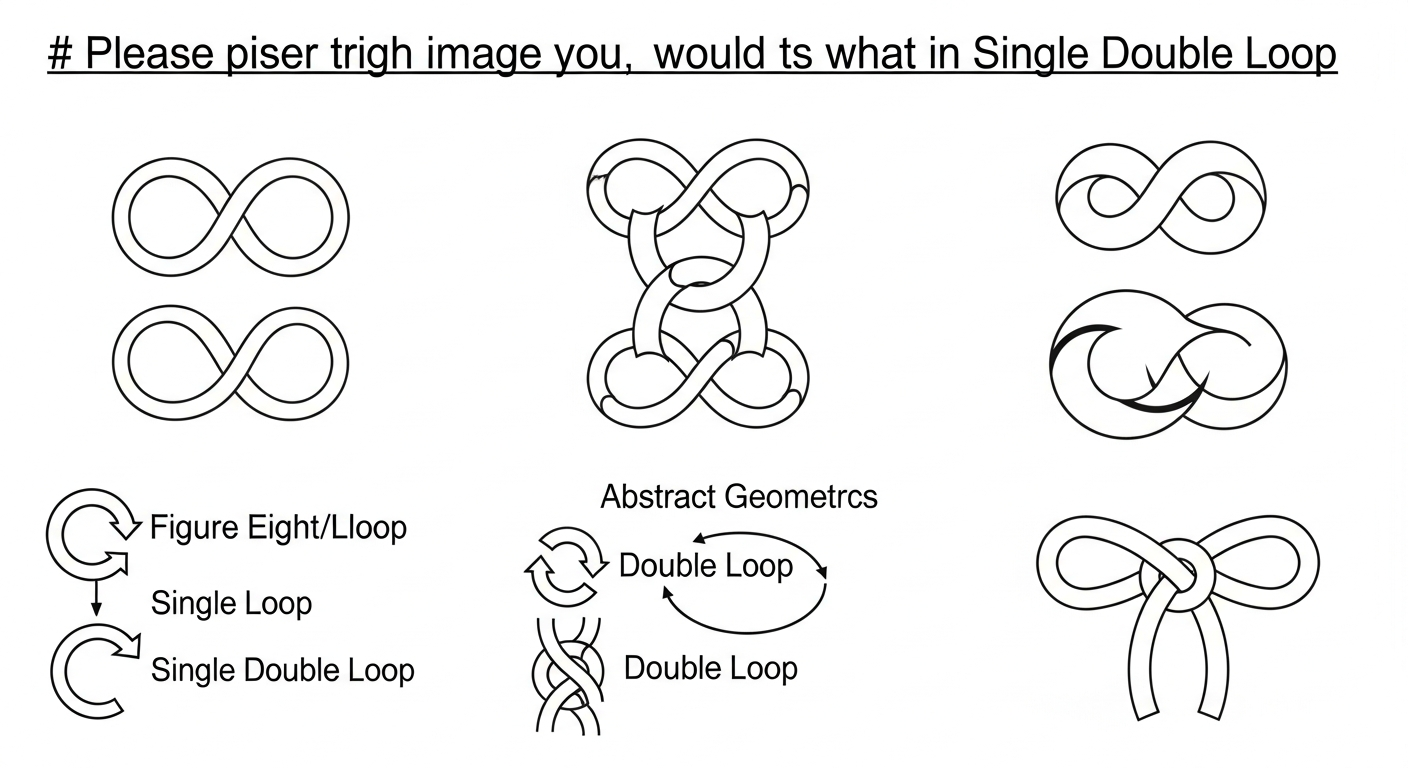
Mastering Organizational Agility: The Power of Single-Loop and Double-Loop Learning in L&D
In today's dynamic business landscape, marked by unprecedented technological shifts and evolving market demands, the role of Learning and Development (L&D) has never been more critical. As VPs, Directors, and Senior Managers of L&D, you are tasked not just with training employees, but with cultivating a learning ecosystem that drives sustainable growth, innovation, and resilience across your organization. From the rigorous compliance frameworks in banking and pharma to the rapid market shifts in retail and oil & gas, every industry demands an agile workforce capable of not just solving problems, but fundamentally rethinking their approach.
At the heart of this agility lies the distinction between single-loop and double-loop learning – two concepts that, when understood and strategically applied, can transform an organization from reactive to profoundly proactive. This article delves into these powerful learning paradigms, exploring their relevance for modern L&D strategies, and how leveraging advanced eLearning technologies can empower your journey towards deeper organizational intelligence.
Understanding Single-Loop Learning: The Art of Doing Things Right
Single-loop learning is akin to a thermostat. When the room gets too cold, the thermostat registers the deviation from the desired temperature and switches on the heater. The system learns and corrects, but it doesn't question *why* the temperature might be set at that specific point, or if heating is the most energy-efficient solution. In an organizational context, single-loop learning focuses on identifying and correcting errors within existing frameworks and assumptions. It asks: "Are we doing things right?"
- In Practice: For L&D, single-loop learning is evident in many common training initiatives. If sales figures are down, you might implement Risk-focused Training to improve negotiation skills or product knowledge. If there's a compliance breach, you train employees on the specific procedures to avoid recurrence. In healthcare, it could be training on new equipment operation; in finance, updates on regulatory changes.
- Benefits: It's efficient, provides quick fixes, and ensures operational effectiveness. It helps organizations maintain existing standards and improve performance within defined parameters.
- Limitations: While crucial for day-to-day operations, single-loop learning doesn't challenge the underlying assumptions, beliefs, or systems that might be causing the problem in the first place. It can lead to organizations becoming highly efficient at doing the wrong thing, or continually patching symptoms rather than curing diseases.
Embracing Double-Loop Learning: The Courage to Do the Right Things
Double-loop learning, in contrast, is about questioning the thermostat's settings themselves. It asks: "Are we doing the right things?" It involves challenging the fundamental assumptions, policies, and goals that guide action. This deeper level of learning requires critical reflection, open dialogue, and a willingness to acknowledge that current mental models might be flawed or outdated. It's about adaptive learning that leads to transformative change.
- In Practice: Instead of just training sales teams on negotiation, double-loop learning might lead L&D to investigate whether the product itself meets market demand, if the sales strategy is misaligned with customer values, or if the incentive structure inadvertently discourages collaboration. In compliance, it’s not just about training on rules, but questioning if the rules are optimally designed to achieve desired ethical outcomes without stifling innovation. In banking, it could involve rethinking customer service models based on emerging digital trends, not just training staff on existing protocols.
- Benefits: Drives innovation, fosters organizational resilience, promotes strategic agility, and allows organizations to proactively adapt to systemic shifts rather than merely reacting to symptoms. It cultivates a culture of continuous questioning and improvement at a foundational level.
- Challenges: It requires a high degree of psychological safety, open communication, and leadership commitment. It can be uncomfortable, as it often means admitting that long-held beliefs or successful past strategies are no longer effective.
You might be wondering: How can L&D leaders transition their teams and organizations towards more profound, double-loop learning, especially when facing established practices in industries like compliance, banking, or healthcare?
The transition requires a deliberate shift in mindset and strategy. L&D must move beyond simply delivering prescriptive training to facilitating environments where questioning, experimentation, and critical reflection are encouraged. This means designing learning experiences that provoke thought rather than just impart facts, creating safe spaces for discussing failures and underlying causes, and empowering employees to challenge the status quo. In regulated industries, this doesn't mean ignoring rules, but understanding their spirit and proactively seeking more effective ways to achieve their objectives without compromising integrity.
The Nexus of Learning and Technology: Driving Double-Loop Transformation
Modern eLearning technologies are not just tools for content delivery; they are catalysts for transforming how organizations learn and adapt. They can provide the infrastructure and intelligence needed to support both single-loop efficiency and double-loop introspection.
For immediate skill gaps and procedural updates, an efficient Microlearning LMS can quickly deploy bite-sized, relevant content, ensuring that employees have up-to-date information for their specific roles – a clear example of optimizing single-loop corrections. When performance metrics dip, targeted microlearning modules can address specific deficiencies with agility.
However, the true power emerges when these platforms are leveraged for deeper insights. Considering the rapid pace of technological advancements, particularly in advanced intelligence systems, what innovative approaches can L&D leverage to design learning experiences that inherently encourage critical reflection and systemic change, moving beyond mere skill acquisition?
The answer lies in integrating features that foster analytical thinking and feedback loops designed for systemic critique. Adaptive Learning pathways, for instance, can not only personalize content but also identify patterns in learner struggles, signaling potential systemic issues beyond individual knowledge gaps. If many learners consistently struggle with a specific concept, it might indicate a flaw in the process or a fundamental misunderstanding that needs a double-loop intervention, not just more training.
A Gamified LMS, while often associated with engagement, can be designed to incorporate simulations and scenarios that force learners to make decisions and reflect on the consequences, including unexpected outcomes that challenge established norms. The feedback in these gamified environments can be structured to prompt not just "what went wrong," but "why did we think that was the right approach?"
Furthermore, an AI Powered Authoring Tool can dramatically accelerate the creation and iteration of content, allowing L&D to rapidly deploy experimental learning modules designed to test new approaches or challenge existing assumptions. This speed enables quicker feedback cycles for double-loop exploration. Moreover, AI can analyze vast datasets of learner performance and organizational outcomes to uncover hidden correlations and systemic inefficiencies that humans might overlook. This leads us to another crucial point:
Beyond just delivering content, how can L&D strategically utilize predictive analytics and intelligent system-driven insights to not only identify current skill gaps but also to anticipate future learning needs and systemic organizational challenges, thereby enabling proactive double-loop interventions?
Predictive analytics, fueled by advanced algorithms, can move L&D from reactive training to proactive strategy. By analyzing performance data, employee feedback, market trends, and even external economic indicators, these systems can forecast where skill gaps might emerge or where current operational paradigms could become obsolete. For example, in the oil and gas sector, predictive analytics might highlight emerging safety risks associated with new drilling technologies, prompting L&D to initiate training that questions current safety protocols and develops entirely new, more robust frameworks – a clear double-loop intervention. In retail, anticipating shifts in consumer behavior can lead to a complete overhaul of customer service training, rather than incremental adjustments.
Implementing Double-Loop Learning in Your Organization
As L&D leaders, fostering double-loop learning requires intentional effort:
- Cultivate Psychological Safety: Create an environment where employees feel safe to voice concerns, challenge ideas, and admit mistakes without fear of retribution. This is foundational for any deep reflection.
- Encourage Critical Thinking and Inquiry: Design learning programs that ask "why" and "what if" more than "how." Use case studies, simulations, and Socratic questioning to stimulate deeper thought.
- Leverage Data and Analytics Strategically: Use eLearning analytics, performance data, and feedback mechanisms not just to measure individual learning, but to question the effectiveness of programs, processes, and even business strategies.
- Lead by Example: Demonstrate a willingness to question your own assumptions and learn from failures within the L&D department itself. Model the behavior you wish to see.
- Design for Reflection: Incorporate reflective exercises, peer discussions, and mentorship programs that encourage learners to connect new information with their existing mental models and challenge them.
Conclusion
Both single-loop and double-loop learning are indispensable for organizational success. Single-loop ensures efficiency and continuous improvement within established norms, while double-loop drives innovation, adaptability, and strategic transformation. As L&D leaders, your mission is to build a learning architecture that seamlessly integrates both.
By thoughtfully leveraging advanced eLearning platforms and cultivating a culture that values deep inquiry, you can empower your workforce across compliance, sales, banking, healthcare, and all other sectors to not only excel at "doing things right" but also to master the art of "doing the right things." This strategic integration of learning loops will be the hallmark of resilient, forward-thinking organizations poised for sustained success in an ever-evolving world.
.jpg)


