

Mastering the Art of Repetitive Learning in Modern L&D: Beyond Rote Memorization
In the dynamic world of corporate learning and development, the concept of "repetitive learning" often conjures images of antiquated training methods – endless lectures, dry textbooks, and uninspired rote memorization. Yet, for L&D leaders like you, operating in high-stakes sectors such as Compliance, Banking, Finance, Insurance, Pharma, Healthcare, and Oil & Gas, effective knowledge retention and skill mastery are non-negotiable. The truth is, when strategically designed and delivered, repetitive learning isn't just a foundational principle; it's a powerful engine for embedding critical information, ensuring compliance, and fostering high performance across your organization.
This article explores how modern L&D can redefine and harness the power of repetition, transforming it from a monotonous chore into an engaging, effective, and indispensable component of your training strategy. We'll delve into the science, the challenges, and the technological solutions that empower your teams to not just learn, but to truly *master* essential skills and knowledge.
The Undeniable Science of Reinforcement
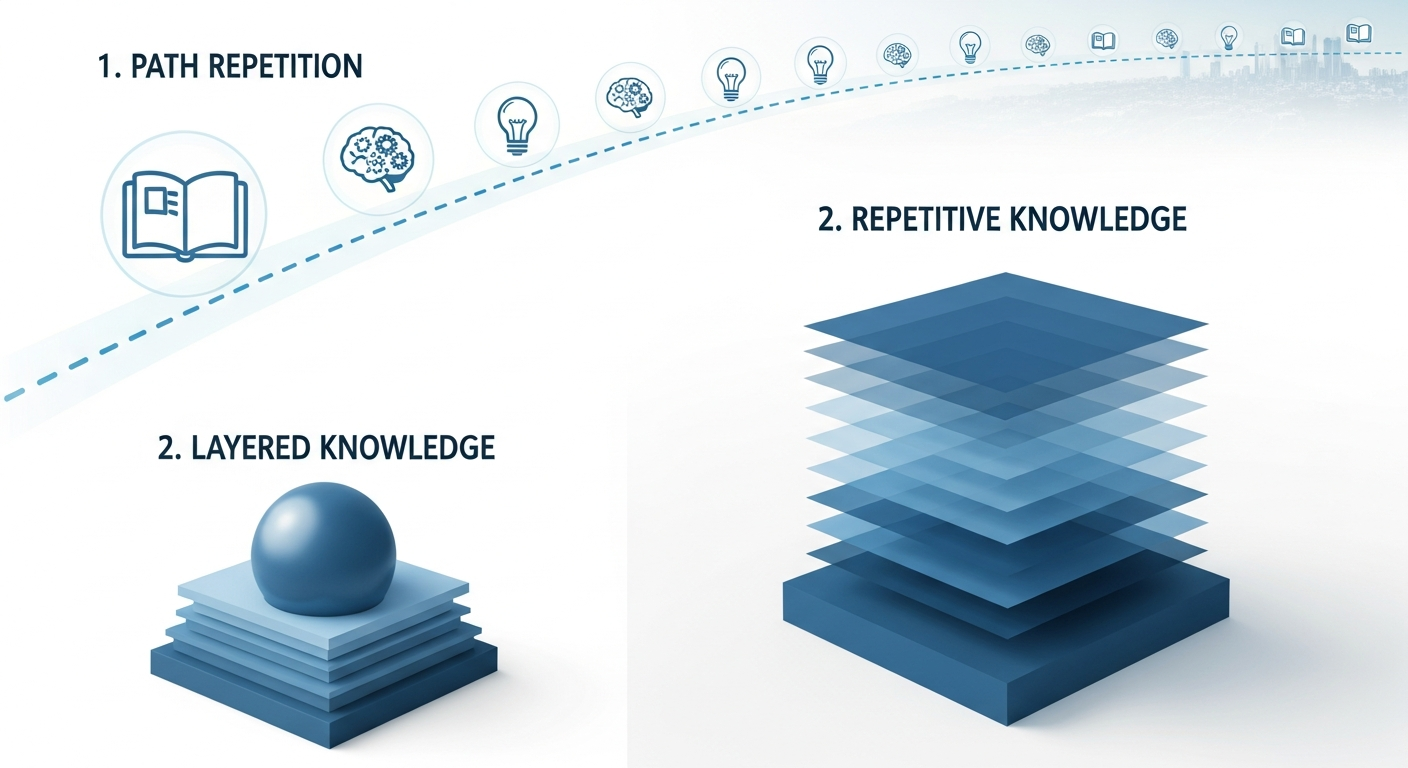
At its core, repetitive learning is about reinforcing neural pathways. Our brains are designed to forget information that isn't revisited or deemed important. This biological reality, often depicted by the "forgetting curve," underscores why one-off training sessions often yield limited long-term results. Effective repetition, particularly when spaced out over time, helps move information from short-term to long-term memory, making it more readily accessible when needed.
For industries where precision, safety, and regulatory adherence are paramount – from the nuanced legal frameworks in Banking and Finance to the critical safety protocols in Mining and Oil & Gas, or the complex product knowledge in Pharma and Retail – ensuring that employees can instantly recall and apply information is vital. It’s not about merely repeating facts; it’s about building mastery through consistent, varied, and intelligently designed exposure.
Transforming Repetition: From Tedium to Engagement
The traditional approach to repetitive learning often falls short, leading to disengagement, boredom, and a perception among learners that their time is being wasted. The key to successful reinforcement in today's corporate environment lies in leveraging innovative methodologies and technologies to make the process efficient, relevant, and even enjoyable.
Intelligent Strategies for Effective Reinforcement
- Spaced Repetition: Instead of cramming, knowledge is revisited at increasing intervals. This scientifically proven method significantly boosts retention by hitting learners just as they're about to forget.
- Varied Modalities: Presenting the same core concept through different formats (e.g., a video, a quiz, a case study, a simulation) prevents monotony and caters to diverse learning styles.
- Contextual Relevance: Repetition is most effective when learners understand *why* the information is important. Linking repeated content directly to job tasks, real-world scenarios, or potential consequences (especially in Risk-focused Training) makes it more meaningful.
- Active Recall: Instead of passively reviewing, learners are prompted to actively retrieve information from memory, strengthening their recall abilities.
- Immediate Feedback: Providing instant feedback on reinforced content helps correct misunderstandings immediately and solidify correct knowledge.
Harnessing Technology for Superior Skill Retention
Modern eLearning platforms are revolutionizing how L&D professionals implement repetitive learning. They offer sophisticated tools that automate, personalize, and enhance the reinforcement process, making it far more impactful than manual methods.
Platforms that offer Microlearning LMS capabilities are particularly effective. By breaking down complex topics into small, digestible modules, they facilitate frequent, short bursts of learning that are ideal for spaced repetition without disrupting workflow. Imagine employees in Retail refreshing product features during a lull, or healthcare professionals reviewing a crucial procedure in just a few minutes.
To combat disengagement, a Gamified LMS injects elements like points, badges, leaderboards, and challenges into the learning journey. This transforms repetitive practice into an exciting competition, encouraging learners to revisit content and strive for mastery, boosting completion rates and knowledge application in areas like Sales training and Customer Service.
For truly personalized reinforcement, Adaptive Learning systems are indispensable. These platforms continuously assess a learner's proficiency and tailor the content and frequency of repetition to their individual needs. If an employee struggles with a specific compliance regulation, the system automatically provides more reinforcement on that topic, while excelling in other areas allows them to progress faster. This ensures efficiency and targeted improvement.
Creating and managing this wealth of content doesn't have to be arduous. An AI Powered Authoring Tool can dramatically speed up content creation, helping L&D teams rapidly generate diverse formats for repetitive learning, from interactive quizzes to scenario-based exercises, ensuring a fresh and engaging experience even when revisiting core concepts.
Insights for L&D Leaders: Common Inquiries Answered
As L&D professionals navigate the complexities of corporate training, strategic questions often arise:
How can modern training platforms enhance skill retention and application across diverse employee groups?
Modern platforms excel by offering flexibility and personalization. They leverage features like microlearning for quick refreshers, gamification for engagement, and adaptive paths that cater to individual learning speeds and knowledge gaps. For organizations with distributed teams, these tools ensure consistent delivery of critical updates, whether for new banking regulations or updated hospitality standards, driving stronger recall and on-the-job application by making learning accessible and relevant, anytime, anywhere.
What are the most effective strategies for ensuring employees truly internalize complex regulatory information and operational safety protocols across geographically dispersed operations?
For organizations operating across various regions and dealing with intricate compliance or safety requirements, the strategy must combine structured reinforcement with contextual relevance. Implementing spaced repetition through a microlearning framework ensures that critical data is revisited consistently without overwhelming employees. Utilizing interactive simulations and real-world case studies allows learners to practice applying knowledge in a safe environment, specifically tailored to local regulations or operational nuances. This approach ensures deep internalization rather than superficial understanding, critical for mitigating risks in industries like Oil and Gas or international Finance.
How will intelligent systems evolve the way we approach continuous learning and skill reinforcement in the workplace?
Intelligent systems are set to revolutionize continuous learning by moving beyond passive delivery to proactive, predictive, and personalized interventions. They will analyze performance data to identify skill decay before it impacts productivity, automatically suggesting relevant micro-lessons or adaptive learning paths. Imagine an AI detecting a pattern of errors in a sales team's CRM usage and instantly pushing a short, gamified module on data entry best practices. These systems will make reinforcement an integral, seamless, and highly effective part of the daily workflow, ensuring that skills are not just learned, but continuously honed and adapted to evolving business needs.
Conclusion: The Future of Repetitive Learning is Smart, Strategic, and Engaging
For L&D Vice Presidents, Directors, and Managers, the imperative to build a highly skilled, knowledgeable, and compliant workforce has never been greater. Repetitive learning, far from being an outdated methodology, is proving to be a cornerstone of effective talent development when approached with intelligence and modern tools.
By embracing Microlearning LMS, Gamified LMS, and Adaptive Learning, and leveraging an AI Powered Authoring Tool for content creation, you can transform the often-dreaded concept of repetition into a powerful, engaging, and highly effective strategy for skill mastery. This ensures your teams in Compliance, Sales, Banking, Pharma, Healthcare, and beyond are not just learning, but truly internalizing the critical knowledge and skills needed to thrive in their roles and drive organizational success.
.jpg)


