

```html
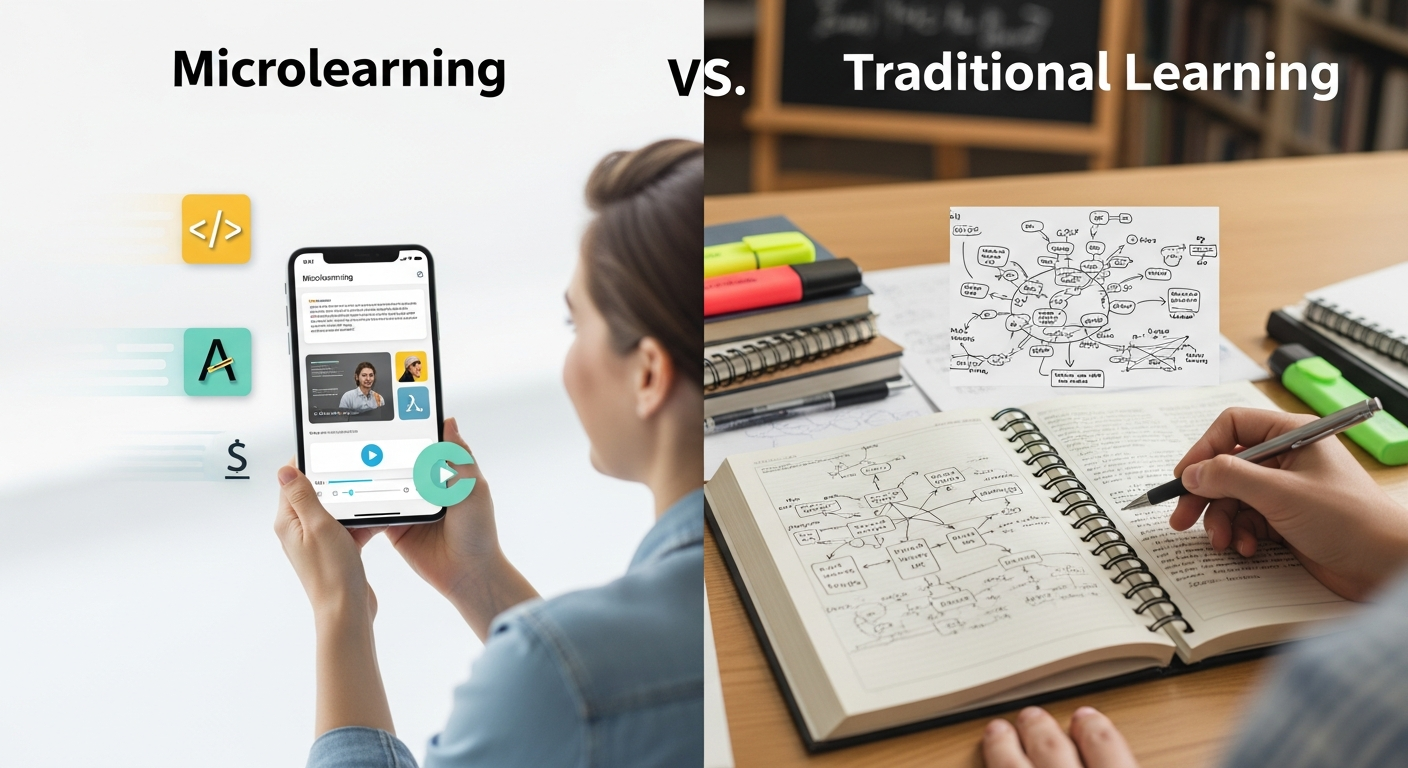
Microlearning Vs. Traditional Learning: Navigating the Future of Corporate Training
In the dynamic landscape of corporate learning and development, L&D Vice Presidents, Directors, and Managers face a persistent challenge: how to deliver effective, engaging, and scalable training that truly impacts business outcomes. The traditional classroom model, with its extensive modules and fixed schedules, once reigned supreme. However, the modern workforce demands agility, personalization, and immediate relevance. This paradigm shift has brought microlearning into the spotlight, posing a critical question: should we stick with the tried-and-true, or embrace the bite-sized future? This article delves into the nuances of microlearning versus traditional learning, offering insights to guide strategic decisions across diverse industries from Compliance and Sales to Banking, Finance, Insurance, Retail, Pharma, Healthcare, Hospitality, Oil and Gas, and Mining.
Understanding Traditional Learning Methodologies
Traditional learning, often characterized by lengthy courses, multi-day workshops, or comprehensive e-learning modules, aims for an exhaustive understanding of a subject. It's built on the premise that a significant time investment leads to deeper knowledge absorption and skill mastery.
The Strengths of Conventional Approaches
- Depth and Breadth: Traditional methods excel at conveying complex foundational knowledge and intricate processes, providing a holistic view.
- Structured Environment: A controlled setting facilitates focused learning, often with direct instructor interaction and peer collaboration.
- Formal Certifications: Many industries require extensive training for compliance and professional accreditation, which traditional models are well-suited to provide.
The Challenges in a Modern Context
However, the demands of the contemporary workplace often expose the limitations of traditional learning:
- Time Commitment: Employees, especially those in high-pressure roles, struggle to allocate significant time away from their daily tasks.
- Engagement Decay: Long sessions can lead to cognitive overload and reduced learner engagement, impacting retention.
- Scalability Issues: Developing and delivering comprehensive traditional courses can be resource-intensive and slow to update.
What are the core characteristics of conventional corporate education programs? They typically involve a significant time commitment, structured curricula, and often a formal assessment at the end, aiming for a comprehensive understanding of a subject over an extended period, delivered through methods like classroom instruction or extensive e-learning modules.
Embracing the Power of Microlearning
Microlearning, in stark contrast, delivers information in small, focused bursts, typically ranging from 3 to 10 minutes. Each module addresses a single learning objective, making it highly targeted and digestible.
Key Attributes of Microlearning
- Conciseness: Short, sharp, and to the point, avoiding extraneous information.
- Targeted Focus: Each piece of content addresses a specific skill gap or knowledge need.
- Flexibility and Accessibility: Learners can access content anytime, anywhere, on any device, fitting learning into their workflow.
- Multimedia Rich: Often utilizes videos, infographics, quizzes, and interactive elements to maximize engagement.
The Benefits for L&D Leaders
For L&D professionals, microlearning offers compelling advantages:
- Improved Knowledge Retention: Bite-sized content, when combined with spaced repetition, significantly boosts recall.
- Enhanced Engagement: Learners are more likely to complete short, relevant modules, leading to higher satisfaction.
- Reduced Time Investment: Minimizes disruption to daily operations, allowing employees to learn on the job.
- Higher ROI: Faster development cycles, easier updates, and better retention translate to more efficient training spend.
How can concise learning modules enhance employee performance? By providing just-in-time, relevant information that can be quickly consumed and applied, microlearning bridges knowledge gaps precisely when needed, leading to immediate performance improvements and greater efficiency in daily tasks.
The Core Differences: A Side-by-Side Analysis
While both methodologies aim to educate, their approaches and outcomes diverge significantly:
Content Structure and Delivery
- Traditional: Linear, comprehensive narratives often delivered in a single sitting or over several extended periods.
- Microlearning: Modular, atomic units of information, designed for quick consumption and self-paced exploration.
Time Commitment and Learner Engagement
- Traditional: Requires substantial dedicated time, risking learner fatigue and disengagement over long periods.
- Microlearning: Short duration sustains attention and encourages active participation, easily fitting into busy schedules.
Knowledge Retention and Application
- Traditional: Information density can lead to the "forgetting curve" without consistent reinforcement.
- Microlearning: Ideal for spaced repetition and reinforcing specific concepts, aiding long-term memory and immediate application.
What are the primary distinctions between extensive training courses and bite-sized learning solutions? The key lies in duration, scope, and delivery method, with extensive courses offering deep dives into broad subjects and bite-sized solutions providing quick, targeted knowledge for specific needs. For L&D leaders looking to deliver flexible and effective learning, embracing a Microlearning LMS can be a game-changer.
When to Choose Which: A Strategic Approach
The decision isn't about one replacing the other; it's about strategic integration. A blended learning approach often yields the best results, leveraging the strengths of each method.
When Traditional Learning Shines
- Foundational Knowledge: For onboarding new employees or teaching core principles in highly regulated industries like banking, finance, or pharma.
- Complex Skills: When in-depth procedural training or intricate problem-solving skills are required (e.g., medical procedures, advanced engineering).
- Certification and Compliance: For mandatory, exhaustive training that requires a formal, comprehensive understanding and standardized assessment.
When Microlearning Excels
- Skill Refreshers and Updates: For quickly disseminating new product features in retail, policy changes in insurance, or new compliance regulations.
- Just-in-Time Support: Providing immediate answers to common customer queries in hospitality or sales.
- Performance Support: Reinforcing concepts learned in traditional settings or addressing specific performance gaps directly on the job.
- Promoting Safety and Compliance: Especially effective for Risk-focused Training, where regular, concise updates on procedures are crucial for sectors like oil and gas, mining, and healthcare.
The Indispensable Role of Technology
Modern L&D strategies rely heavily on technology to bridge the gap between traditional and microlearning. A robust learning platform is critical for successful implementation and management of both.
Leveraging Advanced Learning Systems
- A Gamified LMS can transform routine training into engaging experiences, boosting completion rates and knowledge application across various sectors.
- Implementing Adaptive Learning pathways ensures that content is personalized to each learner's needs and pace, optimizing efficiency and relevance for complex and simple topics alike.
- An AI Powered Authoring Tool can dramatically speed up content creation and curation, allowing L&D teams to rapidly deploy and update microlearning modules, from sales training to crucial compliance refreshers.
How do intelligent learning platforms facilitate modern corporate education? They provide personalized learning paths, automate content delivery based on learner progress, offer advanced analytics for tracking effectiveness, and integrate interactive elements to make learning more engaging and effective, regardless of the content's duration or complexity.
Industry-Specific Applications and Impact
The adaptability of microlearning makes it particularly impactful across various sectors, addressing unique training needs efficiently:
- Compliance (Banking, Finance, Insurance, Pharma, Healthcare, Oil & Gas, Mining): Regular, bite-sized updates on regulations, ethical guidelines, and safety protocols ensure continuous adherence without overwhelming employees, critical for high-stakes environments.
- Sales & Retail: Quick modules on new product features, sales techniques, or customer service best practices can be deployed rapidly, keeping teams agile, informed, and competitive.
- Hospitality: Short videos on service standards, new menu items, or handling specific guest requests empower staff to deliver consistent excellence and adapt to evolving customer expectations.
Measuring Success and Optimizing ROI
For L&D leaders, demonstrating the return on investment (ROI) of training programs is paramount. Microlearning’s inherent measurability and agility offer significant advantages in this regard.
- Granular Data: Tracking completion rates, scores, and time spent on individual micro-modules provides detailed insights into engagement and comprehension, facilitating data-driven decisions.
- Performance Impact: Direct correlation between specific microlearning interventions and improved on-the-job performance can be more easily observed and quantified, proving tangible business value.
- Agile Iteration: The ease of updating and redeploying micro-content allows for continuous optimization based on learner feedback and performance data, ensuring training remains relevant and effective.
What metrics indicate effective corporate education program outcomes? Key indicators include course completion rates, knowledge retention scores, skill application in real-world scenarios, employee performance improvements, and ultimately, positive impacts on key business metrics like sales revenue, compliance adherence rates, employee satisfaction, or customer service scores.
Conclusion: Charting a Blended Future for L&D
The debate between microlearning and traditional learning isn't a zero-sum game. Instead, it's an opportunity for L&D leaders to craft a more agile, effective, and engaging corporate training strategy. By thoughtfully integrating the foundational depth of traditional methods with the flexible, immediate impact of microlearning, organizations can cater to diverse learning needs and business objectives.
Embracing modern learning technologies that support both approaches—from comprehensive platforms to AI-powered content tools—is no longer a luxury but a necessity for navigating today's complex business environment. The future of corporate training lies in this intelligent blend, empowering employees to learn continuously, adapt swiftly, and drive sustained success across every industry.
```.jpg)


