

The Unseen Hand: What Role Does the Player-Subject Play in Microlearning Gamification?
In the dynamic world of corporate learning, where attention spans are shrinking and the demand for measurable skill development is soaring, microlearning gamification has emerged as a powerful strategy. It’s not just about turning learning into a game; it's about deeply understanding the individual at the center of that experience – the player-subject. For Vice Presidents, Directors, and Senior Managers in L&D across sectors like Compliance, Sales, Banking, Finance, Insurance, Retail, Pharma, Healthcare, Hospitality, Oil & Gas, and Mining, grasping this role is paramount to designing truly impactful training initiatives.
The success of any gamified microlearning program hinges on how well it resonates with the learner. This isn't merely a passive recipient of information but an active participant, an agent whose motivations, preferences, and progress dictate the effectiveness of the entire system. By placing the player-subject at the heart of the design process, organizations can unlock unprecedented levels of engagement, retention, and ultimately, performance improvement.
Deconstructing the Player-Subject in Learning
Who exactly is this 'player-subject'? In the context of microlearning gamification, it's your employee – a professional navigating complex tasks, often under time pressure, seeking relevant and actionable knowledge. They are individuals with varying intrinsic motivators, learning styles, and prior experiences. Recognizing these nuances is the first step toward crafting an irresistible learning journey.
From Passive Receiver to Active Engager
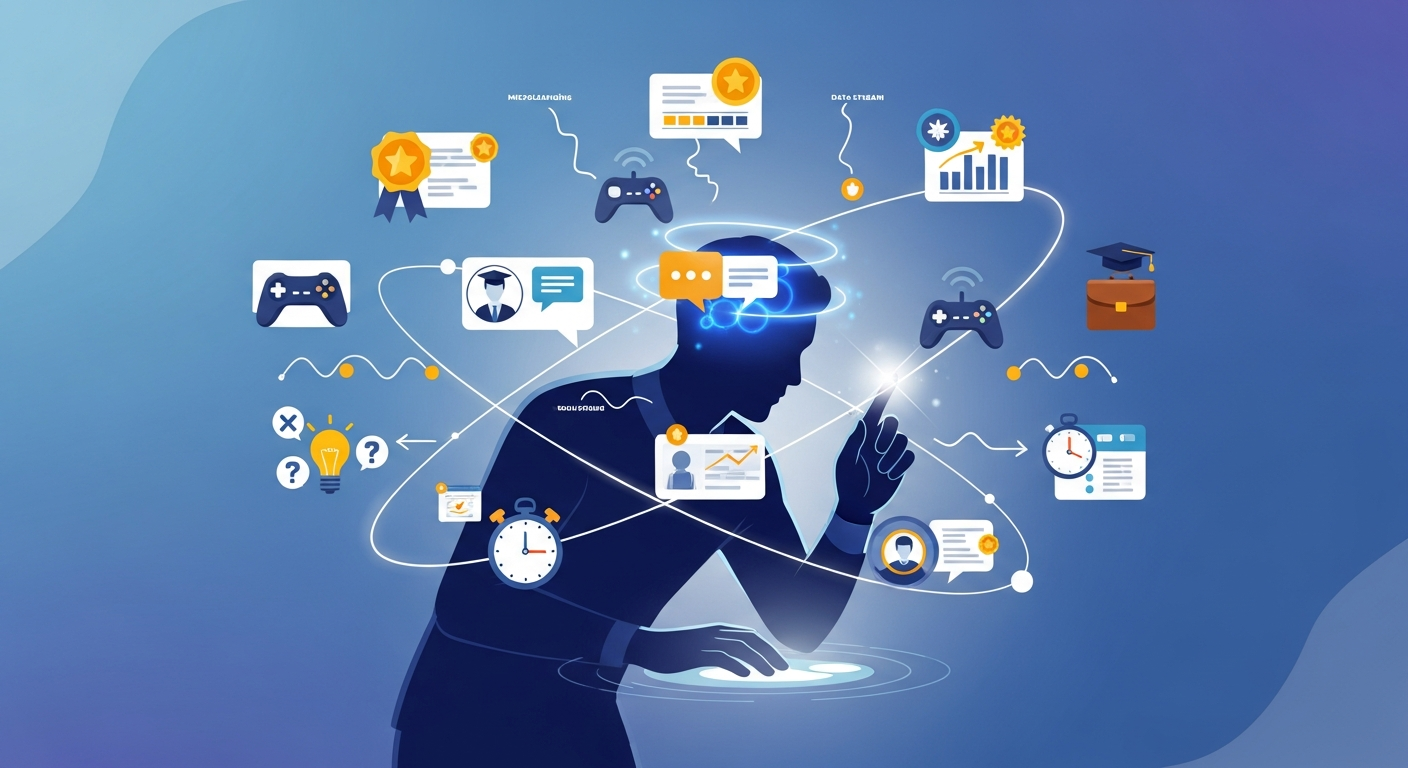
Traditionally, learning often positioned the employee as a passive receiver. Gamification, however, flips this script entirely. The player-subject is no longer just absorbing content; they are:
- Exploring Challenges: Actively seeking to overcome obstacles presented by the learning content.
- Making Decisions: Choosing paths, answering questions, and solving problems within the simulated environment.
- Earning Rewards: Driven by points, badges, leaderboards, or recognition, which serve as tangible affirmations of progress.
- Providing Feedback: Their interactions, successes, and failures offer valuable data that can inform and refine the learning system.
This shift from passivity to active engagement is crucial. When learners feel in control and see a direct impact of their actions, their investment in the learning process skyrockets. A robust Microlearning LMS that incorporates these principles ensures that every interaction moves the learner closer to mastery, not just completion.
The Heart of Engagement: Intrinsic Motivation and Personalization
At the core of the player-subject's role is their intrinsic motivation. Psychologists like Daniel Pink highlight autonomy, mastery, and purpose as key drivers. Gamification, when designed thoughtfully, directly taps into these:
- Autonomy: Allowing choices in learning paths, challenge levels, or even the order of micro-modules.
- Mastery: Providing clear progression, immediate feedback, and opportunities to apply knowledge, fostering a sense of growing competence.
- Purpose: Connecting learning tasks to real-world job functions and organizational goals, making the 'why' clear.
To truly serve the player-subject, personalization becomes non-negotiable. Modern learning management software must move beyond one-size-fits-all approaches. Consider this vital question: "How can a learning platform truly understand what each individual learner needs at this very moment to keep them engaged and progressing?" The answer lies in sophisticated data analytics and intelligent algorithms that track performance, preferences, and even emotional responses to tailor content. This creates an Adaptive Learning experience, where content adjusts in real-time to the learner’s pace and understanding, ensuring optimal challenge and engagement.
Crafting the Gamified Experience Around the Player
The design of a Gamified LMS must be inherently player-centric. This involves several critical elements:
Journey Design
Every learning module should feel like a distinct stage in a larger journey, complete with clear objectives, increasing difficulty, and a narrative that resonates. For professionals in fields requiring Risk-focused Training, this journey can simulate real-world scenarios, allowing them to practice decision-making in a safe environment.
Feedback Loops and Progress Tracking
Immediate, constructive feedback is paramount. The player-subject needs to know how they’re performing, why they succeeded or failed, and what to do next. Visual progress bars, performance dashboards, and real-time alerts within the enterprise learning management system keep them informed and motivated. This transparency builds trust and reinforces the sense of mastery.
Challenges and Rewards
Well-designed challenges align with learning objectives, pushing the learner just beyond their current capabilities. Rewards, whether virtual badges, points, or leaderboards, must be meaningful to the player-subject and tied directly to learning achievements. The right balance prevents frustration while encouraging continuous effort.
Social Learning Elements
Humans are social creatures. Incorporating collaborative challenges, peer leaderboards, and opportunities for friendly competition or team-based learning within the learning content management system can significantly amplify engagement. It leverages the player-subject’s desire for recognition and belonging, fostering a community of learners.
The Impact on Learning Outcomes and Organizational Goals
When the player-subject is truly engaged, the benefits reverberate throughout the organization. Improved retention of knowledge, faster skill acquisition, and a direct impact on job performance become tangible realities. This is especially vital in industries like Compliance and Banking, where understanding and applying regulations is non-negotiable, or in Sales, where effective training directly translates to revenue.
Consider another organizational challenge: "In what ways can intelligent systems predict and respond to evolving training requirements across an entire organization?" By analyzing the collective performance data of player-subjects, an advanced LMS can identify emerging skill gaps, pinpoint areas where existing training falls short, and even suggest new content. This proactive approach ensures that an organization's learning strategy remains agile and responsive to market changes, technological advancements, or regulatory shifts.
Leveraging Technology for a Player-Centric Approach
Modern learning management solutions are the backbone for implementing effective player-centric microlearning gamification. A cloud based learning management system offers the scalability and accessibility needed to reach a diverse workforce across multiple industries.
An AI Powered Authoring Tool, for instance, can significantly reduce the time and effort required to create personalized and engaging content. It can even suggest gamified elements tailored to specific learning objectives, allowing L&D teams to focus more on strategy and less on manual content creation.
Furthermore, imagine a global enterprise. A critical question arises: "How can training content be made relevant and effective for a global workforce operating in diverse cultural and regulatory environments?" A sophisticated learning management system (LCMS) with advanced capabilities can dynamically adapt content based on the learner's geographical location, role, or even language preferences. This ensures cultural sensitivity and regulatory compliance across different regions, from financial regulations in Europe to healthcare protocols in Asia, making the learning experience locally relevant and universally effective for every player-subject.
The MaxLearn Advantage
For L&D leaders seeking to elevate their corporate training, MaxLearn LMS offers comprehensive tools designed with the player-subject in mind. Our platform embodies the principles of effective microlearning and gamification, providing a seamless, engaging, and personalized learning experience that drives real business results. From robust content delivery to powerful analytics, MaxLearn supports the creation of training programs where every employee feels like an empowered participant, not just a passive observer.
Conclusion
The player-subject is not merely a user; they are the protagonist in their own learning story. By deeply understanding their motivations, preferences, and the psychology behind their engagement, L&D professionals can design microlearning gamification strategies that are not only effective but truly transformative. Embracing this player-centric philosophy, supported by cutting-edge learning management software, is the key to fostering a culture of continuous learning, driving performance, and securing a competitive edge in today’s rapidly evolving business landscape.
.jpg)


