

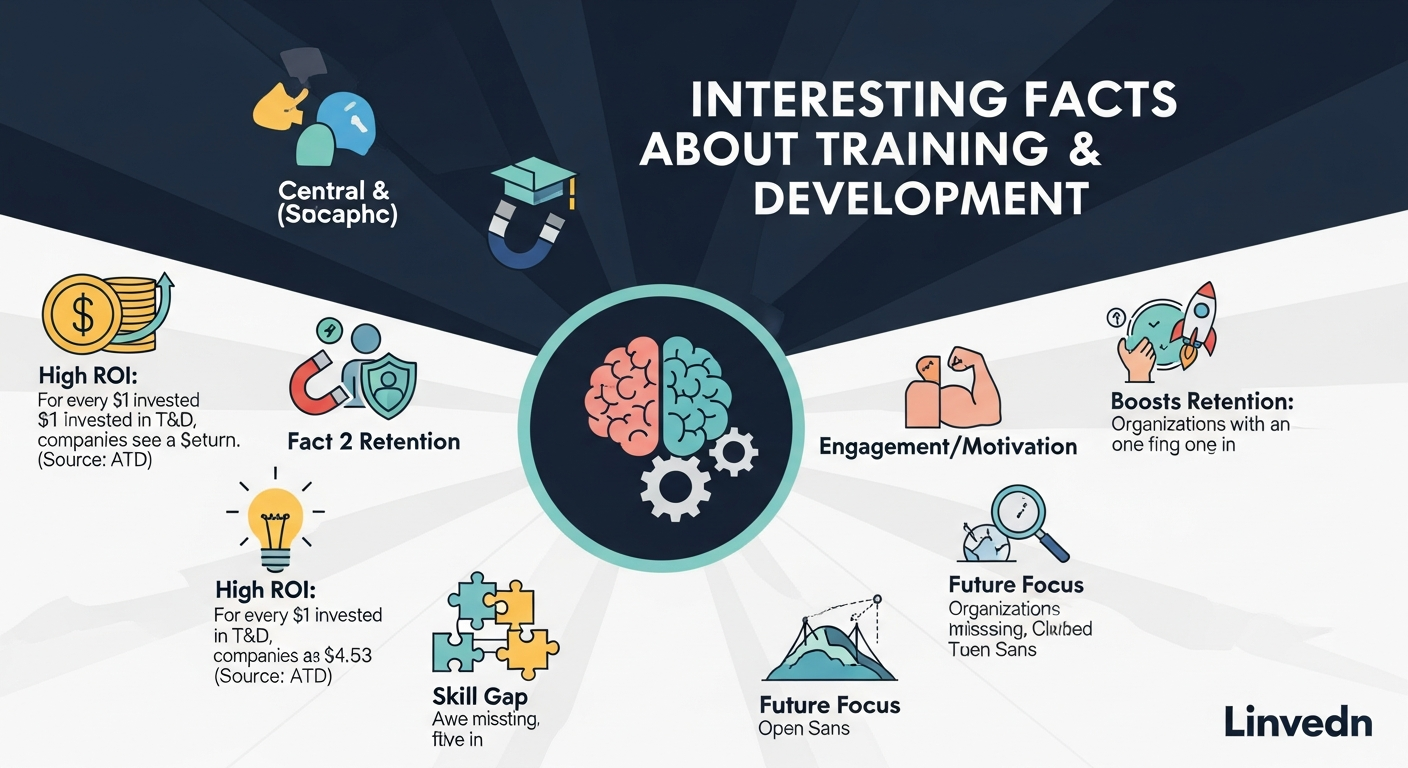
Interesting Facts About Training And Development: Unlocking Potential in the Modern Enterprise
In the dynamic landscape of modern business, Training and Development (T&D) is no longer just a cost center; it’s a strategic imperative. For Vice Presidents, Directors, and Managers of L&D, staying ahead means understanding the evolving science and art behind effective learning. From compliance and sales to banking, healthcare, and even oil & gas, the principles remain universal: engaged employees drive success. Let's delve into some fascinating facts that underscore the critical role of T&D and illuminate pathways to maximize its impact.
The Evolving Landscape of L&D: Beyond Traditional Classrooms
The days of one-size-fits-all, lecture-based training are rapidly becoming relics of the past. Today's workforce demands agile, relevant, and engaging learning experiences that cater to individual needs and organizational goals. Understanding these shifts is key to fostering a culture of continuous growth.
Fact 1: The Staggering ROI of Effective Training
Organizations that prioritize T&D consistently outperform their peers. Studies have shown that companies investing in comprehensive training programs experience a significant uplift in productivity, employee retention, and overall profitability. Effective training isn't an expense; it's an investment with measurable returns.
Many L&D leaders ponder: How can we quantitatively measure the true return on our training investments? The answer lies in robust analytics that track learner progress, skill application, and direct impact on business metrics such as reduced error rates, increased sales conversions, or improved customer satisfaction scores. Demonstrating this tangible value helps secure executive buy-in for future initiatives.
Fact 2: Engagement is Everything: The Power of Modern Methodologies
Learner engagement is the cornerstone of successful training. Passive learning yields poor retention and application. This is where innovative approaches shine. For instance, breaking down complex topics into bite-sized, digestible modules delivered through a Microlearning LMS significantly boosts retention and knowledge application. Employees can access relevant content precisely when and where they need it, fitting learning seamlessly into their workflow.
What modern approaches truly captivate learners and drive retention? Integrating game-like elements, challenges, and rewards into learning pathways through a Gamified LMS transforms mundane training into an exciting and competitive experience. This approach taps into intrinsic motivation, fostering a desire to learn and master new skills, whether for a sales team mastering new product features or compliance officers understanding intricate regulations.
Fact 3: Personalization at Scale with Adaptive Learning
Every learner is unique, possessing different prior knowledge, learning styles, and paces. Traditional training often fails to account for this diversity, leading to disengagement for some and frustration for others. This is where intelligence-driven solutions prove invaluable.
How do intelligent systems tailor educational content to individual learner needs? The answer is Adaptive Learning. This methodology leverages data and algorithms to continuously assess a learner's progress and understanding, dynamically adjusting the content, pace, and difficulty. It ensures that learners focus on areas where they need improvement, skipping over what they already know, making the learning journey highly efficient and effective. This is particularly powerful in fast-paced industries like finance and retail where time is precious.
The Technological Revolution in Learning & Development
Technology has profoundly reshaped the L&D landscape, offering unprecedented tools for content creation, delivery, and analysis. Embracing these advancements is no longer optional but essential for competitive advantage.
Fact 4: AI as Your Co-Pilot: Enhancing Content Creation and Delivery
Artificial Intelligence is not just a buzzword; it’s a game-changer for T&D. From automating administrative tasks to personalizing learning paths, AI is making training more efficient and effective.
Beyond just delivery, how is artificial intelligence transforming the creation of learning materials themselves? With an AI Powered Authoring Tool, L&D teams can rapidly generate engaging content, translate materials, and even suggest improvements based on learner data. This drastically reduces the time and resources required to develop high-quality courses, allowing L&D professionals to focus on strategy and impactful learning design rather than tedious content generation.
Fact 5: Bridging the Gap: Training for Compliance and Risk Mitigation
In highly regulated industries such as banking, healthcare, and pharma, compliance training is non-negotiable. However, traditional approaches can often be dry and ineffective, leading to knowledge gaps and potential liabilities. Modern T&D offers solutions to make even the most critical topics engaging.
How can organizations effectively mitigate complex operational and regulatory risks through targeted training? The solution often lies in Risk-focused Training. This approach tailors content specifically to address high-risk areas within an organization, using scenario-based learning and interactive modules to simulate real-world challenges. It moves beyond rote memorization, encouraging critical thinking and ethical decision-making, which is crucial for preventing costly errors and ensuring regulatory adherence across all segments, from manufacturing in oil & gas to patient safety in healthcare.
Future-Proofing L&D: Key Trends and Insights
As the world continues to evolve at an accelerated pace, so too must the strategies employed by L&D leaders. Anticipating future needs and embracing continuous innovation will define the successful enterprises of tomorrow.
Fact 6: The Unseen Costs of Neglecting Upskilling and Reskilling
The global skills gap is widening, and companies that fail to invest in upskilling and reskilling their workforce face significant repercussions. These include higher employee turnover, reduced productivity, and a diminished competitive edge.
What are the long-term implications for businesses that fail to invest in continuous employee skill development? Beyond the immediate impact on performance, there's a significant financial drain from recruitment costs to productivity losses associated with new hires learning the ropes. Investing in existing talent fosters loyalty, builds a stronger internal talent pipeline, and ensures the organization remains agile and responsive to market changes, whether in retail's shifting consumer demands or banking's evolving digital landscape.
Fact 7: The Global Reach: Delivering Consistent Learning Everywhere
For multinational corporations, ensuring consistent, high-quality training across diverse regions and cultures presents a unique challenge. Language barriers, cultural nuances, and varying regulatory environments demand a sophisticated approach.
For multi-national corporations, how can training consistency and efficacy be maintained across diverse cultural and regulatory landscapes? Leveraging robust learning management systems with localization features, multilingual content capabilities, and culturally sensitive design principles is paramount. Such platforms enable central L&D teams to deploy standardized core content while allowing for regional adaptations, ensuring relevancy and compliance from a sales team in Tokyo to a hospitality worker in Dubai, or a mining engineer in Australia.
Conclusion: Embracing the Future of L&D
The world of Training and Development is vibrant, complex, and filled with incredible potential. For L&D Vice Presidents, Directors, and Managers, these facts are not just interesting tidbits; they are actionable insights. By embracing modern methodologies like microlearning and gamification, leveraging the power of AI and adaptive learning, and focusing on strategic, Risk-focused Training, organizations can transform their workforce into a powerful engine of innovation and growth. The future of your enterprise depends on the continuous development of its most valuable asset: its people.
.jpg)


