

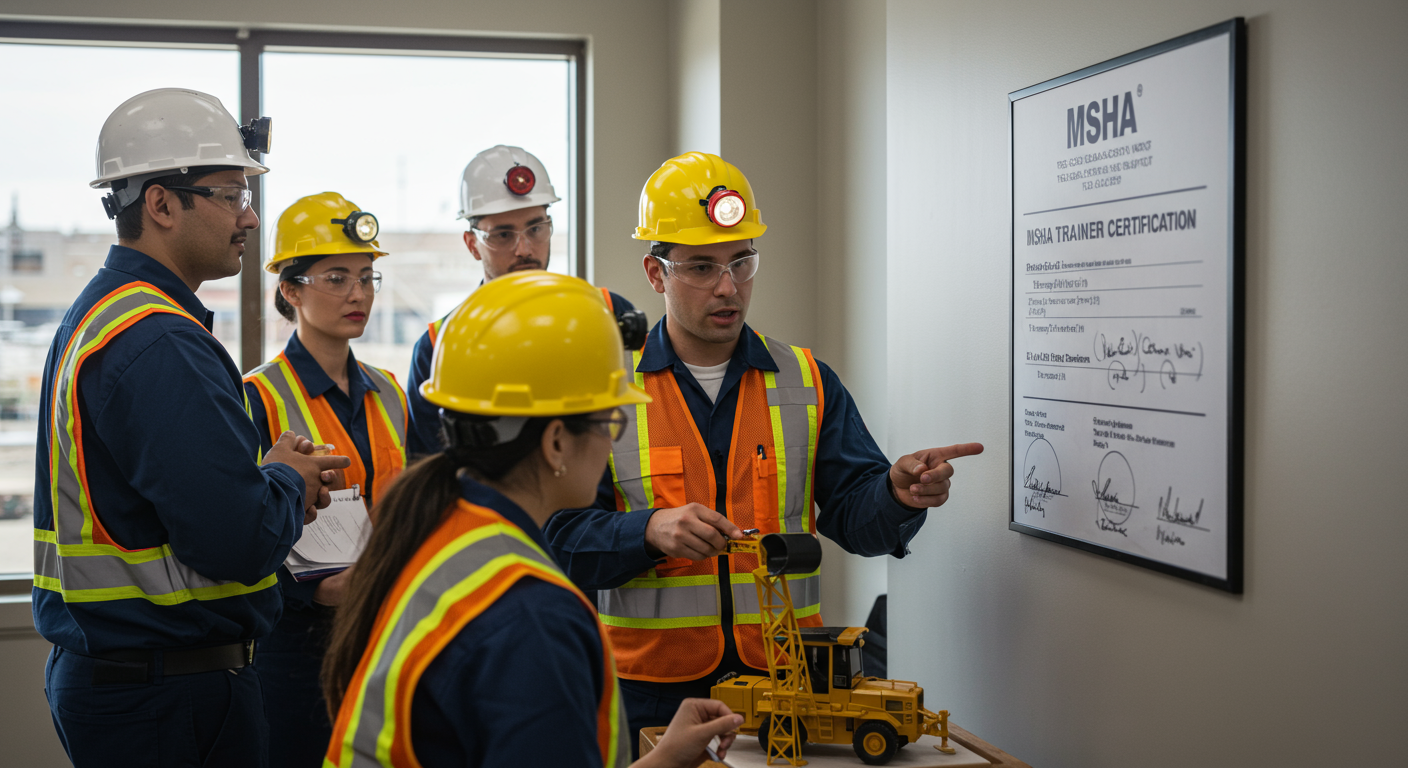
MSHA Trainer Certification: Your Guide to Ensuring Mine Safety Excellence
In the challenging and often hazardous world of mining, safety is not just a priority; it is a fundamental pillar that underpins every operation. The Mine Safety and Health Administration (MSHA) sets forth stringent regulations to protect miners, but these regulations are only as effective as the training that disseminates them. This is where MSHA Trainer Certification becomes critically important. A certified MSHA trainer is more than just an instructor; they are a guardian of safety, an interpreter of complex regulations, and a mentor who empowers miners with the knowledge and skills to navigate their demanding environment safely. This article delves into the significance of MSHA Trainer Certification, the path to achieving it, and how modern learning technologies are reshaping safety education in the mining industry.
What is MSHA Trainer Certification?
The Mine Safety and Health Administration (MSHA), an agency of the United States Department of Labor, is responsible for administering the provisions of the Federal Mine Safety and Health Act of 1977. Its primary mission is to prevent death, illness, and injury from mining and to promote safe and healthful workplaces for U.S. miners. Central to achieving this mission is effective training.
MSHA Trainer Certification is the official recognition by MSHA that an individual possesses the necessary qualifications, experience, and instructional abilities to deliver MSHA-compliant safety training to miners. This certification is crucial because specific regulations (such as 30 CFR Parts 46 and 48) mandate that new miners, experienced miners, and miners requiring specialized training receive instruction from MSHA-approved trainers. These trainers are responsible for teaching a curriculum that covers a vast array of topics, from hazard recognition and emergency procedures to first aid and specific equipment operation. Without certified trainers, mining operations cannot meet their legal obligations, nor can they adequately prepare their workforce for the inherent risks of the job.
Why Become an MSHA Certified Trainer?
Becoming an MSHA certified trainer offers a multitude of benefits, both for the individual and for the broader mining community.
Elevating Safety Standards
At its core, MSHA trainer certification is about saving lives and preventing injuries. Certified trainers are instrumental in instilling a robust safety culture within mines. By delivering high-quality, relevant, and engaging training, they equip miners with the knowledge to identify hazards, understand risks, and implement safe work practices. This direct impact on worker safety is perhaps the most rewarding aspect of the role, contributing significantly to a reduction in accidents and fatalities across the industry.
Meeting Regulatory Compliance
For mining operations, compliance with MSHA regulations is non-negotiable. Failure to provide MSHA-compliant training, delivered by certified trainers, can lead to severe penalties, including hefty fines, operational shutdowns, and legal repercussions. Certified trainers ensure that companies meet these critical regulatory requirements, safeguarding the business from potential liabilities and disruptions. They are the frontline defense in maintaining a legally compliant and ethically responsible operation.
Career Advancement and Professional Development
For individuals, MSHA Trainer Certification represents a significant professional credential. It demonstrates a deep understanding of mine safety regulations and effective instructional techniques. This expertise is highly valued within the mining industry, opening doors to advanced roles in safety management, consulting, and leadership positions. It signifies a commitment to professional excellence and a dedication to the well-being of others, making certified trainers indispensable assets to any mining organization.
The Path to MSHA Trainer Certification
The journey to becoming an MSHA certified trainer is rigorous, designed to ensure that only highly qualified individuals are entrusted with such a critical responsibility.
Prerequisites and Eligibility
While specific requirements can vary slightly depending on the type of certification (e.g., Part 46 vs. Part 48, surface vs. underground), general prerequisites often include a combination of extensive mining experience, demonstrated knowledge of MSHA regulations, and proven instructional capabilities. Candidates must show that they have the practical background to relate theoretical safety concepts to real-world mining scenarios. This often involves several years of direct experience in the mining environment they intend to train for.
Understanding the Application Process
The application process typically involves submitting detailed forms to MSHA, outlining experience, qualifications, and the proposed training agenda. MSHA reviews these applications meticulously, often requiring supporting documentation such as work history, previous training certifications, and references. Candidates may also need to demonstrate their instructional skills through presentations or by submitting lesson plans.
The Importance of Training Curriculum and Methodology
Effective MSHA training goes beyond simply reciting regulations. It involves crafting a curriculum that is relevant, engaging, and digestible for adult learners. Trainers must utilize appropriate methodologies that cater to diverse learning styles, ensuring that critical safety information is not just heard but understood and retained. Modern approaches leverage technology to enhance this process. For instance, a cutting-edge MaxLearn Microlearning Platform can provide short, focused bursts of information that are easier for miners to absorb and recall. Incorporating a Gamified LMS can further boost engagement, making safety training an interactive and enjoyable experience rather than a tedious obligation.
Maintaining Your MSHA Trainer Certification
MSHA Trainer Certification is not a one-time achievement. To ensure trainers remain current with evolving regulations, best practices, and instructional techniques, continuous professional development is required. Trainers must fulfill ongoing education requirements, which may involve attending MSHA-approved refresher courses, workshops, or seminars. They must also stay abreast of any changes in MSHA regulations, mining technologies, and industry safety standards.
Regular interaction with MSHA district offices and active participation in industry forums are vital for staying updated. This continuous learning ensures that certified trainers consistently provide the most accurate and effective safety education, helping to mitigate new and emerging hazards in the mining workplace.
Modernizing MSHA Training: Leveraging Technology for Enhanced Safety
Traditional classroom-based training has its merits, but modern technology offers powerful tools to augment and enhance MSHA safety education, making it more efficient, effective, and accessible.
The Power of Adaptive Learning
Not all learners are the same. Adaptive learning platforms can personalize the training experience, tailoring content to individual miner's knowledge levels, roles, and learning paces. By identifying specific knowledge gaps, adaptive systems can deliver targeted modules, ensuring that each miner receives the most relevant and impactful training, ultimately leading to better comprehension and retention of critical safety information.
Streamlining Content Creation with AI Powered Authoring Tools
Developing comprehensive and engaging MSHA training content can be time-consuming. AI-powered authoring tools can significantly streamline this process. These tools can help trainers rapidly create, update, and deploy learning modules, generate interactive exercises, and even translate content into multiple languages. This efficiency ensures that training materials are always current, accurate, and ready to address new safety challenges as they arise.
Focusing on Critical Areas with Risk-focused Training
In mining, certain tasks and environments carry higher risks. Risk-focused training leverages data and incident analysis to prioritize and intensify training on these critical areas. By concentrating resources on the most probable and severe hazards, trainers can equip miners with specialized knowledge and practical skills to manage high-risk scenarios effectively, significantly reducing the likelihood of serious accidents.
The Impact of a Certified MSHA Trainer on Mine Operations
The presence of highly skilled MSHA certified trainers has a profound and positive ripple effect throughout a mining operation. Their expertise translates directly into measurable improvements across several key areas:
- Reduced Incidents and Accidents: Well-trained miners are more vigilant, more aware of hazards, and better equipped to follow safety protocols, leading to a noticeable decrease in workplace injuries and fatalities.
- Improved Compliance and Fewer Penalties: Consistent and correct training ensures the operation meets MSHA regulations, avoiding costly fines, legal actions, and operational disruptions.
- Enhanced Worker Confidence and Morale: Miners who feel properly trained and safe are more confident in their abilities, leading to higher morale, increased job satisfaction, and a more productive workforce.
- Stronger Safety Culture: Certified trainers are advocates for safety, fostering a proactive and engaged safety culture where every individual takes responsibility for their own safety and the safety of their colleagues.
- Operational Efficiency: Fewer accidents mean less downtime, reduced worker’s compensation claims, and a more streamlined workflow, contributing to overall operational efficiency and profitability.
Conclusion: Investing in Safety, Investing in the Future
MSHA Trainer Certification is far more than a bureaucratic requirement; it is an investment in human life, operational integrity, and the future sustainability of the mining industry. Certified trainers are the backbone of mine safety, translating complex regulations into actionable knowledge and fostering a culture where safety is paramount. As technology continues to evolve, integrating platforms like the MaxLearn Microlearning Platform, with features like adaptive learning, gamified elements, and AI-powered authoring tools, will only amplify the effectiveness of these dedicated professionals. By prioritizing MSHA trainer certification and embracing modern training methodologies, the mining industry can continue its vital work while upholding the highest standards of safety and protecting its most valuable asset: its people.
.jpg)


