

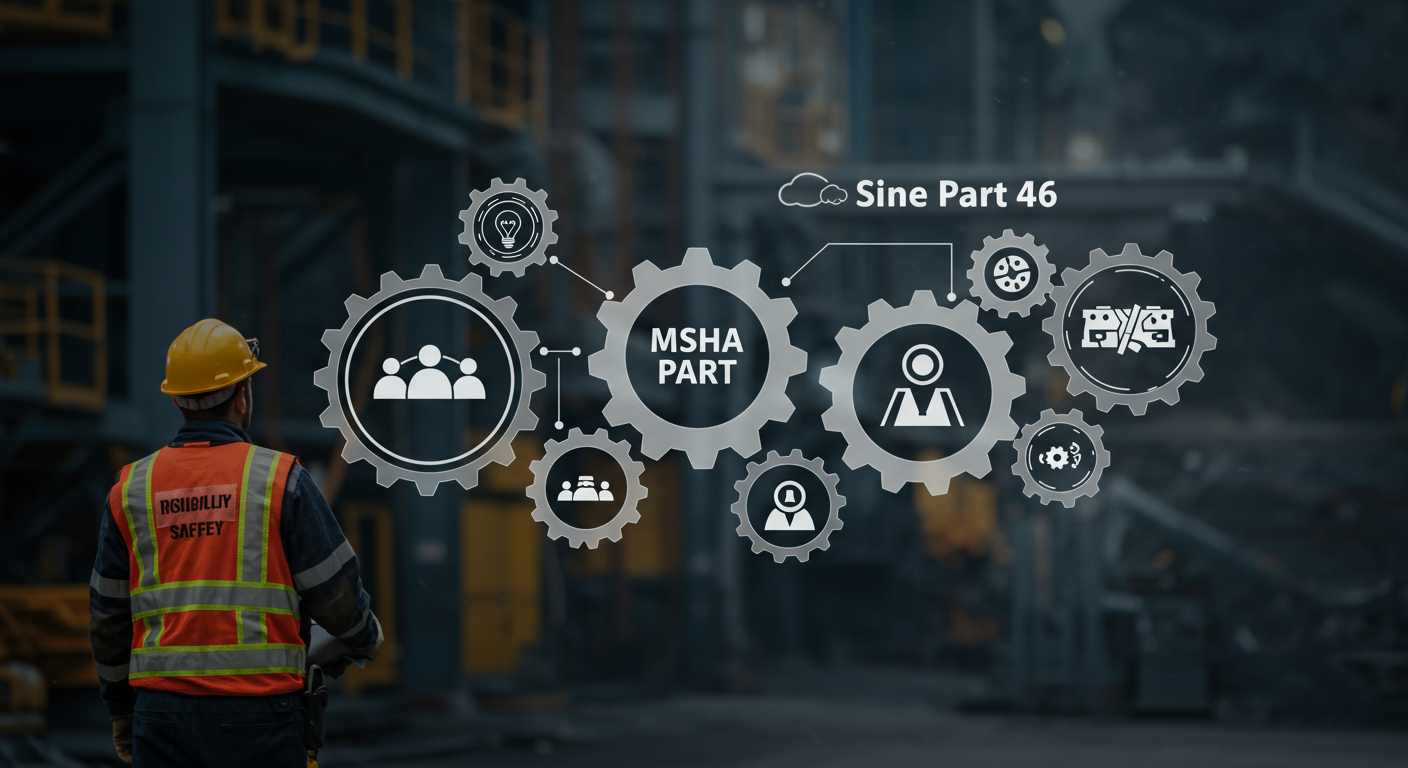
Mastering MSHA Part 46: A Comprehensive Guide to Miner Training and Compliance
The mining industry, while critical to global infrastructure and economy, inherently presents a unique set of hazards. Ensuring the safety and health of miners is paramount, a responsibility underscored by stringent regulations from the Mine Safety and Health Administration (MSHA). Among these, MSHA Part 46 stands as a cornerstone, specifically outlining the requirements for training and instruction of miners engaged in shell dredging, sand, gravel, surface stone, surface clay, colloidal phosphate, and surface limestone mines. Understanding and effectively implementing MSHA Part 46 isn't just about compliance; it's about fostering a culture of safety that protects lives, preserves livelihoods, and prevents catastrophic incidents.
This comprehensive guide delves into the nuances of MSHA Part 46, exploring its critical components, the significance of adherence, and how modern training methodologies can transform compliance from a burden into a powerful asset for operational excellence and worker well-being.
What is MSHA Part 46? An Essential Overview
MSHA Part 46, officially known as "Training and Retraining of Miners Engaged in Shell Dredging, Sand, Gravel, Surface Stone, Surface Clay, Colloidal Phosphate, and Surface Limestone Mining," sets forth the minimum requirements for safety and health training programs at these specific types of mines. Unlike Part 48, which covers underground and some surface coal/metal/nonmetal mines, Part 46 offers greater flexibility, allowing mine operators to develop their own training plans tailored to their specific operations, provided these plans meet MSHA's basic criteria.
The core objective of Part 46 is to ensure that all miners, regardless of their experience level, possess the knowledge and skills necessary to identify and avoid hazards, understand emergency procedures, and safely perform their assigned tasks. It’s a proactive approach to safety, aiming to prevent accidents through education rather than reacting to them.
Key Components of a Robust MSHA Part 46 Training Program
A compliant and effective Part 46 training program revolves around several critical elements:
1. Written Training Plan (PTP)
- Every mine operator covered by Part 46 must develop and implement a written training plan. This plan doesn't need MSHA approval but must be available for review upon request.
- The plan must specify the miners to be trained, the subjects to be taught, the amount of time dedicated to each subject, and the methods of instruction.
- It must also designate a "competent person" responsible for health and safety training. This individual must have relevant experience and knowledge to effectively deliver training.
2. New Miner Training
- New miners, regardless of previous mining experience, must receive a minimum of 24 hours of training within their first 90 days of employment. At least 4 hours must be completed before the new miner begins work.
- This training covers crucial topics such as statutory rights, hazard recognition, emergency procedures, health and safety aspects of the tasks they will perform, and an introduction to the mine's rules and procedures.
3. Experienced Miner Training
- Miners who have completed new miner training or have at least 12 months of mining experience are considered experienced miners.
- When an experienced miner moves to a new mine, they must receive site-specific hazard training appropriate to the new operation.
4. Annual Refresher Training
- All miners must receive at least 8 hours of annual refresher training.
- This training reinforces critical safety concepts, introduces new hazards or controls, reviews accident prevention, and updates miners on any changes in mine procedures or regulations.
5. Task Training
- Miners must receive specific task training before performing any assigned task in which they have no prior experience.
- This training ensures proficiency in safe operating procedures for machinery, equipment, and specific job functions, covering hazards associated with the task and appropriate safety measures.
6. Hazard Recognition and Prevention
- A central theme of Part 46 is the ability to recognize and avoid hazards. Training must emphasize hazard identification, risk assessment, and effective control measures.
7. Record Keeping
- Operators must maintain accurate records of all training provided to miners, including dates, subjects, and the names of miners trained. These records are vital for demonstrating compliance during MSHA inspections.
The Indispensable Value of MSHA Part 46 Compliance
Compliance with MSHA Part 46 extends far beyond merely avoiding penalties. It is a strategic investment in the well-being of your workforce and the operational integrity of your mine.
- Enhanced Safety: The primary benefit is a safer work environment. Well-trained miners are more alert to potential dangers, better equipped to handle emergencies, and less likely to make critical errors.
- Reduced Incidents and Accidents: Effective training directly correlates with a decrease in workplace injuries, illnesses, and fatalities. This not only saves lives but also reduces workers' compensation claims and lost productivity.
- Legal and Financial Protection: Non-compliance can lead to significant MSHA citations, hefty fines, and potentially even criminal charges in severe cases. A robust training program mitigates these legal and financial risks.
- Improved Productivity: When miners feel safe and understand their roles, they work more efficiently and confidently. Reduced downtime due to accidents also contributes to higher productivity.
- Positive Company Culture: Prioritizing safety through comprehensive training demonstrates a commitment to employee welfare, fostering trust, morale, and a stronger safety culture within the organization.
Modernizing MSHA Part 46 Training with Technology
Traditionally, MSHA training often involved lengthy classroom sessions, which, while foundational, can struggle with engagement, retention, and personalized learning. Today, advanced learning technologies offer powerful solutions to enhance Part 46 compliance and effectiveness.
Leveraging a modern MaxLearn Microlearning Platform can revolutionize how mining companies approach MSHA Part 46 compliance. Such platforms break down complex topics into bite-sized, easily digestible modules, perfect for busy miners who need to learn on the job or during short breaks. This approach significantly improves retention and allows for more frequent, impactful training refreshers.
To combat the monotony often associated with mandatory training, adopting a Gamified LMS can transform compliance training into an engaging and interactive experience. Elements like points, badges, leaderboards, and interactive simulations motivate miners, making learning more enjoyable and effective. This approach is particularly effective for hazard recognition and emergency procedure drills.
Furthermore, platforms incorporating Adaptive Learning ensure that each miner receives training tailored to their specific needs and knowledge gaps. Instead of a one-size-fits-all approach, adaptive systems identify areas where a miner needs more support and provide additional resources or modules, optimizing learning paths and ensuring true competency.
Creating and updating training content can be a time-consuming task. With an AI Powered Authoring Tool, safety managers can rapidly develop and deploy up-to-date training modules, incorporating new MSHA guidelines, mine-specific hazards, or incident lessons learned with unprecedented speed and efficiency. This ensures that training content remains relevant and responsive to evolving safety needs.
Finally, implementing Risk-focused Training helps miners truly understand potential hazards and how to mitigate them in their specific work environment. By focusing on the risks most pertinent to their tasks and location, miners develop practical, actionable knowledge that directly contributes to accident prevention. Such targeted training can be easily delivered and tracked through a sophisticated learning platform.
The Future of Miner Safety and MSHA Part 46
As technology continues to advance, so too will the methods of delivering essential safety training. MSHA Part 46 provides the regulatory framework, but it is the ingenuity and commitment of mine operators, coupled with innovative learning solutions, that will ultimately drive down incident rates and elevate safety standards across the industry.
Investing in advanced, engaging, and personalized training solutions isn't just about meeting minimum requirements; it's about exceeding them. It's about empowering every miner with the knowledge, confidence, and vigilance to navigate the complexities of their demanding work environment safely. By embracing modern approaches to MSHA Part 46 compliance, mining operations can build a resilient, well-trained workforce prepared for any challenge, ensuring a safer and more productive future for all.
.jpg)


