

Empowering Growth: The Indispensable Role of an Employee Upskilling Platform
In today's relentlessly accelerating professional landscape, the only constant is change. Technologies evolve at breakneck speed, market demands shift overnight, and job roles transform in unprecedented ways. For businesses to not only survive but thrive, their most valuable asset – their people – must be equipped with future-ready skills. This imperative has brought the MaxLearn Microlearning Platform into the spotlight, emerging as a critical tool for sustained organizational success.
But what exactly is an employee upskilling platform, and why has it become so indispensable? In essence, it's a dedicated digital ecosystem designed to facilitate continuous learning, skill enhancement, and career development for employees. It's the engine that drives a culture of lifelong learning, ensuring that your workforce remains agile, competent, and engaged in a world that never stops moving.
The Evolving Need for Employee Upskilling
The traditional model of static job descriptions and one-off training sessions is long obsolete. Several powerful forces are reshaping the modern workplace, making continuous upskilling not just beneficial, but absolutely vital:
- Technological Disruption: Automation, AI, machine learning, and new software applications are constantly emerging, rendering old skills redundant and creating demand for new ones. Companies must equip employees to work alongside these technologies, not be replaced by them.
- Global Competition: Businesses operate on a global stage, where competition for talent and market share is fierce. An upskilled workforce is a competitive advantage, fostering innovation and efficiency.
- Shifting Job Roles: Many existing roles are evolving, requiring a broader and deeper skill set. New roles are also emerging that didn't exist a decade ago, necessitating proactive training.
- Talent Shortages: Recruitment of new talent can be costly, time-consuming, and increasingly difficult for specialized skills. Upskilling existing employees is often a more sustainable and cost-effective strategy.
- Employee Expectations: Modern employees, particularly millennials and Gen Z, prioritize opportunities for growth and development. Companies that invest in their employees' skills see higher retention rates and greater job satisfaction.
Failing to address these shifts can lead to significant skill gaps, decreased productivity, higher employee turnover, and ultimately, a decline in business performance. An employee upskilling platform provides the structured solution to proactively combat these challenges.
What an Employee Upskilling Platform Offers
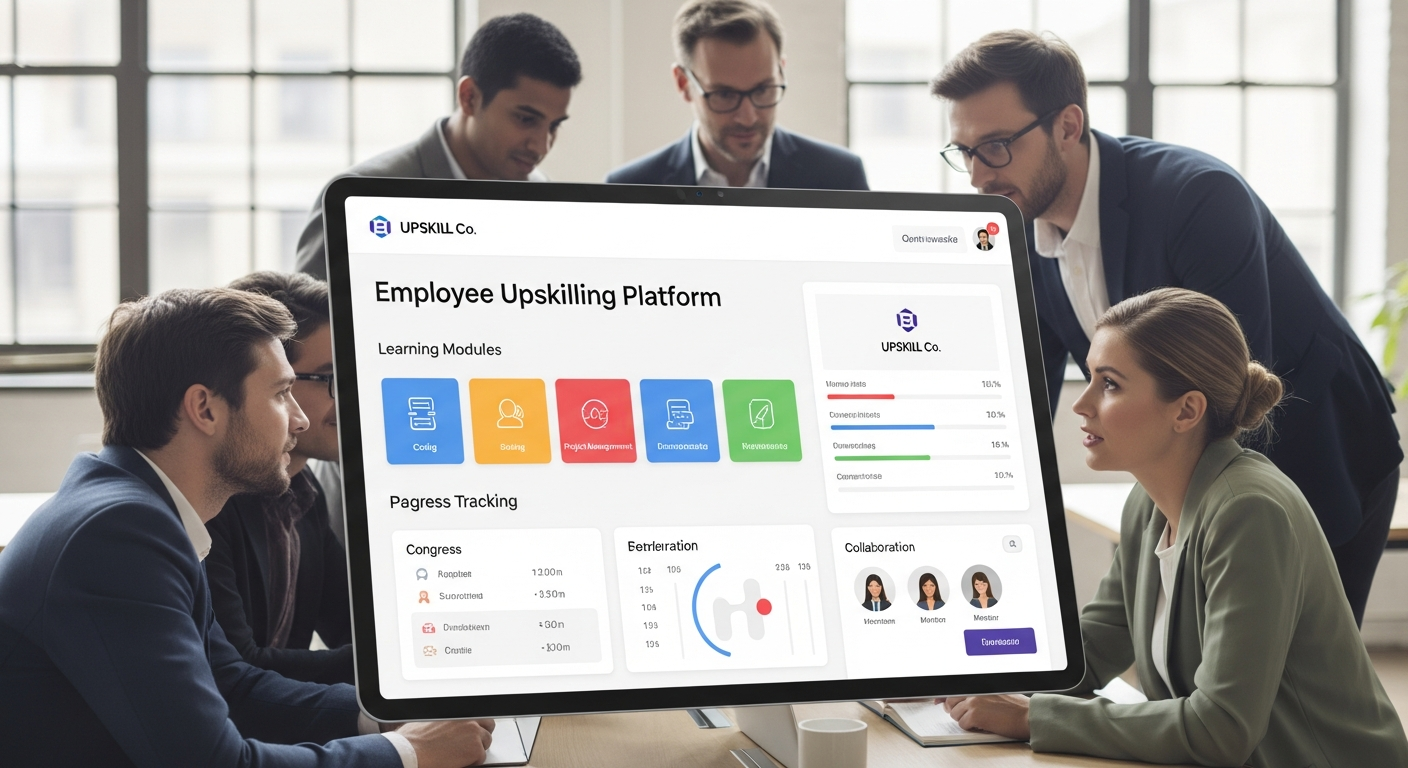
More than just a collection of online courses, a comprehensive upskilling platform offers a holistic learning environment. Key components typically include:
- Curated Content Libraries: Access to a vast array of courses, modules, videos, and articles covering everything from technical skills (e.g., data science, coding) to soft skills (e.g., leadership, communication).
- Personalized Learning Paths: The ability to create customized learning journeys based on an employee's current role, career aspirations, and identified skill gaps. This often leverages Adaptive Learning technologies.
- Progress Tracking and Analytics: Tools for both employees and managers to monitor learning progress, completion rates, and skill acquisition.
- Interactive and Engaging Formats: Utilizing multimedia, quizzes, simulations, and social learning features to keep learners engaged. Many platforms incorporate Gamified LMS elements to boost motivation.
- Accessibility: Cloud-based and often mobile-friendly, allowing employees to learn anytime, anywhere, and on any device.
Core Benefits of Implementing an Upskilling Platform
The advantages of a robust employee upskilling platform extend across the entire organization, benefiting both individual employees and the business as a whole.
For Employees:
- Career Advancement: Provides clear pathways for professional growth, allowing employees to acquire skills necessary for promotions or new roles.
- Increased Job Satisfaction: Employees who feel invested in and supported in their development are more engaged, motivated, and loyal to their employer.
- Enhanced Marketability: A broader and deeper skill set makes employees more adaptable and valuable both within their current company and in the wider job market.
- Sense of Empowerment: Giving employees autonomy over their learning journey fosters a sense of ownership and personal responsibility for their growth.
For Employers:
- Bridging Skill Gaps: Proactively addresses current and future skill shortages, ensuring the workforce remains relevant and productive.
- Improved Retention and Reduced Recruitment Costs: Investing in existing employees reduces turnover and the expensive, time-consuming process of hiring externally.
- Increased Productivity and Innovation: A highly skilled workforce is more efficient, makes fewer errors, and is better equipped to innovate and adapt to new challenges.
- Cultivating a Learning Culture: Establishes a pervasive environment where continuous learning is valued, encouraged, and expected, fostering resilience and adaptability.
- Future-Proofing the Workforce: Prepares the organization for technological shifts and market disruptions, ensuring long-term sustainability and competitive advantage.
- Targeted Training: Enables organizations to deliver specialized training, such as Risk-focused Training, directly to the relevant teams, ensuring compliance and mitigating potential issues.
Key Features to Look for in an Effective Upskilling Platform
When selecting an upskilling platform, organizations should consider several critical features:
- Diverse and Quality Content: Look for a platform with a rich library of up-to-date, relevant content delivered in various formats (microlearning, video, interactive modules).
- Personalization and Adaptive Learning: The ability to tailor learning paths to individual needs, often powered by Adaptive Learning algorithms, is crucial for efficiency and engagement.
- Engagement Features: Elements like social learning, discussion forums, leaderboards, and badges (often part of a Gamified LMS) significantly boost learner motivation and completion rates.
- Intuitive User Experience (UX): The platform must be easy for both learners and administrators to navigate, minimizing friction and maximizing adoption.
- Robust Analytics and Reporting: Comprehensive dashboards that provide insights into learner progress, skill proficiency, and training ROI are essential for measuring impact.
- Powerful Authoring Tools: For organizations that wish to create or customize their own content, an integrated AI Powered Authoring Tool can be invaluable for rapid development.
- Mobile Accessibility: With a growing remote and distributed workforce, learning on the go via mobile devices is a non-negotiable feature.
- Integration Capabilities: The platform should integrate seamlessly with existing HRIS, LMS, or other enterprise systems to streamline data flow and administration.
Choosing the Right Platform: A Strategic Decision
Implementing an employee upskilling platform is a strategic investment that requires careful consideration. Organizations should:
- Conduct a Skill Gap Analysis: Understand current competencies and future skill requirements.
- Define Clear Learning Objectives: What specific skills or behaviors do you aim to develop?
- Evaluate Platform Features: Match the platform's capabilities with your organizational needs and budget.
- Consider Scalability: Choose a platform that can grow with your company.
- Pilot Programs: Test the platform with a small group of users to gather feedback before a full rollout.
The Future of Work is Upskilled with MaxLearn
Leading platforms like the MaxLearn Microlearning Platform exemplify how modern technology is revolutionizing corporate learning. By offering microlearning modules, gamified experiences, AI-powered personalization, and robust analytics, MaxLearn addresses the core challenges of employee development in the 21st century. It allows businesses to efficiently deliver targeted training – from honing specific technical proficiencies to conducting crucial Risk-focused Training – ensuring that every employee has the opportunity to grow and contribute meaningfully.
Conclusion
An employee upskilling platform is no longer a luxury but a strategic necessity for any organization aiming to build a resilient, innovative, and future-ready workforce. By investing in the continuous development of their people, companies can navigate the complexities of the modern world with confidence, fostering a culture of adaptability and sustained success. The right platform not only closes skill gaps but unlocks untapped potential, driving both individual career trajectories and overall business prosperity.
.jpg)


